
Adding to a winning position feels counterintuitive. The stock has already risen, which means you are paying a higher price than before. Every instinct tells you to wait for a pullback, buy something cheaper, or simply be grateful for the gains you have. The idea of putting more money into something that has already worked seems like chasing performance.
But some of the best investment returns come from adding to winners. A stock that rises often does so because the business is performing well, the thesis is playing out, and the market is recognizing value that was previously overlooked. Adding more capital to a working idea can be far smarter than deploying it into an unproven position or a stock that has gone nowhere.
Find out what a stock’s really worth in under 60 seconds with TIKR’s new Valuation Model (It’s free)>>>
The challenge is distinguishing between a stock that has risen for good reasons and one that has simply gotten expensive. Not every winner deserves additional capital. Some stocks rise due to temporary enthusiasm, multiple expansion without fundamental improvement, or sector rotation unrelated to the underlying business. Adding to these positions compounds risk rather than returns.
The key is having a framework that separates rational additions from emotional chasing. Adding to a winner should be based on valuation, fundamental trajectory, and position sizing rather than on the fact that the stock has gone up. This guide explains when adding makes sense, when it does not, and how to use TIKR to systematically assess when it does.
Why Adding to Winners Works
Conventional wisdom says to buy low and sell high. This leads investors to constantly hunt for cheap stocks and avoid anything that has already risen. The problem is that cheap stocks are often cheap for a reason, while stocks that keep rising frequently do so because the businesses behind them keep improving.
Academic research supports the idea that winners tend to keep winning. Momentum is one of the most persistent factors in equity markets. Stocks that have performed well over the past six to twelve months tend to outperform over the following six to twelve months. This is not a guarantee, but it reflects a real pattern in how markets process information.
The reason is partly behavioral. Investors underreact to positive news and slowly update their expectations. A company that beats earnings estimates and raises guidance often continues to exceed expectations for several quarters. The market adjusts incrementally rather than all at once, creating a sustained uptrend that rewards investors who stay invested or add to their positions.
There is also a fundamental explanation. A rising stock price often reflects genuine business improvement. Revenue is accelerating, margins are expanding, or returns on capital are increasing. These trends tend to persist because competitive advantages compound over time. A company that gains market share in one year is often better positioned to gain more the next year.
Adding to winners aligns your capital with businesses that are demonstrating success rather than those where you are hoping for a turnaround. The psychological discomfort of paying a higher price is the cost of investing in quality.
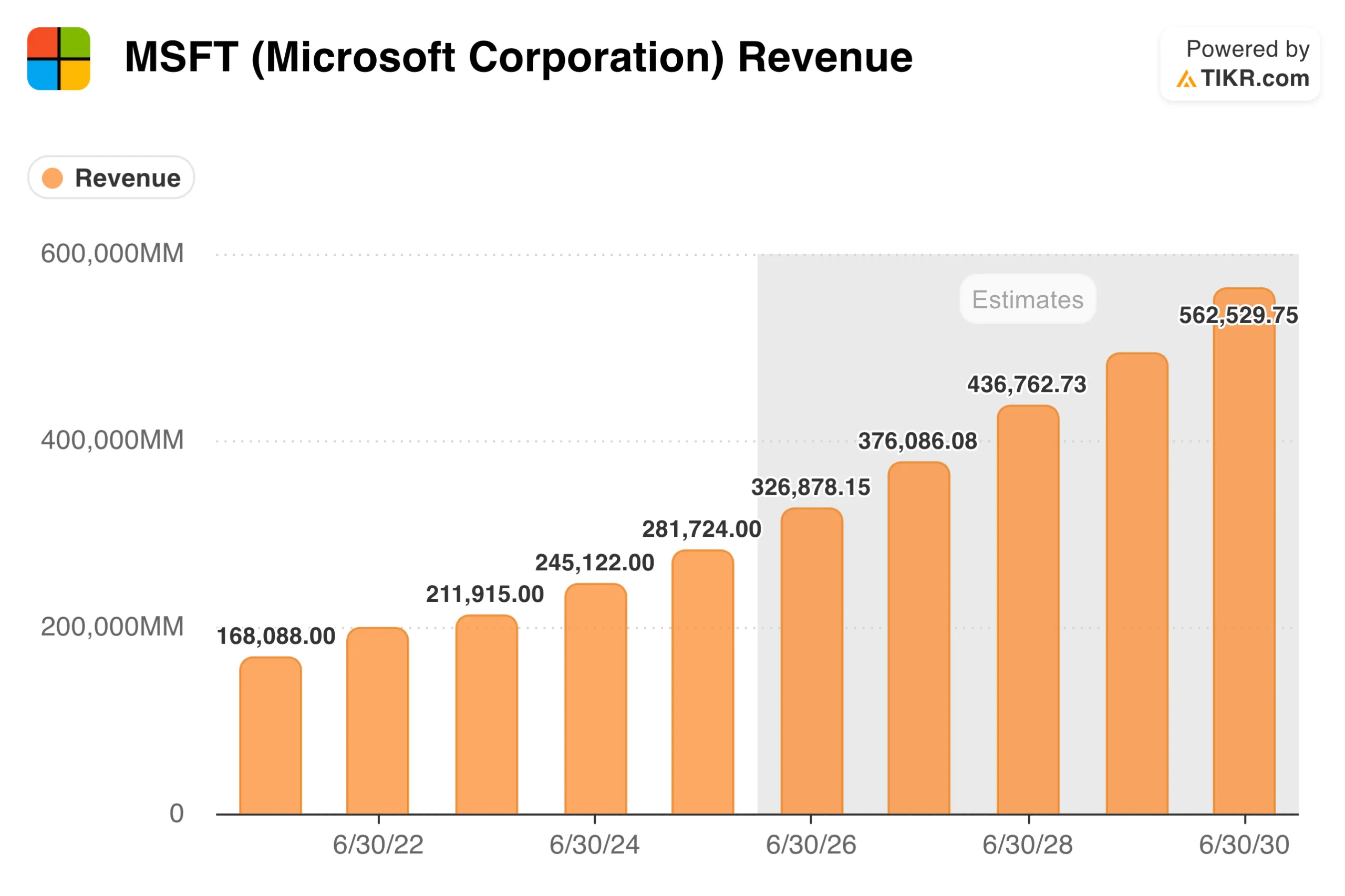
TIKR tip: Use TIKR’s Estimates tab to see whether analysts have been revising earnings expectations higher. Consistent upward revisions often accompany stocks that continue to outperform.
Estimate a company’s fair value instantly (Free with TIKR) >>>
Valuation Check Before Adding
A rising stock price does not automatically mean the stock is expensive. What matters is the relationship between price and fundamentals. If earnings have grown faster than the stock price, the valuation may actually be more attractive than when you first bought.
Consider a stock you purchased at $50 with earnings of $2.50 per share, giving it a P/E of 20x. Two years later, the stock trades at $80, and earnings have grown to $5.00 per share. The P/E has actually compressed to 16x despite the stock rising 60%. This stock is cheaper on a fundamental basis than when you originally invested.
The opposite can also occur. A stock might rise from $50 to $80 while earnings grow from $2.50 to only $3.00 per share. The P/E has expanded from 20x to nearly 27x. Adding to this position means paying a significantly higher multiple for each dollar of earnings. That may or may not be justified, but you should recognize the shift in risk profile.
Before adding to any winner, compare the current valuation to where it stood when you initiated the position and to its historical range. If the multiple has compressed or held steady while fundamentals improved, adding makes sense. If the multiple has expanded significantly without a corresponding improvement in growth or quality, caution is warranted.
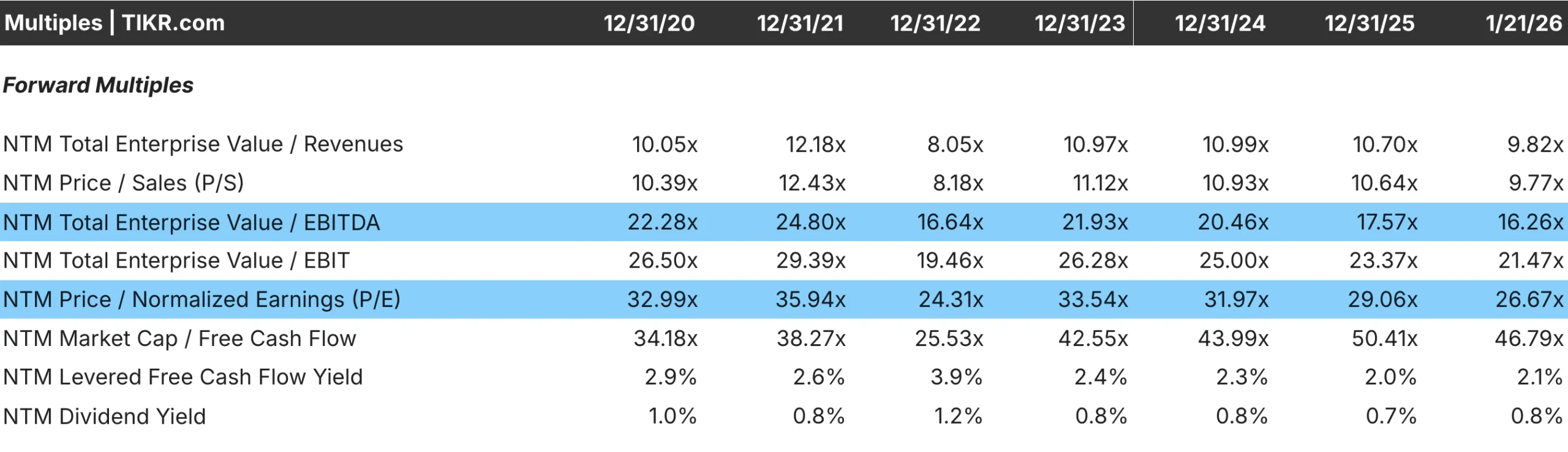
TIKR tip: TIKR’s Valuation tab shows historical multiples alongside current figures. Compare the P/E or EV/EBITDA when you first bought it to its current level. A stock that has risen but trades at a similar or lower multiple is a stronger candidate for adding.
Value any stock in less than 60 seconds with TIKR’s new Valuation Model (It’s free) >>>
Confirming Fundamentals Still Support the Thesis
Adding to a position is a reaffirmation of your original thesis. Before committing more capital, confirm that the reasons you bought the stock remain intact and that the business continues to execute.
Review the key metrics that drove your initial investment. If you bought because of revenue growth, check whether growth has accelerated, held steady, or begun to slow. If you bought for margin expansion, verify that margins are still improving. If you bought for high returns on capital, confirm that ROC remains elevated.
The trajectory matters as much as the absolute level. A company growing revenue at 15% annually is attractive, but one that has decelerated from 25% to 15% tells a different story than one that has accelerated from 10% to 15%. The former suggests fading momentum while the latter suggests strengthening fundamentals.
Pay attention to what management says about the future. Earnings calls and investor presentations reveal whether leadership sees the current performance as sustainable or exceptional. If management is raising guidance and expressing confidence, that supports adding to the position. If they are tempering expectations despite recent strength, proceed carefully.
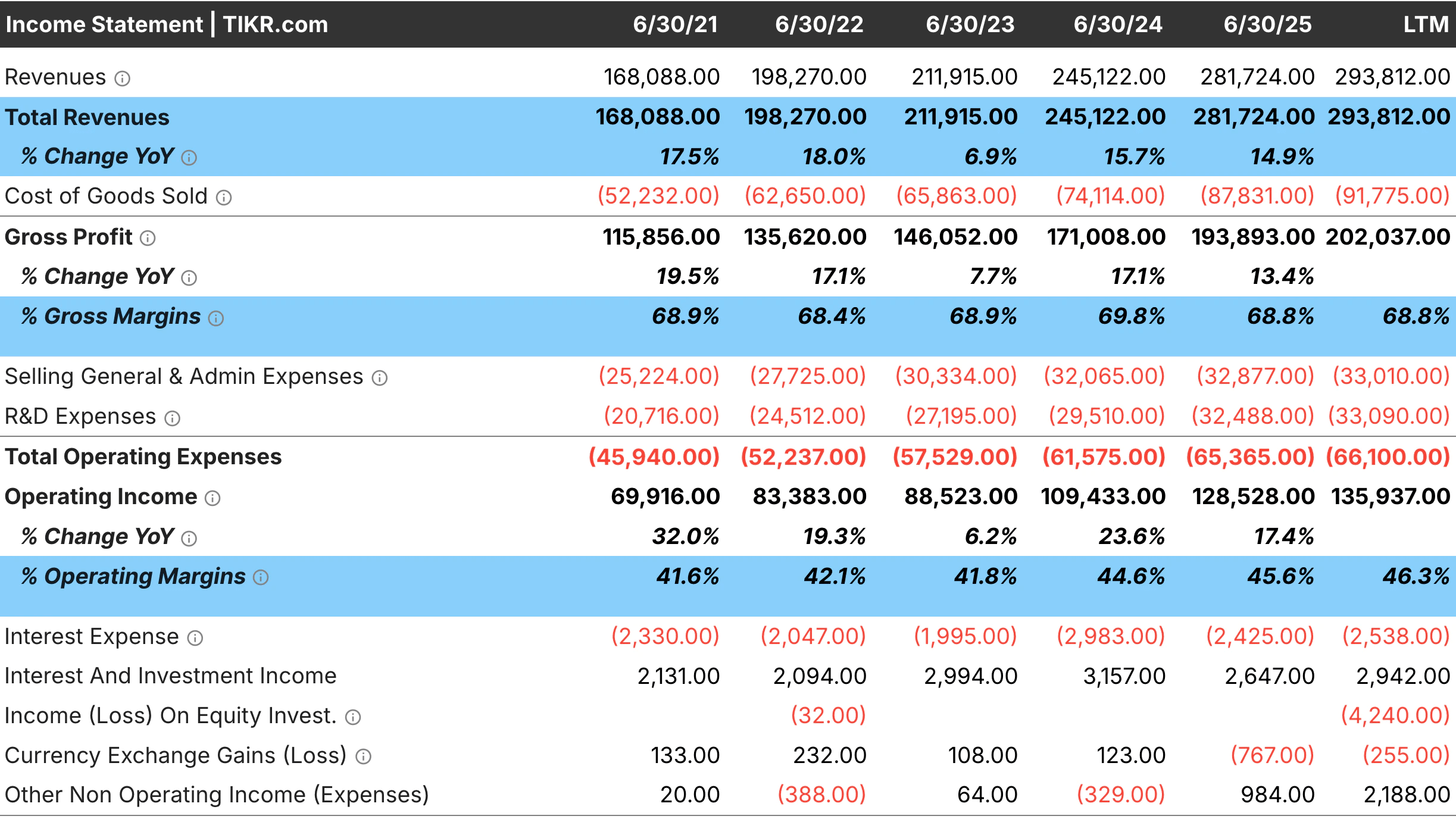
TIKR tip: Use TIKR’s Detailed Financials to track revenue growth, margins, and returns on capital over the past several years. Look for trends that are stable or improving rather than deteriorating.
Get the most up-to-date financial snapshots of thousands of stocks with TIKR (It’s free) >>>
Position Sizing Considerations
Even if valuation is reasonable and fundamentals are strong, position sizing matters. Adding to a winner increases your concentration on a single name. That concentration amplifies both potential gains and potential losses.
Before adding, consider what the position will represent as a percentage of your portfolio after the purchase. If a stock has already grown from 5% to 8% of your portfolio and you add more, you might push it to 10% or higher. That level of concentration requires high conviction and tolerance for volatility.
One approach is to scale additions based on conviction and valuation. A small addition of 1% to 2% of your portfolio might be appropriate when you have moderate confidence and the stock is fairly valued. A larger add of 3% to 5% might be justified when conviction is high, and valuation remains attractive despite the price increase.
Consider how you will feel if the stock declines 30% immediately after you add. If that outcome would cause you to panic or significantly impair your financial situation, the position is too large. The right size is one that lets you hold comfortably through volatility without making emotional decisions.

TIKR tip: Track your portfolio positions in a TIKR watchlist. Before adding to any holding, calculate the new weight and decide whether that concentration level aligns with your risk tolerance.
Run a competitor analysis on TIKR for the top stocks in your portfolio (It’s free) >>>
When Not to Add
Adding to winners is not always the right move. Several situations warrant caution even when a stock has performed well.
When the valuation has stretched significantly. If a stock has risen primarily through multiple expansion rather than earnings growth, adding to it increases your risk. You are paying more for each dollar of earnings and relying on sentiment to remain elevated. Multiples can compress quickly during market corrections, erasing gains that took years to accumulate.
When growth is decelerating. A stock can keep rising even as growth slows, but the math eventually catches up. If revenue growth has dropped from 20% to 12% over the past two years, the market may no longer reward the stock with the same multiple. Adding during deceleration means buying into fading momentum.
When the position is already large. Concentration can enhance returns, but it also magnifies risk. If a single stock already represents 10% or more of your portfolio, adding more may create an imbalance that leaves you vulnerable to company-specific problems.
When your thesis has partially played out. If you bought a stock expecting a specific catalyst, such as a product launch or margin improvement, and that catalyst has already occurred, the easy gains may be behind you. Adding at this point requires a new thesis for why the stock will continue to outperform.
When insiders are selling heavily. Executives have many reasons to sell, but sustained heavy selling from multiple insiders can signal that those closest to the business see limited upside. If insiders are cashing out while you are buying in, consider what they might know that you do not.
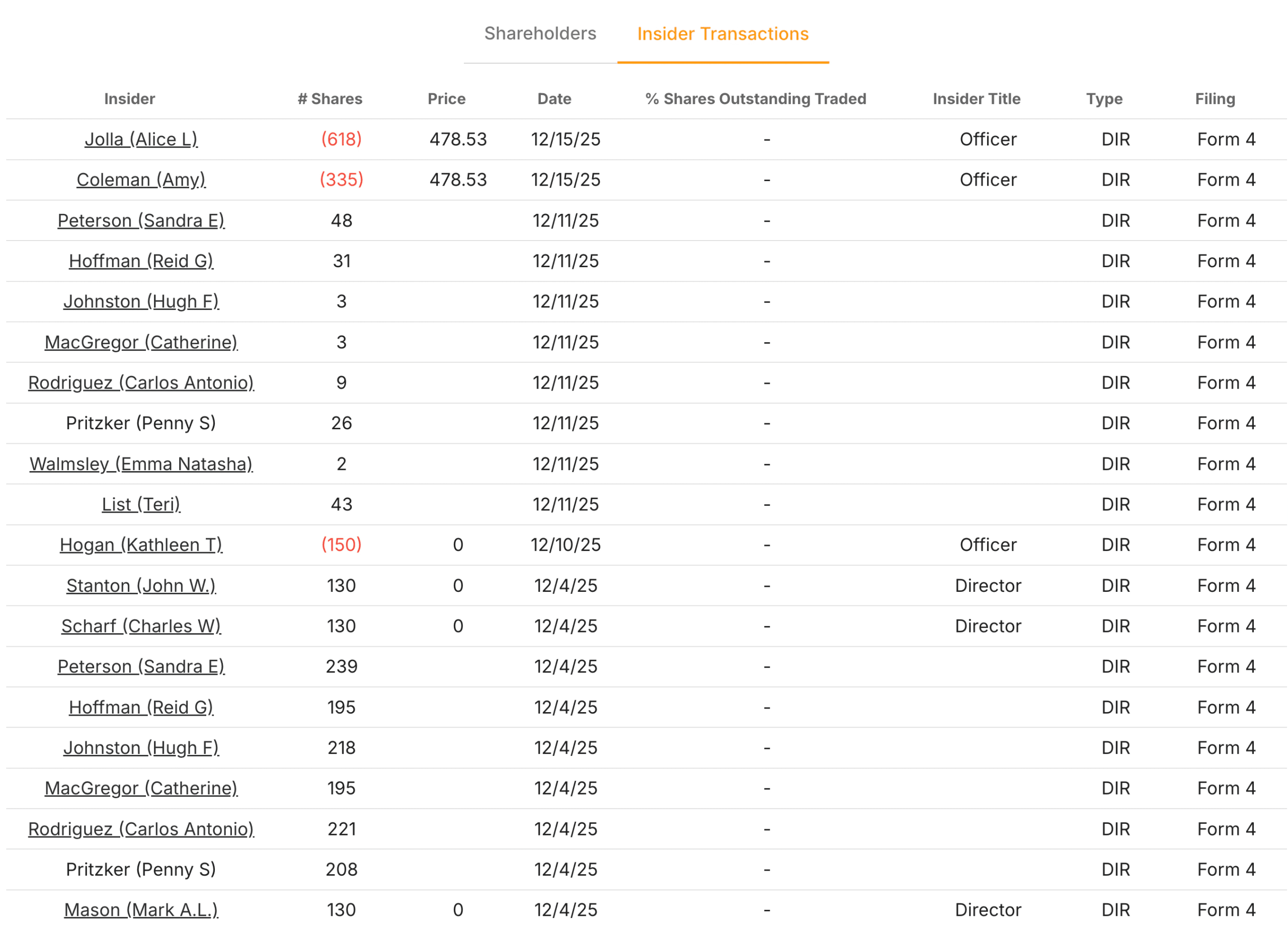
TIKR tip: Check the Ownership tab in TIKR before adding to any position. If insiders have been selling consistently over the past several quarters, weigh that against your conviction before committing more capital.
Using Pullbacks Strategically
One way to add to winners while managing risk is to wait for pullbacks within an uptrend. Stocks rarely move in straight lines. Even the best performers experience corrections of 10% to 20% along the way. These pullbacks can offer attractive entry points for adding to positions.
The key is distinguishing between a healthy pullback and the start of a larger decline. A pullback within an intact uptrend typically occurs on lower volume, does not coincide with deteriorating fundamentals, and finds support at predictable levels. A breakdown often comes with high volume, negative earnings revisions, and a failure to hold previous support.
Using pullbacks requires patience. You must be willing to watch a stock rise further without you while waiting for an opportunity that may not come. If the stock keeps climbing, you face the decision of adding at higher prices or missing the move entirely.
One approach is to split your intended addition into multiple purchases. Add a portion at the current price, then reserve capital for a potential pullback. This averages your entry price and ensures you have exposure whether the pullback comes or not.
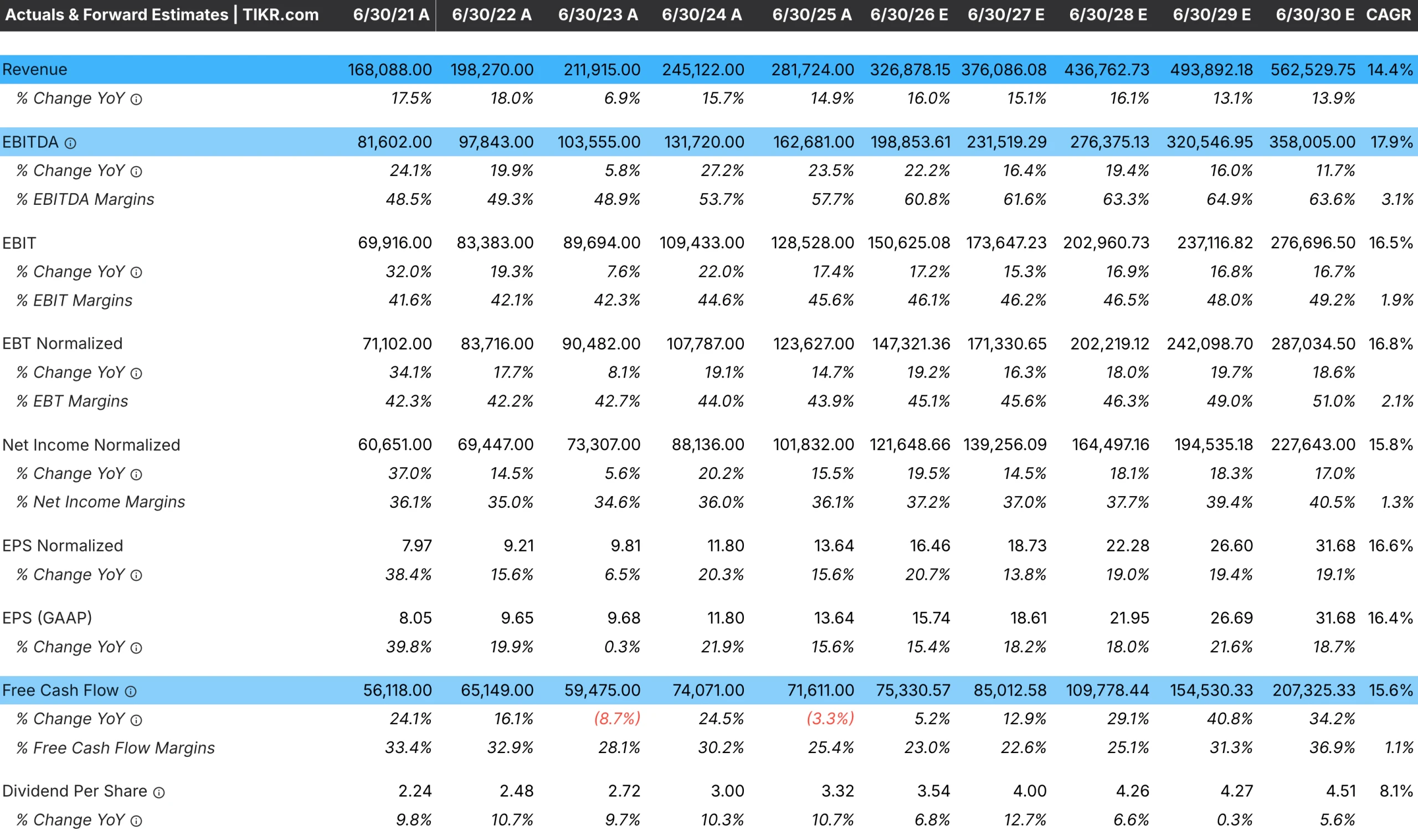
TIKR tip: Use TIKR’s Estimates tab to monitor analyst revisions during a pullback. If estimates remain stable or continue to rise even as the stock price falls, the pullback is more likely to be technical than fundamental.
The TIKR Takeaway
Adding to winning positions is one of the most powerful tools in an investor’s arsenal, but it requires discipline. The goal is to allocate more capital to ideas that are working because the underlying businesses are executing, not simply because the stock price has risen.
The decision should be driven by valuation, fundamental trajectory, and position sizing. A stock that has risen but trades at a reasonable multiple with improving fundamentals is a strong candidate for adding. A stock that has risen primarily through multiple expansion with slowing growth is not.
TIKR makes this assessment straightforward by consolidating valuations, financial trends, analyst estimates, and insider activity on a single platform. You can compare current multiples to historical ranges, track whether growth is accelerating or decelerating, and see whether management is buying or selling alongside you.
The best investors let their winners run and selectively add when the opportunity is compelling. A disciplined framework ensures you are adding for the right reasons rather than simply chasing performance.
Find undervalued stocks in less than 60 seconds with TIKR’s new Valuation Model (It’s free) >>>
Value Any Stock in Under 60 Seconds with TIKR
With TIKR’s new Valuation Model tool, you can estimate a stock’s potential share price in under a minute.
All it takes is three simple inputs:
- Revenue Growth
- Operating Margins
- Exit P/E Multiple
If you’re not sure what to enter, TIKR automatically fills in each input using analysts’ consensus estimates, giving you a quick, reliable starting point.
From there, TIKR calculates the potential share price and total returns under Bull, Base, and Bear scenarios so you can quickly see whether a stock looks undervalued or overvalued.
See a stock’s true value in under 60 seconds (Free with TIKR) >>>
Looking for New Opportunities?
- Discover which stocks billionaire investors are purchasing, so you can follow the smart money.
- Analyze stocks in as little as 5 minutes with TIKR’s all-in-one, easy-to-use platform.
- The more rocks you overturn… the more opportunities you’ll uncover. Search 100K+ global stocks, global top investor holdings, and more with TIKR.
Disclaimer:
Please note that the articles on TIKR are not intended to serve as investment or financial advice from TIKR or our content team, nor are they recommendations to buy or sell any stocks. We create our content based on TIKR Terminal’s investment data and analysts’ estimates. Our analysis might not include recent company news or important updates. TIKR has no position in any stocks mentioned. Thank you for reading, and happy investing!