


Taking profits sounds simple. A stock goes up, you sell some or all of it, and you lock in the gain. In practice, the decision is anything but straightforward. Sell too early, and you watch the stock double again without you. Sell too late, and you give back gains that took years to accumulate.
The difficulty is partly psychological. Winners feel good about owning. They validate your research and boost your confidence. Selling a winning position means admitting that the easy gains may be behind you, and it risks regretting watching the stock continue higher. These emotions push investors toward inaction, even when taking some profits would be the rational choice.
But there is also a legitimate analytical challenge. A stock that has risen 100% is not automatically overvalued. Some of the best long-term investments are stocks that seemed expensive at every point along the way. Amazon looked pricey at $100, and it looked pricey at $500. Investors who sold to lock in profits missed one of the greatest wealth compounders in market history.
The key is distinguishing between a stock that has simply risen and one where the risk-reward has fundamentally shifted. Taking profits should not be about arbitrary price targets or percentage gains. It should be about valuation, position sizing, and whether the expected return still justifies the risk. This guide explains how to make that assessment and when locking in gains makes sense.
Why Taking Profits Feels So Difficult
The reluctance to take profits has deep psychological roots. Behavioral finance research shows that investors feel the pain of regret more acutely than the satisfaction of gains. Selling a winner that keeps rising triggers intense regret. Holding a winner that falls back feels like bad luck rather than a mistake.
This asymmetry leads to a predictable pattern. Investors hold their winners in hopes of more gains, then watch those gains evaporate during corrections. The same investors reluctantly sell their losers, hoping for a recovery that often never comes. The result is a portfolio where winners are cut short, and losers are allowed to run.
There is also the narrative problem. Winning stocks come with compelling stories. The company is disrupting an industry, or the CEO is visionary, or the market is finally recognizing hidden value. These narratives make it emotionally difficult to sell because doing so feels like abandoning a story you believe in.
The antidote is focusing on numbers rather than narratives. Valuation, position size, and expected return are measurable. Stories are not. When the numbers no longer support holding a full position, taking some profits is rational regardless of how compelling the story remains.
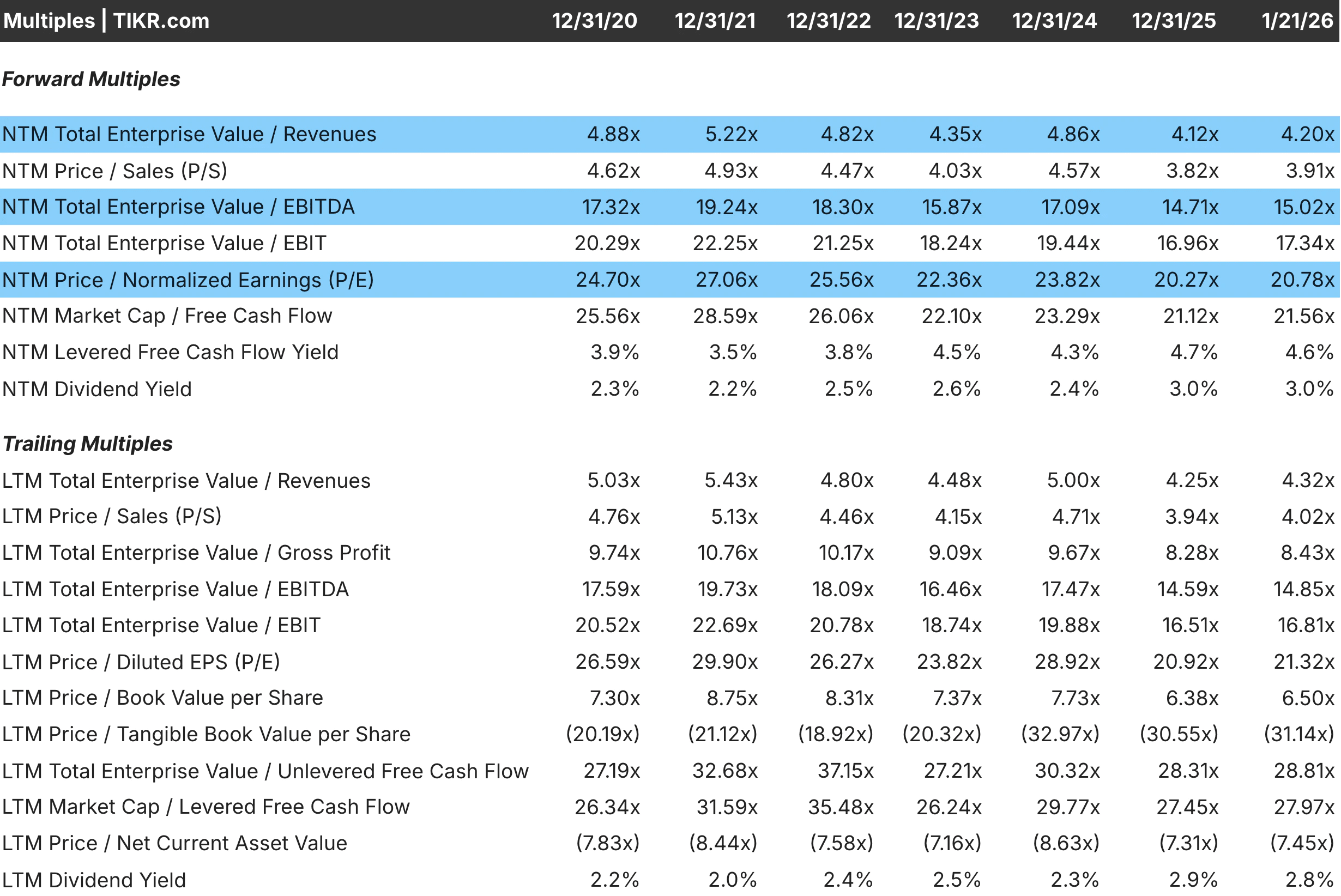
TIKR tip: Use TIKR’s Valuation tab to ground your analysis in data rather than narrative. Comparing current multiples to historical averages provides an objective reference point for whether a stock has become expensive.
Estimate a company’s fair value instantly (Free with TIKR) >>>
Valuation-Based Profit Taking
The clearest signal to take profits is when valuation has stretched beyond what fundamentals support. A stock that traded at 15x earnings when you bought it and now trades at 35x earnings carries a different risk profile, even if the business has improved.
This does not mean selling every time a multiple expands. Multiples can rise for good reasons. Improving growth, expanding margins, or reduced risk all justify higher valuations. The question is whether the current multiple is reasonable given realistic expectations for the future.
One framework is to estimate the return you would expect if you bought the stock today at its current price. If a stock trades at 40x earnings and you expect 12% earnings growth, the math for attractive returns becomes difficult. The multiple would need to hold steady or expand further, which requires continued optimism from other investors.
Compare this to the return profile when you originally purchased the stock. If the expected return has dropped from 15% annually to 5%, the risk-reward has shifted even though the business may be performing well. Taking partial profits and redeploying into higher-return opportunities makes sense.
Historical valuation ranges provide useful context. If a stock has traded between 15x and 25x earnings over the past decade and now trades at 30x, you are betting that the market will continue paying a premium it has rarely paid before. That bet may prove correct, but the odds have shifted against you.
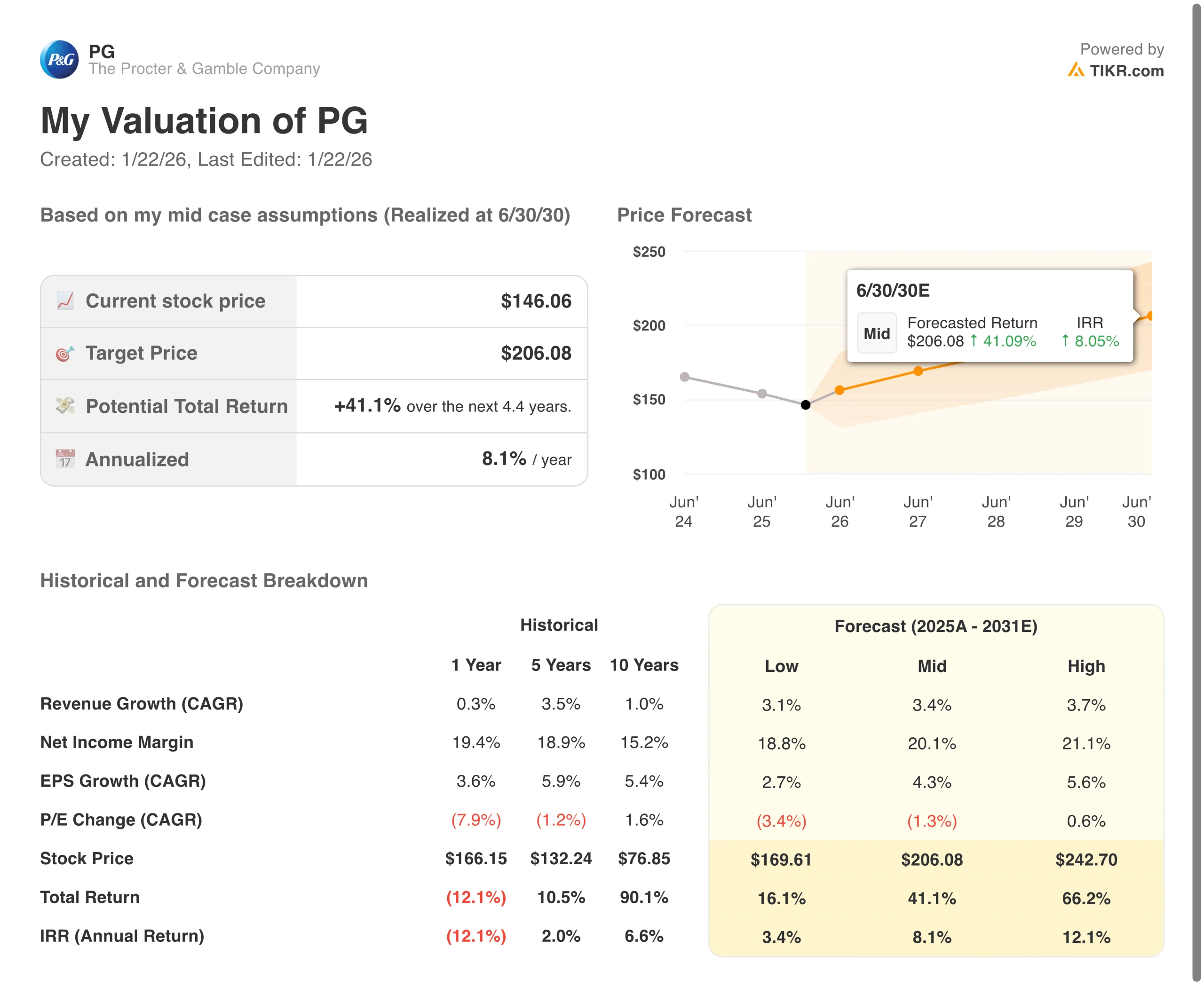
TIKR tip: TIKR displays five-year and ten-year valuation averages alongside current multiples. When a stock trades more than one standard deviation above its historical range, consider whether the premium is justified or whether profits are worth taking.
Value any stock in less than 60 seconds with TIKR’s new Valuation Model (It’s free) >>>
Position Sizing and Portfolio Management
Even if a stock is not overvalued in absolute terms, position sizing may warrant taking profits. A stock that doubles becomes a much larger portion of your portfolio. What started as a 5% position is now 10%. That concentration increases both potential reward and risk.
Portfolio management requires balancing conviction with diversification. A 10% position means that a 20% decline in one stock costs your portfolio 2%. A 20% position means that the same decline costs 4%. Concentrated portfolios can generate exceptional returns, but they can also suffer exceptional drawdowns.
The decision depends on your confidence in the position and your tolerance for volatility. If you have deep conviction and can stomach a significant decline, letting winners run makes sense. If the position has grown to a size that would cause you to panic during a correction, trimming is prudent.
One approach is to set a maximum position size in advance. If your rule is that no single stock exceeds 10% of your portfolio, you automatically trim when a position crosses that threshold. This removes emotion from the decision and enforces discipline.
Trimming does not mean exiting entirely. Selling a portion of a winning position locks in some gains while maintaining exposure to future upside. You capture the benefit of the rise while reducing the risk of giving it all back.
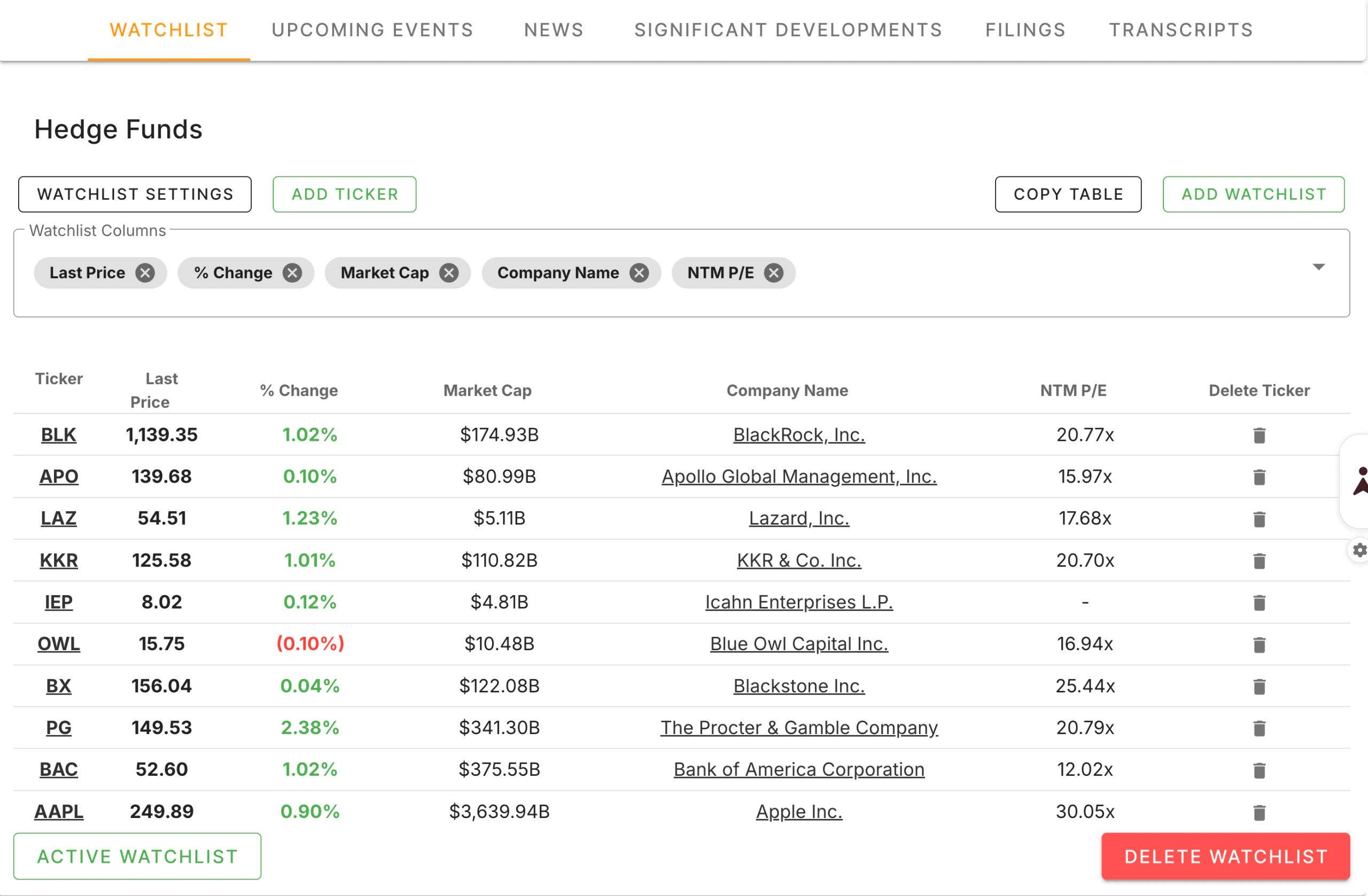
TIKR tip: Create a TIKR watchlist of your current holdings and track their weights relative to your portfolio. When a position grows beyond your target allocation, use the Valuation tab to assess whether trimming makes sense.
Get the most up-to-date financial snapshots of thousands of stocks with TIKR (It’s free) >>>
When to Let Winners Run
Taking profits is not always the right choice. Some of the best long-term returns come from holding exceptional businesses through multiple cycles of apparent overvaluation.
The key distinction is business quality. A high-quality compounder with durable competitive advantages, high returns on capital, and a long runway for reinvestment can grow into elevated valuations over time. Selling because the P/E looks high means missing years of compounding from a business that keeps exceeding expectations.
Consider the reinvestment question. If you sell a winning stock, where will you deploy the capital? If the alternative is cash or a lower-quality business, you may be trading a proven winner for an uncertain outcome. The friction of taxes and transaction costs further tilts the math toward holding.
Look at what management is doing. If insiders continue to hold or buy shares despite the stock’s rise, they see value that the valuation multiple alone does not capture. If insiders are selling heavily, they may believe the easy gains are behind them.
The business trajectory matters more than the current multiple. A company growing earnings at 20% annually can justify a high multiple because those earnings will be much larger in five years. A company with slowing growth cannot rely on future earnings to bail out today’s valuation.
TIKR tip: Review the Ownership tab in TIKR to see whether insiders are buying, holding, or selling. Also, check the Estimates tab to see whether analysts expect growth to continue. A stock can remain a hold even at elevated valuations if the growth runway is long.
Partial Versus Full Exits
Taking profits does not have to mean selling your entire position. Partial sales allow you to lock in gains while maintaining exposure to future upside.
A common approach is to sell enough to recover your original investment. If you invested $10,000 and the position is now worth $25,000, selling $10,000 worth of shares means you are playing with house money. The remaining position has zero cost basis from a psychological standpoint, which makes it easier to hold through volatility.
Another approach is to trim a fixed percentage when certain valuation thresholds are met. You might sell 20% of a position when it reaches 1.5x your estimate of fair value and another 20% at 2x fair value. This systematic approach removes emotion and ensures you capture some gains during periods of exuberance.
Full exits make sense when the thesis is broken or when valuation has reached truly extreme levels. If a stock trades at 50x earnings with slowing growth and declining returns on capital, the risk of holding may outweigh any potential reward. In these cases, taking full profits and moving on is often the right choice.
The decision between partial and full exits depends on your conviction and the opportunity cost of capital. If you still believe in the business but worry about near-term valuation, trimming makes sense. If you no longer see a path to attractive returns, a full exit may be warranted.
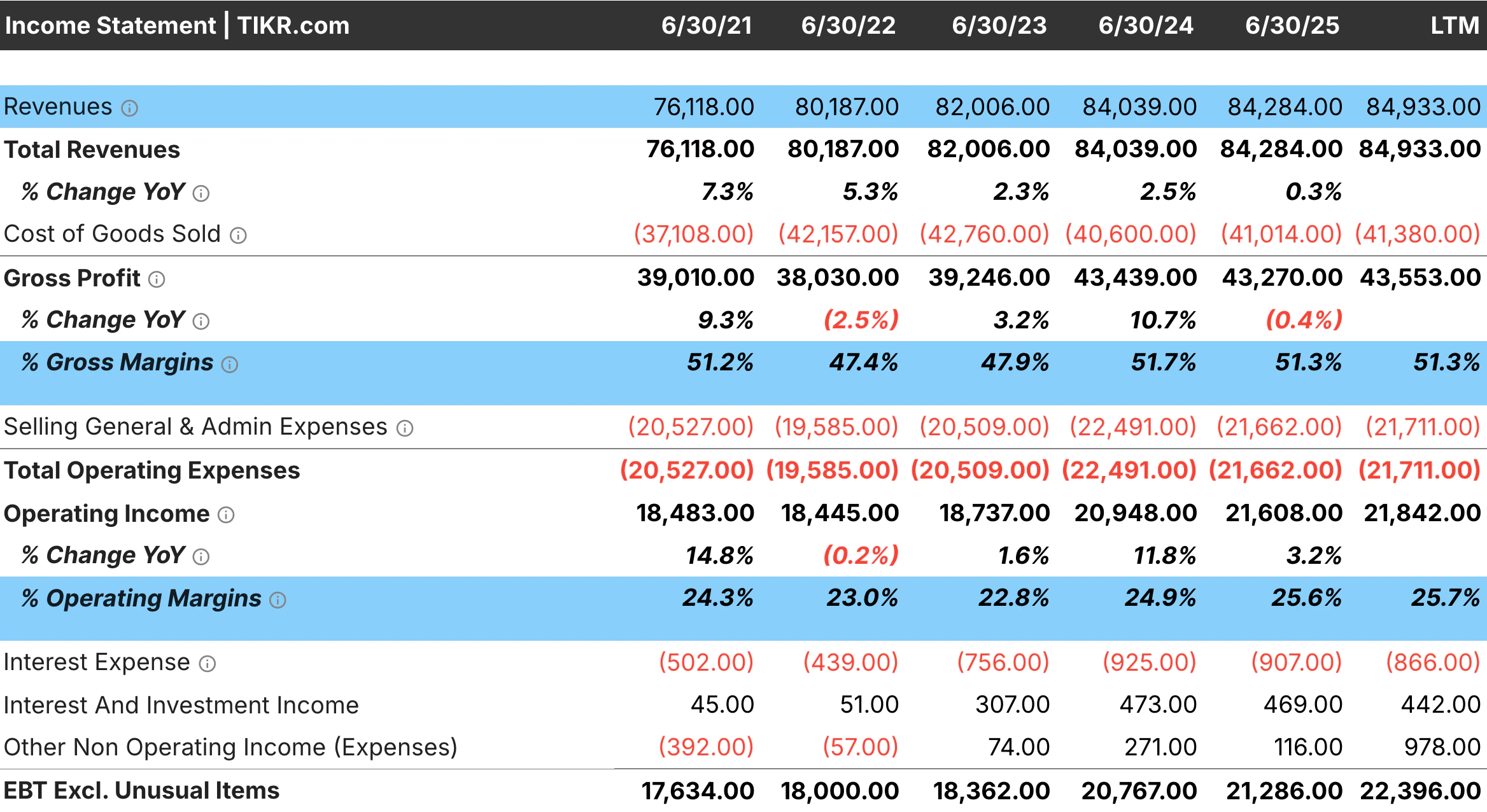
TIKR tip: Use TIKR’s Detailed Financials to review whether returns on capital and margins remain strong. A stock that has risen significantly but maintains excellent fundamentals may warrant only a partial trim rather than a full exit.
Tax Considerations
Taxes significantly affect the math of profit-taking. Short-term capital gains, on positions held less than one year, are taxed at ordinary income rates. Long-term gains receive preferential treatment. This difference can amount to 15 to 20 percentage points depending on your tax bracket.
The tax impact means that taking profits on a position held for eleven months is far more costly than waiting one more month. If you are considering trimming a winning position, check your holding period first. A few weeks of patience can save thousands in taxes.
Tax-loss harvesting can offset gains. If you have losing positions in your portfolio, selling them generates losses that reduce your tax liability on gains elsewhere. This allows you to take profits on winners while minimizing the tax hit.
Tax considerations should inform timing but not override investment logic. Holding a deteriorating position to avoid taxes is usually a mistake. The tax savings rarely compensate for continued losses. But when the decision is marginal, tax efficiency can tip the balance toward holding longer.

TIKR tip: Before taking profits, review your TIKR portfolio for positions trading below your cost basis. Harvesting those losses can offset gains and improve the after-tax return of your profit-taking strategy.
A Framework for Deciding
Taking profits should follow a systematic process rather than an emotional impulse. Ask yourself these questions before selling any portion of a winning position.
Has valuation moved significantly above historical norms? If the stock trades well above its typical range without a corresponding improvement in fundamentals, the risk-reward has shifted.
Has the position grown too large for my portfolio? Concentration creates risk. If one position dominates your portfolio, trimming restores balance regardless of valuation.
Would I buy this stock today at the current price? If the answer is clearly no, holding is just a different form of buying. Consider whether the capital would be better deployed elsewhere.
What is the tax situation? If you are close to long-term holding status, waiting may be worthwhile. If you have losses to harvest elsewhere, the tax impact of selling is reduced.
Is the business still compounding at high rates? If returns on capital remain strong and growth continues, letting winners run may generate better long-term results than taking profits too early.
These questions force a rational assessment of whether locking in gains makes sense or whether patience will be rewarded.
Run a competitor analysis on TIKR for the top stocks in your portfolio (It’s free) >>>
The TIKR Takeaway
Taking profits is one of the most nuanced decisions in investing. Sell too early, and you sacrifice compounding. Wait too long, and you give back gains that took years to build. The goal is to find the balance between capturing returns and maintaining exposure to future upside.
The decision should be driven by valuation, position sizing, and expected return rather than by price targets or percentage gains. A stock that has doubled may still be cheap if fundamentals have improved accordingly. A stock that has risen 30% may be expensive if the multiple has stretched beyond reason.
TIKR helps you make this assessment by displaying historical valuations, fundamental trends, analyst estimates, and insider activity in one platform. You can see whether a stock’s rise is justified by improving business performance or by the market becoming more optimistic.
The best investors take profits systematically. They trim when valuations become extreme, rebalance when positions grow too large, and let winners run when the business continues to compound. A disciplined approach turns profit-taking from a source of regret into a tool for managing risk and optimizing returns.
Find undervalued stocks in less than 60 seconds with TIKR’s new Valuation Model (It’s free) >>>
Value Any Stock in Under 60 Seconds with TIKR
With TIKR’s new Valuation Model tool, you can estimate a stock’s potential share price in under a minute.
All it takes is three simple inputs:
- Revenue Growth
- Operating Margins
- Exit P/E Multiple
If you’re not sure what to enter, TIKR automatically fills in each input using analysts’ consensus estimates, giving you a quick, reliable starting point.
From there, TIKR calculates the potential share price and total returns under Bull, Base, and Bear scenarios so you can quickly see whether a stock looks undervalued or overvalued.
See a stock’s true value in under 60 seconds (Free with TIKR) >>>
Looking for New Opportunities?
- Discover which stocks billionaire investors are purchasing, so you can follow the smart money.
- Analyze stocks in as little as 5 minutes with TIKR’s all-in-one, easy-to-use platform.
- The more rocks you overturn… the more opportunities you’ll uncover. Search 100K+ global stocks, global top investor holdings, and more with TIKR.
Disclaimer:
Please note that the articles on TIKR are not intended to serve as investment or financial advice from TIKR or our content team, nor are they recommendations to buy or sell any stocks. We create our content based on TIKR Terminal’s investment data and analysts’ estimates. Our analysis might not include recent company news or important updates. TIKR has no position in any stocks mentioned. Thank you for reading, and happy investing!


