In the fast-moving world of the stock market, looking at an annual report from six months ago is like trying to drive a car while only looking at the rearview mirror. By the time a company’s “Annual Results” are even ninety days old, they have essentially become financial archaeology. If you are relying on last year’s earnings to value a stock in the middle of a massive industry shift, you aren’t investing, you’re guessing based on a ghost.
If you want to know what a company is worth right now, you need TTM (Trailing Twelve Months). TTM isn’t a secret accounting trick; it is a four-quarter rolling window of the most recent data. It ensures that your valuation models are grounded in the most current performance, capturing recent surges in growth or sudden dips in profitability that haven’t yet made it into the official annual report.
The following guide breaks down why this “rolling” snapshot is the gold standard for active investors. We will look at how to calculate it from raw filings, which metrics are the most sensitive to time, and how to spot the moments when TTM data is actually screaming at you to buy or sell. By the end, you’ll see why “annual only” investors are almost always the last ones to realize the story has changed.
Analyze stocks quicker with TIKR >>>
The Danger of “Stale” Annual Data
To see why TTM is so critical, let’s look at a classic valuation trap. Imagine it is August 2026, and you are looking at a tech company that reported $5.00 in Earnings Per Share (EPS) for the fiscal year ending in December 2025. With the stock trading at $100, the Annual P/E Ratio is 20x.
However, the company just had a massive first half of 2026, and their actual earnings for the last four quarters (Q3 ’25, Q4 ’25, Q1 ’26, and Q2 ’26) total $8.00 per share.
- Annual P/E (Dec 2025): 20x (Looks “fairly valued”)
- TTM P/E (August 2026): 12.5x (Looks like a massive bargain)

If you relied on the annual data, you’d miss the fact that the company is significantly cheaper than it appears. This “stale data” problem is particularly dangerous mid-year. If a company’s fundamentals are improving (or deteriorating) rapidly, the annual report becomes a piece of fiction within months. TTM forces you to acknowledge the reality of the present.
Value stocks in less than 60 seconds with TIKR’s new Valuation Model tool (It’s free) >>>
How to Calculate TTM Like a Pro
You don’t have to wait for an annual filing to update your numbers. You can calculate TTM yourself by digging into the quarterly 10-Q filings. The formula is simple: take the most recent quarter’s results and add them to the previous three quarters.
TTM = Qcurrent + Qprev1 + Qprev2 + Qprev3

Alternatively, you can use the “Subtraction Method” if you’re looking at mid-year results. You take the last full annual report, subtract the year-to-date (YTD) data from the previous year, and add the YTD data from the current year. This effectively “unplugs” the old months and plugs in the new ones. It sounds like a chore, but it is the only way to ensure your “current” P/E ratio is actually anchored to the last 365 days of performance.
Review income statements on any stock in less than 60 seconds with TIKR (It’s free) >>>
Which TTM Metrics Matter Most?

Not every metric needs a TTM update to be useful, but for valuation and momentum, these four are non-negotiable:
- TTM P/E Ratio: The most common way to see if a stock is expensive relative to its actual current earnings power.
- TTM EV/EBITDA: Crucial for capital-intensive businesses to see if the “cash-flow engine” is accelerating or stalling mid-year.
- TTM Revenue Growth: Annual growth numbers can hide a recent slowdown. TTM revenue tells you if the top-line momentum is actually holding up right now.
- TTM ROE (Return on Equity): Indicates whether management is still efficient with your capital today or if their performance has declined since the last annual meeting.
TTM vs. Forward Estimates: Mapping the Past to the Future
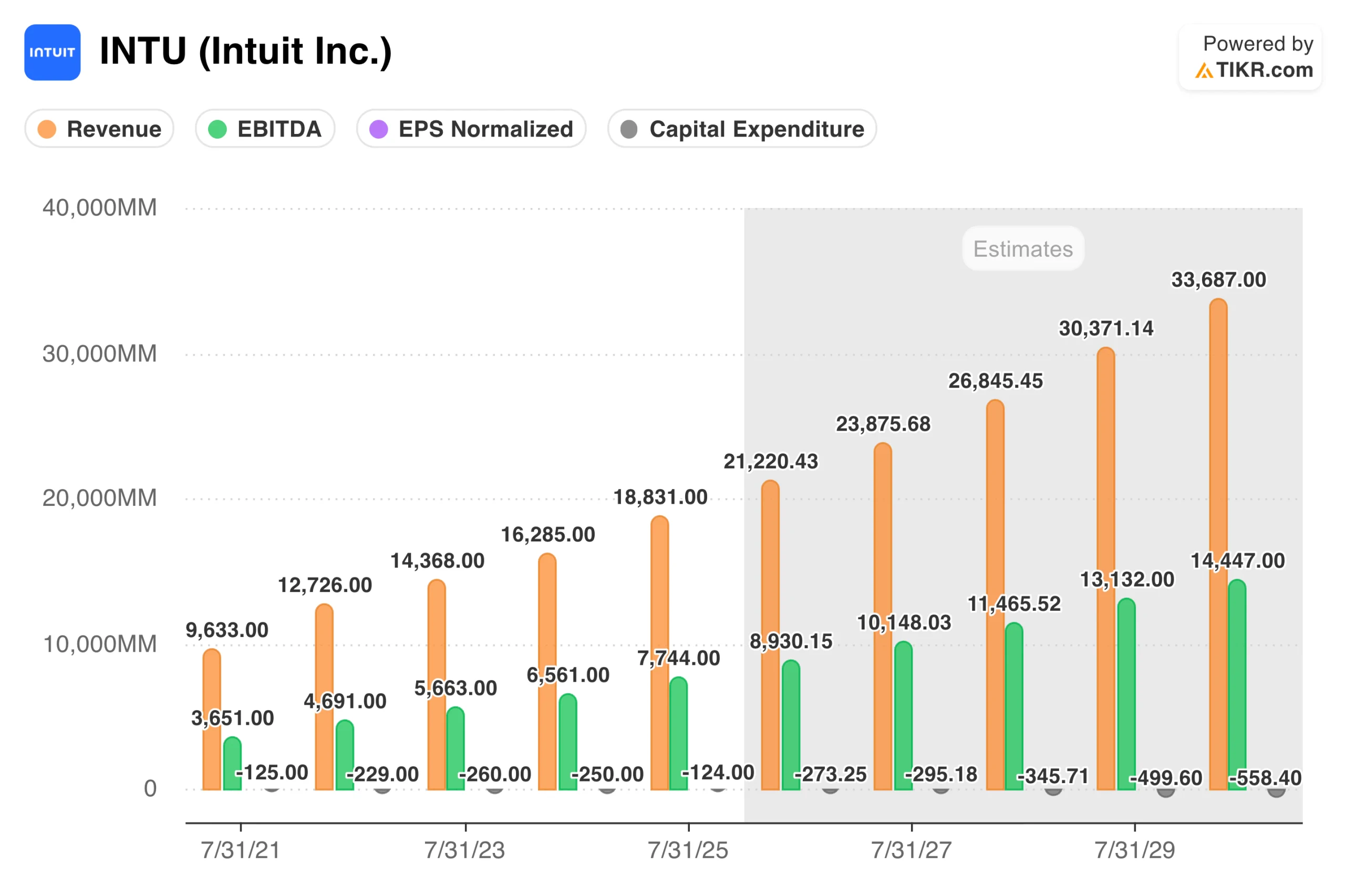
While TTM tells you where the company has been for the last 12 months, it also serves as the launchpad for Forward Estimates. Professional analysts use TTM as their “Base Case,” the floor from which they project future growth. If a company’s TTM numbers consistently beat its previous annual numbers, it creates a “trend line” that often signals a future guidance raise.
Understanding the gap between TTM and Forward Estimates is how you spot “Expectation Gaps.” If the TTM data shows a massive acceleration, but the forward estimates remain conservative, you might have found an opportunity where the market is lagging behind the business’s current trajectory.
The Risk: When TTM Can Mislead
While TTM is superior to annual data, it isn’t perfect. The biggest risk is cyclicality or one-off events. If a company had a massive, one-time legal settlement or a “unicorn” quarter due to a global supply shortage, those figures will remain “inflated” in the TTM calculation for the next full year.
This can create a “Value Trap” where a stock looks incredibly cheap on a TTM basis, but only because it’s carrying the weight of a lucky quarter that will soon drop out of the rolling 12-month window. Always check the TTM data against historical averages to ensure you aren’t overpaying for a temporary performance spike that is about to expire.
Track company financials to quickly review P/E and EBIDTA with TIKR (It’s free) >>>
TIKR Takeaway
The biggest hurdle to using TTM data is the “spreadsheet tax”—the time it takes to hunt down four different quarterly filings and add them up. TIKR eliminates this friction by doing the heavy lifting for you across 100,000+ global stocks.
When you pull up a stock on TIKR, the Detailed Financials and Ratios tabs include a dedicated LTM (Last Twelve Months) column right next to the annual data. This allows you to instantly compare the “stale” annual numbers against the most recent four-quarter reality. Whether you are checking a company’s current debt-to-equity or its most recent net margins, TIKR ensures you are never making a 2026 decision based on 2025 data.
Why it works: TIKR standardizes quarterly data globally, which means you get a consistent TTM view, even for international companies with different filing schedules, ensuring your “current” valuation is actually current, no matter where the company is headquartered.
Value Any Stock in Under 60 Seconds with TIKR
With TIKR’s new Valuation Model tool, you can estimate a stock’s potential share price in under a minute.
All it takes is three simple inputs:
- Revenue Growth
- Operating Margins
- Exit P/E Multiple
If you’re not sure what to enter, TIKR automatically fills in each input using analysts’ consensus estimates, giving you a quick, reliable starting point.
From there, TIKR calculates the potential share price and total returns under Bull, Base, and Bear scenarios so you can quickly see whether a stock looks undervalued or overvalued.
See a stock’s true value in under 60 seconds (Free with TIKR) >>>
Looking for New Opportunities?
- Discover which stocks billionaire investors are purchasing, so you can follow the smart money.
- Analyze stocks in as little as 5 minutes with TIKR’s all-in-one, easy-to-use platform.
- The more rocks you overturn… the more opportunities you’ll uncover. Search 100K+ global stocks, global top investor holdings, and more with TIKR.
Disclaimer:
Please note that the articles on TIKR are not intended to serve as investment or financial advice from TIKR or our content team, nor are they recommendations to buy or sell any stocks. We create our content based on TIKR Terminal’s investment data and analysts’ estimates. Our analysis might not include recent company news or important updates. TIKR has no position in any stocks mentioned. Thank you for reading, and happy investing!