Key Takeaways
- DoorDash shares have fallen from a late-August peak near $237 to $187.53 by September 24, a slide that continued straight through the week Meta’s Muse app dethroned ChatGPT atop the App Store.
- Wall Street has not followed the stock down. The mean 12-month price target actually rose from $245.96 in June to $256.26 in September, putting consensus fair value roughly 37 percent above where the stock trades now.
- Weeks before Muse had even launched, DoorDash CEO Tony Xu was asked directly on the Q2 earnings call whether AI shopping agents could route around the platform, and laid out, on the record, why he does not think so.
- Of the roughly 45 analysts covering DASH as of September 24, 26 rate it a buy and none rate it a sell, a split that has barely moved even as the stock gave back its entire post-earnings rally.
DoorDash Stock Is Being Priced Like Muse Already Won
DoorDash’s (DASH) second-quarter call on August 5 included a question from Bank of America analyst Justin Post that sounded almost theoretical at the time: was DoorDash seeing any traffic from agentic AI assistants, the kind that book, browse, and buy on a user’s behalf? Tony Xu’s answer was blunt. Volume was “quite low.”
Then he made his case for why that would stay true. Consumers, he said, do not care what a platform calls itself, agentic or otherwise; they care about getting their burrito, their sneakers, their groceries, correctly and on time. That means someone has to know what is actually in stock, manage the handoff at the merchant, and fix it when the wrong item shows up. “We’re effectively the only place that can offer that,” Xu said, framing DoorDash’s physical-world logistics, not its app, as the thing an AI agent would need to plug into rather than replace.
Weeks later, that answer got tested in public. Meta’s Muse had logged 2.8 million downloads within two weeks of launch and overtaken ChatGPT as the top free app in the US and Canada by the week of September 23. Reuters named DoorDash directly among the stocks dragged down that week alongside Uber and Lyft, on fears that a Meta-scale comparison-shopping agent could weaken the loyalty that keeps customers inside any single delivery app.
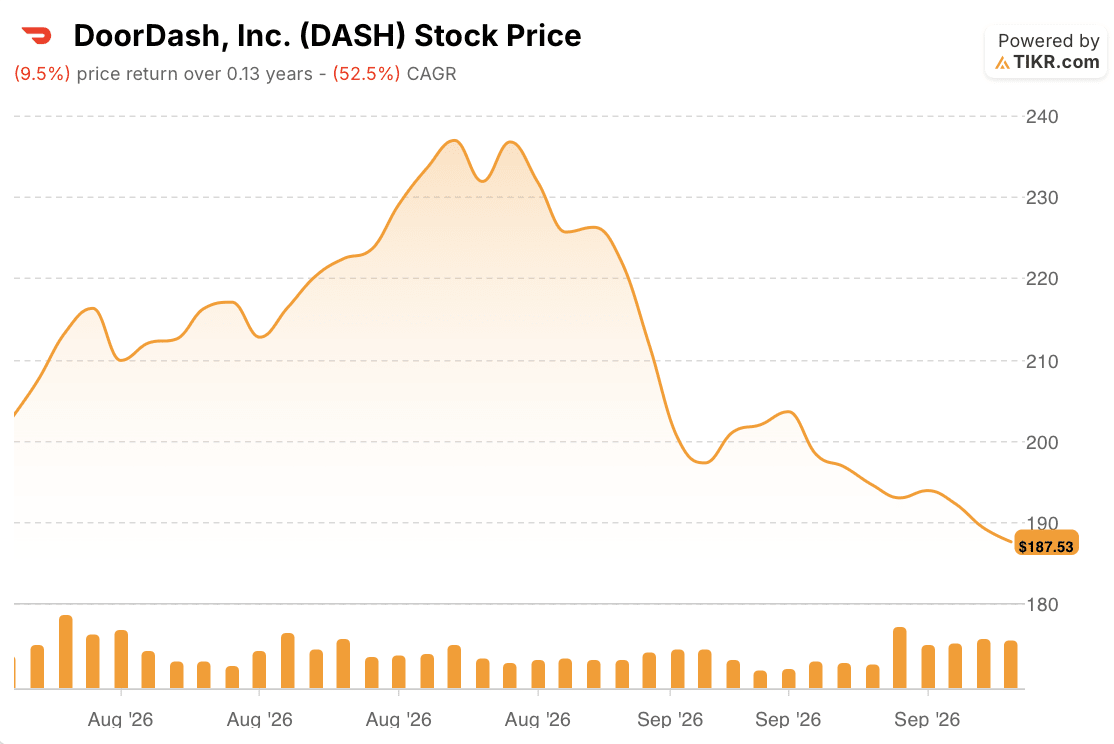
DoorDash’s chart backs up the mood: shares peaked near $237 in late August, on the strength of a Q2 beat that saw marketplace gross order value rise 36 percent and adjusted EBITDA jump 40 percent, then gave nearly all of it back, closing at $187.53 on September 24, with trading volume picking up and the decline resuming in the very days Muse was topping app store charts.
The Rebuttal Is Already Sitting in the Data
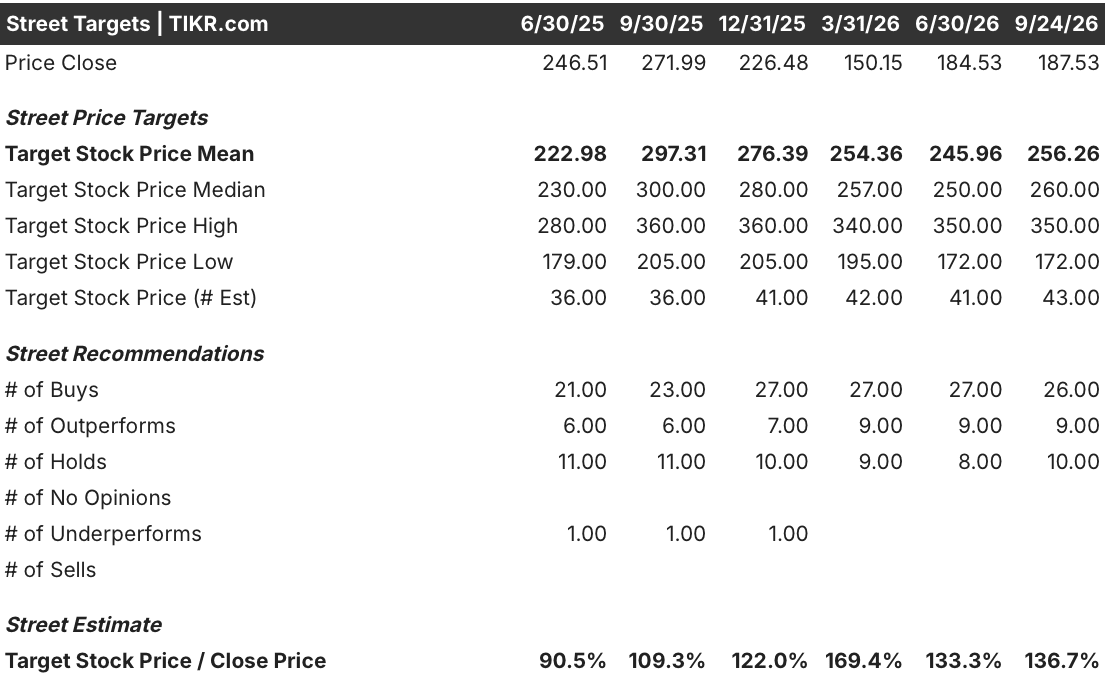
What has not moved is the sell-side’s own math. TIKR’s Street Analysts Target table shows the mean price target climbing from $245.96 at the end of June to $256.26 by September 24, even as the stock fell. The number of analysts covering the name grew too, from 41 estimates to 43, and of the roughly 45 with a formal rating, 26 call it a buy, 9 an outperform, 10 a hold, and not one a sell. That leaves the stock trading about 37 percent below the Street’s own mean target, a gap wider than it was back in June.
None of that proves Muse is harmless. Agentic commerce is new enough that a single quarter of low traffic does not settle the question, and Xu himself only offered a thesis, not a guarantee. But the most direct rebuttal to this week’s fear is not a hypothetical; it is already on the transcript, delivered before the fear existed, by the person who runs the company being feared for.
The number worth watching next is the one Xu named himself: agentic traffic. If it stays “quite low” through the next call, the gap between DoorDash’s stock price and the Street’s targets looks like sentiment catching up to a story management already told. If it starts climbing and DoorDash’s take rate or order growth wobbles alongside it, the market will have been right to move first.
Should You Invest in DoorDash, Inc.?
The only way to really know is to look at the numbers yourself. TIKR gives you free access to the same institutional-quality financial data that professional analysts use to answer exactly that question.
Pull up DASH stock and you’ll see years of historical financials, what Wall Street analysts expect for revenue and earnings in the quarters ahead, how valuation multiples have moved over time, and whether price targets are trending up or down.
You can build a free watchlist to track DoorDash, Inc. alongside every other stock on your radar. No credit card required. Just the data you need to decide for yourself.
Access Professional Tools to Analyze DASH stock on TIKR for Free →
Looking for New Opportunities?
- See what stocks billionaire investors are buying so you can follow the smart money.
- Analyze stocks in as little as 5 minutes with TIKR’s all-in-one, easy-to-use platform.
- The more rocks you overturn… the more opportunities you’ll uncover. Search 100K+ global stocks, global top investor holdings, and more with TIKR.
Disclaimer:
Please note that the articles on TIKR are not intended to serve as investment or financial advice from TIKR or our content team, nor are they recommendations to buy or sell any stocks. We create our content based on TIKR Terminal’s investment data and analysts’ estimates. Our analysis might not include recent company news or important updates. TIKR has no position in any stocks mentioned. Thank you for reading, and happy investing!