Key Takeaways
- Block shares fell [3%] today after Morgan Stanley downgraded the stock to Equal Weight and cut its price target to $80 from $90.
- Morgan Stanley’s concerns are fair, but Block’s valuation already reflects plenty of doubt ahead of its report.
- Morgan Stanley expects Cash App Borrow loan growth to slow as Block moves to longer loans, which could raise credit losses.
- Block’s Nov. 3 report will show whether loss growth is slowing from the second quarter’s 99% pace.
Block (XYZ) shares fell 3% today on an up day for the market, after Morgan Stanley downgraded the stock ahead of its Nov. 3 earnings report.
Analyst James Faucette warned that the company’s “bullish expectations” create modestly higher risk to its near-term growth and profit outlook.
What exactly happened
Faucette cut Block to Equal Weight from Overweight this morning and lowered his price target to $80 from $90, only about 5% above Friday’s close. He expects:
- A near-term slowdown in Cash App Borrow originations, as Block moves to longer-duration loans and faces tougher comparisons in the second half of 2026
- Those longer loans to weigh on origination growth and potentially drive credit losses
- Intensifying competition to limit Square’s upside
Clear Street also trimmed its target to $82 from $87, citing weaker cross-border online shopping.
TIKR tracks 47 analysts on Block. How many say “Buy”?
See the full breakdown of Buy, Hold, and Sell ratings on Block, along with Wall Street’s revenue and earnings estimates, all in one place. More than 500,000 investors use TIKR to research stocks like this one. See Block’s Analyst Ratings
The easy comparisons are over
Lending has done a lot of Block’s heavy lifting. Consumer lending originations grew 59% to $18.9 billion in the second quarter, and the third quarter laps Borrow’s 134% origination growth from a year earlier.
The costs are rising too. Transaction, loan and consumer receivable losses nearly doubled to $585 million in the second quarter, and Block’s reserve against its consumer loans climbed to 14.7% of the book at June 30, from 10.7% at the end of 2025.
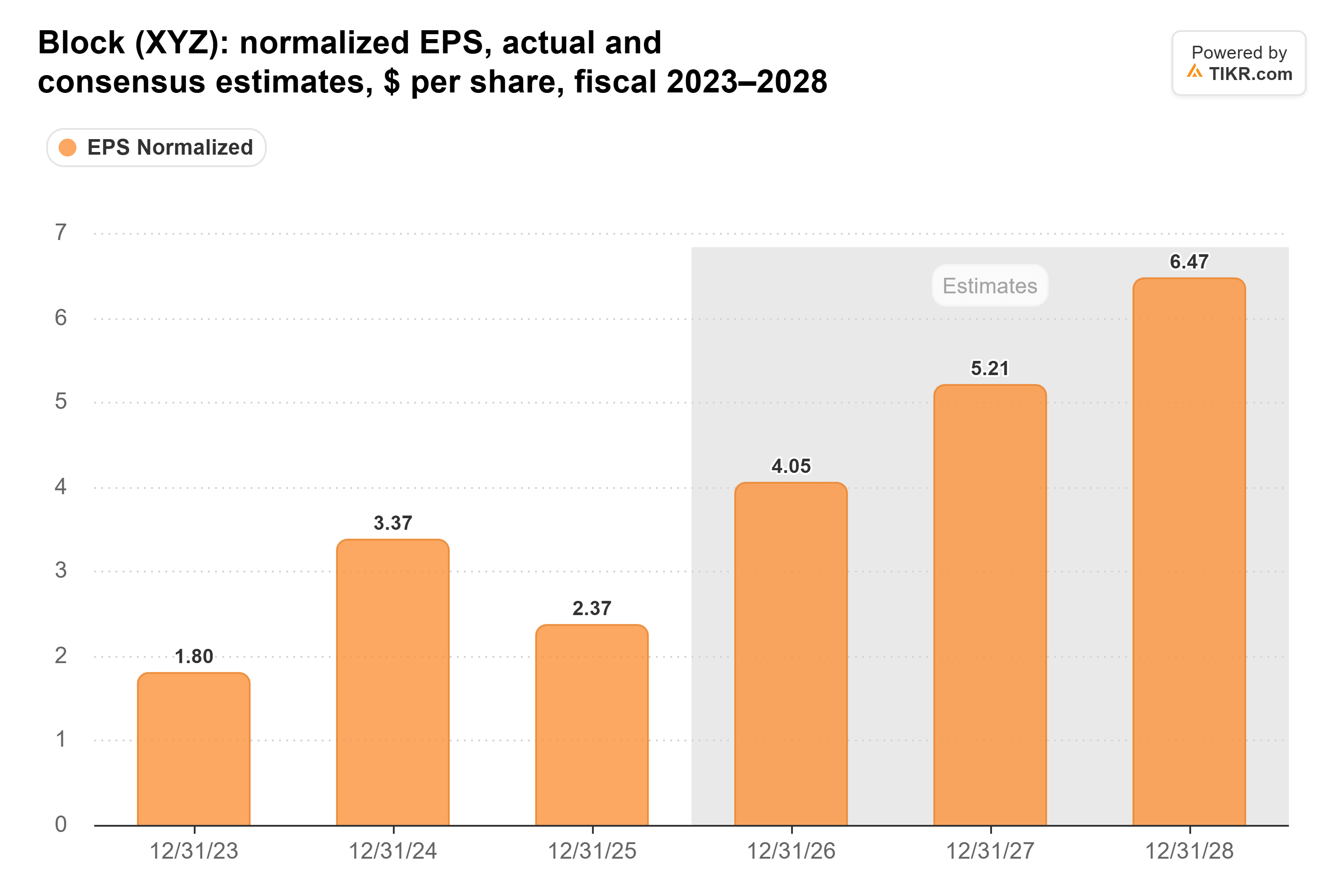
Yet Wall Street still expects normalized EPS to climb from $2.37 in 2025 to $6.47 by 2028.
BMO doesn’t share Morgan Stanley’s worry about Square. It upgraded Block to Outperform on Oct. 22 and raised its target to $100 from $85, betting on Square’s payment volume growth through 2027. Square’s gross payment volume grew 13% to $72.8 billion in the second quarter.
Nov. 3 is the test
Block has guided to $3.13 billion of third-quarter gross profit (up 18%) and $875 million of adjusted operating income, a 28% margin.
And the stock isn’t priced for perfection. As of Friday’s close, Block traded at about 17x forward earnings, less than half its five-year average of 37x and below its three-year average of 20x.
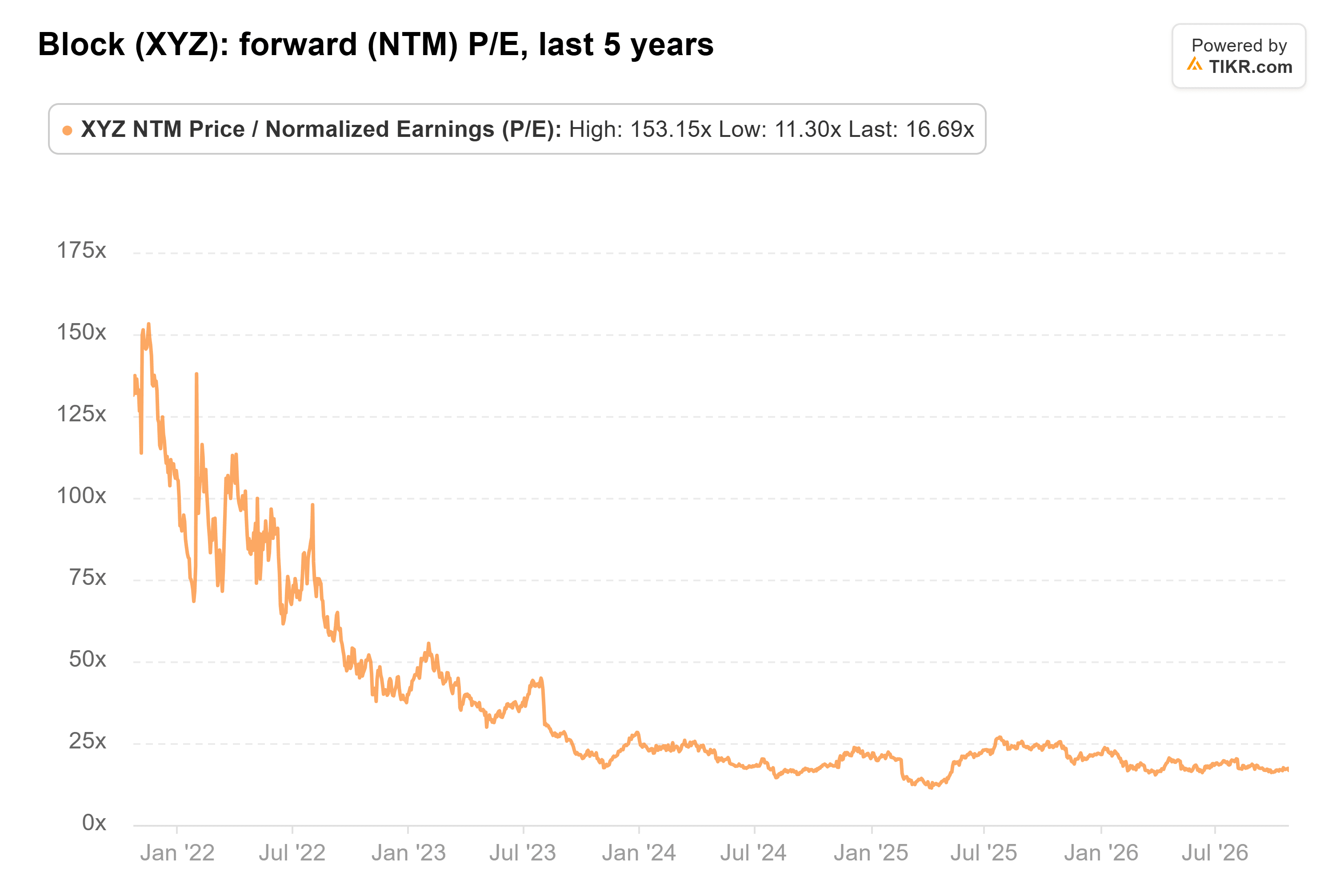
My take: Morgan Stanley’s Borrow worries are fair, but at 17x, the stock already carries plenty of doubt. I’d watch the report before selling.
Of course, if loss expense keeps growing anywhere near the second quarter’s 99% pace, that discount could get deeper.
So what is Block stock actually worth?
TIKR lets you forecast the future price of any stock in less than a minute. Just enter a few assumptions into TIKR’s valuation model and see what Block could be worth. Start from Wall Street consensus estimates, or adjust the inputs to reflect your own view of the business. It’s free to use.
Disclaimer:
Please note that the articles on TIKR are not intended to serve as investment or financial advice from TIKR or our content team, nor are they recommendations to buy or sell any stocks. We create our content based on TIKR Terminal’s investment data and analysts’ estimates. Our analysis might not include recent company news or important updates. TIKR has no position in any of the stocks mentioned. Thank you for reading, and happy investing!