Key Takeaways for Palo Alto Networks Stock as of September 2026
- Post-Earnings Slide: Palo Alto Networks stock fell more than 9% on September 2 even after Q4 revenue climbed 34% YoY to $3.41B and adjusted EPS of $1.02 beat the $0.98 estimate, as FY27 guidance implied NGS ARR growth slowing to 22-23% from 63%.
- Street Repricing: Palo Alto Networks stock carries 33 buys, 10 outperforms, 11 holds, 1 underperform and 1 sell, with a $391 mean target sitting 16% above the price.
- Model Upside: TIKR values PANW stock at $459, implying 36% upside.
- Target Trend: Since July 31, the mean target has jumped 16% to $391 while the stock price stayed flat, reversing months of the stock outrunning the Street.
Why Palo Alto Networks Stock Fell 9% After a Beat-and-Raise Quarter
Palo Alto Networks (PANW) stock fell more than 9% on September 2, the second-biggest drag on the S&P 500 that day, even though the company beat fiscal fourth-quarter estimates and guided fiscal 2027 revenue above what Wall Street expected.
The quarter gave bulls plenty to point to. Revenue rose 34% year over year to $3.41 billion, ahead of the $3.35 billion analysts had modeled, and adjusted earnings per share of $1.02 topped the $0.98 estimate. Next-Generation Security ARR reached $9.1 billion, up 63%, with nearly $1 billion of that added in the fourth quarter alone. Remaining performance obligations crossed $20 billion for the first time, up 34% to $21.2 billion.
None of that stopped the stock from sliding. The fiscal 2027 guide told a different story than the headline beat: management guided NGS ARR growth to 22% to 23%, less than half the 63% rate just reported, and RPO growth to 19% to 20%, down from 34%. The reaction was sharper than the numbers alone might suggest because the stock walked into the print trading at 93 times forward earnings, up from 72 three months earlier, leaving little room for a guide that implied slower growth. CFO Dipak Golechha explained the mechanics on the Q4 2026 earnings call, pointing to a large customer migration to the company’s Chronosphere observability platform that boosted fiscal 2026 and won’t repeat at the same scale: “our outlook assumes the tail end of this migration will last through Q1 of fiscal ’27 and that the net new ARR contribution from this migration will be less than what was added in Q4.”
The guide reflected a comparison quirk more than a demand problem, yet the market priced it as if demand itself had cracked. Palo Alto Networks also closed its acquisition of Console, an AI-native platform folded into its Cortex security-operations unit, the same day it reported; a TechCrunch report said the deal was valued at $500 million, arriving weeks after the company added Embrace to the same observability stack that includes Chronosphere. The result is a company still growing at a 34% clip, standing next to a stock now priced as if that growth had already been cut in half.
Palo Alto Networks Stock’s Target Keeps Climbing Even as Shares Stall
Palo Alto Networks stock carries 33 buy ratings, 10 outperforms, 11 holds, 1 underperform and 1 sell rating as of September 8. The mean price target sits at $391, 16% above the $337 close. Separately, 50 analysts publish a price target on the stock, the same coverage level as on July 31.
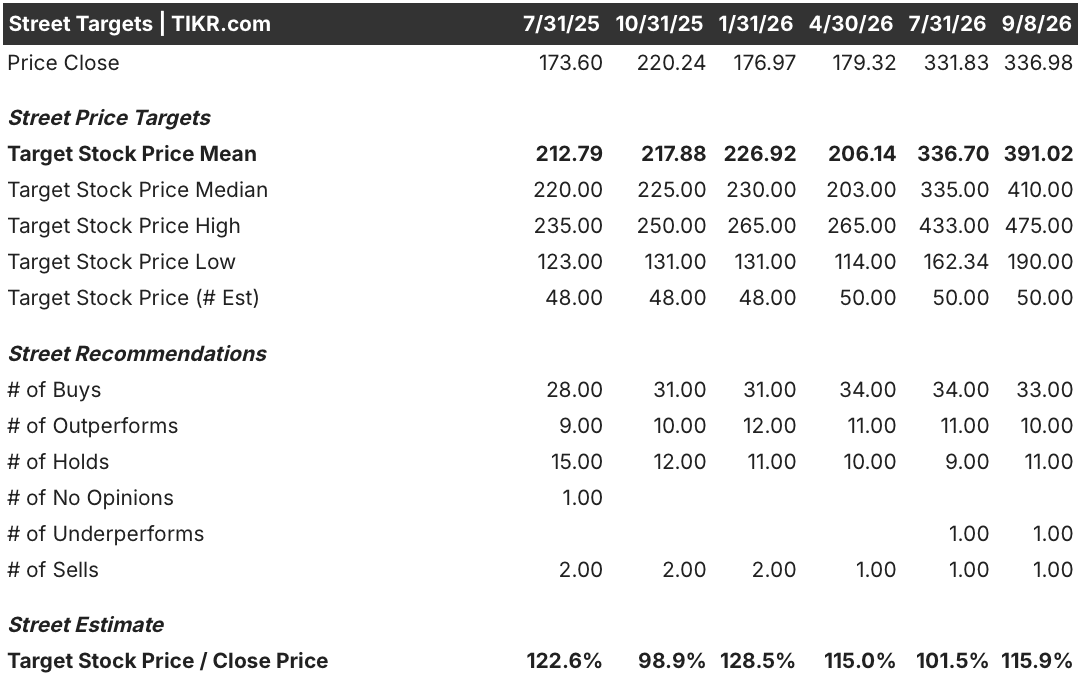
That gap opened almost entirely from the target side. On July 31, the mean target stood at $337, essentially in line with the $332 close that day, a target-to-close ratio of just 102%. By September 8, the stock had barely moved, but the mean target had jumped 16% to $391, and the median target climbed even further, from $335 to $410. The jump lines up with the days right after the Q4 print. Reuters compiled research actions from nine firms raising their targets between September 1 and 2, including RBC to $475 from $434 and Oppenheimer to $450 from $400.
The stock now trades below where the analysts who cover it most closely think it belongs, a gap that didn’t exist in July.
TIKR Values Palo Alto Networks Stock at $459 by Mid-2031
TIKR’s mid-case model values Palo Alto Networks stock at $459 by July 2031, implying 36% total return from the current price of $337, or 7% annualized over the next 4.9 years.
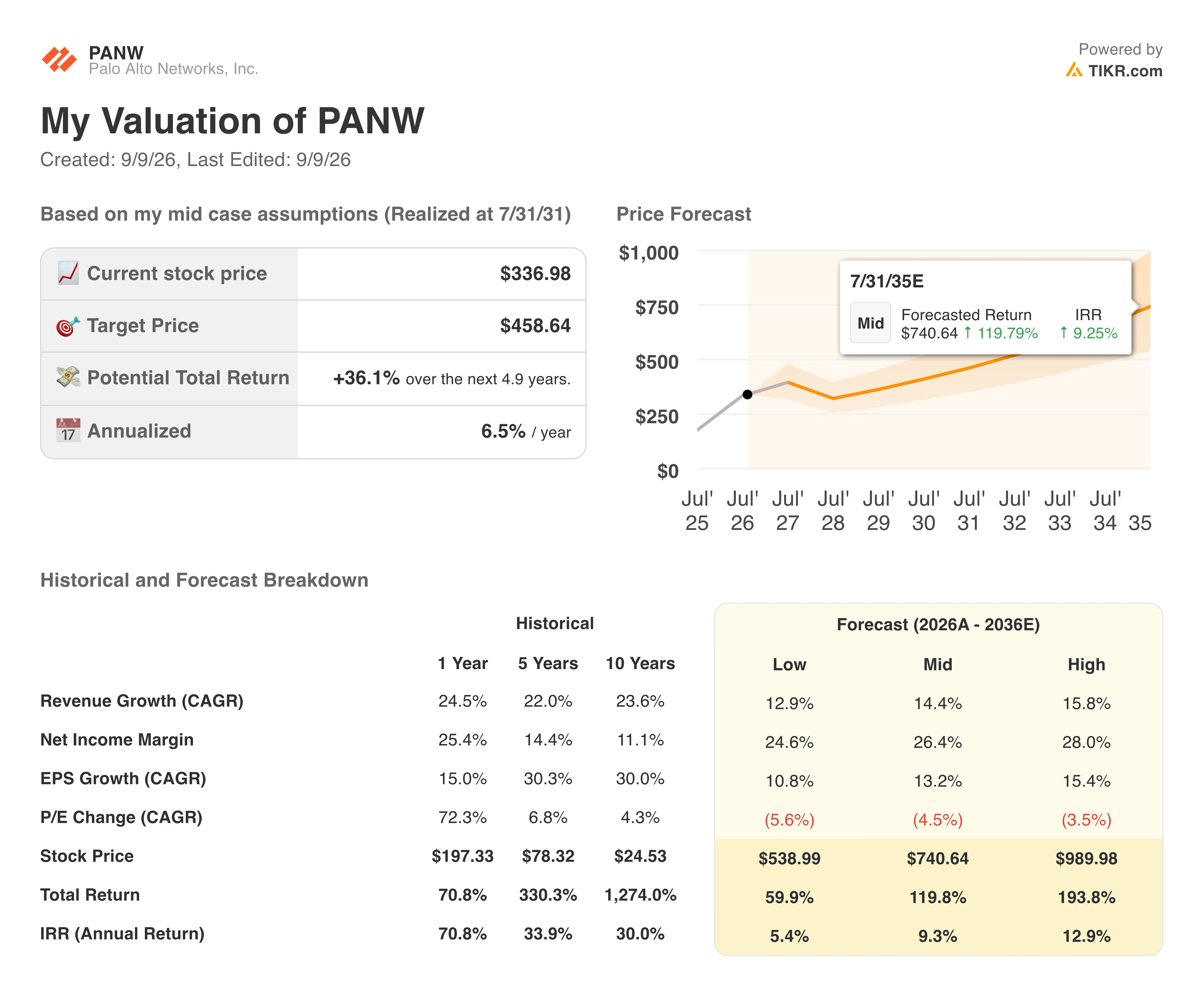
That return profile positions Palo Alto Networks stock as a steady compounder rather than a re-rating story, a lower bar than the growth multiple the market has been paying for the name over the past year.
The target looks reachable against what’s already on the page. The Street’s own targets have been pushed toward $391 in the days since the fiscal 2027 guide, and management framed the deceleration behind the September 2 selloff as a comparison quirk tied to a fading Chronosphere migration rather than a shift in underlying demand.
Should You Invest in Palo Alto Networks, Inc.?
The only way to really know is to look at the numbers yourself. TIKR gives you free access to the same institutional-quality financial data that professional analysts use to answer exactly that question.
Pull up Palo Alto Networks, Inc. stock and you’ll see years of historical financials, what Wall Street analysts expect for revenue and earnings in the quarters ahead, how valuation multiples have moved over time, and whether price targets are trending up or down.
You can build a free watchlist to track Palo Alto Networks, Inc. alongside every other stock on your radar. No credit card required. Just the data you need to decide for yourself.
Access Professional Tools to Analyze PANW stock on TIKR for Free →
Looking for New Opportunities?
- See what stocks billionaire investors are buying so you can follow the smart money.
- Analyze stocks in as little as 5 minutes with TIKR’s all-in-one, easy-to-use platform.
- The more rocks you overturn… the more opportunities you’ll uncover. Search 100K+ global stocks, global top investor holdings, and more with TIKR.
Disclaimer:
Please note that the articles on TIKR are not intended to serve as investment or financial advice from TIKR or our content team, nor are they recommendations to buy or sell any stocks. We create our content based on TIKR Terminal’s investment data and analysts’ estimates. Our analysis might not include recent company news or important updates. TIKR has no position in any stocks mentioned. Thank you for reading, and happy investing!