Individual investors often feel they are at a disadvantage in terms of information compared to institutional giants. We assume hedge funds have access to better data, management teams, and resources that remain out of reach for the rest of us.
While that may be true to an extent, the regulatory environment creates a unique opportunity to level the playing field. Every quarter, institutional managers with over $100 million in assets are required to disclose their long US equity holdings in a 13F filing.
These filings provide a direct window into the portfolios of the world’s best capital allocators. They allow you to see exactly what investors like Warren Buffett, Seth Klarman, or Stan Druckenmiller are buying and selling. However, the data itself is often messy and delayed. Without a system to organize it, you might just be looking at a list of tickers without understanding the conviction behind them.
The goal of analyzing 13Fs is not to blindly copy every trade you see. It is to generate high-quality ideas that have already passed the filter of a sophisticated research team. By using the TIKR platform to sort and analyze this data, you can build a watchlist of vetted opportunities to research further.
Before You Read Any Filings
Preparing before you review filings makes your work easier and more accurate. A 13F shows only long positions and reports past data. Understanding this helps you interpret each move correctly and avoid assuming something about current holdings that may no longer be true.
Next, decide which managers you consider worth following. A strong 13F strategy depends on quality inputs. You want funds with clear thinking, steady decision-making, and meaningful convictions. A manager who constantly trades in and out of positions creates noise. A manager who builds carefully across quarters gives you cleaner, more useful signals.
Finally, set up your routine. You want a simple checklist you follow every quarter. Consistency helps you notice patterns faster and compare new moves with what you saw before. A clear workflow produces better insights than a rushed or improvised review.
Step 1: Prepare Your Strategy
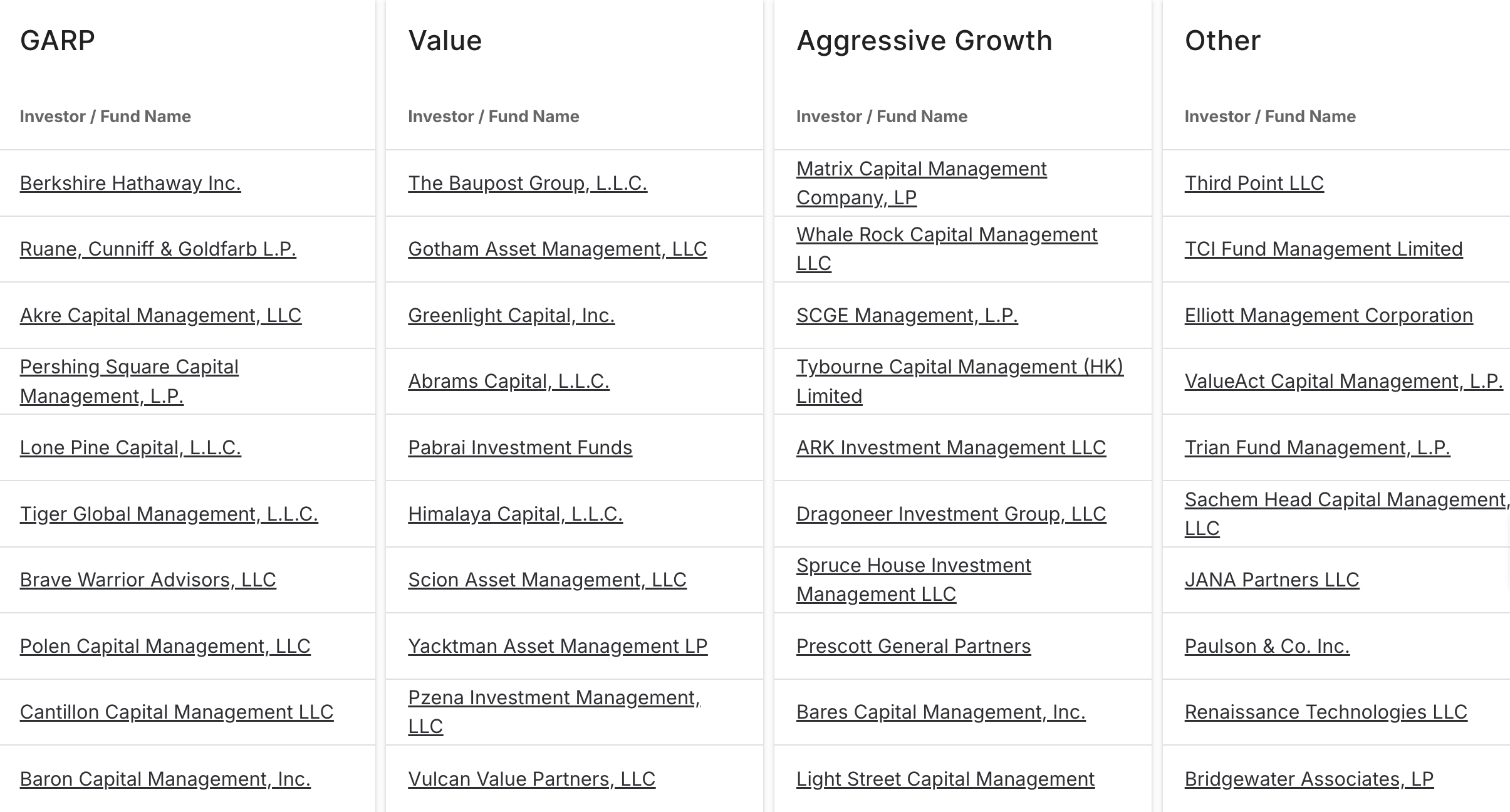
Preparation makes your analysis more effective, and you must remember that a 13F filing shows only long positions and reports data from the past. Understanding these limits helps ensure you interpret the data correctly and avoid mistaking a quarterly snapshot for a complete strategy.
Selection matters next. A strong 13F process relies on the quality of the investors you track. You want managers with clear convictions and steady hands. Funds that trade frequently generate noise. Funds that build positions slowly provide a signal. Use the TIKR Track Investing Gurus tab to filter for managers who demonstrate low turnover and high concentration.
Finally, you need a routine. A consistent checklist helps you identify patterns that a disorganized review will miss. Clear workflows lead to better insights.
Track the hedge fund ownership level of each stock with TIKR (It’s free) >>>
Step 2: Identify High-Conviction Buys
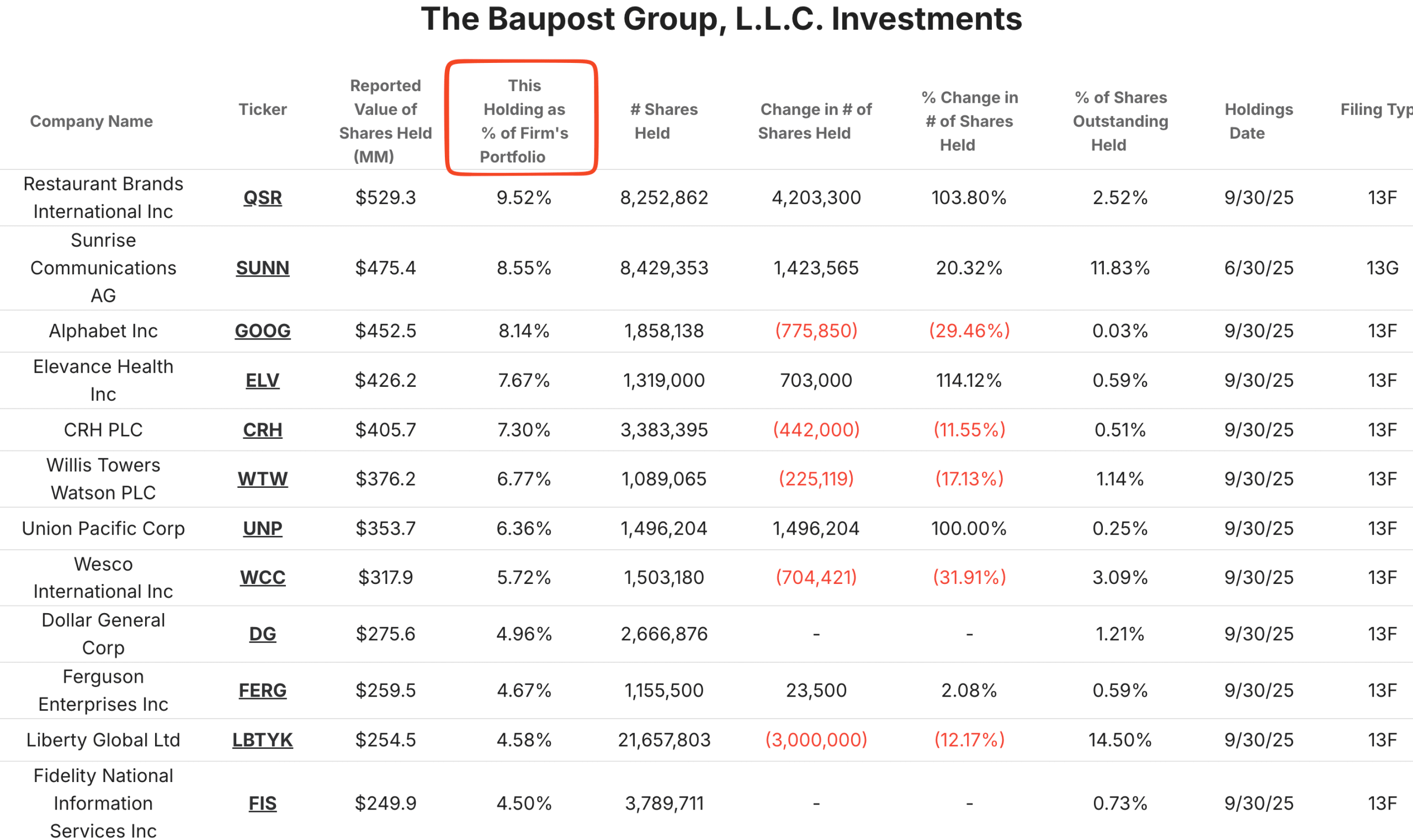
Once you have your list of investors, you need to filter out the noise to get the signal. A fund might buy a small position as a tracking error hedge or a tentative “toe-hold” while it does more work. These small positions rarely offer the strong signal you are looking for.
Focus your attention on the top holdings and significant portfolio changes. In the TIKR “Holdings” view for any specific fund, look at the “This Holding as % of Firm’s Portfolio” column. When a disciplined investor allocates 5% or more of their capital to a single idea, it implies deep conviction. If they increase an existing position by a wide margin, it suggests their thesis has been confirmed and that they still believe the stock is undervalued.
Step 3: Watch for Cluster Buying

One of the most powerful signals in 13F data occurs when multiple top-tier investors buy the same stock in the same quarter. This “cluster buying” suggests that a specific opportunity has become too obvious for value-focused managers to ignore, regardless of their individual nuances.
You can easily spot this by reviewing ownership data for specific companies on TIKR. If you see that three or four of the super-investors you track have recently initiated positions in the same mid-cap industrial stock, it validates that the asset is likely mispriced. This consensus among independent thinkers acts as a quality filter for your own research process.
Review stock fundamentals in less than 60 seconds with TIKR (It’s free) >>>
Step 4: Dig into the “New” Positions
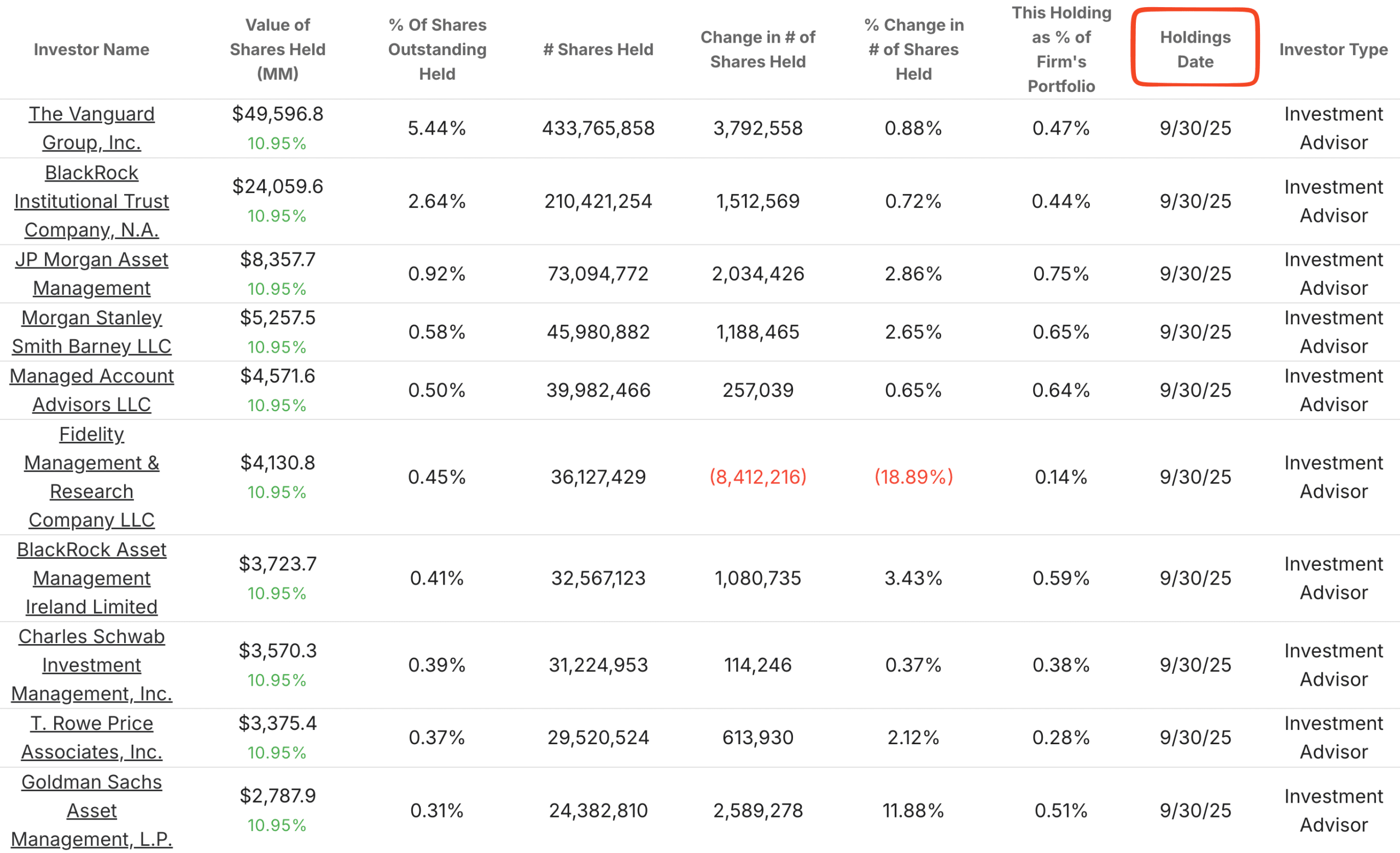
While adding to a position is a good sign, a brand-new position often signals a fresh catalyst or a newly discovered value proposition. It represents a stock that has successfully competed for capital against all other assets the manager already owns.
Use the TIKR filtering tools to identify “New” entries from the latest quarter. Pay special attention to stocks that are new to the portfolio but are immediately sized as top-10 positions. This indicates the manager saw an opportunity so compelling that they didn’t want to wait to build the stake slowly. These are often the most fertile grounds for your own due diligence.
Step 5: Clone but Verify

The 13F filing is the starting line, not the finish line. A common pitfall is assuming the work is done just because a famous investor bought the stock. You do not know their entry price, their hedging strategy, or if they have sold since the quarter ended.
After identifying an idea, use TIKR’s Detailed Financials and Valuation tabs to understand why they might have bought it. Are the margins expanding? Is the stock trading at a historical low multiple? You need to reverse-engineer their thesis to see if it still holds water at today’s price. If you cannot understand the reason for the investment, pass on it.
Common Mistakes to Avoid
The most dangerous mistake is ignoring the reporting lag. 13F filings are released 45 days after the quarter ends. In volatile markets, a stock could have appreciated by 20% or declined by 20% over that period. Buying a stock simply because a guru bought it two months ago, without checking if the valuation has fundamentally changed, is a recipe for poor returns.
Another error is style drift. Investors often look at the top holdings of a famous fund without realizing the fund has a specific mandate, such as distressed debt or merger arbitrage, that doesn’t fit a standard equity portfolio. Always ensure you understand the “game” the manager is playing before you try to join them.
Track hedge fund buying on TIKR (It’s free) >>>
How to Apply This in Practice
Imagine an investor who follows a set of concentrated value managers. During the latest 13F cycle on TIKR, they noticed that a respected fund manager has established a new 6% position in a regional bank.
The investor clicks into the stock’s profile on TIKR to see who else owns it. They note that two other value funds have also recently initiated small positions. This cluster of activity prompts the investor to open the Financials tab, where they see the bank has consistently grown book value despite a temporary dip in earnings.
They then check the Valuation tab and see it is trading at 0.8x book value, well below its historical average. Now, armed with a validated idea and data supporting the valuation, the investor reviews the latest annual report to decide whether to proceed with the purchase.
TIKR Takeaway
13F filings are one of the best tools for idea generation, but they are not a replacement for your own thinking. By using TIKR to track high-conviction moves from the world’s best investors efficiently, you can build a watchlist of high-quality companies. The goal is to stand on the shoulders of giants, not to follow in their footsteps blindly.
Accurately Value a Stock in Under 30 Seconds
With TIKR’s new Valuation Model tool, you can accurately estimate a stock’s potential share price in 30 seconds or less.
All it takes are three simple inputs:
- Revenue Growth
- Operating Margins
- Exit P/E Multiple
If you’re not sure what to enter, TIKR will enter analysts’ consensus estimates for you.
From there, TIKR calculates the potential share price and total returns under Bull, Base, and Bear scenarios so you can quickly see whether a stock looks undervalued or overvalued today.
See a stock’s true value in under 30 seconds (Free with TIKR) >>>
Looking for New Opportunities?
- Discover which stocks billionaire investors are purchasing, so you can follow the smart money.
- Analyze stocks in as little as 5 minutes with TIKR’s all-in-one, easy-to-use platform.
- The more rocks you overturn… the more opportunities you’ll uncover. Search 100K+ global stocks, global top investor holdings, and more with TIKR.
Disclaimer:
Please note that the articles on TIKR are not intended to serve as investment or financial advice from TIKR or our content team, nor are they recommendations to buy or sell any stocks. We create our content based on TIKR Terminal’s investment data and analysts’ estimates. Our analysis might not include recent company news or important updates. TIKR has no position in any stocks mentioned. Thank you for reading, and happy investing!