Key Stats for AppLovin Stock
- Current Price (TIKR model): $331.46
- Target Price (Mid): ~$668
- Street Target: ~$502
- Potential Total Return: ~102%
- Annualized IRR: ~18% / year
Now Live: Discover how much upside your favorite stocks could have using TIKR’s new Valuation Model (It’s free) >>>
What Happened?
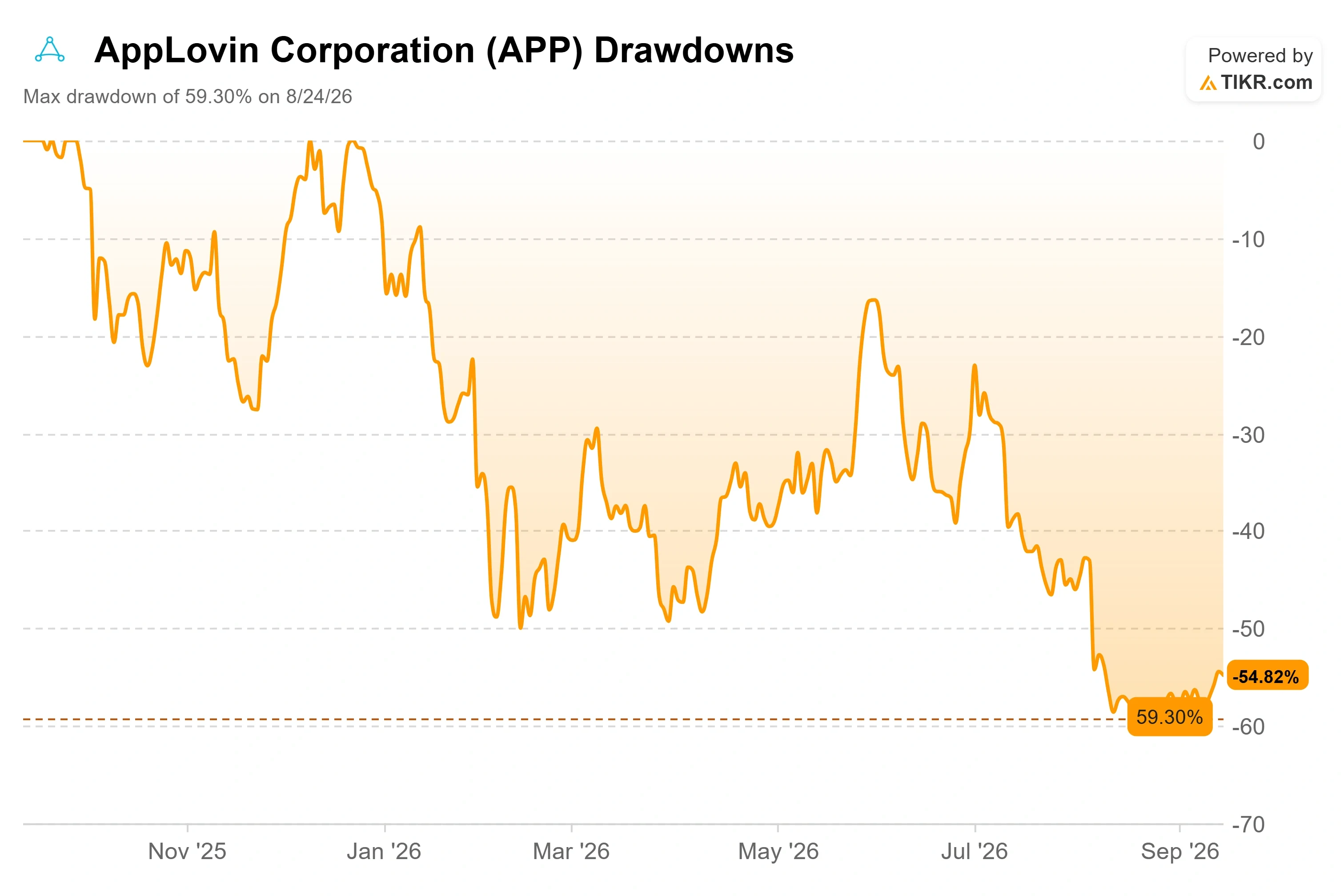
AppLovin Corporation (APP) spent nine months as one of the worst-performing large caps in tech, down more than 55% from its 52-week high of $745.61 to around $327 in mid-September, with a drawdown that reached 59.30% on August 24. Then the selling stopped. Over the past couple of weeks, the stock has been based in the low $300s near its lows, even climbing about 3% on September 11 against a soft tape, and two overhangs that fed the decline have quietly lifted at the same time.
The business never actually broke: revenue still grew 53% last quarter at adjusted EBITDA margins near 84%. What changed is that the two fears driving the derating, a federal probe and a competitive threat, both eased within a span of days, just as management guided to a reacceleration that is already underway. Whether that marks the bottom is now a question the numbers can answer.
The Two Overhangs That Just Lifted
The first was regulatory. An SEC inquiry that opened in October 2025 shadowed the stock all year, and as recently as February, the regulator described it to Bloomberg as “still active and ongoing.” On the second-quarter call, CFO Matt Stumpf closed the loop: the SEC “concluded its inquiry with no recommended action.” A cloud that short sellers had leaned on for months came off the table.
The second was competitive, and it is where the most current debate sits. Investors have worried that Unity’s Vector ad engine could erode AppLovin’s dominance in mobile-game user acquisition. On September 14, Morgan Stanley’s Matthew Cost pushed back: the mobile-app ad market is worth roughly $80 billion with conversion rates still around 1%, leaving room for both to grow as targeting improves. Cost still cut his target to $450 from $650 while keeping an Overweight rating, a reminder that even the bulls have reset lower. That reset shows in the Street target, now near $502 against a $738 mean back in December.
Insiders, including CEO Adam Foroughi, have been steady sellers through 2026, though the sales run through preset 10b5-1 trading plans rather than discretionary calls on the price. And the reason the stock fell this far in the first place still deserves a direct look.
See historical and forward estimates for AppLovin stock (It’s free!) >>>
Why It Fell, and Why the Miss Was Smaller Than the Reaction
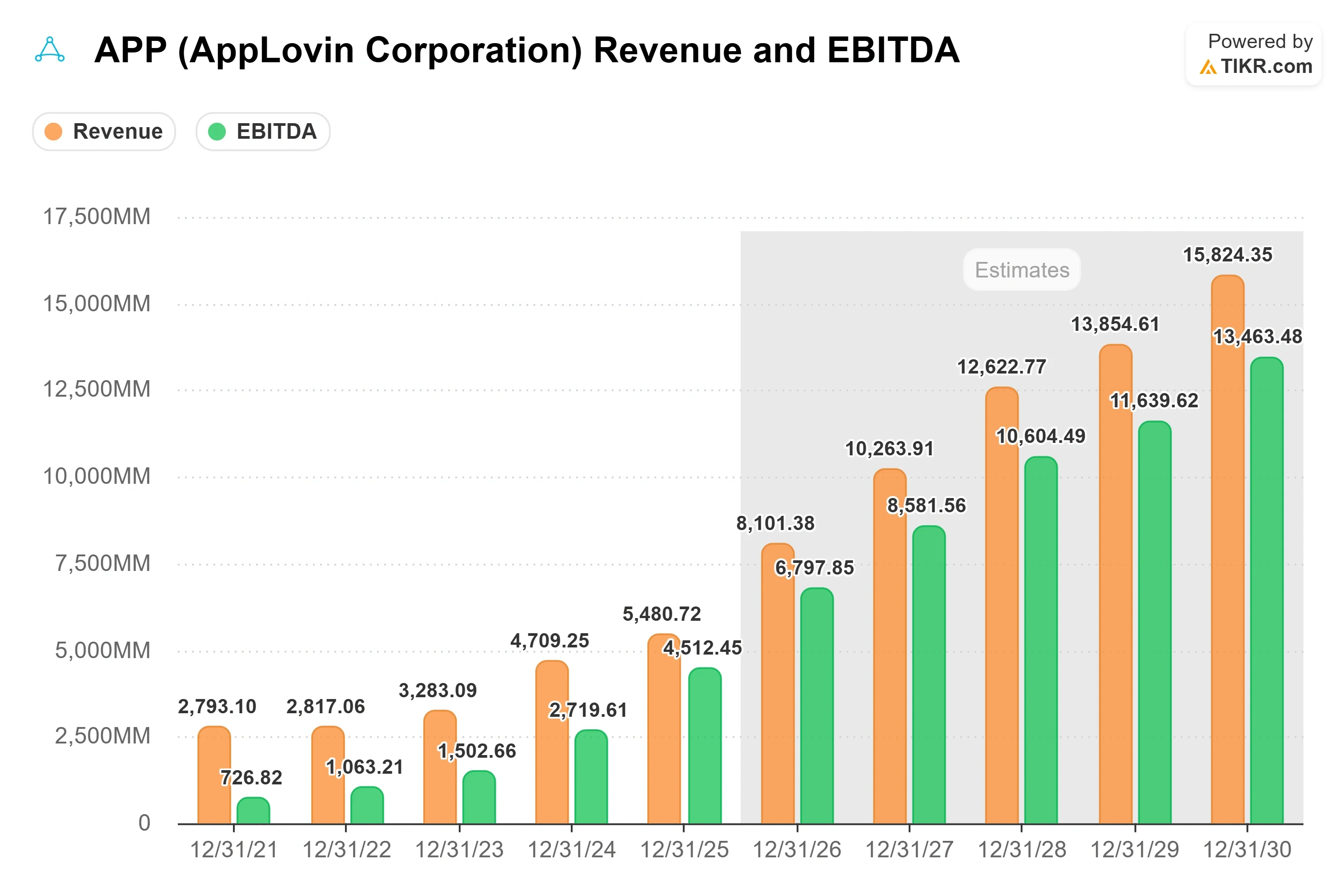
On August 5, AppLovin reported second-quarter revenue of $1.92 billion, up 53% year over year but just below its own guidance midpoint, a shortfall of under 1%. Shares fell about 19% the next session, per TIKR’s earnings-reaction data. The revenue line understates the miss, though: adjusted EPS came in about 6% light, and free cash flow of $863 million landed roughly 32% below the Street, pressured by the timing of tax and interest payments. It was the company’s first revenue shortfall against the Street in five quarters, for a stock priced to never miss.
Gaming is still most of the revenue, and its growth depends on how fast the company’s AI models improve. That quarter, the pace was lighter than usual, and the next step-up landed just after the period closed. On the call, Stumpf tied the margin pressure to the same engine: the company now spends about “$0.10” of every incremental revenue dollar on the compute that trains those models. Demand was not the problem, he and Foroughi argued: MAX publisher earnings still grew double digits sequentially, and consumer advertising set a spending record, 28% above the seasonal peak of Q4 2025.
What the Q3 Guide Is Really Saying
AppLovin guided third-quarter revenue to between $2.055 billion and $2.085 billion, or 46% to 48% growth, with an adjusted EBITDA margin around 83%. That guide already reflects the model improvement that arrived after Q2 and excludes any release not yet deployed, so the reacceleration it implies is not a projection but a reflection of what is already live. “Q3 is off to a strong start, and the business is back on the trajectory we expect,” Foroughi said.
Shares now trade near 14x NTM EV/EBITDA and roughly 18x forward earnings, a fraction of their peak multiples. Against peers, they still look expensive on the surface: The Trade Desk sits near 10x and Magnite near 12x. But those companies grow far slower and at a fraction of AppLovin’s margins, so paying a premium for several times the growth and roughly triple the margin is not the error the peer table implies. The harder risk to dismiss is the compute cost climbing faster than the free cash flow it is meant to generate, squeezing margins before the next model leap pays for them.
See how AppLovin performs against its peers in TIKR (It’s free!) >>>
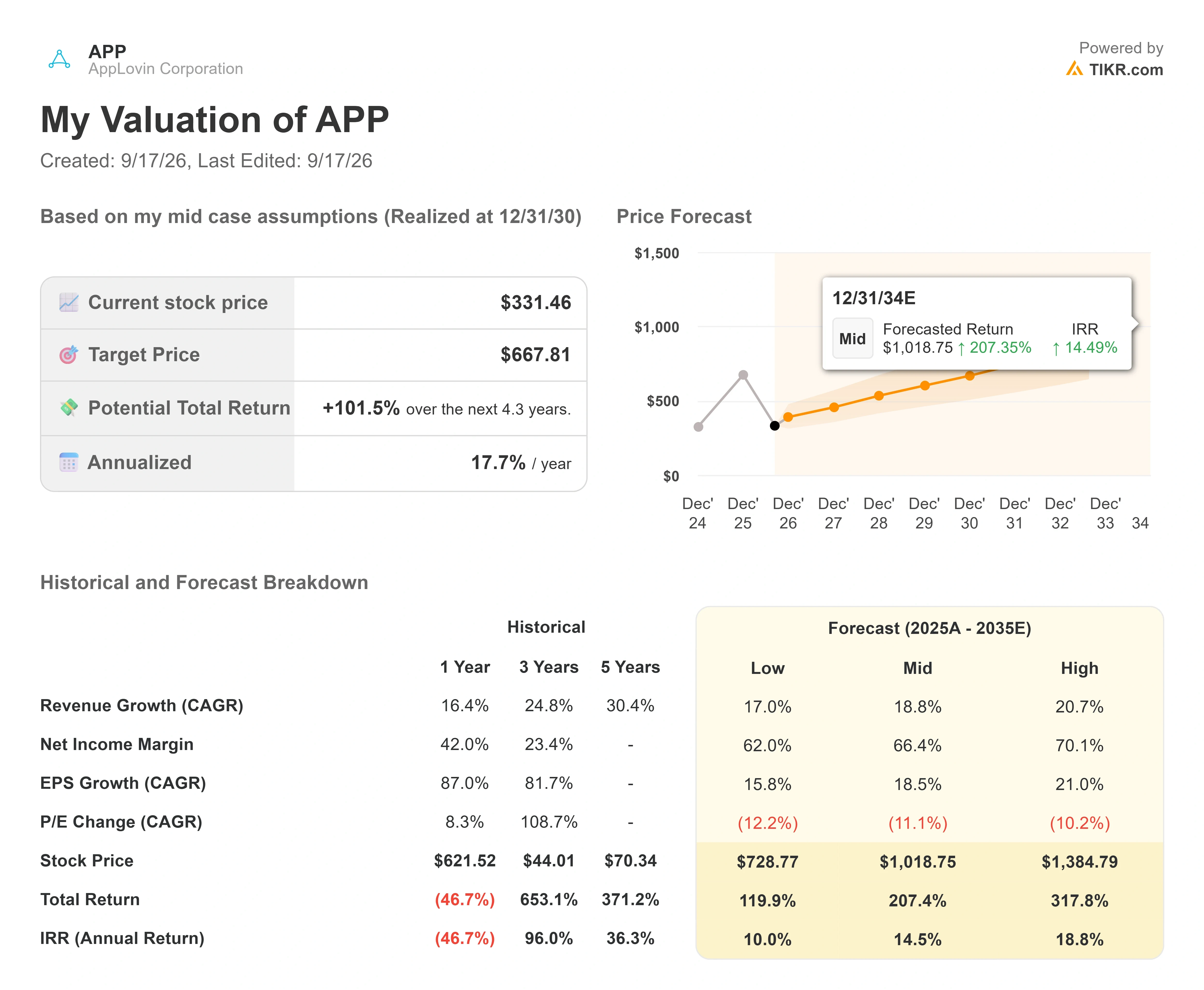
TIKR Advanced Model Analysis
- Current Price (TIKR model): $331.46
- Target Price (Mid): ~$668
- Potential Total Return: ~102%
- Annualized IRR: ~18% / year
See analysts’ growth forecasts and price targets for AppLovin stock (It’s free!) >>>
Two revenue drivers carry it, and the business is already showing both: continued gaming-model improvement as the near-term lever, and the scaling of consumer advertising from a small base into a durable second engine. The margin driver is operating leverage, the same dynamic that pushed EBITDA margins near 84%, holding as model-driven revenue outpaces rising compute costs. The primary risk is the mirror image: if model gains stay lumpy and mid-market e-commerce brands do not scale their spend profitably, growth decelerates faster than the model assumes, and the multiple compresses further. The upside is that the consumer becomes a real second engine while gaming reaccelerates, and the stock reprices toward the mid-case target. The downside is that Q2 was an early warning rather than a blip, and a business this dependent on unscheduled breakthroughs keeps delivering them unevenly.
Conclusion
The next real test is the third-quarter report, due in early November. The guide promises 46% to 48% revenue growth on a model improvement that is already live, so the bar is concrete. A print at or above the $2.085 billion high end, with the EBITDA margin holding near 83%, would confirm Q2 was a timing blip and give the turn its proof. A second miss, or any crack in that margin as compute costs climb, would tell you the derating still has room to run. After a year of watching this stock fall, investors finally have a clean date and a clear number to judge it against.
See what stocks billionaire investors are buying so you can follow the smart money with TIKR.
Should You Invest in AppLovin?
The only way to really know is to look at the numbers yourself. TIKR gives you free access to the same institutional-quality financial data that professional analysts use to answer exactly that question.
Pull up AppLovin, and you’ll see years of historical financials, what Wall Street analysts expect for revenue and earnings in the quarters ahead, how valuation multiples have moved over time, and whether price targets are trending up or down.
You can build a free watchlist to track AppLovin alongside every other stock on your radar. No credit card required. Just the data you need to decide for yourself.
Analyze AppLovin on TIKR Free →
Looking for New Opportunities?
- See what stocks billionaire investors are buying so you can follow the smart money.
- Analyze stocks in as little as 5 minutes with TIKR’s all-in-one, easy-to-use platform.
- The more rocks you overturn… the more opportunities you’ll uncover. Search 100K+ global stocks, global top investor holdings, and more with TIKR.
Disclaimer:
Please note that the articles on TIKR are not intended to serve as investment or financial advice from TIKR or our content team, nor are they recommendations to buy or sell any stocks. We create our content based on TIKR Terminal’s investment data and analysts’ estimates. Our analysis might not include recent company news or important updates. TIKR has no position in any stocks mentioned. Thank you for reading, and happy investing!