High margins attract investors for good reason. A company converting 25% of revenue to operating profit has a fundamentally different economic profile than one converting 8%. The high-margin business generates more cash from the same sales base, grows more easily, and withers less during downturns. But high margins also attract competition. Rivals see those profits and want a piece of them, which means today’s fat margins can become tomorrow’s industry average.
The question is not whether a company has high margins but whether it can keep them. Some businesses sustain premium margins for decades because structural advantages protect their pricing and cost position. Others enjoy temporary margin expansion that reverses when competition catches up, input costs normalize, or management runs out of costs to cut. The difference between these outcomes determines whether a high-margin stock is a compounder or a trap.
Evaluating margin sustainability requires examining what drives margins, how they compare to competitors, whether they depend on factors within management’s control, and their long-term trajectory. A few minutes of focused analysis reveal whether high margins reflect durable competitive advantages or temporary circumstances that will fade.
Identify the Source of High Margins
Sustainable margins stem from structural advantages that competitors cannot easily replicate. A company with strong brand loyalty commands premium prices because customers value more than the product’s functionality. A business with proprietary technology or patents produces goods at costs rivals cannot match. A platform with network effects operates more efficiently than standalone competitors. These advantages persist because replicating them requires years of investment, customer relationship building, or scale that new entrants lack.
Unsustainable margins often stem from temporary factors. A company benefiting from favorable commodity prices will see margins compress when those prices normalize. One that has cut costs aggressively may have exhausted easy savings and face pressure to reinvest. A business enjoying first-mover advantage in a new market will face margin pressure as competitors enter and pricing rationalizes.
Ask what would happen if a well-funded competitor tried to replicate the margin structure. If the answer involves years of brand building, massive scale investment, or technological breakthroughs, the margins have structural protection. If a competitor could match the economics within a few quarters by cutting prices or increasing spending, the margins are vulnerable.
A strong example is this transcript from Unity Technologies in which Chief Financial Officer, Luis Visoso, explains that there is expectation around “higher average long-term margins” due to higher demand for NAND.
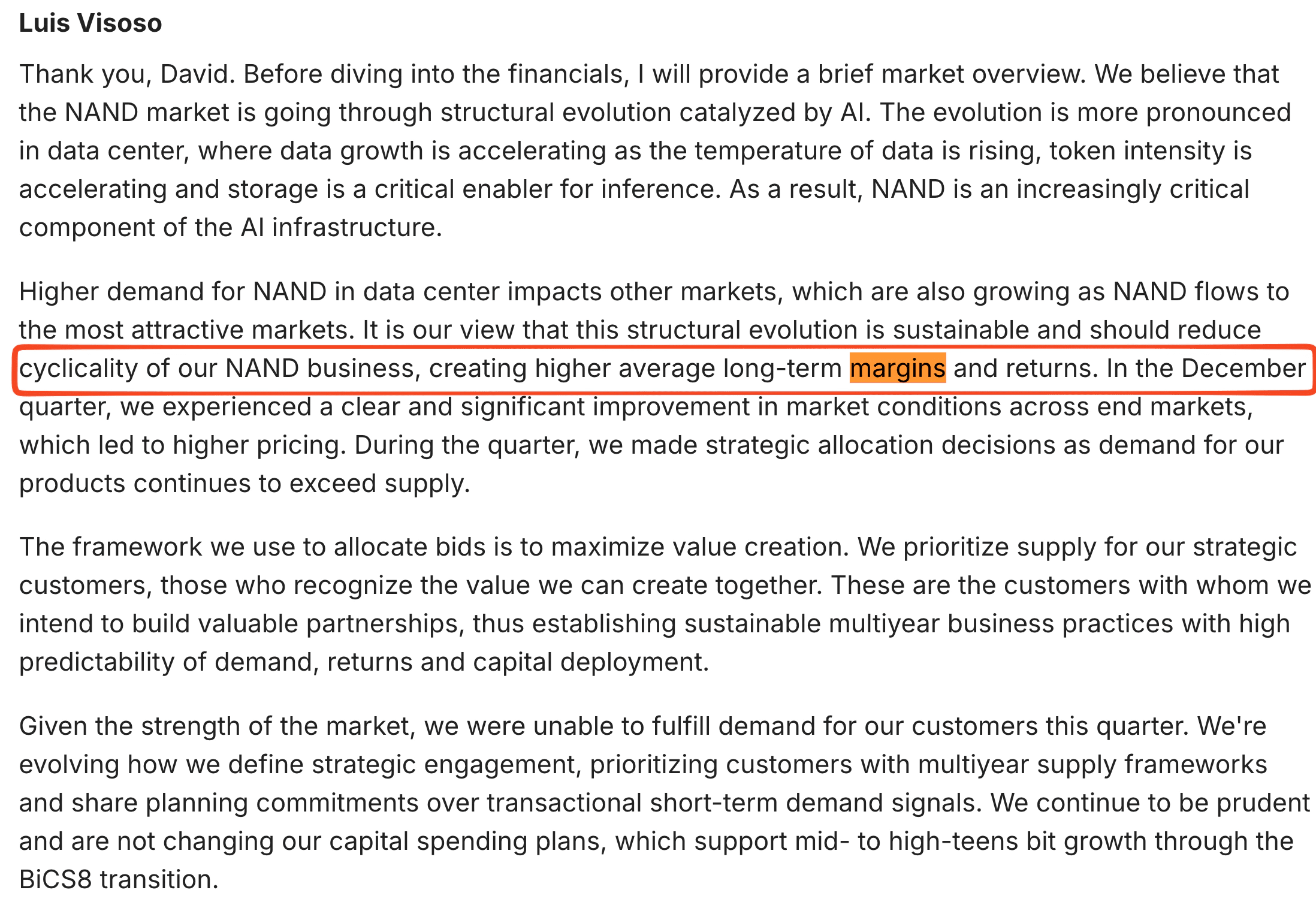
TIKR tip: Read recent earnings transcripts in TIKR’s Transcripts section for management discussion of margin drivers. Executives who explain margins through competitive advantages tell a different story than those attributing results to cost cuts or favorable market conditions.
Evaluate a company’s high margin instantly (Free with TIKR) >>>
Compare Margins to Industry Peers
A company’s margins mean little without a competitive context. A 15% operating margin looks strong in grocery retail, where 3% is typical. The same margin looks weak in software, where 25% is common. Comparing margins to direct competitors reveals whether the company possesses genuine advantages or simply operates in a high-margin industry.
Sustained margin premiums over peers indicate company-specific advantages. If one business consistently earns 20% operating margins while competitors earn 12%, something differentiates that company. The gap might reflect brand strength, scale advantages, product mix, or operational excellence. Whatever the cause, persistent outperformance suggests durable competitive positioning that supports margin sustainability.
Margins converging toward the industry average signal eroding advantages. A company that earned a five-point margin premium five years ago but now earns only two points above peers is losing whatever edge it possessed. Competitors have closed the gap through imitation, investment, or improved execution. This trajectory often continues until the premium disappears entirely.
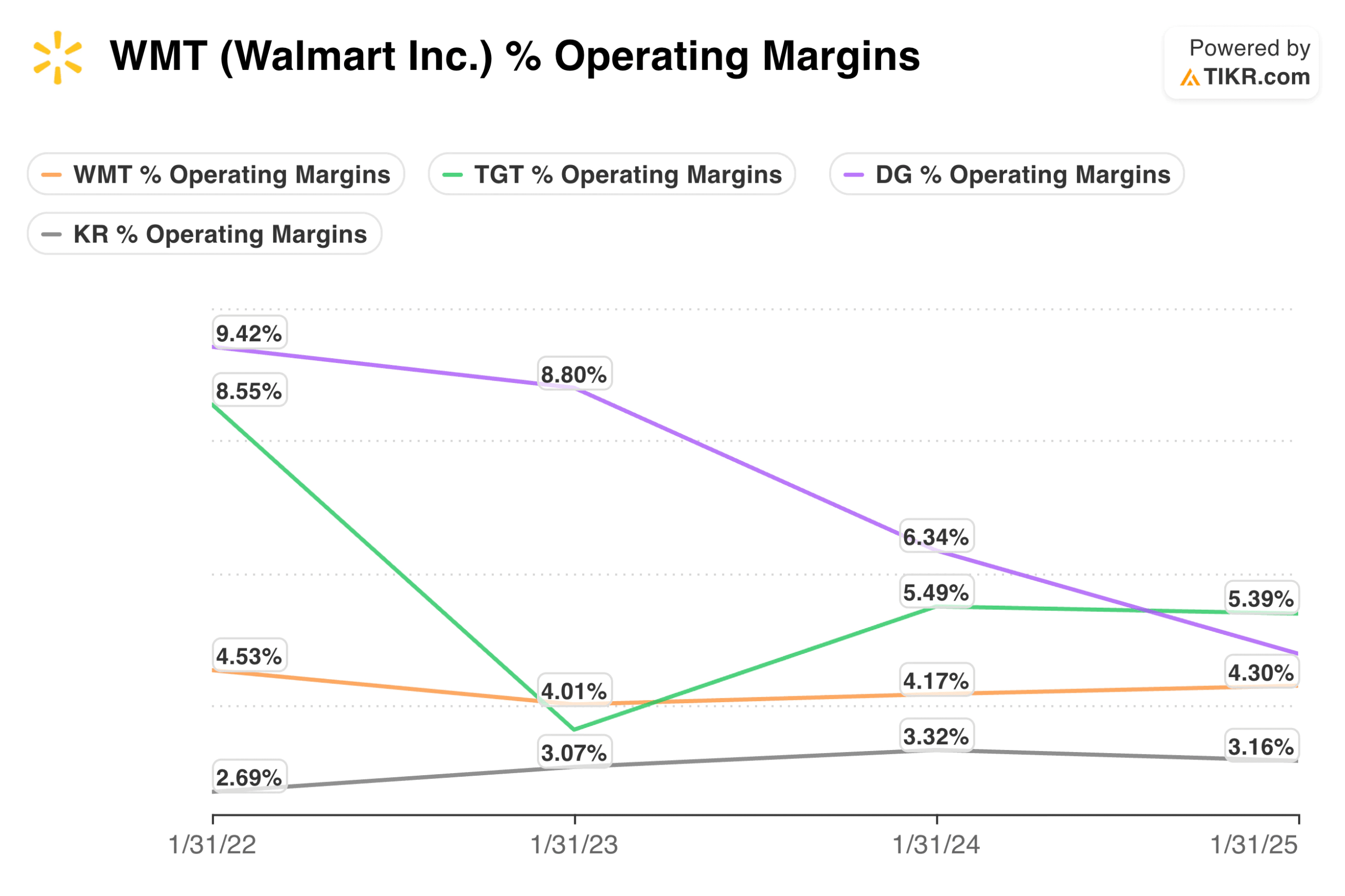
TIKR tip: Use TIKR’s competitors’ information to identify peer companies quickly, then click into each competitor’s Detailed Financials to compare operating margins directly. This reveals where the company ranks and whether its margin premium or discount to peers has changed over time.
Value any stock in less than 60 seconds with TIKR’s new Valuation Model (It’s free) >>>
Examine Margin Trajectory Over Time
The direction of margins matters as much as their current level. Expanding margins suggest strengthening competitive position, operating leverage from growth, or successful pricing initiatives. Stable margins indicate a mature business holding its ground. Compressing margins signals competitive pressure, cost inflation, or pricing weakness that threatens future profitability.
Look for margin stability through different economic conditions. A company that maintained margins through the 2020 recession and the 2022 inflation spike has demonstrated resilience that supports sustainability. One that saw margins swing wildly with economic conditions has revealed sensitivity to factors beyond management control. Cyclical margin volatility makes forecasting difficult and increases the risk that current high margins represent a peak rather than a baseline.
Watch for margin expansion that comes from reduced investment. A company can boost short-term margins by cutting R&D, reducing marketing, or deferring maintenance. These savings flow directly to profits but often damage long-term competitiveness. If margin expansion coincides with declining investment ratios, the improvement may be borrowing from the future rather than reflecting genuine operational strength.
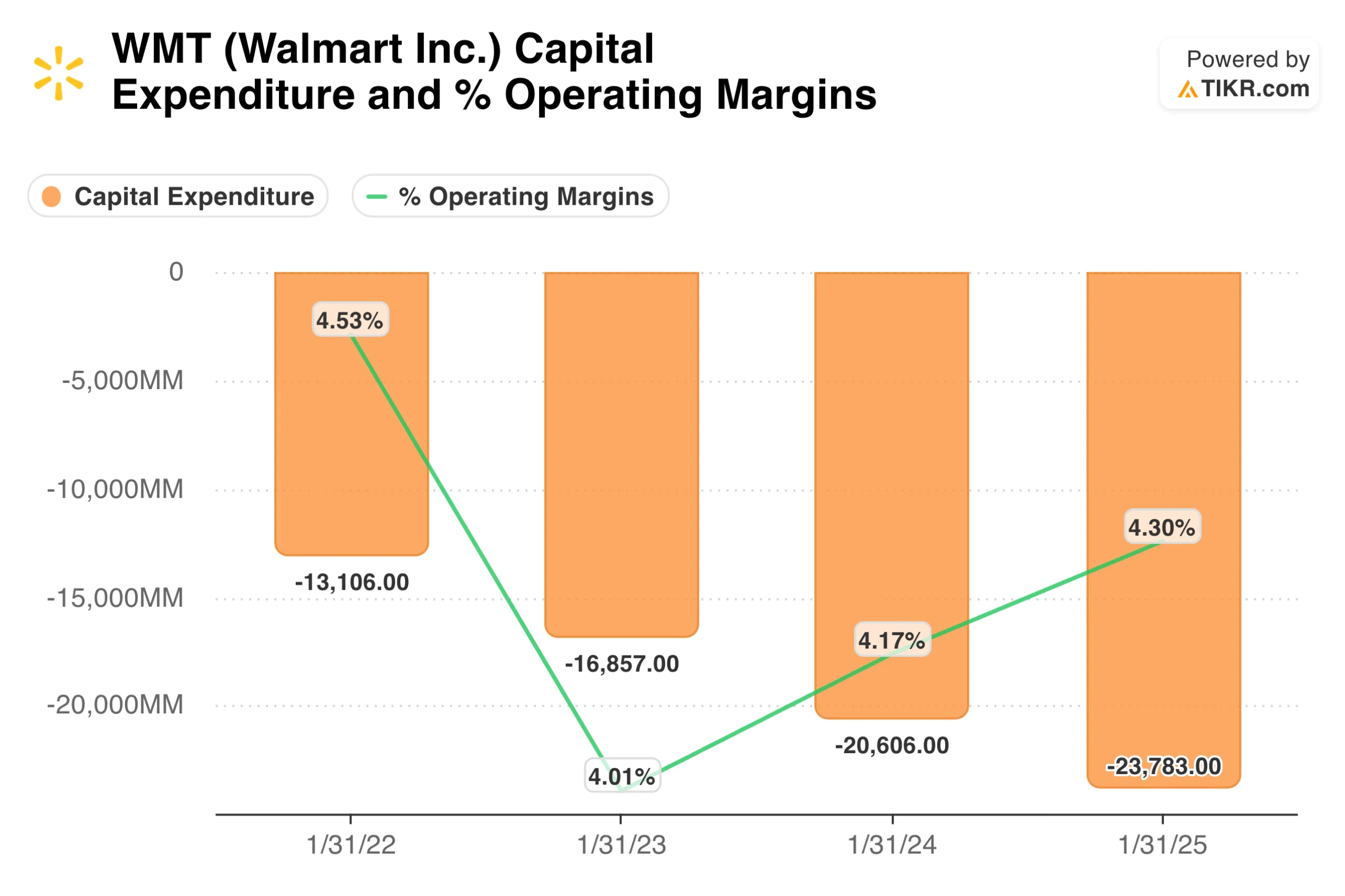
TIKR tip: Track operating margin alongside R&D and capital expenditure trends in TIKR’s Detailed Financials. Margin expansion accompanied by maintained or growing investment signals genuine improvement rather than short-term harvesting.
Get the most up-to-date margin information across thousands of stocks with TIKR (It’s free) >>>
Assess Pricing Power and Customer Captivity
Margins ultimately depend on a company’s ability to maintain pricing while controlling costs. Pricing power determines the revenue side of the equation. Customer captivity determines whether buyers have alternatives that force price competition.
Companies with captive customers sustain margins because switching costs exceed any savings from alternatives. Enterprise software vendors, medical device companies with installed bases, and industrial suppliers with qualification requirements all benefit from customer captivity. Their buyers complain about price increases but still pay them because switching vendors would cost more than accepting higher prices.
Commodity businesses face the opposite dynamic. Customers view products as interchangeable and buy primarily on price. Any margin premium attracts competitors who undercut until margins compress to industry averages. A company in a commodity industry showing high margins should raise immediate questions about sustainability. Either the margins reflect temporary factors or the company has found differentiation that the commodity label obscures.
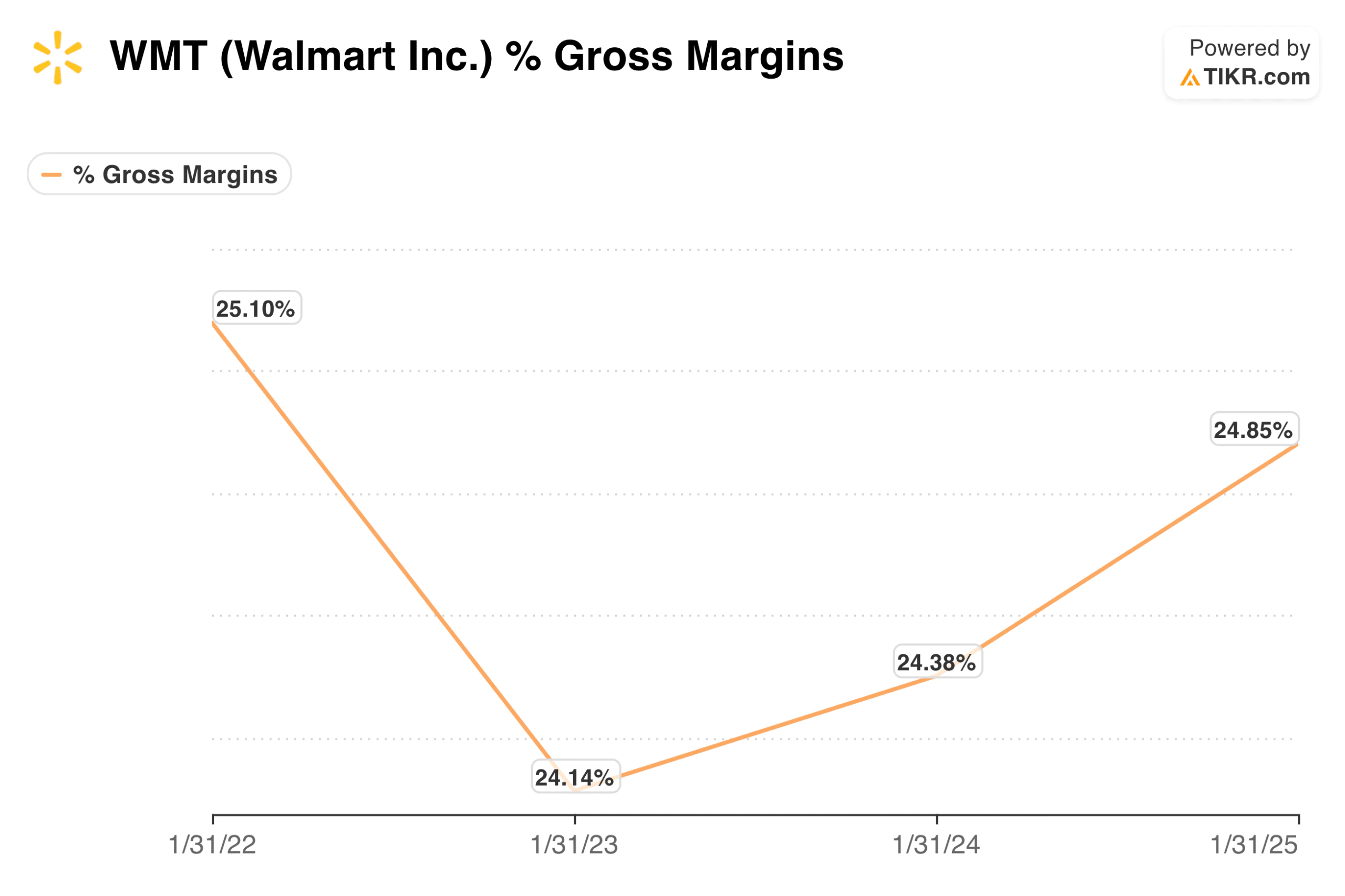
TIKR tip: Compare the company’s gross margin trend to input cost indices for its industry. TIKR’s historical financials show whether the company maintained margins as costs rose, indicating pricing power, or saw margins compress, indicating price-taking behavior.
Track company financials to quickly review pricing power with TIKR (It’s free) >>>
The TIKR Takeaway
High margins create shareholder value only when they persist. A company earning 25% operating margins that compresses to 15% over five years delivers worse returns than one earning a steady 18%. Sustainability matters more than the current level.
Durable margins stem from structural advantages like brand strength, proprietary technology, network effects, or customer captivity. They demonstrate stability through economic cycles, maintain premium pricing relative to competitors, and sustain investment in the business. Fragile margins depend on temporary factors, converge toward industry averages over time, and often accompany reduced investment that sacrifices the future for current profits.
TIKR provides the data to distinguish sustainable margins from temporary ones. Historical financials reveal trajectory and stability. Competitor comparisons show relative positioning. Earnings transcripts explain what management believes drives the margins. Together, these tools help you determine whether high margins represent a durable competitive advantage or a peak that will soon revert.
Find undervalued stocks in less than 60 seconds with TIKR’s new Valuation Model (It’s free) >>>
Value Any Stock in Under 60 Seconds with TIKR
With TIKR’s new Valuation Model tool, you can estimate a stock’s potential share price in under a minute.
All it takes is three simple inputs:
- Revenue Growth
- Operating Margins
- Exit P/E Multiple
If you’re not sure what to enter, TIKR automatically fills in each input using analysts’ consensus estimates, giving you a quick, reliable starting point.
From there, TIKR calculates the potential share price and total returns under Bull, Base, and Bear scenarios so you can quickly see whether a stock looks undervalued or overvalued.
See a stock’s true value in under 60 seconds (Free with TIKR) >>>
Looking for New Opportunities?
- Discover which stocks billionaire investors are purchasing, so you can follow the smart money.
- Analyze stocks in as little as 5 minutes with TIKR’s all-in-one, easy-to-use platform.
- The more rocks you overturn… the more opportunities you’ll uncover. Search 100K+ global stocks, global top investor holdings, and more with TIKR.
Disclaimer:
Please note that the articles on TIKR are not intended to serve as investment or financial advice from TIKR or our content team, nor are they recommendations to buy or sell any stocks. We create our content based on TIKR Terminal’s investment data and analysts’ estimates. Our analysis might not include recent company news or important updates. TIKR has no position in any stocks mentioned. Thank you for reading, and happy investing!