Key Stats for CVX Stock
- Past week performance: +2.4%
- 52-week range: $146 to $218
- Valuation model target price: $220
- Implied upside: 0.9% over 2.3 years
Plug Chevron’s oil price assumptions into TIKR’s Valuation Model (It’s free) >>>
An Oil Warning From the Top
Chevron (CVX) stock barely budged this week, but the commentary coming out of the company was anything but quiet. CEO Mike Wirth told an energy conference that the strategic buffers built up in global crude markets after the recent Iran conflict are now “played out.” He added that it’s “harder to envision a scenario where prices soften quickly,” a notable shift from an executive who typically avoids bold near-term price calls.
Chevron also outlined a $7 billion expansion plan in Venezuela, funded entirely from cash generated by its three existing joint ventures there. The goal is to more than double output to roughly 600,000 barrels per day by 2031. The new contract terms include international arbitration rights, a meaningful protection given Venezuela’s history of political risk. It’s one of Chevron’s largest growth bets outside its core U.S. shale and offshore positions.
Separately, Chevron Australia flagged that LNG prices are likely to stay elevated for around six months, citing tight Asian markets and continued Middle East supply disruptions. Between the crude warning, the Venezuela expansion, and the LNG commentary, Chevron spent the week signaling that energy markets remain tighter than headline oil prices suggest.
Wirth’s message carries weight because Chevron, unlike smaller producers, runs both upstream production and downstream refining, giving management a broad view across the entire energy value chain. If Chevron stock keeps trading sideways despite this kind of commentary, investors may simply be waiting for prices to move before repricing the stock higher.
Unpack Chevron’s target price inside TIKR’s free Valuation Model (It’s free) >>>
Is CVX Stock Undervalued?

Under valuation model assumptions realized through 12/31/28, the stock is modeled using:
- Revenue Growth (CAGR): 3.8%
- Operating Margins: 17.8%
- Exit P/E Multiple: 13.7x
Based on these inputs, the model estimates a $220 target price, implying a 0.9% total return from the current share price and a 0.4% annualized return over the next 2.3 years.
That 0.4% annualized return is about as close to fully valued as a stock gets. Chevron’s total return over the past week alone was already 2.4%, and the stock sits just a few dollars below its 52-week high of $218. The oil-price warnings from Wirth are real, but the model suggests the market already priced in a decent chunk of that upside expectation.

Revenue growth assumptions of 3.8% reflect a mature, capital-intensive business rather than a growth story, and margins near 18% are solid but unlikely to expand dramatically without a sustained jump in crude prices. The model bakes in little room for multiple expansion because the 13.7x exit multiple sits roughly in line with where integrated oil majors historically traded.
Against its own history, Chevron looks reasonably valued rather than stretched, since its multiple hasn’t run away the way some energy names have during past price spikes. But reasonably valued isn’t the same as undervalued, and the Venezuela investment adds execution risk that won’t show up in production numbers for years.
Rank Chevron against ExxonMobil and ConocoPhillips (Free with TIKR) >>>
Chevron’s Place in the Integrated Oil Pecking Order
Chevron’s integrated model, spanning production, refining, and chemicals, sets it apart from both ExxonMobil and ConocoPhillips, and the comparison shapes how investors should think about its current price. ExxonMobil (XOM) trades around 15x forward earnings with a dividend yield near 2.5% to 2.7%, backed by a 43-year streak of consecutive dividend increases. Chevron actually trades cheaper than ExxonMobil on a forward basis, at 13.7x earnings, while offering a higher dividend yield near 3.3%.
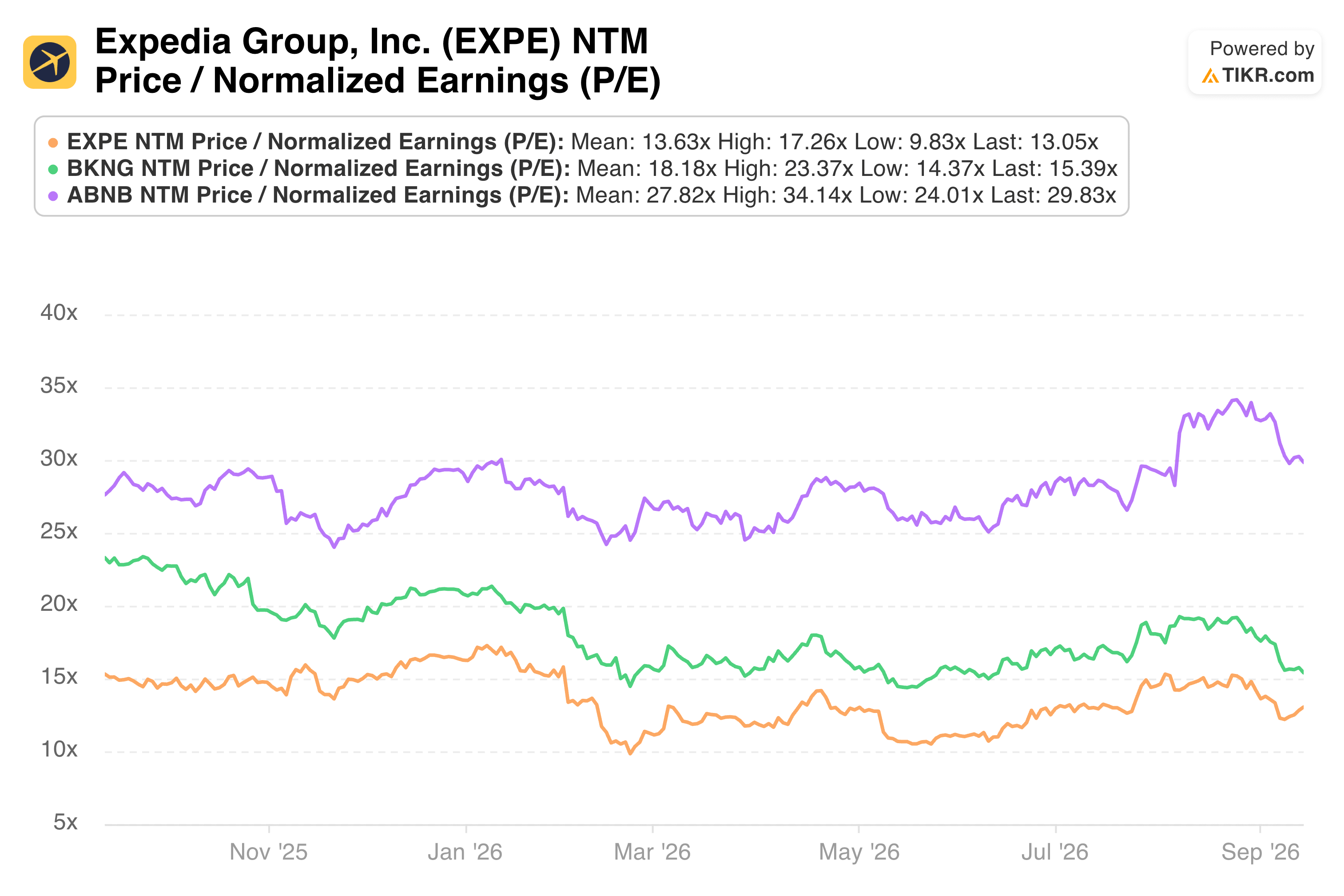
ConocoPhillips (COP) offers a different comparison, since it’s a pure-play exploration and production company with no downstream refining business to smooth out earnings. COP trades around 13x forward earnings with a dividend yield near 2.9%, and its earnings are more directly tied to crude prices without Chevron’s refining buffer. That makes ConocoPhillips more of a leveraged bet on Wirth’s price warnings actually playing out, while Chevron’s integrated structure provides more downside protection if oil prices stay range-bound.
Chevron’s advantage over both peers is diversification. Its downstream refining segment can partially offset weak upstream pricing, something ConocoPhillips simply doesn’t have. Against ExxonMobil, Chevron’s smaller scale means the Venezuela and Australia LNG bets carry more relative weight, for better or worse, on overall results. None of the three majors screens as expensive today, which suggests the sector broadly hasn’t priced in Wirth’s warning that oil buffers are already spent.
What’s Driving CVX Stock Going Forward?
The clearest near-term catalyst is whether Wirth’s oil price warning actually materializes. If depleted stockpiles and eased sanctions enforcement on floating storage translate into tighter physical markets, crude prices could climb faster than current guidance assumes, and that would flow directly into Chevron’s upstream earnings.
The Venezuela expansion is the bigger long-term catalyst. Doubling output to 600,000 barrels per day by 2031 would meaningfully grow Chevron’s production base, but execution risk is real given the country’s political history. The new international arbitration rights offer some protection, but investors should expect a multi-year story rather than an immediate earnings driver.
LNG dynamics matter too. Chevron’s Australian operations benefit from elevated prices tied to Middle East supply disruptions, and management’s six-month outlook suggests near-term strength, though that could reverse quickly if geopolitical tensions ease.
Capital discipline remains the underlying theme across all of these catalysts. Chevron has consistently prioritized shareholder returns through dividends and buybacks even while funding growth projects like Venezuela, and how it balances that spending will shape whether the stock’s current multiple holds.
Adjust Chevron’s dividend and multiple assumptions (Free with TIKR) >>>
Should You Invest in Chevron?
The only way to really know is to look at the numbers yourself. TIKR gives you free access to the same institutional-quality financial data that professional analysts use to answer exactly that question.
Pull up CVX, and you’ll see years of historical financials, what Wall Street analysts expect for revenue and earnings in the quarters ahead, how valuation multiples have moved over time, and whether price targets are trending up or down.
You can build a free watchlist to track CVX alongside every other stock on your radar. No credit card required. Just the data you need to decide for yourself.
Analyze CVX stock on TIKR Free→
Disclaimer:
Please note that the articles on TIKR are not intended to serve as investment or financial advice from TIKR or our content team, nor are they recommendations to buy or sell any stocks. We create our content based on TIKR Terminal’s investment data and analysts’ estimates. Our analysis might not include recent company news or important updates. TIKR has no position in any stocks mentioned. Thank you for reading, and happy investing!