Key Takeaways
- Bill Gates praised Meta’s Muse agent the day after Meta reported third-quarter revenue up 26% to $64.6 billion.
- Over a quarter of Muse’s active users already shop with it, which gives Meta a way to earn commerce fees from a product that’s free for most people.
- Rivals are moving fast, with Anthropic’s Claude Duet out this week and an Alphabet agent expected, while Meta’s capex plan of $135 billion to $145 billion this year turned its third-quarter free cash flow negative.
- At 21x forward earnings, in line with its five-year average, Meta’s stock isn’t pricing in much success for Muse.
Meta Platforms (META) reported third-quarter revenue up 26% to $64.6 billion on Wednesday. A day later, Bill Gates gave its new AI agent the kind of review most companies would frame.
“I think Muse is the first truly great consumer AI product,” the Microsoft co-founder said on [Decoder](LINK NEEDED).
His reasoning: plenty of people sour on AI because all they’ve tried are free chatbots that make things up, and AI overviews (the AI answers Alphabet (GOOG) puts at the top of Google searches). Muse, he said, actually does things.
Not bad for a product that launched last month.
The harder part starts now: turning all that usage into revenue before everyone else copies it.
TIKR tracks 63 analysts on Meta Platforms. How many say “Buy”?
See the full breakdown of Buy, Hold, and Sell ratings on Meta Platforms, along with Wall Street’s revenue and earnings estimates, all in one place. More than 500,000 investors use TIKR to research stocks like this one. See Meta Platforms’ Analyst Ratings
People are already shopping with Muse
Meta said on Wednesday that more than 10 million people in the US and Canada have set up Muse. And Mark Zuckerberg said on the earnings call that shopping is its biggest use: over a quarter of active users shop with it, at an average purchase above $200. (That includes travel bookings, Evercore ISI’s Mark Mahaney said on [Prof G Markets](LINK NEEDED).)
Muse stays free for most people. Meta plans to charge businesses commerce fees, a share of each transaction, and to charge power users for advanced models. Mahaney has another word for that share of transactions: “advertising.”
That plays right into Meta’s hands. It already gets paid when people find things to buy on Facebook and Instagram, and an agent that does the buying puts Meta at the checkout itself.
But the fees will need to be big to matter. Analysts already expect Meta’s revenue to climb from $201 billion in 2025 to $369 billion in 2028.
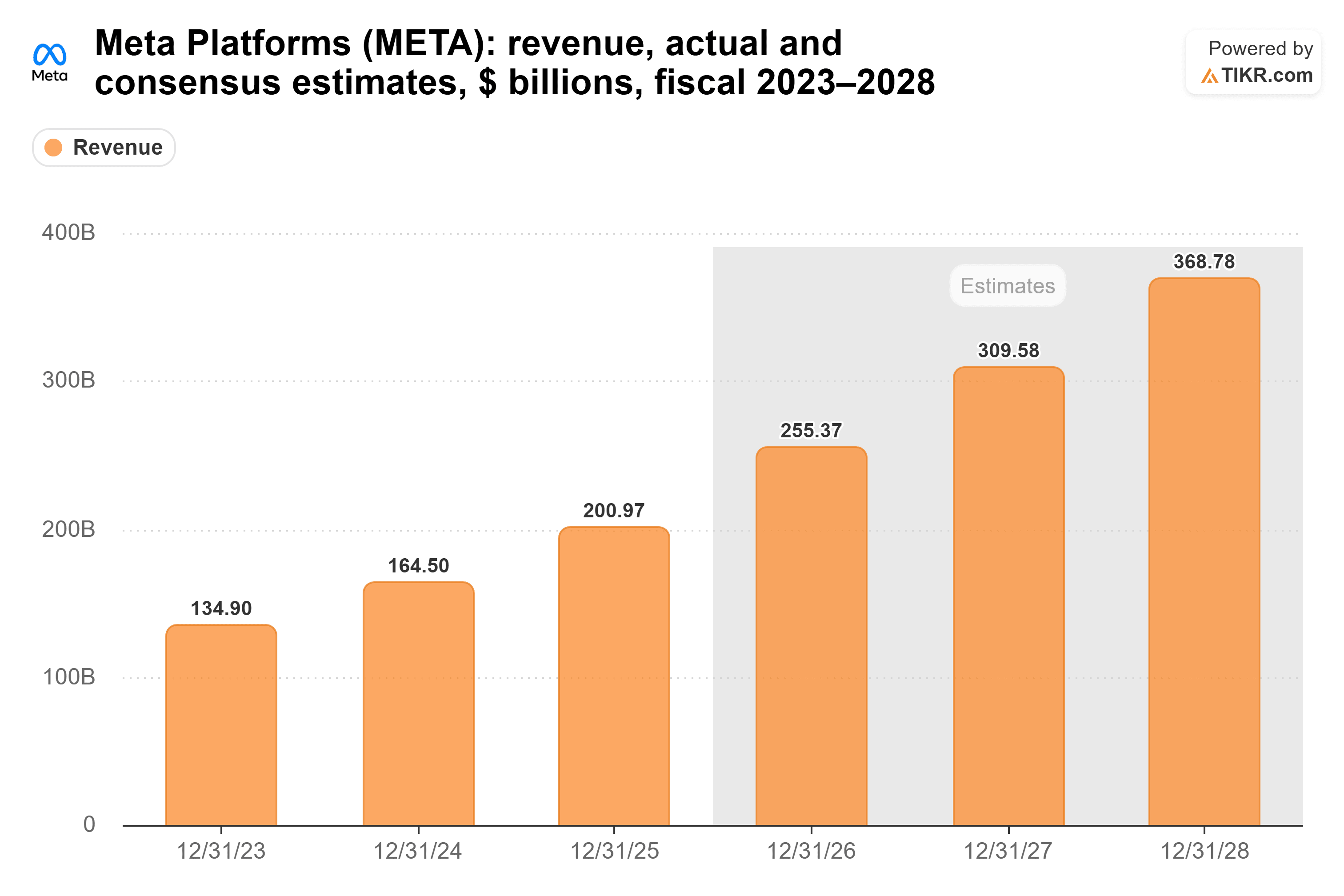
CFO Susan Li said Meta’s new AI businesses could start adding revenue in 2027, so that’s the year Muse could start pushing these estimates higher.
Muse isn’t cheap to run
Meta expects capital spending of $135 billion to $145 billion in 2026, and the third quarter’s $34.9 billion pushed quarterly free cash flow to negative $2.12 billion. Capex has been growing far faster than the cash the business brings in: it went from $18.7 billion in 2021 to $69.7 billion in 2025, while cash from operations went from $57.7 billion to $116 billion.
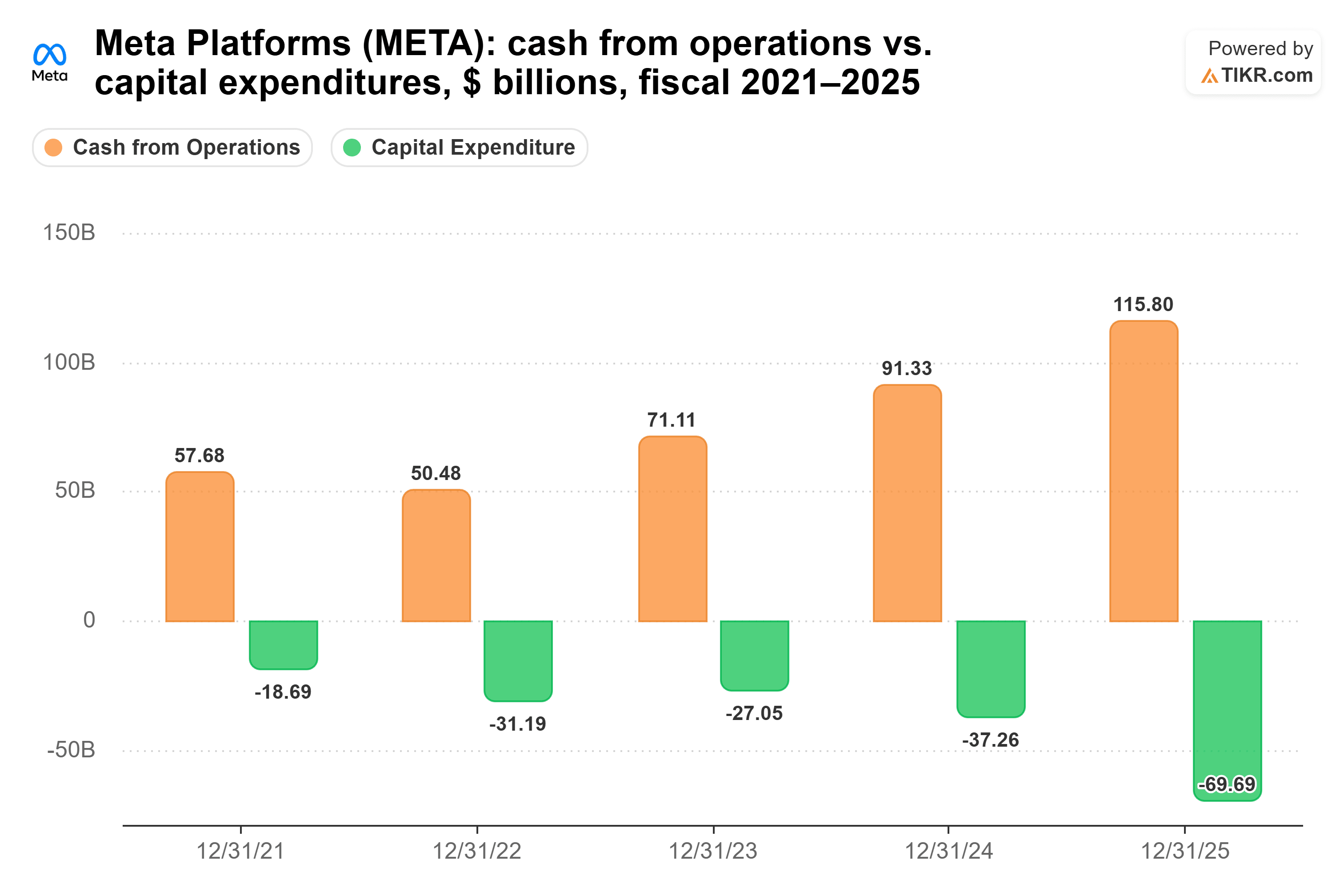
This year’s capex guidance is more than all the cash Meta’s operations brought in last year.
Meta aims to make Muse more than 10x more cost-efficient within a year. Until then, the ad business carries the bill, and it can: average price per ad rose 14% from a year earlier in the third quarter. That’s one reason Meta can afford to give so much of its AI away.
The copycats are coming
Palo Alto Networks CEO Nikesh Arora doesn’t expect Meta to have the field to itself for long. As he put it on All-In:
“In the next three months, every Frontier Lab is going to have a full-on, full-court press on the Muse concept.”
Anthropic is first out of the gate. It just launched Claude Duet, an agent that shops and reads your email without being asked. It’s a research preview with a waitlist, and it will eventually go to Anthropic’s paying Pro and Max subscribers. That’s a slow start against a free Muse and the 3.64 billion people who use Meta’s apps every day.
Alphabet is the tougher rival. It already runs Gmail and Google search, and Bank of America’s Justin Post wrote this week that a competitive agent and a broader Gemini 4 launch could be catalysts for the stock.
The market isn’t paying for Muse yet
Mahaney reckons “the market’s 40% more excited than it was last earnings.” You wouldn’t know it from the multiple: Meta trades at 21x forward earnings, in line with its five-year average and well below the 29x it hit in February 2025.
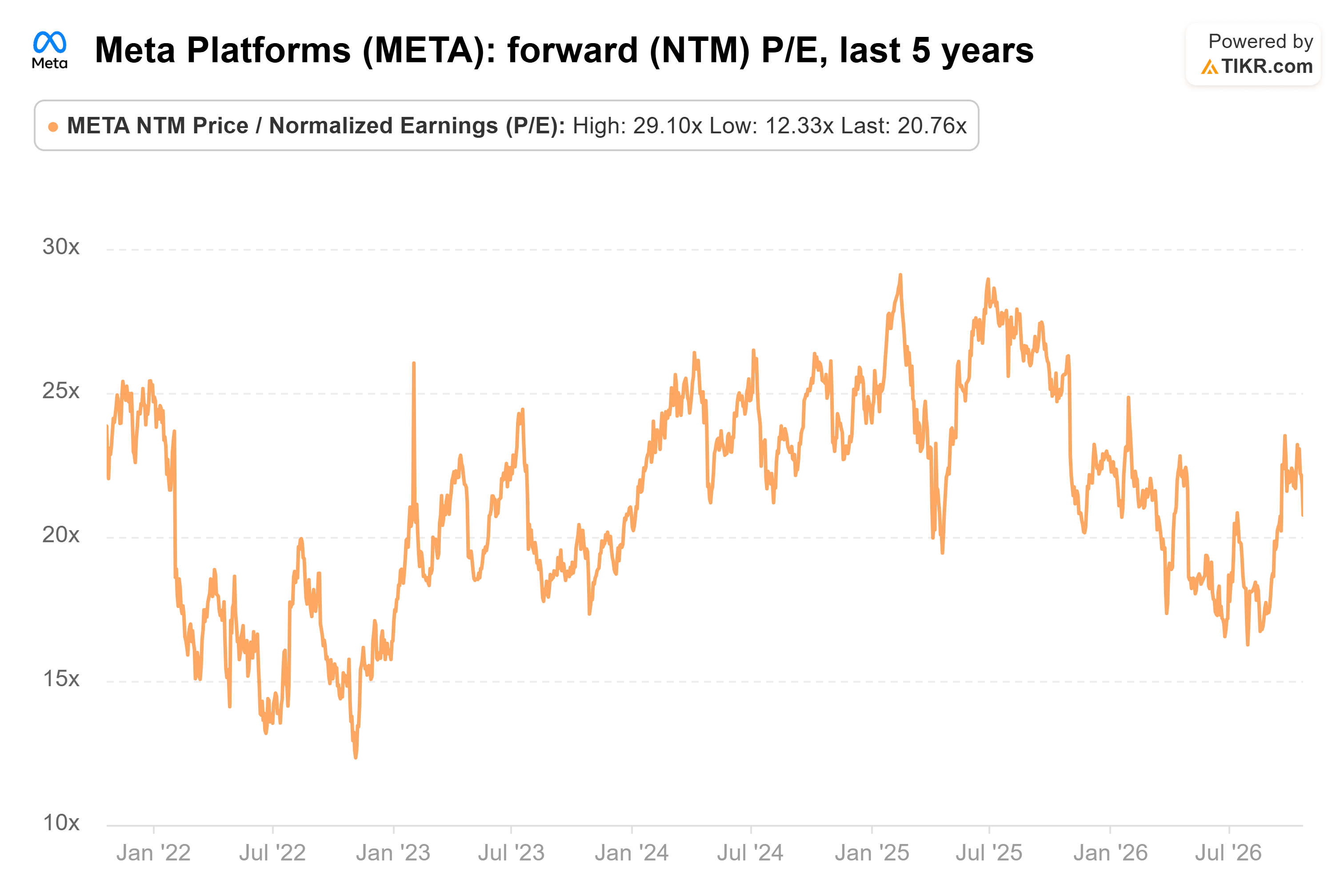
Gates is right about the product, and the shopping numbers give Meta a real way to get paid for it.
My take: at its usual multiple, Meta’s stock doesn’t need Muse to be a hit to work from here. And if Meta turns that shopping into commerce fees before Alphabet’s agent arrives, there’s plenty of upside on top.
Of course, a capex bill that size leaves little room for Muse to stumble, and the next test comes soon: Alphabet reports next week, and investors will be listening for its answer to Muse.
So what is Meta stock actually worth?
TIKR lets you forecast the future price of any stock in less than a minute. Just enter a few assumptions into TIKR’s valuation model and see what Meta could be worth. Start from Wall Street consensus estimates, or adjust the inputs to reflect your own view of the business. It’s free to use.
Disclaimer:
Please note that the articles on TIKR are not intended to serve as investment or financial advice from TIKR or our content team, nor are they recommendations to buy or sell any stocks. We create our content based on TIKR Terminal’s investment data and analysts’ estimates. Our analysis might not include recent company news or important updates. TIKR has no position in any of the stocks mentioned. Thank you for reading, and happy investing!