Key Takeaways
- Robinhood stock fell 11.6% in the five trading sessions through October 19, more than three times the Nasdaq 100’s 3.7% decline.
- Wolfe Research downgraded Robinhood to Peer Perform, while Wells Fargo reduced its price target to $120.
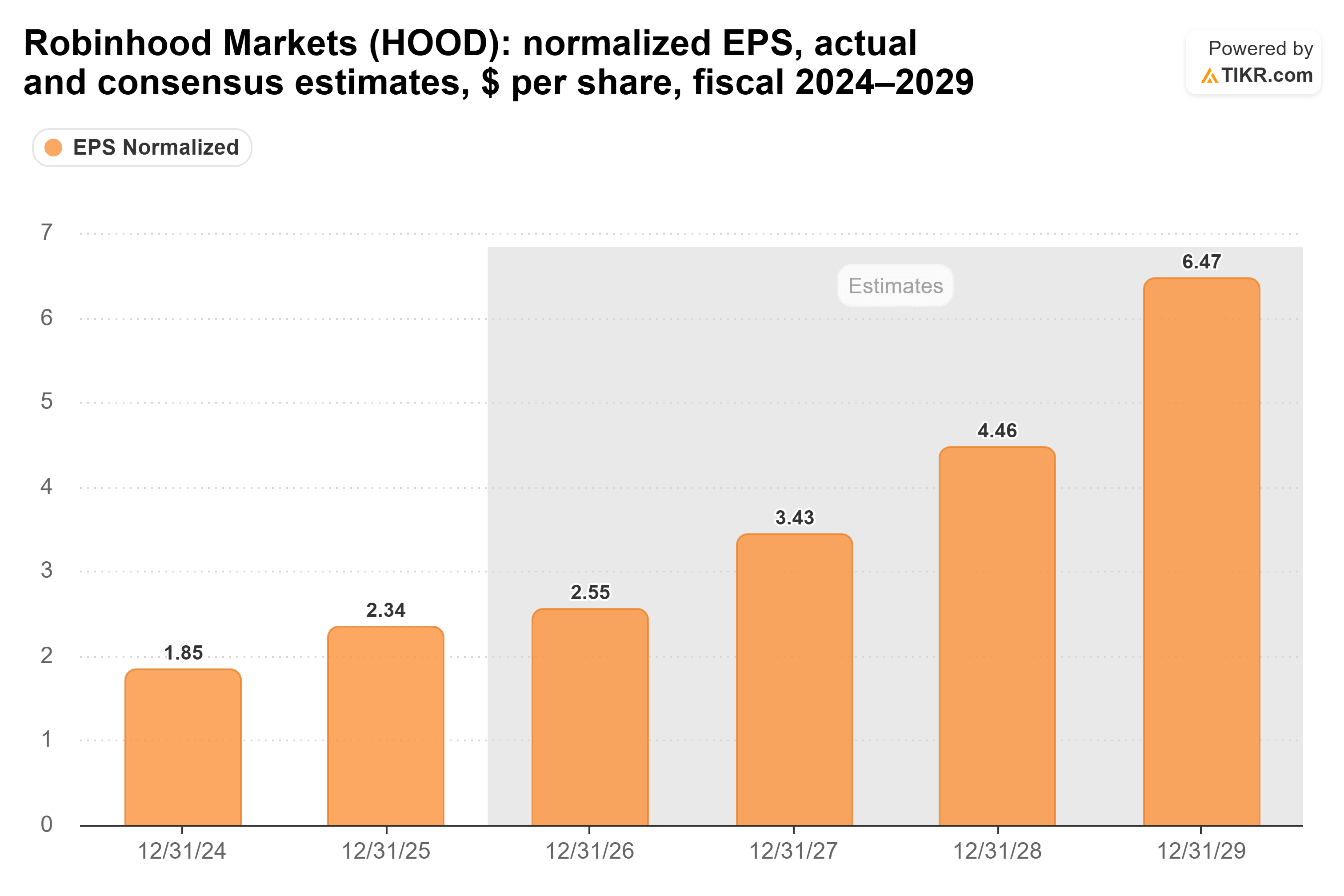
- Analysts expect normalized EPS to increase from $2.34 in 2025 to $3.43 in 2027, suggesting substantial earnings growth remains possible.
- Robinhood’s October 27 earnings report could determine whether the selloff creates a buying opportunity or signals further downside.
Robinhood Markets (HOOD) stock dropped 11.6% in the five trading sessions through October 19, compared with a 3.7% decline in the Nasdaq 100.
Shares closed at $96.52 that Monday, approximately 36% below their 52-week high. The question is whether Robinhood’s growth prospects justify buying after the correction.
What Happened?
Robinhood fell 8.5% on October 14 after Wolfe Research downgraded the stock from Outperform to Peer Perform, arguing that much of the expected good news was already reflected in its valuation.
Wells Fargo also reduced its price target from $125 to $120 while maintaining an Equal Weight rating.
Broader weakness in financial and technology stocks added pressure. Robinhood rebounded 2.9% on October 15 before declining another 4.9% the following session. Over the month through October 22, Robinhood fell 22%, compared with declines of 16% for Coinbase (COIN) and 14% for SoFi (SOFI), showing that Robinhood faced greater selling pressure than its fintech peers.
The selloff reflects concern about how much investors should pay for Robinhood’s future growth, rather than evidence of a sudden collapse in the business.
Is Robinhood Stock Undervalued After the Selloff?
Robinhood’s forward P/E declined from approximately 43x at the end of 2025 to 33.4x on October 16, well below its October 2025 peak of 75.5x.
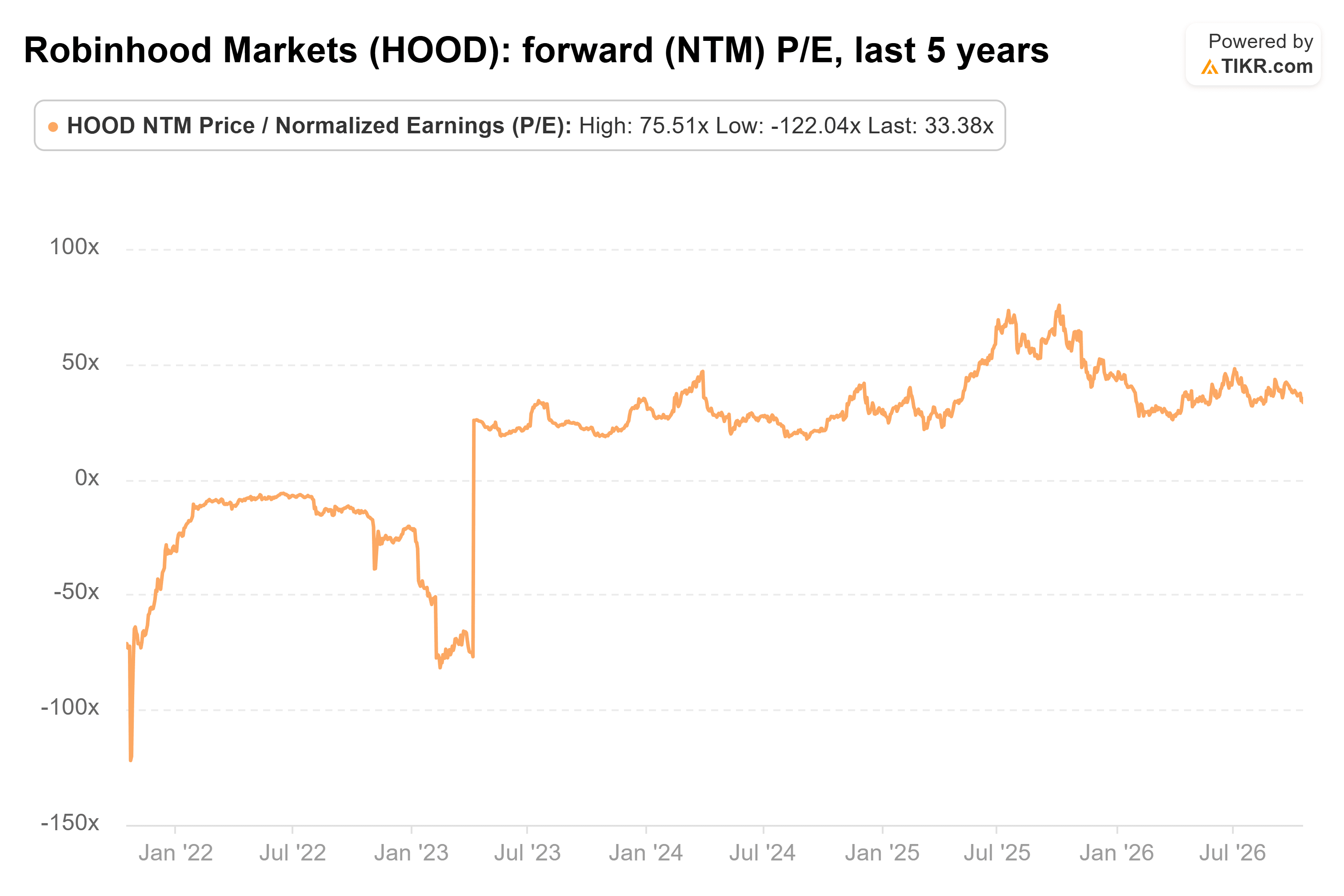
However, the stock isn’t necessarily cheap. Its multiple previously fell to approximately 28x in March, leaving room for additional valuation compression.
Meanwhile, analysts expect normalized EPS to increase from $2.34 in 2025 to $3.43 in 2027, representing approximately 47% cumulative growth.
Robinhood is scheduled to report third-quarter earnings after the market closes on October 27, with analysts expecting approximately $1.44 billion in revenue.
Event contracts generated $156 million in Q2, while cryptocurrency revenue totaled $100 million. These businesses, alongside net deposits, will be important indicators of whether Robinhood can maintain its growth.
Regulatory uncertainty surrounding sports-related event contracts presents another risk. Restrictions in Michigan and Ohio could weigh on future expansion.
Strong earnings could support Robinhood’s premium valuation, but disappointing trading activity or cautious guidance could prolong the selloff.
Is Robinhood Stock a Buy or Sell?
Robinhood’s consensus analyst price target stood near $134 on October 16, representing approximately 39% potential upside from its October 19 closing price.

However, a return to March’s 28x forward earnings multiple, based on estimated next-twelve-month EPS of $2.96, would imply a share price near $83, representing approximately 14% downside from its October 19 closing price.
The bullish case depends on sustained earnings growth, stronger cryptocurrency trading, and successful expansion into event contracts.
Robinhood looks more like a potential buying opportunity than a stock to sell after the correction, although its premium valuation and regulatory risks make aggressive buying less appealing.
For long-term investors comfortable with volatility, gradually accumulating shares looks more reasonable than loading up all at once, provided the company delivers the earnings growth analysts expect.
The October 27 results will be an important test of whether those expectations remain achievable.
So what is Robinhood stock actually worth?
TIKR lets you forecast the future price of any stock in less than a minute. Just enter a few assumptions into TIKR’s valuation model and see what Robinhood could be worth. Start from Wall Street consensus estimates, or adjust the inputs to reflect your own view of the business. It’s free to use.
Disclaimer:
Please note that the articles on TIKR are not intended to serve as investment or financial advice from TIKR or our content team, nor are they recommendations to buy or sell any stocks. We create our content based on TIKR Terminal’s investment data and analysts’ estimates. Our analysis might not include recent company news or important updates. TIKR has no position in any of the stocks mentioned. Thank you for reading, and happy investing!