Key Takeaways
- Coca-Cola raised its profit forecast as PepsiCo works through a cut 2026 outlook calling for 2.5% to 3.5% core EPS growth.
- Q3 core EPS of $2.34 beat estimates, helped by 8% international organic growth and tariff refunds worth about 4 points of profit growth.
- KFC’s switch to Coke removes an estimated $500 million in annual U.S. beverage sales, though PepsiCo kept Taco Bell through 2036.
- A late 2026 supply chain update and Q4 results will show whether North American volume can recover.
Coca-Cola (KO) lifted its profit forecast on Tuesday. That is awkward timing for PepsiCo (PEP).
Three weeks ago, PepsiCo cut its own 2026 earnings outlook. KFC is also moving its U.S. soda business to Coke starting in January 2027, ending a partnership of roughly 40 years.
PepsiCo shares closed at $135 on Monday, about 21% below their 52-week high of $171. Chairman and CEO Ramon Laguarta sold 30,000 shares last week at an average of $135.13.
The good news is easy to find. Almost none of it is coming from the U.S.
The beat came with a cut
Q3 looked solid at first glance. Net revenue rose 5.6% to $25.3 billion, organic revenue grew 3.1%, and core EPS of $2.34 beat the $2.29 consensus.
Then came guidance. PepsiCo now expects 2026 core EPS growth of 2.5% to 3.5%, down from the low end of a prior 5% to 7% range. Core constant currency EPS growth fell to 1% to 2%.
Three numbers explain the gap:
- International organic revenue grew 8%, and core operating margin there expanded 105 basis points.
- North American beverage volume fell 2%, while food volume was flat.
- Tariff refunds added about 4 points to core operating profit growth.
Without those refunds, core operating profit would have slipped slightly.
The split between home and abroad shows up clearly by segment…
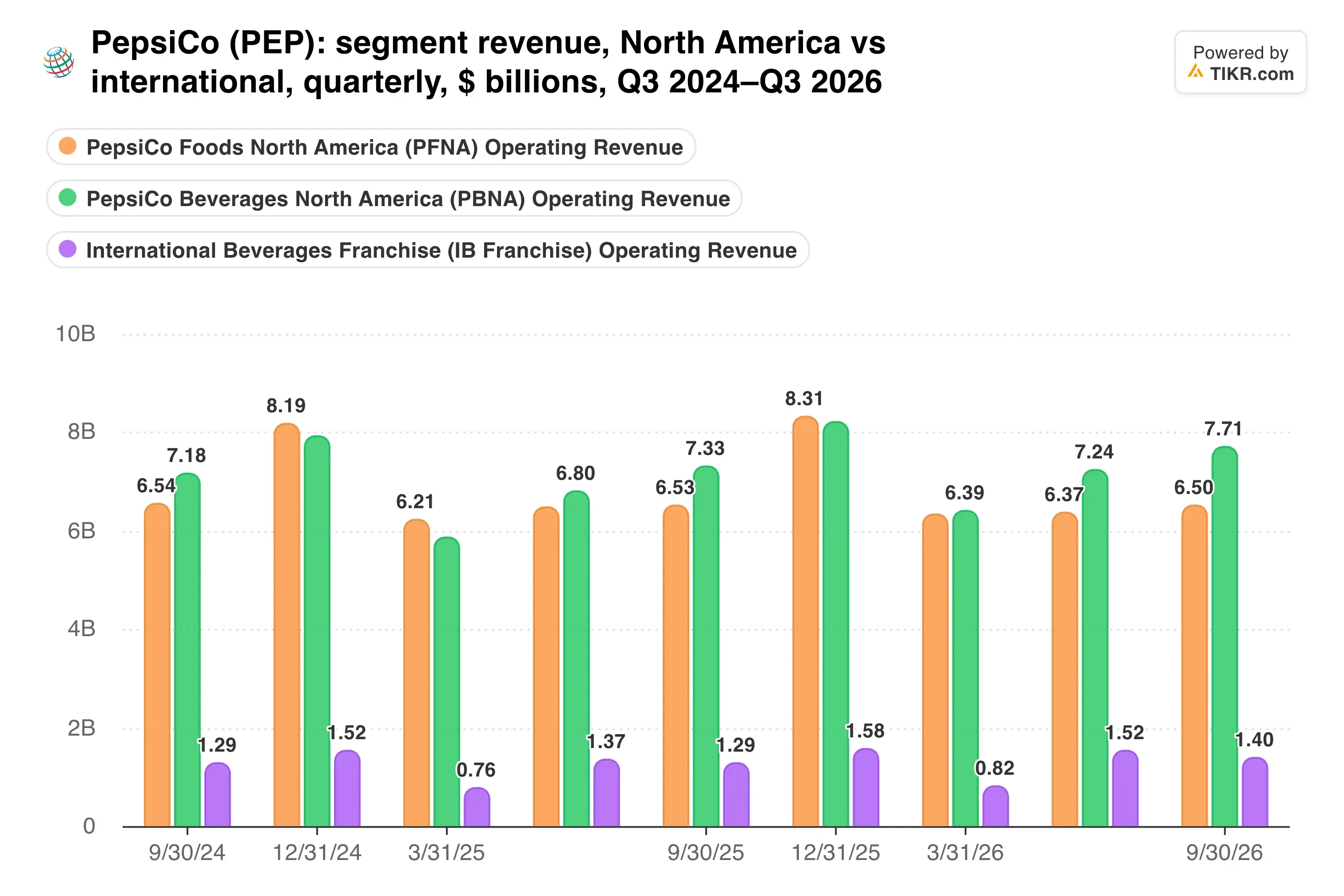
PepsiCo Foods North America revenue was flat at $6.5 billion, and that is the heart of the problem.
Fountain losses sting more
KFC’s switch removes an estimated $500 million in annual U.S. beverage sales. Both KFC and Taco Bell belong to Yum! Brands (YUM), so the split decision is telling.
PepsiCo did keep Taco Bell, renewing its U.S. deal through 2036. That matters more in dollars, since Taco Bell’s roughly $17 billion in U.S. systemwide sales dwarfs KFC’s $5 billion.
Coke’s momentum is the bigger worry. Coca-Cola entered its Q3 report guiding to 9% to 10% comparable EPS growth for 2026, then raised its profit outlook again. PepsiCo’s 2.5% to 3.5% looks thin next to that.
Laguarta pointed to “an acceleration in organic revenue growth” in the Q3 release. Yet North America is where the turnaround still lags.
How wide is the profitability gap with Coke?
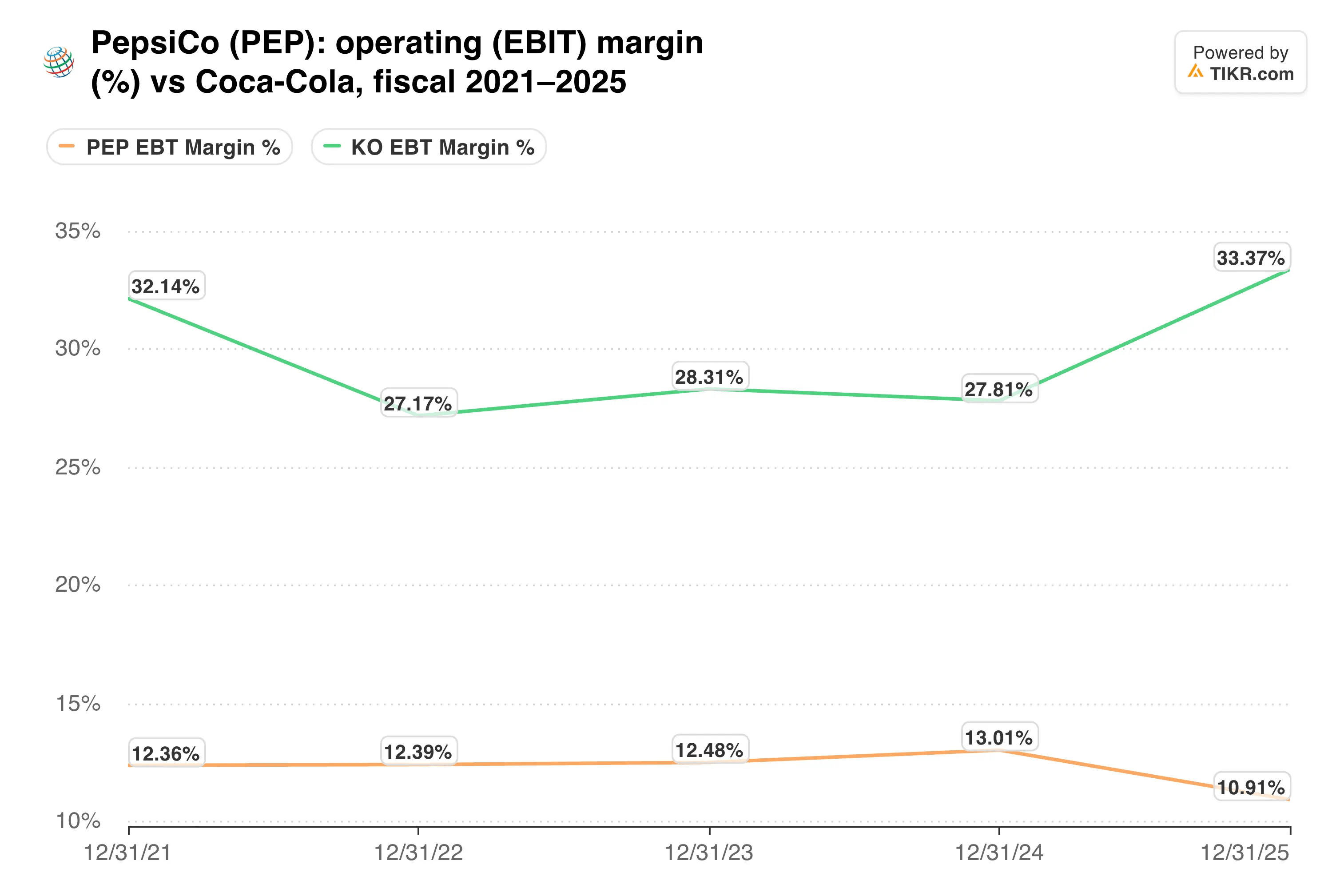
Coca-Cola’s operating margin sits well above PepsiCo’s 16%, which gives Coke more room to win fountain deals on price.
TIKR tracks 24 analysts on PepsiCo. How many say “Buy”?
See the full breakdown of Buy, Hold, and Sell ratings on PepsiCo, along with Wall Street’s revenue and earnings estimates, all in one place. More than 500,000 investors use TIKR to research stocks like this one. See PepsiCo’s Analyst Ratings
The yield carries the stock
At $135, PepsiCo trades at 16.0x forward earnings with a 4.5% dividend yield. The payout ratio is 72.3%, and net debt runs at 1.95x EBITDA.
Analysts expect EPS growth of just 3% a year over the next two years. So the average Street target of $142 implies only about 5% upside.
Elliott Investment Management, which disclosed a $4 billion stake, has pushed for bottling refranchising and asset sales. PepsiCo promised an update on its North American supply chain review in late 2026, and it still plans $8.9 billion of cash returns to shareholders this year.
Here is what the market has been willing to pay for that growth.
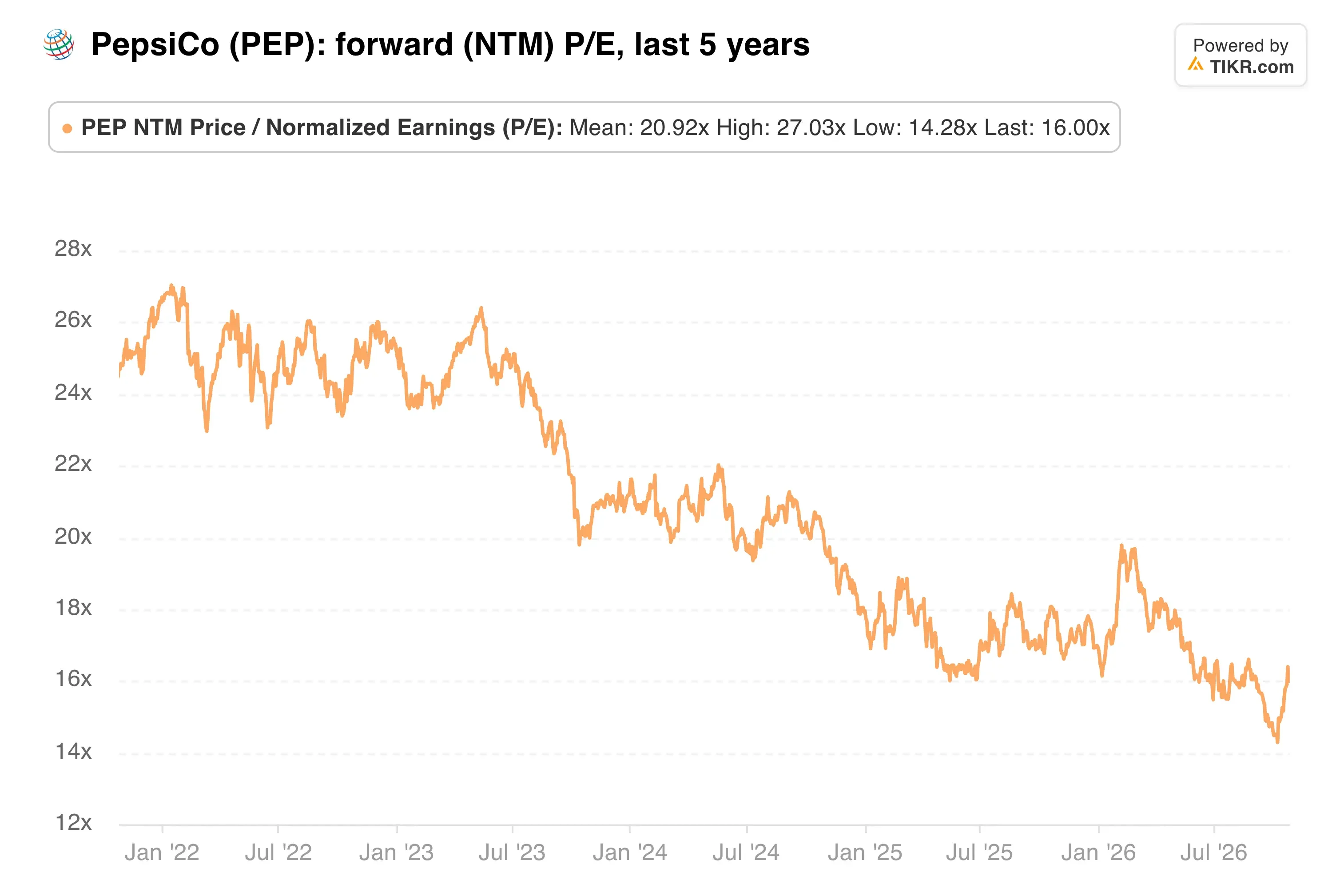
At 16x, the multiple already prices PepsiCo as a slow grower.
My take: The 4.5% yield pays investors to wait, and the valuation leaves little room for further disappointment. I would still hold off on calling a rerating until North American volume turns positive and the supply chain review produces something concrete, such as a bottling refranchise plan.
The next checkpoint is that supply chain update, followed by Q4 results expected around January 11. Both will show whether 2027 can look better than 2026.
So what is PepsiCo stock actually worth?
TIKR lets you forecast the future price of any stock in less than a minute. Just enter a few assumptions into TIKR’s valuation model and see what PepsiCo could be worth. Start from Wall Street consensus estimates, or adjust the inputs to reflect your own view of the business. It’s free to use.
Disclaimer:
Please note that the articles on TIKR are not intended to serve as investment or financial advice from TIKR or our content team, nor are they recommendations to buy or sell any stocks. We create our content based on TIKR Terminal’s investment data and analysts’ estimates. Our analysis might not include recent company news or important updates. TIKR has no position in any stocks mentioned. Thank you for reading, and happy investing!