Key Takeaways
- Netflix fell after its Oct. 20 report, when it guided fourth-quarter revenue below Wall Street’s estimates and cut its 2026 ad revenue outlook to about $2.7 billion from $3 billion.
- Chamath Palihapitiya called Netflix “a dormant subscription” and said $14 billion of debt financed its content library, while Alphabet’s YouTube gets its content cheaply.
- Netflix’s debt is manageable: it ended September with $15.3 billion of gross debt and $8.2 billion of cash, and it expects about $12 billion of free cash flow this year.
- The bigger risk is Netflix’s content bill of about $20 billion this year, which it pays before anyone watches, while YouTube pays creators a share of revenue after it comes in.
Netflix (NFLX) fell after its third-quarter report on Tuesday, Oct. 20, when it guided fourth-quarter revenue and operating margin below Wall Street’s estimates. The stock was already down 26% in 2026 going in.
Revenue rose 11.8% from a year earlier to $12.87 billion, the fourth straight quarter of slower growth. Netflix also cut its 2026 ad revenue outlook to about $2.7 billion from $3 billion.
Chamath Palihapitiya, the founder of Social Capital, had a blunter read on X:
“I watch something on YouTube every day. Netflix is a dormant subscription for me.”
And a dormant subscription is the kind that gets canceled.
His argument goes past his own viewing habits. Alphabet (GOOG) gets YouTube’s videos from creators, while Netflix pays for its own: “YouTube has very low costs of content creation. Netflix has $14B of debt that has financed their content library.” He called it a possible “lesson in the halls of mismatching assets and liabilities.”
TIKR tracks 52 analysts on Netflix. How many say “Buy”?
See the full breakdown of Buy, Hold, and Sell ratings on Netflix, along with Wall Street’s revenue and earnings estimates, all in one place. More than 500,000 investors use TIKR to research stocks like this one. See Netflix’s Analyst Ratings
The debt is the easy part
Palihapitiya’s $14 billion matches the $14.5 billion of debt on Netflix’s balance sheet at the end of 2025. TIKR’s total debt figure also counts leases, so it runs a bit higher. It has also barely moved, staying between $16.9 billion and $18.1 billion every year since 2021.
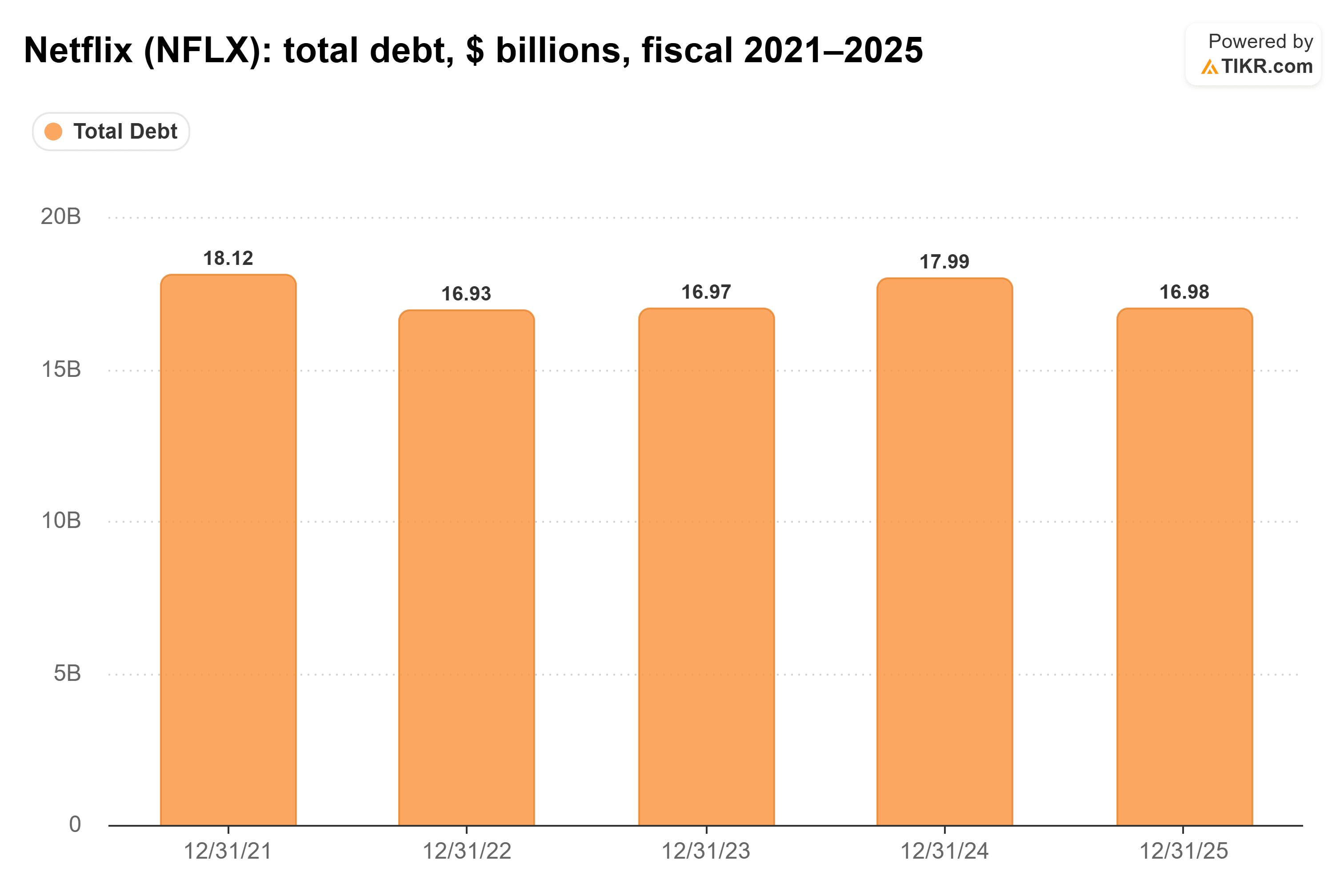
So most of that borrowing happened by 2021, when Netflix’s free cash flow was still slightly negative. Since then, Netflix has mostly rolled its debt over. In the third quarter it sold $1 billion of bonds to pay off $1 billion that comes due in the fourth.
Meanwhile, free cash flow went from slightly negative in 2021 to $9.5 billion in 2025…
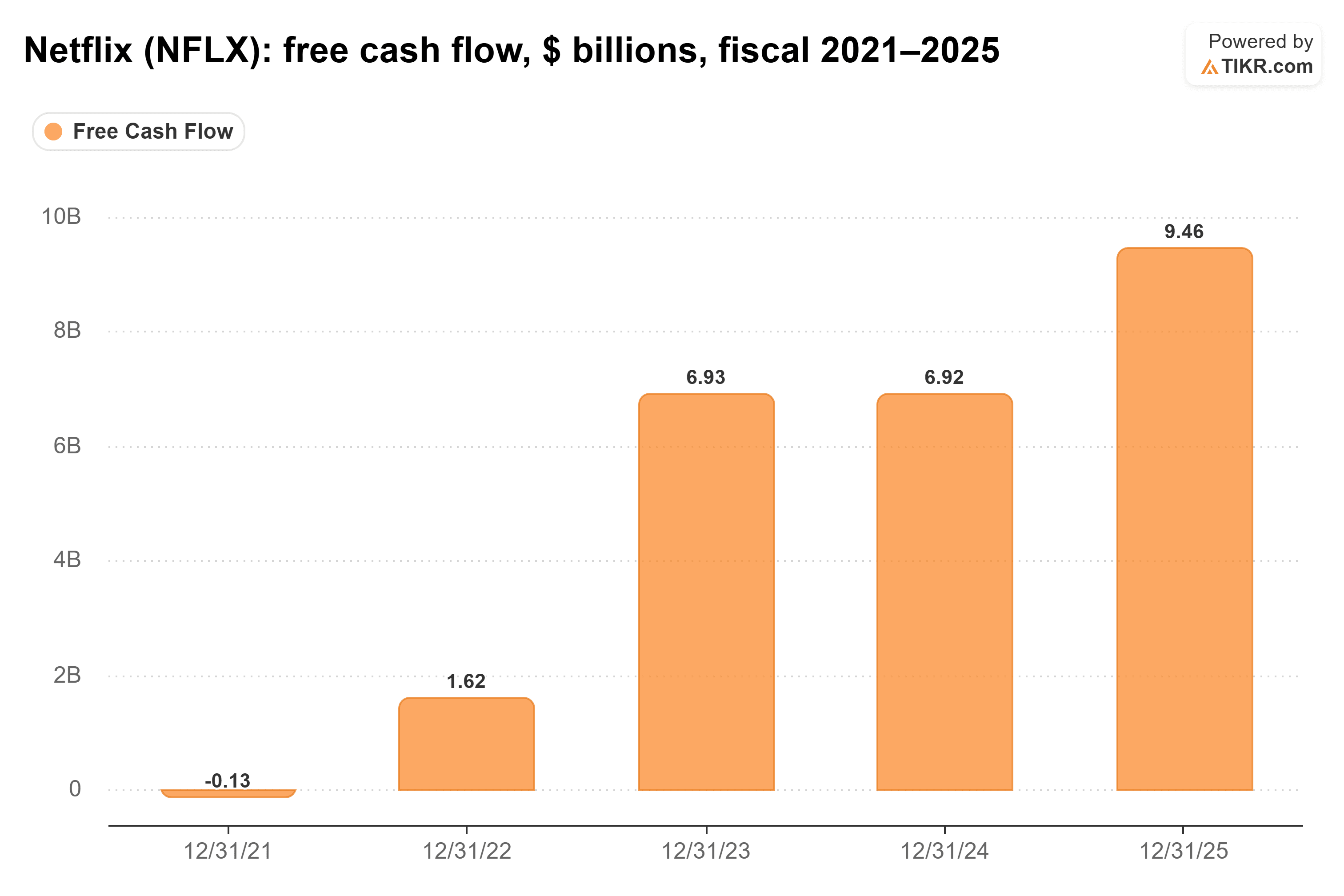
…and Netflix expects about $12 billion this year. That’s down from $12.5 billion because of a real estate deal it expects to close in the fourth quarter.
Netflix ended September with $15.3 billion of gross debt and $8.2 billion of cash. That leaves about $7.1 billion of net debt, less than a year of free cash flow. It also spent $4.8 billion buying back stock in the third quarter, its biggest quarter of buybacks ever. That’s hardly how a company worried about its lenders behaves.
Netflix pays for its shows before anyone watches
Palihapitiya’s mismatch is real, and it sits in Netflix’s content contracts.
Netflix expects to spend about $20 billion on content in 2026. According to its quarterly report, at the end of June it had committed to $25.1 billion of content payments, with $11.9 billion due within a year. That’s a bigger fixed bill than its debt, and Netflix signs up for it before a show has proven anything.
YouTube’s content isn’t free either: Alphabet’s video arm says it paid more than $100 billion to creators, artists and media companies from 2022 through 2025. But YouTube pays a share of what videos earn (55% of ad and subscription revenue in its Partner Program), and only after they earn it. If viewers drift away, YouTube’s content bill shrinks along with its revenue. Netflix still owes for the shows it has already ordered.
Netflix’s own fix calls for even more money up front. Co-CEO Ted Sarandos said on Tuesday’s call that markets outside the U.S. lean on its biggest hits:
“We had some really solid doubles and triples this year. But the other territories count on some of those titles being home runs so that they’ll travel around the world.”
Netflix also just replaced chief content officer Bela Bajaria with former Disney executive Peter Rice. Home runs cost money long before they’re hits, and they pay off only if people give Netflix the hours they now give YouTube.
Growth is already cooling
That’s why engagement matters so much here. Analysts expect revenue growth to slow from about 16% in both 2024 and 2025 to 13% this year and 11% in 2027.
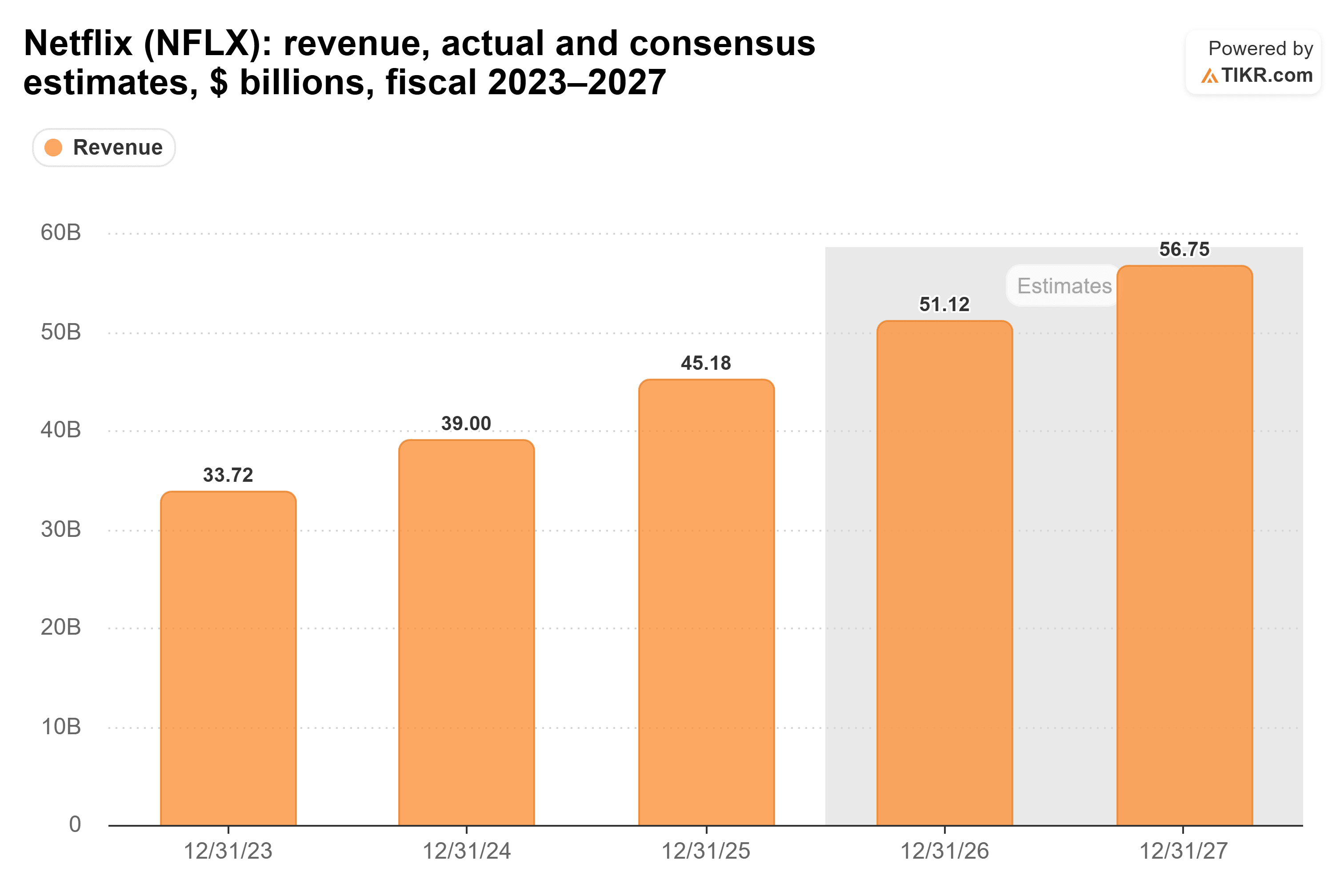
That’s still double-digit growth. The fourth-quarter shortfall is small next to a $51 billion year, so it shouldn’t move these estimates much. Hitting them while the content bill grows every year depends on viewers sticking around.
Watch the content bill
Palihapitiya is right that Netflix carries a mismatch YouTube doesn’t. The $14 billion of debt is the smaller part of it: a little over a year of this year’s free cash flow would cover it. The bigger part is the $20 billion a year Netflix spends on shows before it knows who’ll watch them.
My take: the debt is the least of Netflix’s worries, and at around 20x earnings, the stock already prices in plenty of slowing. Even that could look expensive if the content bill keeps rising while viewers spend more of their evenings on YouTube.
Of course, a couple of home runs would change the conversation fast. The fourth-quarter report in January is the next check on whether the slate is working.
So what is Netflix stock actually worth?
TIKR lets you forecast the future price of any stock in less than a minute. Just enter a few assumptions into TIKR’s valuation model and see what Netflix could be worth. Start from Wall Street consensus estimates, or adjust the inputs to reflect your own view of the business. It’s free to use.
Disclaimer:
Please note that the articles on TIKR are not intended to serve as investment or financial advice from TIKR or our content team, nor are they recommendations to buy or sell any stocks. We create our content based on TIKR Terminal’s investment data and analysts’ estimates. Our analysis might not include recent company news or important updates. TIKR has no position in any of the stocks mentioned. Thank you for reading, and happy investing!