Key Stats for Vertiv Stock
- Current Price: $305.58
- Target Price (Mid): ~$519
- Street Target: ~$377
- Potential Total Return: ~70%
- Annualized IRR: ~12.5% / year
- Max Drawdown: 25.32% (June 10, 2026)
Now Live: Discover how much upside your favorite stocks could have using TIKR’s new Valuation Model (It’s free) >>>
What Happened?
Vertiv Holdings Co (VRT) has spent 2026 proving it can sell AI infrastructure faster than almost anyone doubted. The harder question, the one that actually moves the stock now, is whether it can build fast enough to deliver what it has already sold. On July 1, the company opened its first factory in Southeast Asia, and the market is still arguing about what the answer is worth.
The stock reaction has been whippy. VRT jumped 5.79% on July 6 as investors connected the regional buildout to AI data center demand, then gave back 4.05% on July 7 to close at $305.58. That two-day round trip captures the whole debate in miniature. Bulls see a company physically expanding to feed a record order book. Bears see a stock up roughly 86% year to date, trading near 45 times forward earnings, where any stumble resets the multiple in a hurry. The one thing both sides agree on is that execution, not demand, is now the variable that matters.
Why a factory opening is the real story
Manufacturing announcements rarely move a stock. This one matters because it targets Vertiv’s single biggest risk: a backlog that has grown faster than its ability to ship.
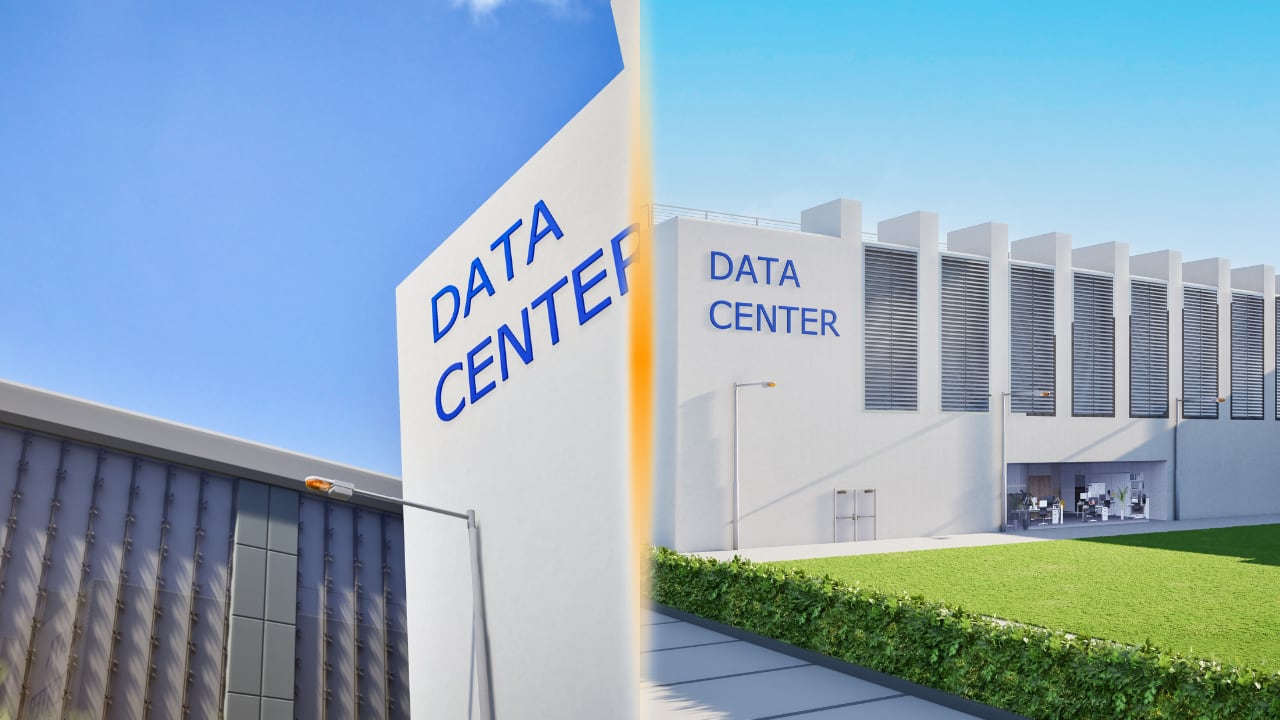
The Johor plant sits in Senai, just across the border from Singapore, in one of the fastest-growing data center markets on earth. It runs about 236,000 square feet, and Vertiv expects it to employ 500 workers by 2027, with roughly 75% of output serving the Malaysian market. It builds the products where demand is most acute: liquid cooling equipment, CoolChip coolant distribution units (the devices that move fluid between the chip and the wider cooling loop), and prefabricated power modules.
The scope matters, though, and so does the scale. Vertiv says the site will be fully operational only in 2027, and with most of its output pointed at the local market, Johor is best read as a regional supply-and-resilience move, not a switch that converts the entire $15 billion global backlog overnight. What it does prove is a repeatable template. The site runs full-scale witness testing, meaning customers can validate equipment under real site conditions before it ships, per the company’s announcement. Vertiv says its prefabricated Power Module and Power Skid systems can cut deployment time by up to 50% versus traditional builds, one lever among several that shorten the path from order to installed capacity.
CEO Giordano Albertazzi tied the plant directly to that scaling problem. “As compute requirements evolve across multiple generations of AI infrastructure, customers need partners to provide power, cooling, and infrastructure solutions at scale,” he said. The word that matters is scale. It is what the whole thesis now hinges on.

See historical and forward estimates for Vertiv stock (It’s free!) >>>
What management told investors the market missed
The clearest window into why capacity has become the battleground came at Vertiv’s May 2026 Investor Conference, where Chief Product and Technology Officer Scott Armul spent a long session on a theme that got less attention than his product demos: customers are no longer just asking what Vertiv makes, they are asking whether it can deliver at volume.
Armul described the shift bluntly when an analyst asked whether the industry was seeing a shakeout among the dozens of companies claiming cooling capability. “Give me a credible story as to how do you ramp, how do you scale, how do you deliver it mass, how do you test and turn up and commission,” he said, framing that as the question customers now lead with. His conclusion was pointed: “folks that can scale are going to be the first look or maybe more of the trusted partner as we think about how this ecosystem builds.” The Johor plant, with its witness-testing bays and prefabrication lines, is that argument rendered in concrete.
Armul also explained why the deployment phase itself is exposing gaps across the industry. As sites move from planning into live installation, the unglamorous work of flushing, filling, and commissioning hundreds of cooling units at a single campus has become a bottleneck. “Figuring out how to do the fluid management, the flush and fill on the primary side and the secondary side at a 250-megawatt site is not a walk in the park,” he said. That is the operational reality a valuation model cannot easily capture, and it favors the vendor with the deepest service bench.
The numbers behind the premium
The reason investors tolerate a rich multiple is that the growth genuinely is exceptional. Vertiv’s forward two-year revenue CAGR (compound annual growth rate, the smoothed annual growth pace) runs at around 32%, with forward EBITDA compounding at around 46%. Those are multiples of what its closest large-cap peers produce.
That gap is what justifies the spread against comparables. Vertiv trades at roughly 32.6 times NTM (next twelve months, the forward-looking year) EV/EBITDA, against about 17.1 times for Schneider Electric and 15.8 times for Legrand. On the surface, that is a steep premium. But Schneider and Legrand are growing revenue at a fraction of Vertiv’s pace, and neither carries the backlog visibility Vertiv has built. A company compounding earnings two to three times as fast as the field, with a booked order pipeline the others lack, should not trade at the same multiple. The premium is defensible on growth. What it is not is forgiving, because it leaves almost no cushion if that growth slows.
The execution track record is the bull’s best evidence. First-quarter 2026 net sales reached $2.65 billion, up 30% year over year, and adjusted diluted EPS of $1.17 rose about 83% from $0.64 a year earlier. The April 22 report drew a 5.44% single-day gain. Free cash flow has swung sharply positive, with LTM (last twelve months) free cash flow of roughly $2.0 billion, and net leverage sits near zero at 0.30 times. This is no longer a speculative story about future demand. It is a company converting orders into cash today.
The risk is concentrated and real. Vertiv’s revenue leans on a handful of hyperscale customers, and its 5-year beta of 2.04 means the stock moves about twice as hard as the market in both directions. If AI capital spending pauses even briefly, the multiple compresses faster than the business does. The Johor plant helps the supply side of that equation. It does nothing to diversify the demand side.

See how Vertiv performs against its peers in TIKR (It’s free!) >>>
TIKR Advanced Model Analysis
- Current Price: $305.58
- Target Price (Mid): ~$519 by year-end 2030
- Potential Total Return: ~70%
- Annualized IRR: ~12.5% / year over the next 4.5 years

See analysts’ growth forecasts and price targets for Vertiv stock (It’s free!) >>>
The mid case is used rather than the high case because it holds the P/E roughly flat, so the return comes from the business rather than from investors agreeing to pay even more.
Two revenue drivers underwrite that target:
- Content per megawatt: as rack densities climb toward 600 kilowatts and beyond, Vertiv sells more power and cooling into each site.
- Regional capacity coming online: Johor and the Americas expansions convert backlog to revenue on a faster clock.
The margin driver is mixed, as higher-margin liquid cooling and integrated systems grow as a share of sales, supporting the model’s mid-case net income margin of around 20% (up from single digits before 2023). The primary risk is customer concentration: a hyperscaler capex pause would hit revenue and the multiple at once.
- Upside: AI factory adoption and margin execution stay exceptionally strong, pushing returns toward the high-case arc.
- Downside: AI spending cools and a stock priced for perfection derates hard, cutting annualized returns toward the high single digits.
Conclusion
The catalyst to watch is Q2 2026 earnings on July 29. The single most important line will not be revenue, which the backlog largely guarantees, but the adjusted operating margin exit rate and any commentary on how fast the new Americas and Asia capacity is reaching run rate. Good looks like margins holding in the mid-20s with management reaffirming or raising the full-year $6.30 to $6.40 adjusted EPS guide. Bad looks like incremental margins slipping as greenfield plants ramp, which would tell investors the cost of scaling is eating the operating leverage that justifies the multiple. A stock near 45 times forward earnings does not get graded on whether it can sell. It gets graded on whether it can build. On July 29, Vertiv shows its work.
See what stocks billionaire investors are buying so you can follow the smart money with TIKR.
Should You Invest in Vertiv?
The only way to really know is to look at the numbers yourself. TIKR gives you free access to the same institutional-quality financial data that professional analysts use to answer exactly that question.
Pull up Vertiv, and you’ll see years of historical financials, what Wall Street analysts expect for revenue and earnings in the quarters ahead, how valuation multiples have moved over time, and whether price targets are trending up or down.
You can build a free watchlist to track Vertiv alongside every other stock on your radar. No credit card required. Just the data you need to decide for yourself.
Looking for New Opportunities?
- See what stocks billionaire investors are buying so you can follow the smart money.
- Analyze stocks in as little as 5 minutes with TIKR’s all-in-one, easy-to-use platform.
- The more rocks you overturn… the more opportunities you’ll uncover. Search 100K+ global stocks, global top investor holdings, and more with TIKR.
Disclaimer:
Please note that the articles on TIKR are not intended to serve as investment or financial advice from TIKR or our content team, nor are they recommendations to buy or sell any stocks. We create our content based on TIKR Terminal’s investment data and analysts’ estimates. Our analysis might not include recent company news or important updates. TIKR has no position in any stocks mentioned. Thank you for reading, and happy investing!