Uber Technologies (UBER) said on Tuesday, October 6, that it will buy corporate catering platform ezCater for $2.3 billion in cash. It’s Uber’s second delivery deal in under three months, after July’s agreement to buy Delivery Hero in a $14.8 billion deal.
ezCater, founded in 2007, handles food orders for office meetings, events and workplace meals. Uber says it generated more than $2.5 billion in gross bookings over the last 12 months, growing in the high teens, with average orders above $400 across 140,000+ US restaurants. The deal needs regulatory approval and should close in the coming months. Uber stock closed at $69.48 on Monday.
Why Uber wants catering
“Catering is a big business, and can be a huge revenue stream for restaurants,” CEO Dara Khosrowshahi said in the release.
The buyer is the draw. Corporate catering gives Uber access to workplace food budgets, and Uber already serves those customers through Uber for Business. ezCater plugs a catering marketplace into that sales channel and into Uber Eats’ restaurants.
How big is this for Uber?
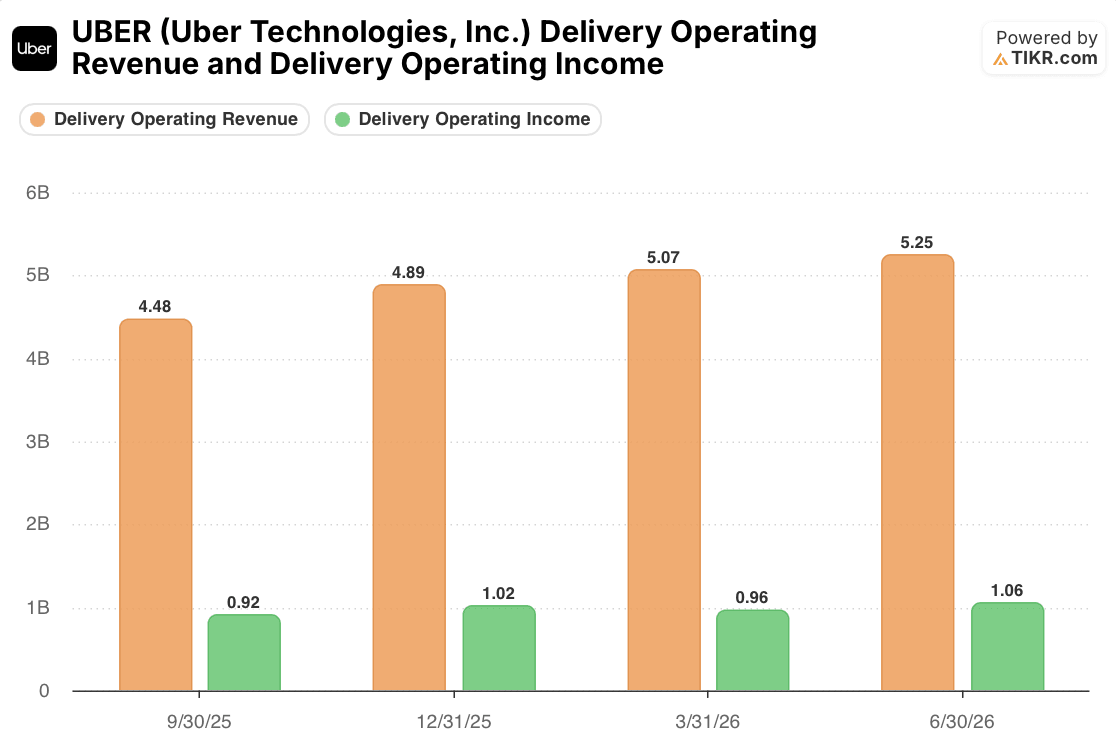
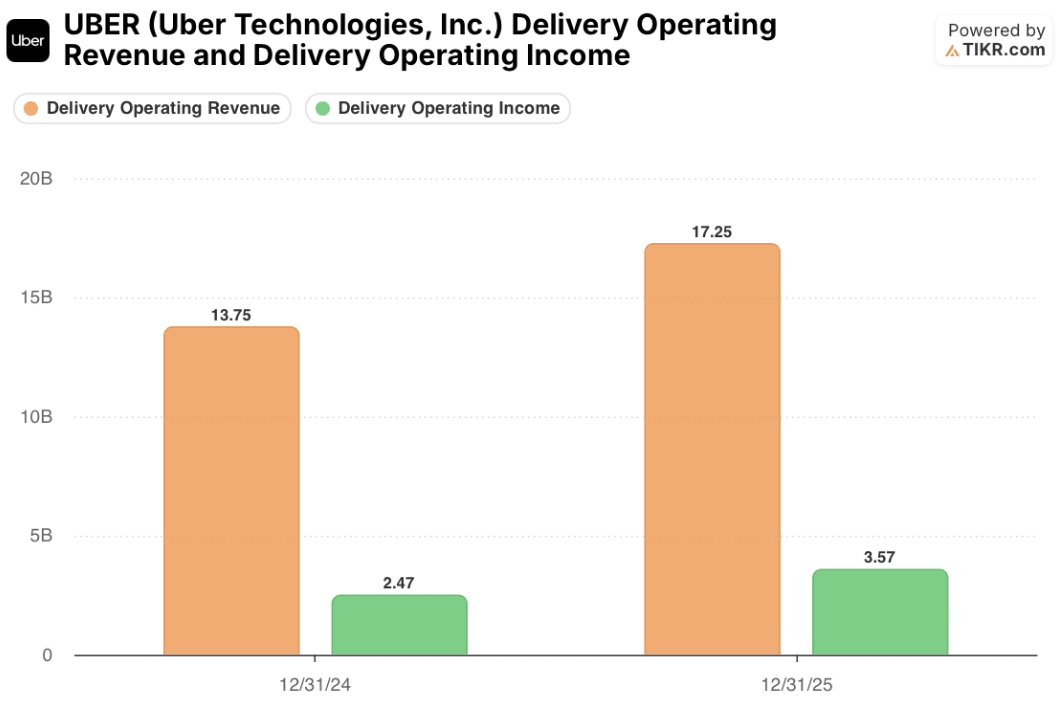
Not very. Delivery revenue rose from $13.75 billion in 2024 to $17.25 billion in 2025 (up 25%), and hit $5.25 billion in Q2 2026 alone.
Delivery also booked $27.5 billion in gross bookings in Q2, per Uber’s results. Annualize that, and ezCater’s bookings add about 2% to Delivery.

The price is just as manageable. Uber generated $10.1 billion of free cash flow over the last four quarters, so $2.3 billion is less than one quarter’s $2.79 billion.
Testing the margin claim
Uber says ezCater is profitable on a non-GAAP operating income basis and will be “margin accretive.” Delivery earned $3.96 billion of operating income on $19.69 billion of revenue over the last four quarters, about 20%, up from 18% in 2024. Measured against gross bookings, Q2 Delivery profit was about 3.8%.
The trade-off: ezCater’s high-teens growth trails Delivery’s 26% bookings growth in Q2. This deal buys margin, not speed.
What to watch on Uber stock
At the Goldman Sachs conference on September 10, Khosrowshahi said “the hurdle rate for us to buy any other company is very high,” adding, “we think our stock is really cheap.” Uber aims to send about half its free cash flow to buybacks, but spent about $4 billion in Q2, largely on Delivery Hero shares. Krishnamurthy said rebuilding buybacks would take “months, not quarters.”
I think ezCater clears that hurdle: about 0.9x bookings for a profitable B2B asset is a fair price. The test is the November 4 Q3 report, which will show whether buybacks recover while Delivery Hero is still to fund. For DoorDash (DASH), which chases the same office orders through DoorDash for Business, the acquisition would give Uber a dedicated catering network of 140,000+ restaurants to sell into the same accounts.
Want to see how Uber’s Delivery margins and cash flow have trended before the next deal lands? Pull up the same segment and free cash flow charts on TIKR for free. Learn more here.
So what is Uber stock actually worth?
TIKR lets you forecast the future price of any stock in less than a minute. Just enter a few assumptions into TIKR’s valuation model and see what UBER stock could be worth. Start from Wall Street consensus estimates, or adjust the inputs to reflect your own view of the business. It’s free to use.
Value Uber Technologies, Inc. for free→
Disclaimer:
Please note that the articles on TIKR are not intended to serve as investment or financial advice from TIKR or our content team, nor are they recommendations to buy or sell any stocks. We create our content based on TIKR Terminal’s investment data and analysts’ estimates. Our analysis might not include recent company news or important updates. TIKR has no position in any of the stocks mentioned. Thank you for reading, and happy investing!