Key Stats for Target Stock
- 52-Week Range: $83 to $133
- Current Price: $123
- Street Mean Target: $132
- Street High Target: $160
- Analyst Consensus: 9 Buys, 2 Outperforms, 24 Holds, 3 Underperforms
- TIKR Model Target (Jan. 2031): $182
Target Stock Beats Q1 by 17% on Broad-Based Sales Growth While the Real Story Has Barely Started
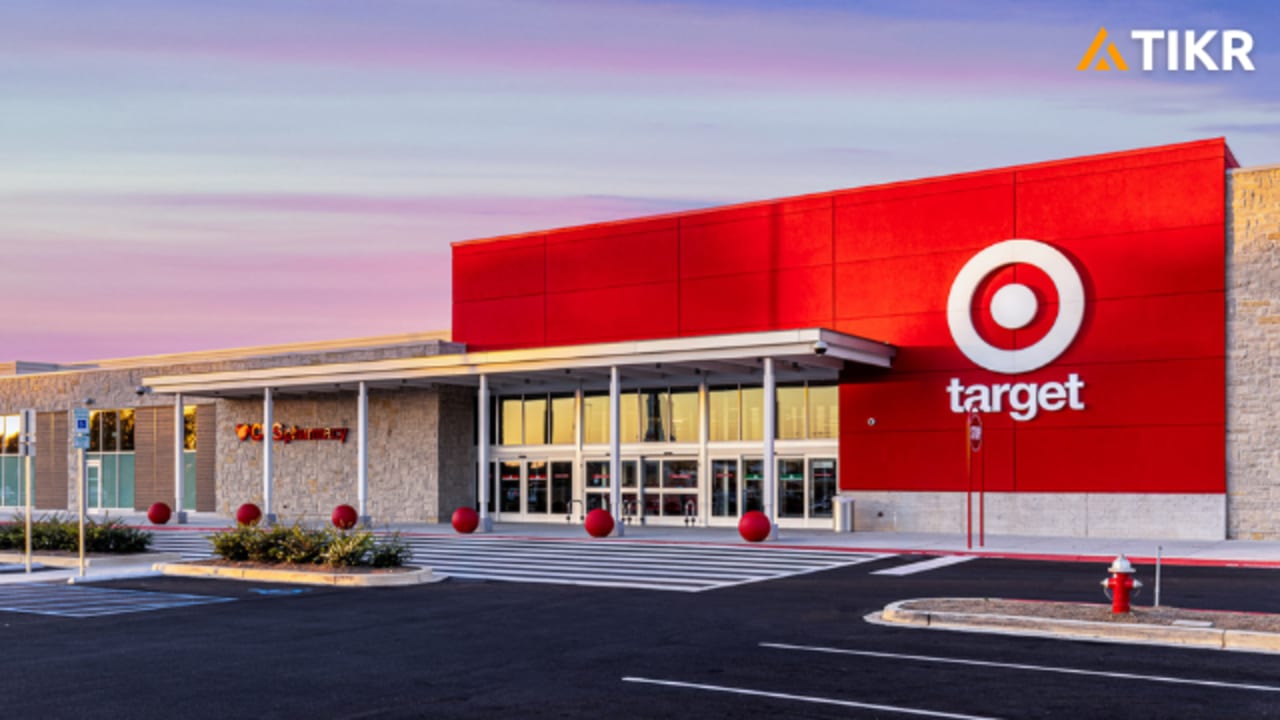
Target Corporation (TGT) reported first quarter fiscal 2026 results on May 20 that beat analyst estimates across every major line, with net sales of $25.44 billion rising 6.7% year over year and adjusted EPS of $1.71 clearing the $1.46 consensus by around 17%.
Comparable sales grew 5.6%, nearly double the 2.5% that analysts had expected, led by a 4.4% increase in traffic.
That traffic figure matters more than the EPS beat.
When a retailer like Target gains comp through traffic, not just higher average transaction size, it means more consumers are choosing to walk in, not just spending more when they do.
Digital comparable sales surged 8.9% in the quarter, led by more than 27% growth in same-day delivery through the Target Circle 360 membership program.
Net sales in all six core merchandise categories grew, compared with declines in five categories a year ago.
The toy category posted double-digit comp growth, powered by new offerings priced at $20 or less, and food and beverages rose around 6% after Target added 3,000 new items in the quarter.
The baby category was the most revealing proof point, with comp trends accelerating by more than 5 percentage points in the back half of Q1 following the launch of new premium assortments, baby concierge services in 200 stores, and roughly 2,000 new items.
CEO Michael Fiddelke, who took the helm in February after three straight years of declining revenue under his predecessor, set the tone on the Q1 2027 earnings call: “We will not confuse this progress with potential.”
That line was not humility for its own sake.
Target raised its full-year net sales growth forecast to around 4%, double the prior target of 2%, and guided adjusted EPS toward the high end of the $7.50 to $8.50 range, while Fiddelke added that he was “not wanting to swing too hard too quickly despite the early signs of momentum.”
Shares fell about 6% on the day, a reaction that reflects macro anxiety more than execution risk, given the numbers delivered against a high bar.
TGT Analysts Stay Cautious as Targets Rise: Why the Hold-Heavy Consensus Understates the Upside
The analyst consensus on Target stock after Q1 earnings shifted in numbers but not in tone, with 33 analysts covering the stock and a mean target of around $132, implying roughly 7% upside from the current price.

The consensus sits at 9 Buys, 2 Outperforms, 24 Holds, and 3 Underperforms, a distribution that reflects genuine caution rather than bearish conviction.
RBC Capital Markets, with an Outperform rating and a target around $153, argued that investors were overlooking organizational improvements capable of driving more sustainable growth, even as it flagged that comparable sales could moderate sequentially and that elevated fuel costs remain a margin risk.
D.A. Davidson, with a Buy and a target around $155, called the guidance “conservative” and noted that even a modest slowdown from Q1 pace would represent meaningful improvement over the prior three years.
At the cautious end, Deutsche Bank raised its target to around $126 after the print, and Roth MKM moved to around $114, both reflecting skepticism that the Q1 performance was durably repeatable in a tougher macro environment.
The forward EPS trajectory is where the thesis resolves.

For the quarter ended April 30, 2026, Target posted EPS of $1.71, up around 32% from the prior-year adjusted figure of $1.30.
For the quarter ending July 31, 2026, analysts expect EPS of around $2.24, implying around 9% year-over-year growth, with the toughest prior-year comparison of the year given the Nintendo Switch 2 launch that boosted Q2 fiscal 2025.

Meanwhile, annual EPS is expected to grow around 5% to 6% per year over the next several years as the category resets compound and operating leverage builds on the top-line recovery.
The Hold-heavy consensus distribution tells the story of a stock that has already moved 30% year to date, where the Q1 beat cleared a high bar but also raised the execution standard for the rest of the year.
Target stock is undervalued here because the consensus reflects a wait-and-see posture toward a turnaround that has already delivered ahead of schedule in its first full quarter of new leadership.
The catalyst to watch is Q2, where Target laps the Nintendo Switch 2 launch and faces its toughest prior-year comparison — any sequential comp figure above zero against that backdrop would sharply narrow the gap between the cautious consensus and the bull case.
TGT Earns Less Than Costco and Walmart Per Quarter, but Its EPS Recovery Rate Leads the Peer Group

Target’s quarterly EPS Normalized of $1.71 in the April 2026 quarter sits well below Costco’s $4.55 and Walmart’s $0.66 in the same period, placing TGT at a meaningful absolute earnings disadvantage against its two largest peers.
The forward estimates reveal a different picture on trajectory, with Target’s EPS expected to reach around $2.24 in the July 2026 quarter, an increase of around 31% from the $1.71 just reported, while Costco is expected at around $4.97 and Walmart at around $0.74 over the same period.
Target’s recovery slope is the steepest of the three on a percentage basis, which is exactly what a turnaround in its first full quarter of new leadership should look like, and it is the dynamic the Hold-heavy consensus is not yet pricing as durable.
Is Target Stock Undervalued in 2026? TIKR’s $182 Model Target Implies a Cleaner Story Than the Street Sees
TIKR’s base case values Target stock at approximately $182 by January 2031, implying around 48% total return from the current price of around $123, or roughly 8% annualized over approximately 4 and a half years.

In the low case, Target reaches around $197 on a revenue CAGR of around 3% and a net income margin of around 4%, producing around 61% total return and an IRR of around 6% annualized.
In the mid case, a revenue CAGR near 3%, net income margin near 4%, and modest EPS growth near 6% annually brings Target stock to approximately $242 by January 2031 under the mid-case forecasted return, representing around 98% total return at roughly 8% annualized.
In the high case, with revenue growing around 4% annually, net income margin of around 4%, and EPS growth near 8%, the TIKR model puts Target near $288, implying around 135% total return and an IRR near 10% annualized.
The scenario range is wide because the unknowns are real. Target’s category reinvestment is still front-loaded with cost, SG&A is running above historical norms as payroll and training investments flow through the income statement, and the macro environment is genuinely uncertain with fuel costs elevated and consumer sentiment declining.
But the asymmetry favors the buyer at $123. If Target delivers the mid-case growth profile, the annualized return at current prices approaches 8% with a business that is growing, investing, and gaining traffic simultaneously. If it underdelivers, the downside is bounded by a portfolio of around 2,000 stores, a $516 million quarterly dividend program with a 50-year annual increase streak, and a brand with disproportionate wallet share among busy families — the exact consumer segment Target is doubling down on.
What is the price target for TGT?
The Street mean target for Target stock is around $132 based on 33 analysts as of early June 2026, with the high target at $160.
TIKR’s base case model puts Target at approximately $182 by January 2031.
Is Target stock a buy right now?
9 analysts rate it Buy, 2 Outperform, 24 Hold, and 3 Underperform.
The bull case rests on the category reset delivering durable traffic gains; the bear case centers on macro pressure and tough second-half comparisons.
What happened to Target stock after Q1 earnings?
Target stock fell around 6% on earnings day despite a significant beat, as investors weighed the strong Q1 results against cautious forward guidance and a challenging macro environment including fuel-related consumer pressure.
Should You Invest in Target Corporation?
The only way to really know is to look at the numbers yourself. TIKR gives you free access to the same institutional-quality financial data that professional analysts use to answer exactly that question.
Pull up Target Corporation stock and you’ll see years of historical financials, what Wall Street analysts expect for revenue and earnings in the quarters ahead, how valuation multiples have moved over time, and whether price targets are trending up or down.
You can build a free watchlist to track Target Corporation alongside every other stock on your radar. No credit card required. Just the data you need to decide for yourself.
Access Professional Tools to Analyze TGT stock on TIKR for Free →