
Key Takeaways
- Credit Acceptance shares fell 20% today after a $291.2 million loan forecast cut pushed it to a third-quarter loss.
- Adjusted EPS rose 27% to $13.01, beating estimates, and loan volume grew 51%.
- Loans made from 2023 to 2026 are collecting less than planned, as the company pays dealers more per loan.
- Ally Financial and Capital One show little sign of the same slippage, and Carvana is the one to watch.
Credit Acceptance (CACC) sank 20% today after cutting its forecast of what its loans will collect by $291.2 million, which swung it to a third-quarter loss.
That’s a worry for others with money in auto loans, including Ally Financial (ALLY), Capital One Financial (COF) and Carvana (CVNA).
Two very different quarters
Adjusted EPS rose 27% to $13.01, beating estimates, and loan dollar volume jumped 51%.
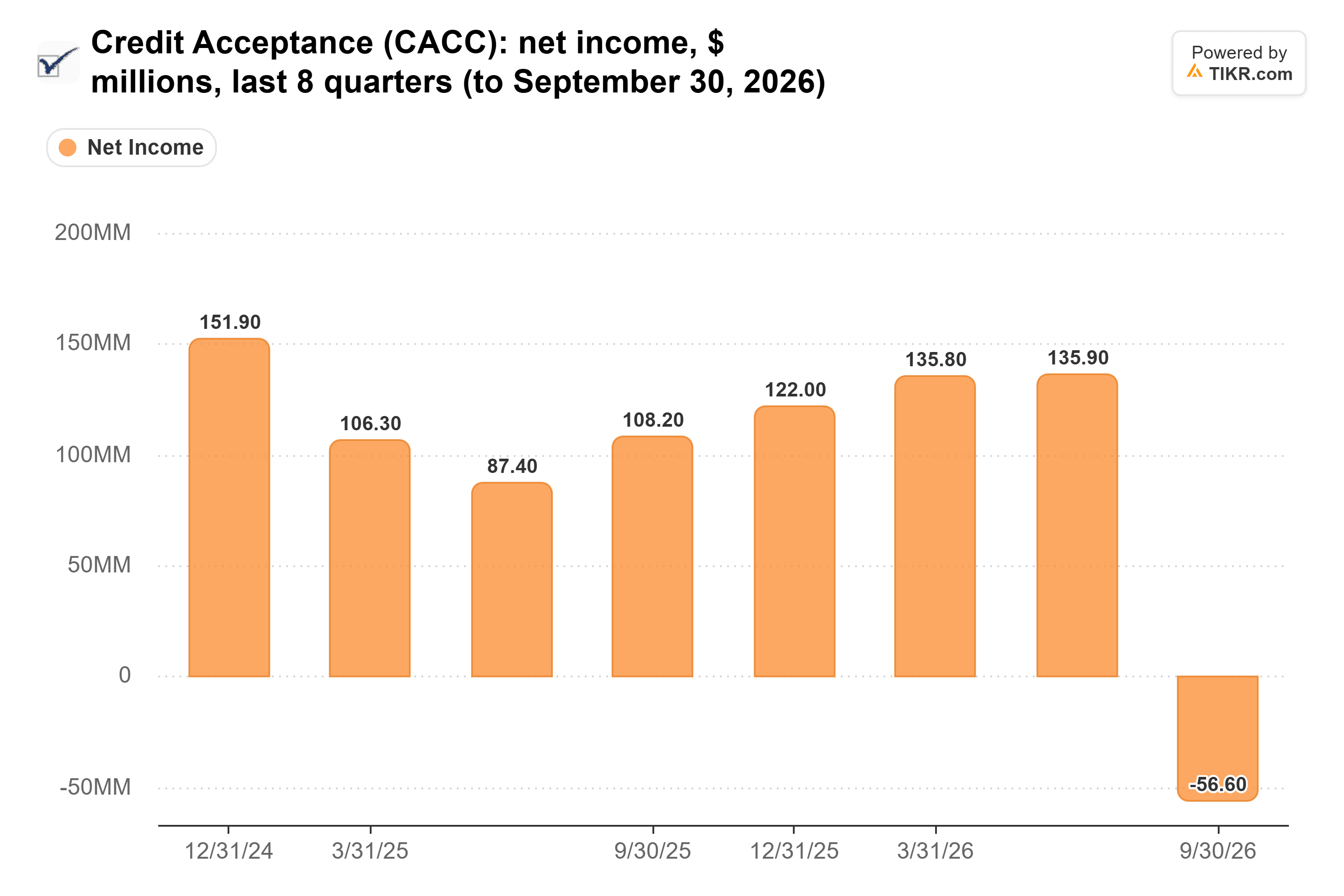
But on a GAAP basis, Credit Acceptance lost $56.6 million, against a $108.2 million profit a year earlier. Here’s its net income over the last eight quarters:
The loans keep coming up short
Credit Acceptance said in its release that it had seen “small but consistent” underperformance on loans made from 2022 to 2026.
The misses don’t look small anymore. Loans from 2023 are now expected to collect 62.4% of what borrowers owed, against 67.5% when they were made.
It’s also paying more up front: its advance rate on third-quarter loans was 46.6%, up from 45.2% in the first half, and those loans already sit 0.9 point below the forecast they were priced on.
TIKR tracks 3 analysts on Credit Acceptance. How many say “Buy”?
See the full breakdown of Buy, Hold, and Sell ratings on Credit Acceptance, along with Wall Street’s revenue and earnings estimates, all in one place. More than 500,000 investors use TIKR to research stocks like this one. See Credit Acceptance’s Analyst Ratings
Ally and Capital One aren’t seeing it yet
So far, the banks suggest the problem is Credit Acceptance’s own. Ally’s retail auto net charge-offs were 1.89% in the third quarter, up from 1.88% a year earlier, though 44% of its volume came from its highest credit tier. Capital One’s auto charge-off rate was 1.59%, and its auto originations grew 22% from a year earlier.
Carvana is the one I’d watch. It sells the loans it writes, and its third-quarter gross profit per car fell $365 from a year earlier, partly on lower loan rates it gave customers. If loan buyers start pricing in what Credit Acceptance found, does that figure keep falling?
Growth on a shakier base
Here’s Credit Acceptance’s forward P/E over the past five years:
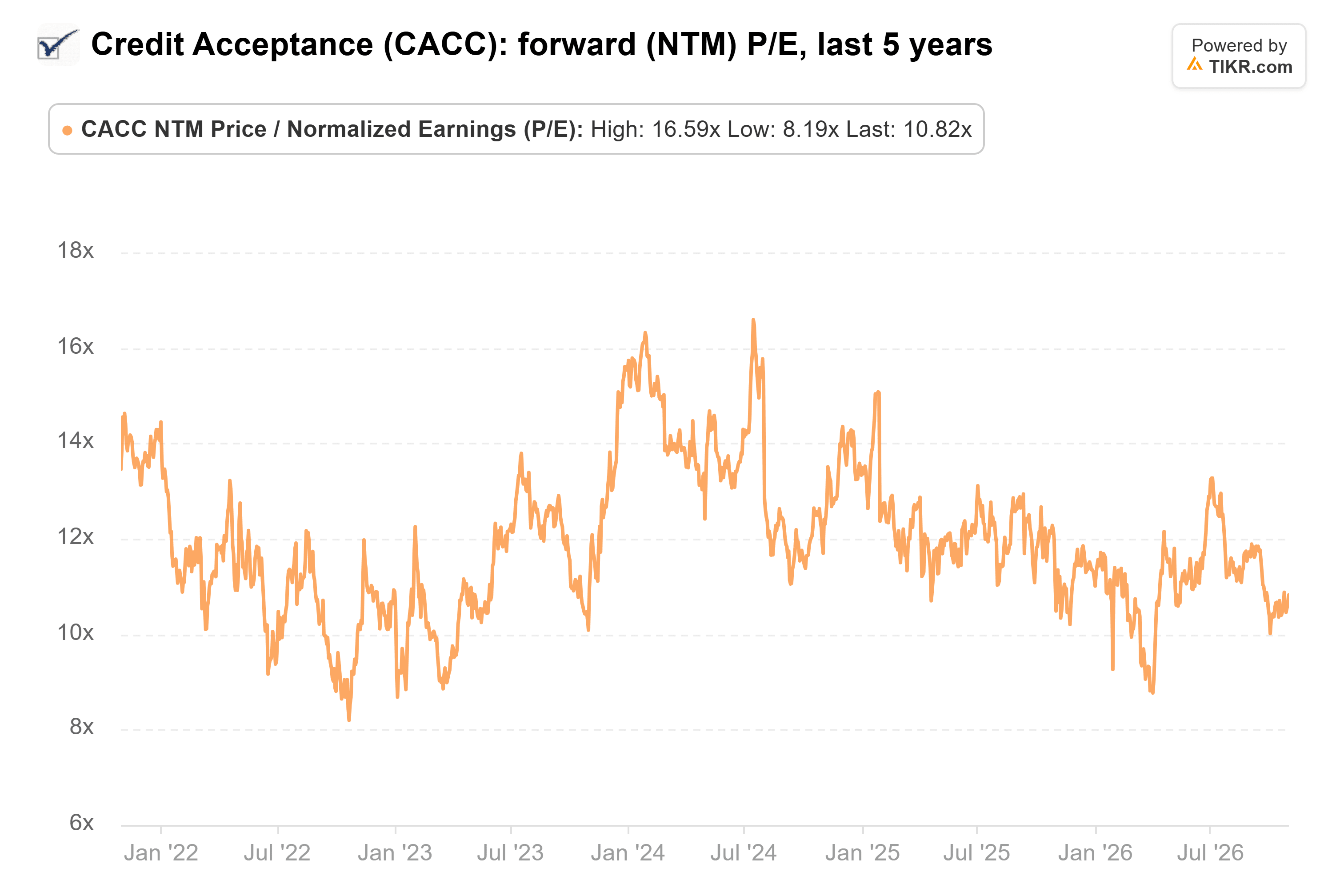
My take: The reset is a one-time catch-up, but I’d be wary of a lender growing this fast on loans it keeps marking down.
The next test is whether the 2026 loans hold their new forecasts in the fourth-quarter report early next year.
So what is Credit Acceptance stock actually worth?
TIKR lets you forecast the future price of any stock in less than a minute. Just enter a few assumptions into TIKR’s valuation model and see what Credit Acceptance could be worth. Start from Wall Street consensus estimates, or adjust the inputs to reflect your own view of the business. It’s free to use.
Value Credit Acceptance for free
Disclaimer:
Please note that the articles on TIKR are not intended to serve as investment or financial advice from TIKR or our content team, nor are they recommendations to buy or sell any stocks. We create our content based on TIKR Terminal’s investment data and analysts’ estimates. Our analysis might not include recent company news or important updates. TIKR has no position in any of the stocks mentioned. Thank you for reading, and happy investing!