Key Stats for Applied Materials Stock
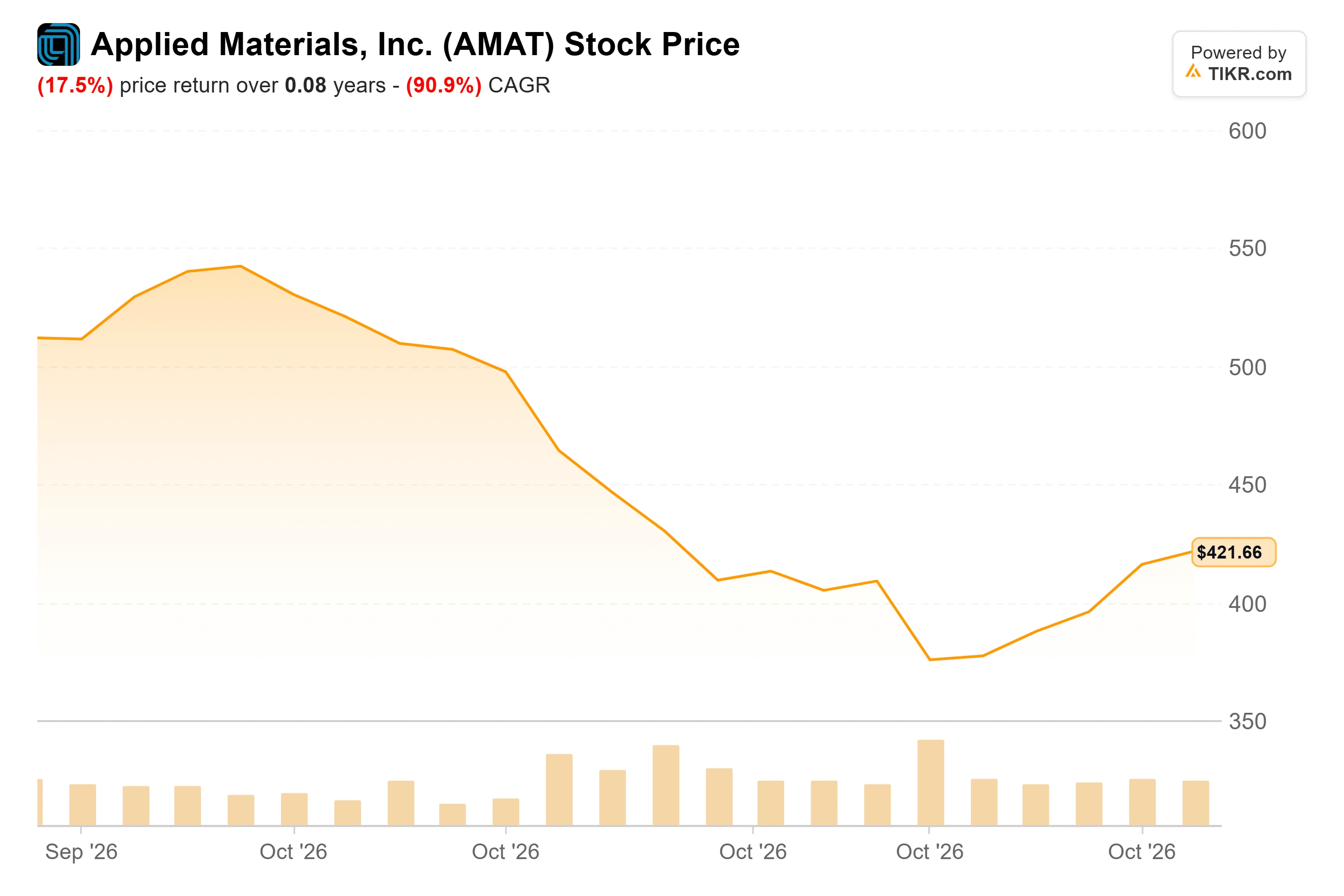
- Current Price: $421.66
- Target Price (Mid): ~$806
- Street Target: ~$628
- Potential Total Return: ~91%
- Annualized IRR: ~18% / year
What Happened?
Applied Materials (AMAT) has gained 8.79% in three sessions since it said after the Oct. 26 close that it would raise its stake in Dutch chip-packaging toolmaker BE Semiconductor Industries (BESI) to about 20%, from roughly 9%. Besi shares rose more than 9% during Oct. 27 trading, Reuters reported. Applied’s own gain owes more to the sector: its biggest day, up 5.07% on Oct. 28, came as chip stocks rallied on SK hynix’s forecast of a memory shortage through 2030. The stake matters more, because it ties Applied closer to the bonding step of hybrid bonding, the one piece Applied’s own executives say it doesn’t make.
Besi Owns the Bond. Applied Owns Most of the Rest
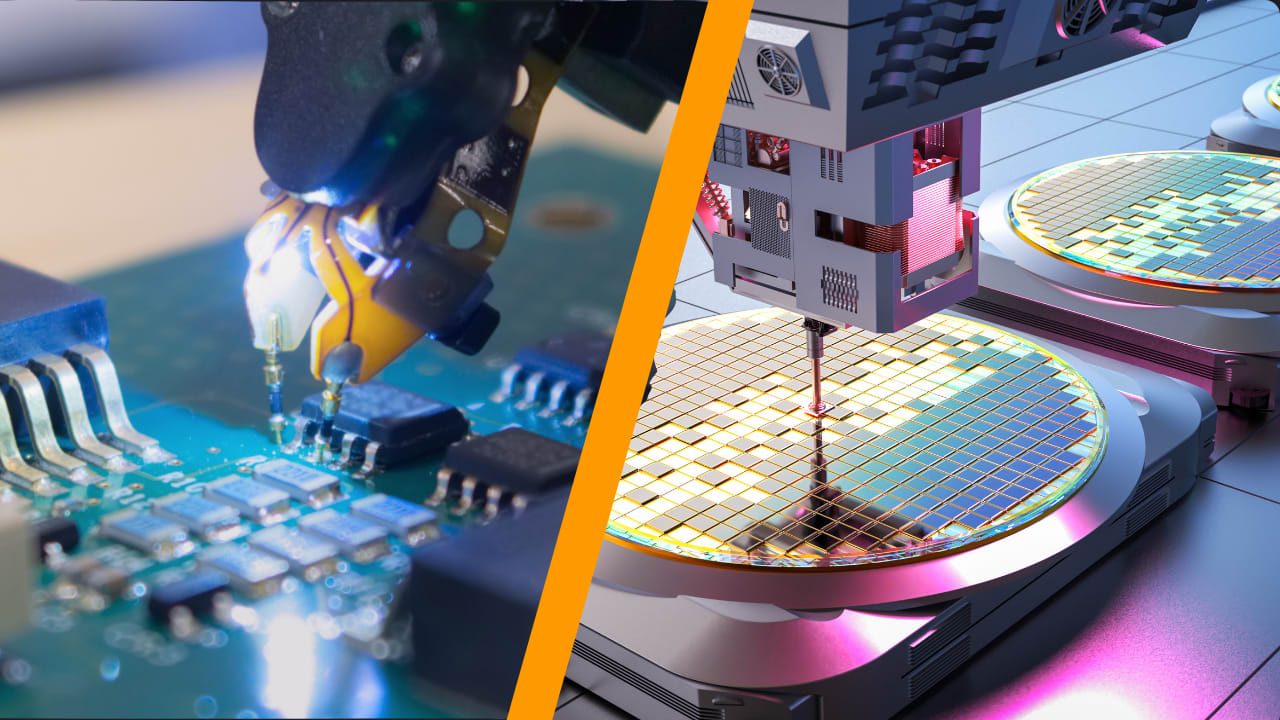
Hybrid bonding stacks chips by fusing their copper connections directly instead of joining them with tiny solder bumps, which packs far more links between chips. Besi builds the tools that place and bond the dies.
At Applied’s Oct. 13 SEMICON West investor breakfast, Prabu Raja, president of its Semiconductor Products Group, said Applied’s portfolio addresses about 80% of hybrid bonding steps across pre-bonding, bonding, and post-bonding work. “We don’t have bonding,” he said, which is why Applied partners with Besi on Kinex, an integrated die-to-wafer bonding tool.
The prize is high-bandwidth memory (HBM), the stacked chips that feed AI processors. Raja said Applied holds more than 60% of its served HBM packaging market and expects “over $1 billion this year alone” there. Then he raised the ceiling: “Hybrid bonding will double our SAM as compared to micro bumps and TSV.” SAM is served available market, and TSVs (through-silicon vias) are the vertical wires that run through each stacked chip. By Raja’s math, the spending Applied can compete for doubles if HBM makers switch.
The deal is not done. Delivery of the shares still needs U.S. antitrust clearance, and Applied said it has no plan to go beyond about 20% or to seek a board seat. A full takeover would face hurdles: Dutch rules require a bid above 30%, and a Degroof Petercam analyst told Reuters China’s regulator would likely block one.
TIKR tracks 40 analysts on Applied Materials. How many say “Buy”?
See the full breakdown of Buy, Hold, and Sell ratings on Applied Materials, along with Wall Street’s revenue and earnings estimates, all in one place. More than 500,000 investors use TIKR to research stocks like this one. See Applied Materials’ Analyst Ratings
Consensus Already Expects Faster Growth
TIKR consensus for fiscal 2028 revenue rose from about $34 billion at the end of 2025 to about $56 billion as of Oct. 30, as coverage widened from 14 to 23 analysts. That leaves less room for hybrid bonding to arrive late.

CEO Gary Dickerson told analysts at the same event that Applied is “making tremendous progress on the yields,” but that yields are “super important on when those inflections happen.” The Street mean target has eased from $638.94 on Sept. 30 to $627.83, though 34 of the 40 analysts covering the stock still rate it Buy or Outperform.
TIKR Advanced Model Analysis
- Current Price: $421.66
- Target Price (Mid): ~$806
- Potential Total Return: ~91%
- Annualized IRR: ~18% / year

The model’s assumptions, which run through 2035, need earnings per share to compound about 19% a year, slightly faster than the 17.7% of the past five years, with the P/E multiple edging lower. The margin driver is a net margin roughly six points above the past year’s 26.5%. Raja said hybrid bonding is already being adopted in HBM, 3D IC logic, and co-packaged optics, which supports that pace. The main risk is timing: if yields push the HBM switch out, more of that growth has to come from logic and DRAM.
Conclusion
Applied reports fiscal fourth-quarter results on Nov. 12. An update that keeps HBM above $1 billion and narrows the hybrid bonding timeline would support the Besi bet; silence on either would suggest the payoff sits further out. The second checkpoint is antitrust clearance, after which the Besi shares are delivered.
So what is Applied Materials stock actually worth?
TIKR lets you forecast the future price of any stock in less than a minute. Just enter a few assumptions into TIKR’s valuation model and see what Applied Materials could be worth. Start from Wall Street consensus estimates, or adjust the inputs to reflect your own view of the business. It’s free to use.
Analyze Applied Materials on TIKR Free →
Disclaimer:
Please note that the articles on TIKR are not intended to serve as investment or financial advice from TIKR or our content team, nor are they recommendations to buy or sell any stocks. We create our content based on TIKR Terminal’s investment data and analysts’ estimates. Our analysis might not include recent company news or important updates. TIKR has no position in any stocks mentioned. Thank you for reading, and happy investing!