Key Takeaways
- KeyBanc kept its Buy rating on Intel on Oct. 30 and cut its price target to $140 from $155, which is 52% above Thursday’s close.
- Intel expects fourth-quarter revenue of $15.0 billion to $16.0 billion, below the third quarter’s $16.5 billion, because PC demand is weakening and a shutdown in Israel is cutting server shipments.
- The $140 target implies 80x next-twelve-months earnings, against Intel’s five-year average of 50x.
- The target asks for a higher multiple than the near-term numbers support, and a named customer for Intel’s 14A process would be the thing to change that.
Intel (INTC) has fallen 35% from its June high, and Thursday’s report brought a wave of target cuts.
KeyBanc analyst John Vinh cut his to $140 from $155 on Oct. 30 and kept his Buy rating. That’s still 52% above Thursday’s $92.07 close.
The guidance did the damage
The slide started in October. Elon Musk confirmed early in the month that TSMC is in talks to join Terafab, the best-known planned user of Intel’s 14A process. Then, on Oct. 14, a fatal accident forced an extended shutdown at Intel’s Israel factory.
Thursday’s guidance made it worse. Intel expects fourth-quarter revenue of $15.0 billion to $16.0 billion, down from $16.5 billion in the third quarter, and non-GAAP EPS of $0.25, down from $0.52. The Israel shutdown takes about $300 million off that revenue, and PC chip revenue should fall more than 20% from the third quarter as PC makers cut inventory.
“We see the PC slowdown continuing at least through the first half of next year,” CFO David Zinsner said in the release.
Servers are still booming
Third-quarter revenue rose 21%, ahead of guidance, and data center revenue jumped 78% to $7.3 billion. Zinsner said demand for those chips “continues to meaningfully exceed available supply.”
When Vinh raised his target to $155 in July, he pointed to rising yields on Intel’s 18A process. That part is holding up: Intel says 18A costs are down about 40% since the first quarter.
TIKR tracks 48 analysts on Intel. How many say “Buy”?
See the full breakdown of Buy, Hold, and Sell ratings on Intel, along with Wall Street’s revenue and earnings estimates, all in one place. More than 500,000 investors use TIKR to research stocks like this one. See Intel’s Analyst Ratings
Does $140 add up?
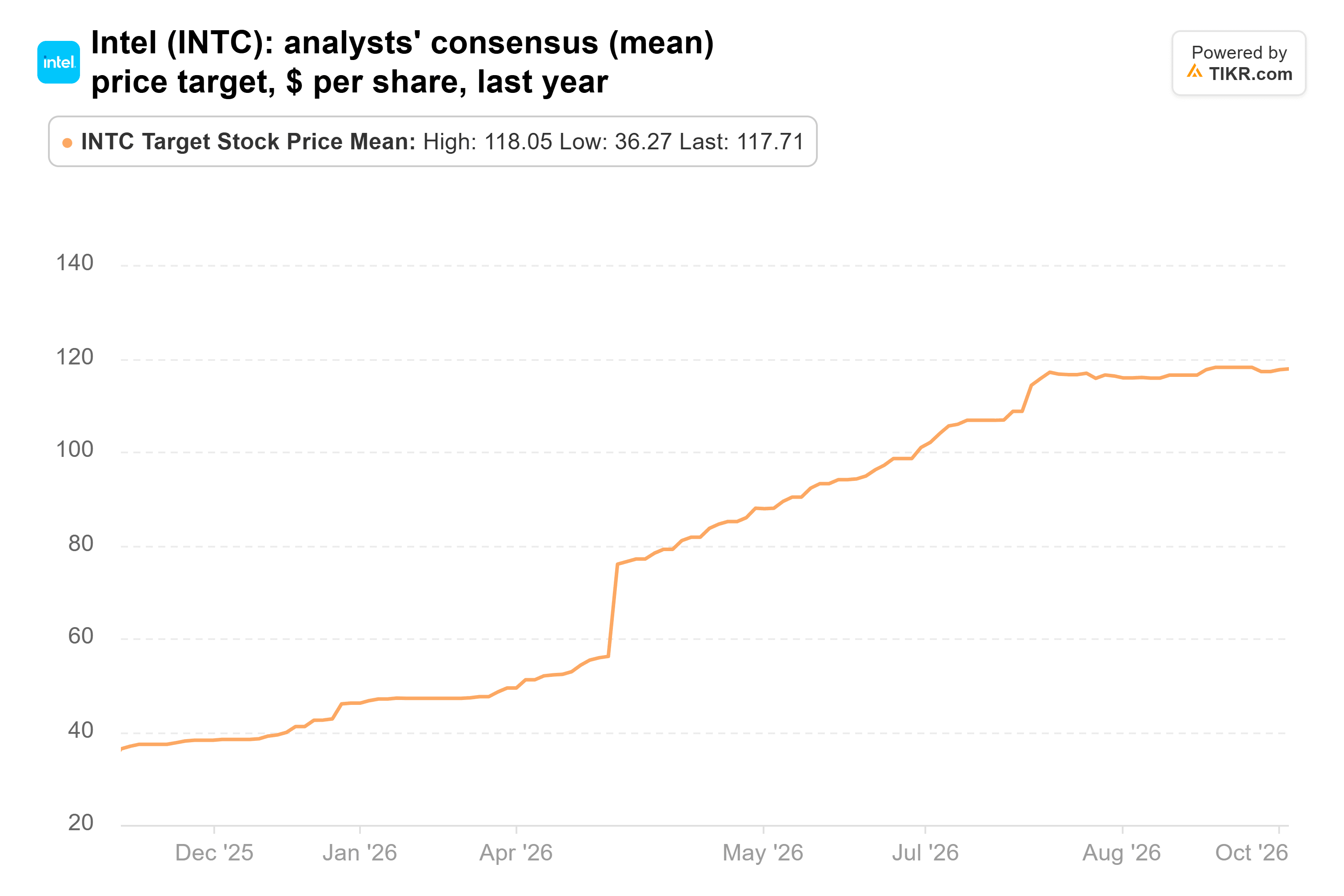
The consensus target from the 48 analysts covering Intel is $118, [28%] above the price and up from $36 a year ago. KeyBanc’s $140 sits 19% above that.
Consensus normalized EPS is $1.54 for 2026 and $2.19 for 2027. Three months ago, the 2027 estimate was $2.01.
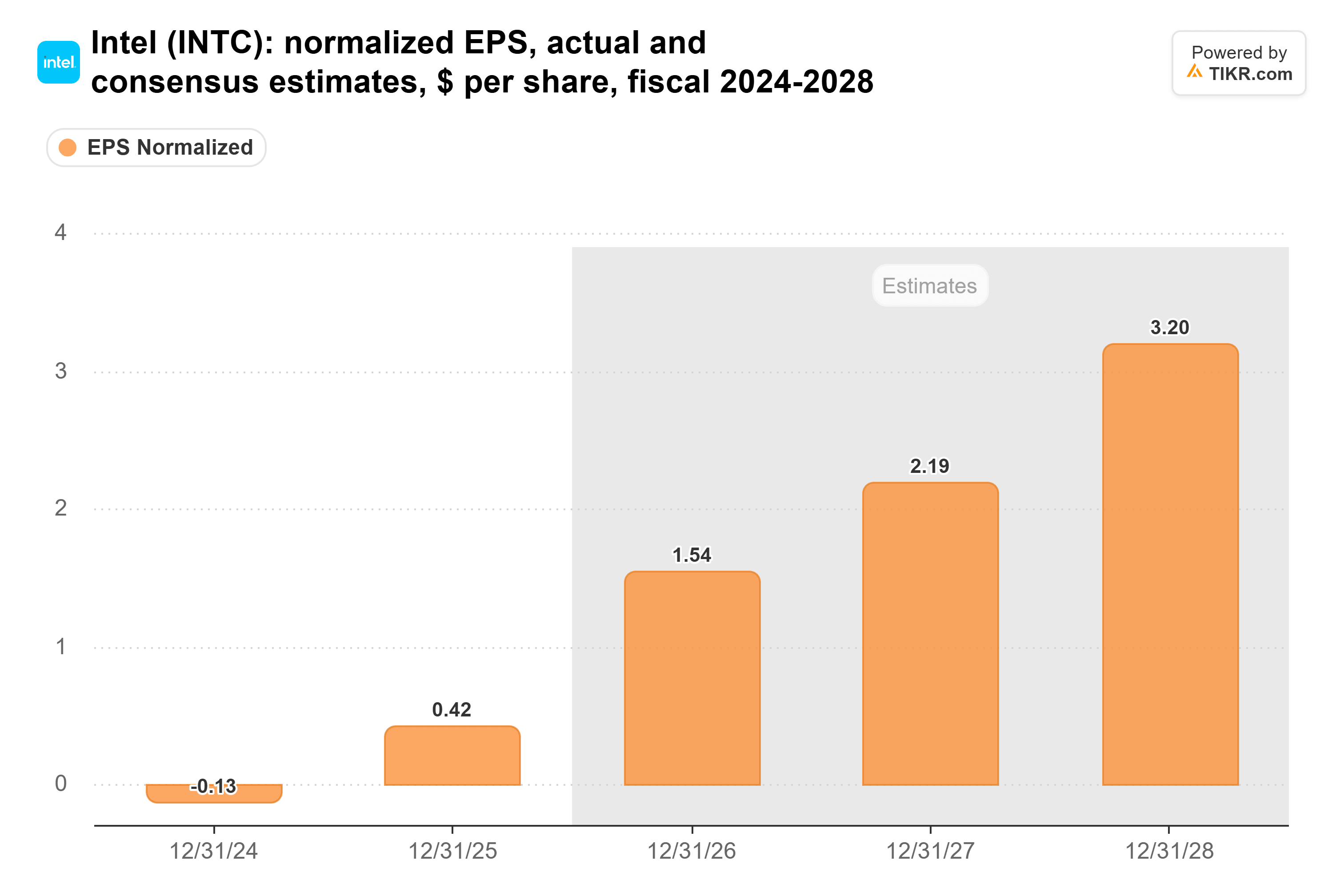
With the fourth quarter guided to $0.25 a share, I’d expect the near-term numbers to come down.
The bigger issue is the multiple. Divide $140 by the $1.75 a share analysts expect over the next twelve months, and the target implies 80x forward earnings. Intel trades at [53x] today, against a five-year average of 50x.
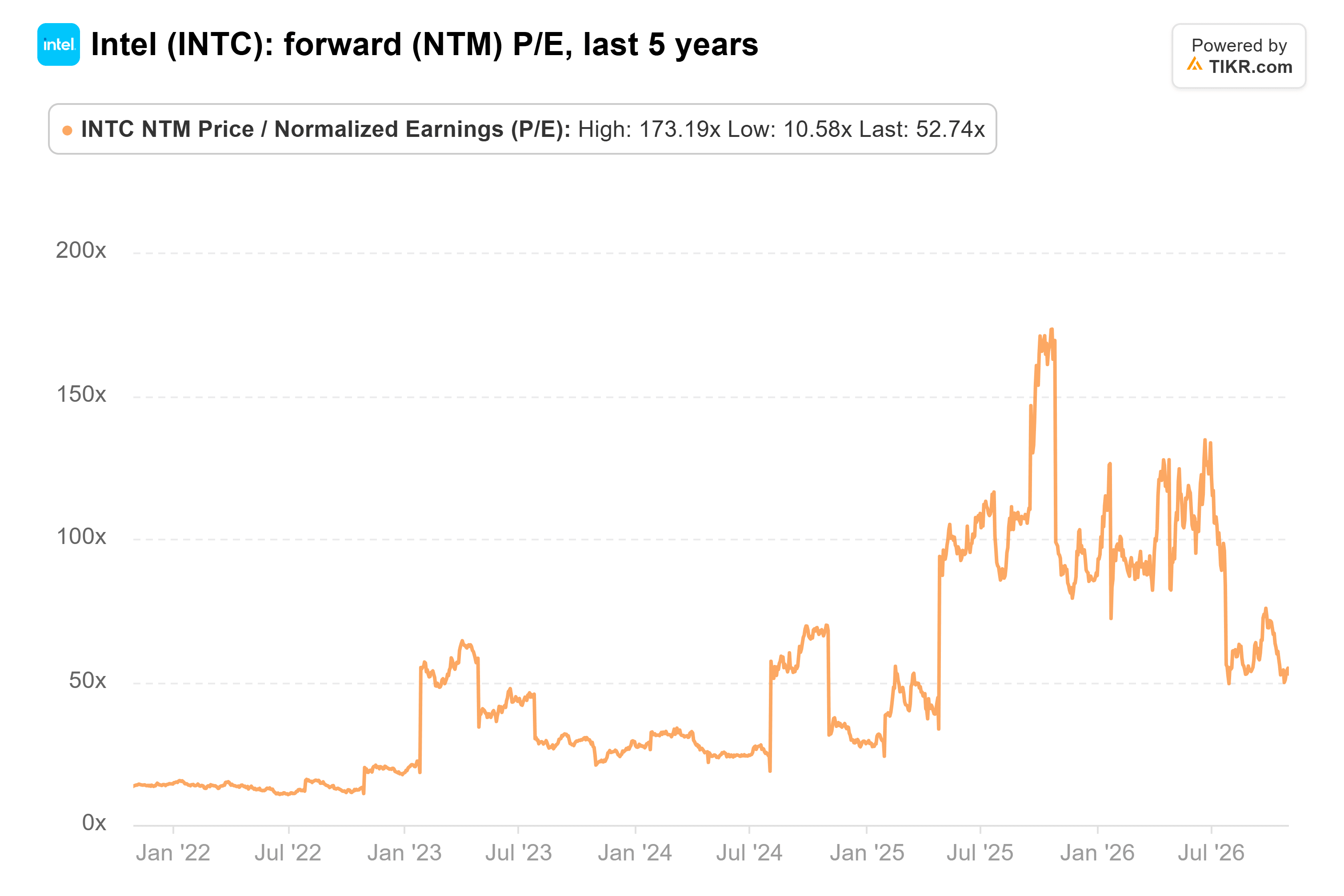
Intel did average 90x over the past year. But that was before the guidance turned.
Too much, too soon
Capital spending will be “up strongly” in 2027, Zinsner said, and he doesn’t expect positive free cash flow next year. August’s $23 billion stock sale had already lifted the diluted share count to 5.31 billion in the third quarter, from 4.53 billion a year earlier.
KeyBanc is right about the servers. But $140 asks investors to pay 80x forward earnings for a company whose next quarter is getting worse and whose PC business won’t recover until memory prices ease. That’s too much to pay for now.
A named 14A customer would change that. CEO Lip-Bu Tan said he’s “highly encouraged by the progress we are making with multiple potential customers on 14A,” and one big name would make $140 a lot easier to defend.
So what is Intel stock actually worth?
TIKR lets you forecast the future price of any stock in less than a minute. Just enter a few assumptions into TIKR’s valuation model and see what Intel could be worth. Start from Wall Street consensus estimates, or adjust the inputs to reflect your own view of the business. It’s free to use.
Disclaimer:
Please note that the articles on TIKR are not intended to serve as investment or financial advice from TIKR or our content team, nor are they recommendations to buy or sell any stocks. We create our content based on TIKR Terminal’s investment data and analysts’ estimates. Our analysis might not include recent company news or important updates. TIKR has no position in any of the stocks mentioned. Thank you for reading, and happy investing!