
Key Stats for Caterpillar Stock
- Current Price: $826.35
- Target Price (Mid): ~$1,060
- Street Target: ~$976
- Potential Total Return: ~29%
- Annualized IRR: ~6% / year
Now Live: Discover how much upside your favorite stocks could have using TIKR’s new Valuation Model (It’s free) >>>
What Happened?
Caterpillar (CAT) announced two moves on back-to-back days. On September 29, it agreed to acquire John Fabick Tractor Company, a Cat dealer of more than 100 years covering parts of Missouri and Illinois, all of Wisconsin, and Michigan’s Upper Peninsula. On September 30, it said it intends to invest approximately $1 billion in North Carolina, including plans for a new Sanford plant for compact track loaders and telehandlers. Both bear on construction and rental, the side of the business that outgrew power in Caterpillar’s latest quarter, according to its investor relations materials.
Construction Outgrew Power Last Quarter
Construction Industries sales reached $8.346 billion in the second quarter of 2026, up 35% from a year earlier, while Power & Energy, home of the data center generator business, grew 17% to $8.238 billion. The rebound follows two down years, with construction sales falling from $27.418 billion in 2023 to $25.060 billion in 2025.
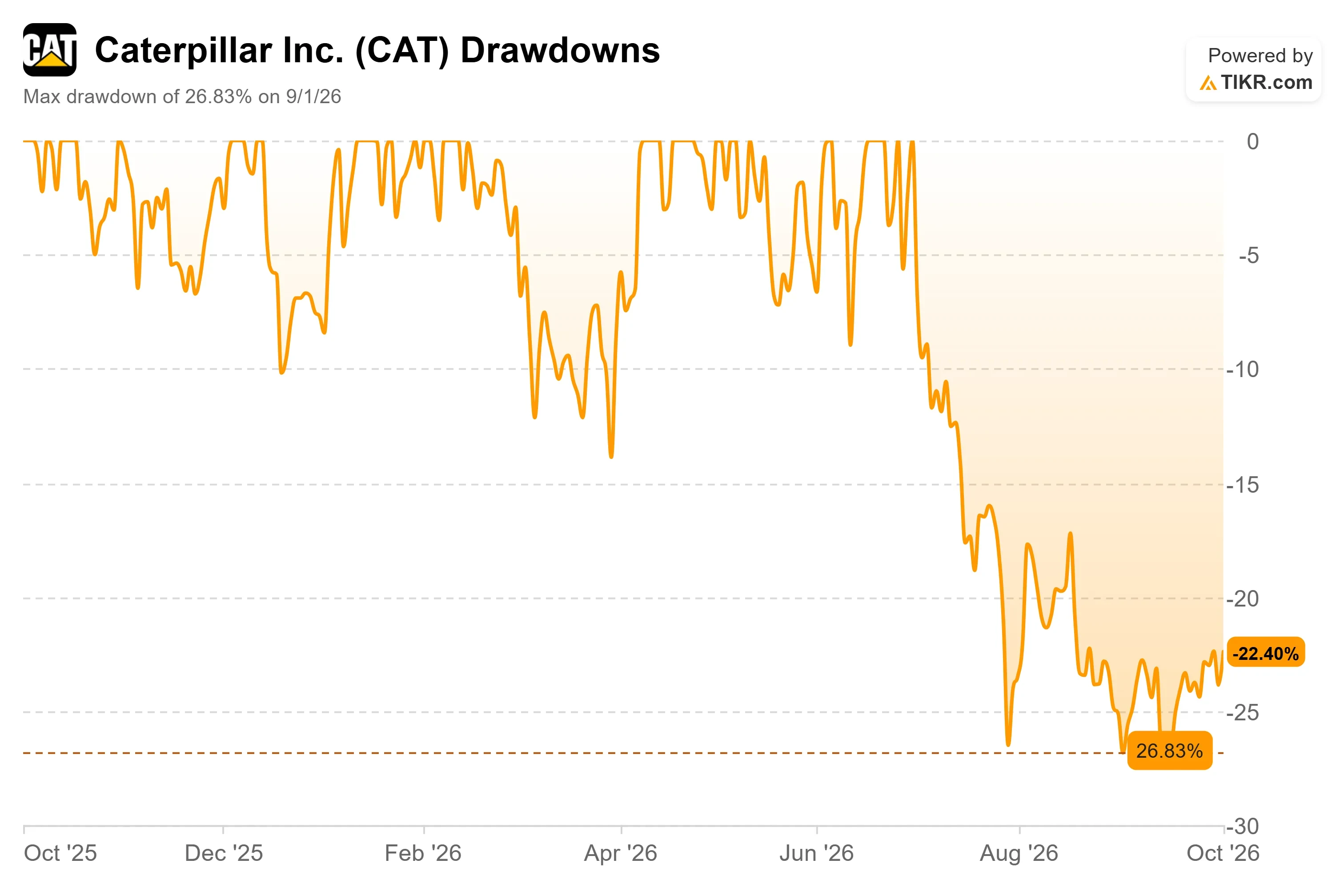
On a Wells Fargo Securities investor call on September 10, Chairman and CEO Joe Creed said Caterpillar may have been underserving parts of construction, particularly the small buyers Cat Compact targets. “We’re really excited about being a little more retail-friendly for that small customer who owns 1 or 2 pieces of equipment and buys every few years,” he said, calling it a very fast-growing part of the construction industry for Caterpillar.
Creed added that construction backlog was up, but that most construction products are not necessarily capacity-constrained the way Power & Energy is. Caterpillar is ramping up some existing plants and wants “production more in line with STU growth,” meaning dealer sales to end customers. Sanford, announced 20 days later, is a longer-term bet on top of that. The segment also carries a cost risk: Caterpillar expects about half of its tariff costs to land in construction.
See historical and forward estimates for Caterpillar stock (It’s free!) >>>
Fabick Puts Caterpillar Closer to Rental Customers
Rental is the other gap Creed described. Smaller customers often rent before buying their first machine, he said, and dealer results vary: “Some dealers are really good at it. Some dealers have struggled in that area.” Dealers set their own rental rates, Caterpillar has no target fleet size, and a dealer joint venture is meant to help it compete for mega projects that a single dealer’s fleet may not cover.
Buying Fabick would bring one dealer under Caterpillar’s ownership, but the scope is narrow. Caterpillar framed the deal as a seamless transition of Fabick’s ownership and did not say whether it would run the dealership long term. Terms were not disclosed, regulators must approve, and closing is expected within 30 days.
The stock already prices in growth. At 28.75x NTM P/E, Caterpillar trades closer to Deere (DE) at 31.77x than to engine maker Cummins (CMI) at 15.74x.
See how Caterpillar performs against its peers in TIKR (It’s free!) >>>
TIKR Advanced Model Analysis
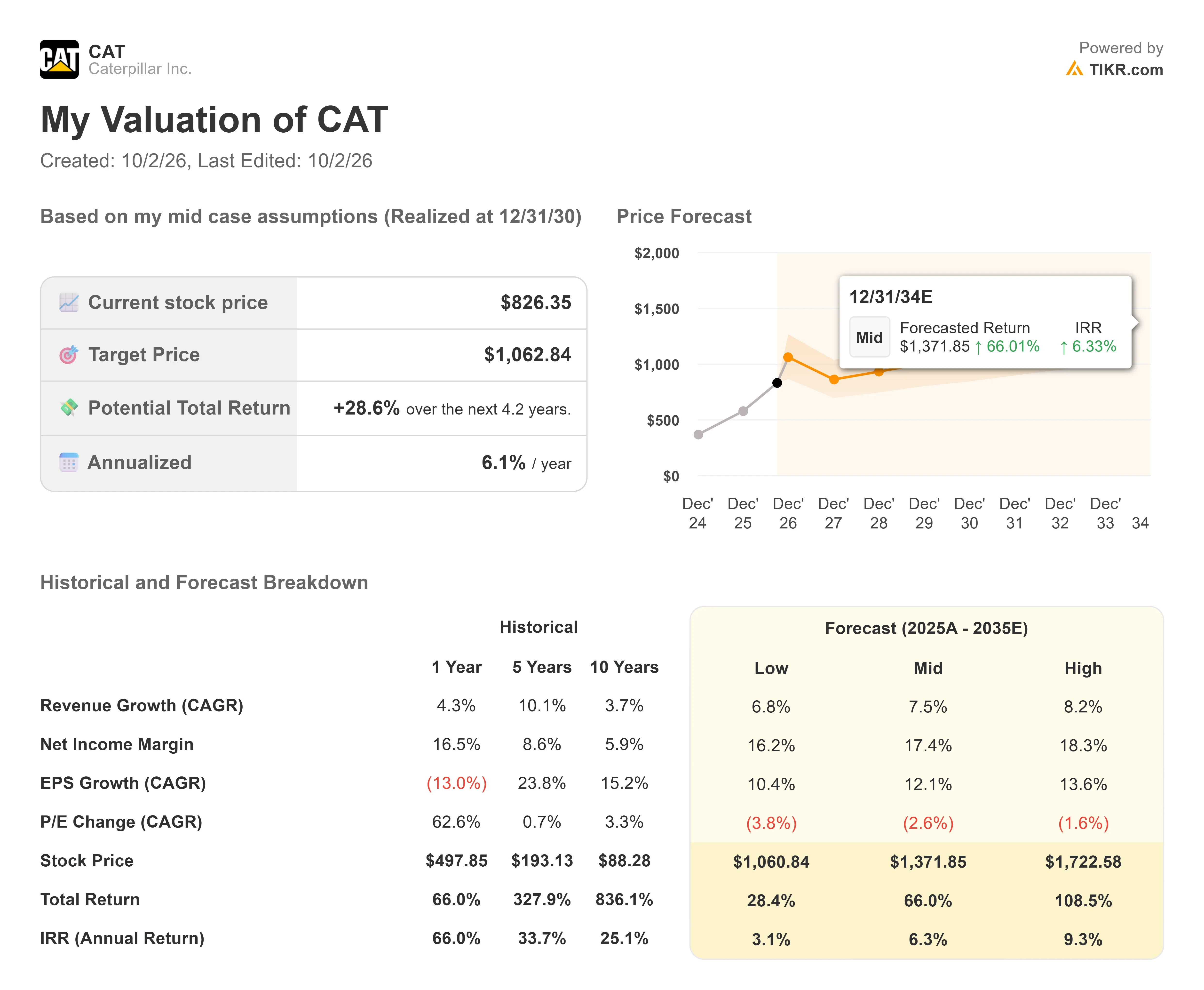
- Current Price: $826.35
- Target Price (Mid): ~$1,060
- Potential Total Return: ~29%
- Annualized IRR: ~6% / year
See analysts’ growth forecasts and price targets for Caterpillar stock (It’s free!) >>>
The TIKR model’s mid case, its central scenario, values Caterpillar at around $1,060 by December 31, 2030, a ~29% total return from $826.35, or about 6% a year. That pace is far below the 33.7% annual return of the past five years shown on the same TIKR model card.
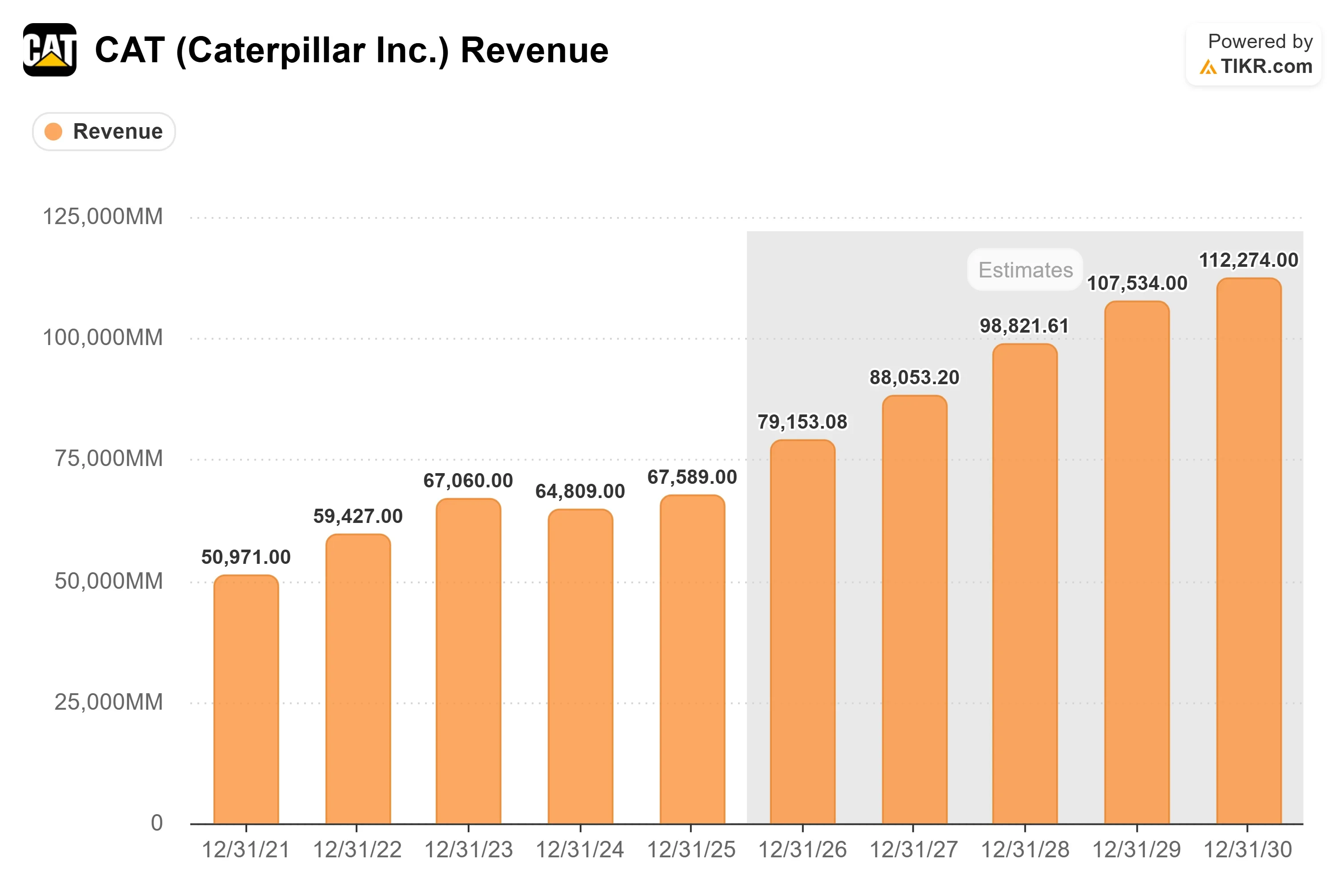
Consensus sees revenue rising from $67.589 billion in 2025 to about $99 billion in 2028, and normalized EPS roughly doubling from $19.06 to about $39. The main risk sits in power. Asked by Wells Fargo’s Jerry Revich about roughly 100 gigawatts of new industry capacity, Creed said “the industry wants and probably needs to be in free supply” at some point, meaning supply catches up with demand. Construction growth would soften that shift; a construction slowdown at the same time would not.
Conclusion
Fabick is expected to close by late October. For the third quarter, Caterpillar’s 10-Q guides to strong construction sales growth, while TIKR consensus calls for about $20.4 billion in total revenue, up about 16% year over year, and about $6.92 in adjusted EPS. Construction growth holding well above that company-wide pace would support the shift; growth sliding toward it would show the second-quarter surge fading.
See what stocks billionaire investors are buying so you can follow the smart money with TIKR.
So what is Caterpillar stock actually worth?
TIKR lets you forecast the future price of any stock in less than a minute. Just enter a few assumptions into TIKR’s valuation model and see what Caterpillar could be worth. Start from Wall Street consensus estimates, or adjust the inputs to reflect your own view of the business. It’s free to use.
Analyze Caterpillar on TIKR Free →
Looking for New Opportunities?
- See what stocks billionaire investors are buying so you can follow the smart money.
- Analyze stocks in as little as 5 minutes with TIKR’s all-in-one, easy-to-use platform.
- The more rocks you overturn… the more opportunities you’ll uncover. Search 100K+ global stocks, global top investor holdings, and more with TIKR.
Disclaimer:
Please note that the articles on TIKR are not intended to serve as investment or financial advice from TIKR or our content team, nor are they recommendations to buy or sell any stocks. We create our content based on TIKR Terminal’s investment data and analysts’ estimates. Our analysis might not include recent company news or important updates. TIKR has no position in any stocks mentioned. Thank you for reading, and happy investing!