


Key Takeaways for Carnival Corporation Stock as of September 2026
- Three-Month Slide: Carnival stock has dropped 16% over the past three months, closing at $23.23 on September 1 after trading near $28 in early June.
- Ratings Split: Analysts currently carry 18 buys, 5 outperforms, and 7 holds on Carnival stock, with a mean target of $35, sitting 52% above the current price.
- Target Lag: The Street’s mean target actually climbed from $34 to $35 over the same three months the stock fell, and coverage grew from 21 analysts to 26, widening the target-to-price gap to its highest point in at least six quarters.
- Model Upside: TIKR’s mid-case valuation model puts Carnival stock at $43 by late 2030, implying an 87% total return, or roughly 16% annualized.
Why Carnival Stock Has Fallen 16% Since Its June Guidance Cut
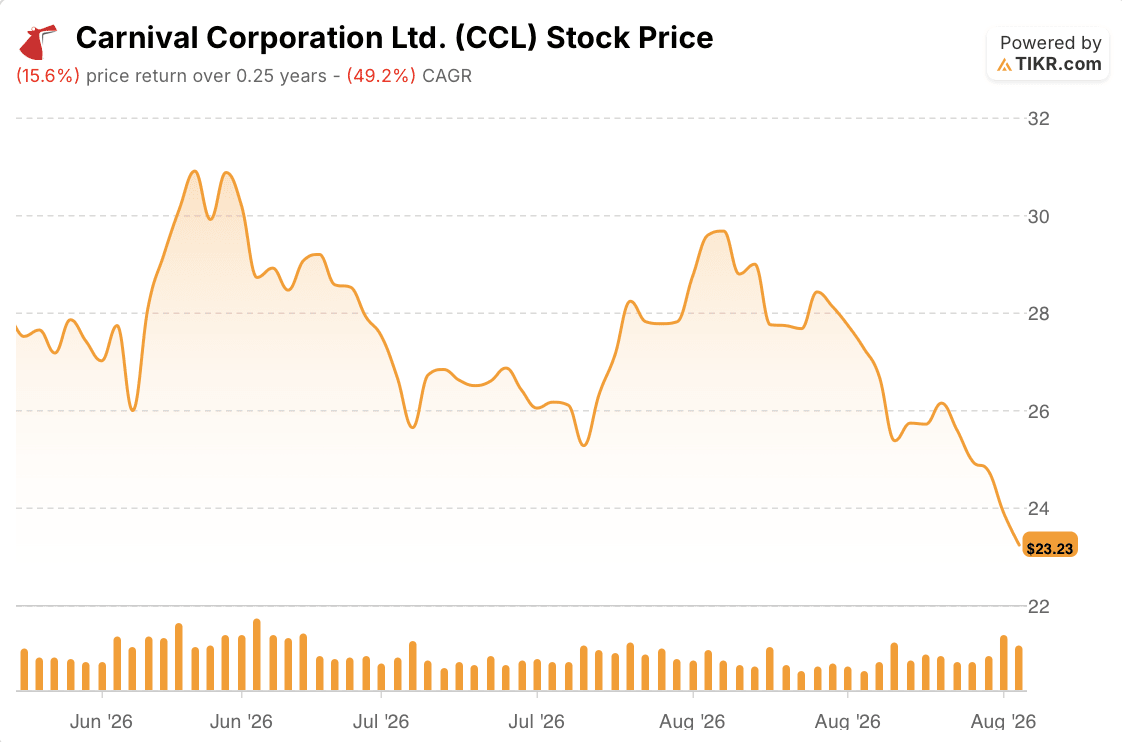
Carnival (CCL) stock has slid 16% over the past three months, and the drop traces back to a specific afternoon: June 23, when Carnival cut its full-year yield growth guidance and the shares fell as much as 8% in a single session. The cut wasn’t small. CFO David Bernstein told analysts the revision represented “a $0.14 per share operational knock-on impact of the extreme geopolitical volatility generated by the Middle East conflict,” which had hammered European bookings, particularly in the Mediterranean, and pushed fuel costs up nearly 30% year over year.
Management didn’t frame it as a structural problem. CEO Josh Weinstein told investors on the Q2 earnings call that “the key takeaway here is that this moderation is already proving to be transitory and is not something that alters the underlying trajectory of the company.” Carnival still beat second-quarter profit estimates that day, posted record customer deposits of $9 billion, and pointed to booking trends already turning up in June. The market took the guidance cut at face value anyway, and the stock never fully recovered the ground it lost that afternoon.
That’s the tension running through the past three months. Carnival stock priced in a genuine but temporary demand hit in June, then kept sliding through July and August even as management insisted the underlying booking curve was intact. A single earnings reaction rarely explains a 16% slide on its own, which is where the second half of the story comes in.
August’s Oil-Driven Selloff Compounded Carnival Stock’s Slide
The June guidance cut set the tone, but a broader macro rotation in August did most of the remaining damage. On August 20, Wall Street’s three major indexes fell together as Treasury yields climbed and oil pushed above $87 a barrel, and Reuters flagged Carnival and Royal Caribbean by name among the session’s biggest percentage decliners, calling both stocks “sensitive to fuel prices.” Weak Walmart earnings that same week dragged down consumer-facing names broadly, and cruise operators, which burn through marine fuel as one of their largest operating costs, took an outsized hit.
Carnival doesn’t hedge its fuel exposure the way some peers do, which leaves the stock more directly tethered to crude prices than most travel names. That structural choice turned a sector-wide risk-off week into a Carnival-specific one, layering fresh macro pressure on top of a guidance cut the company had already called temporary two months earlier.
Analysts Have Raised Targets on Carnival Stock Even as Shares Fell
Wall Street’s current view on Carnival stock doesn’t match the chart. As of September 1, coverage stands at 18 buys, 5 outperforms, and 7 holds, with a mean target of $35 against a $23 close, a 52% gap. That’s the widest target-to-price spread the stock has carried across the last six quarterly readings.
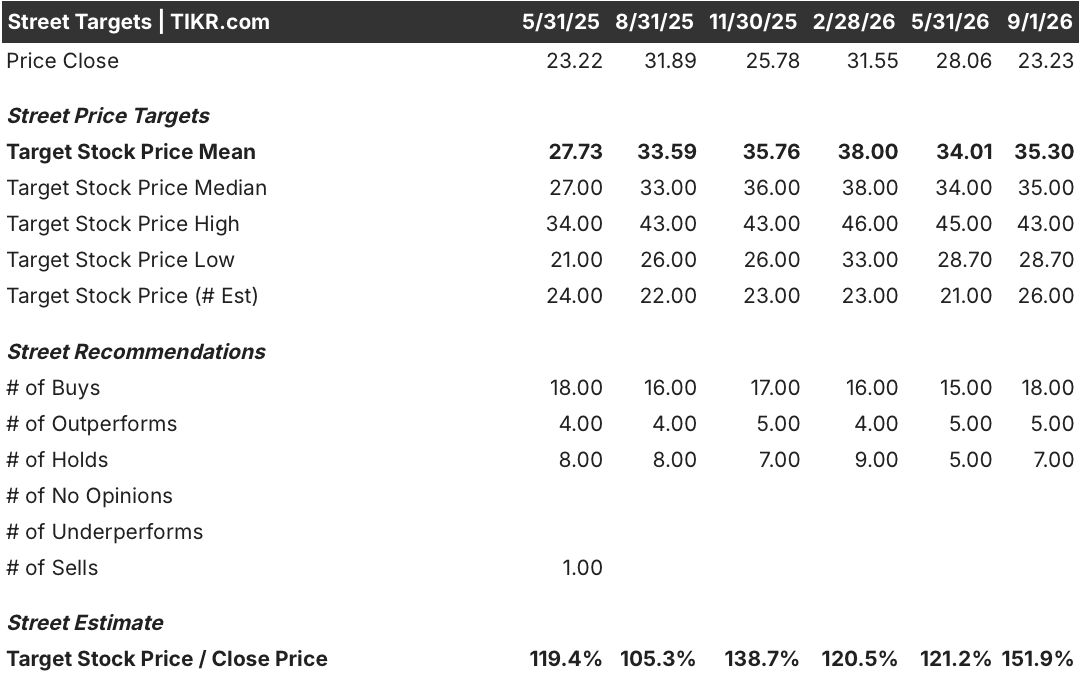
The direction of that gap is the real story. Back on May 31, with the stock at $28, the mean target sat at $34, a 21% premium. Three months and a 16% share price decline later, the mean target hasn’t fallen. It rose to $35, and the analyst count publishing targets grew from 21 to 26. Buy ratings climbed from 15 to 18 over the same stretch. Analysts watched the same guidance cut and the same August selloff investors did and came out the other side more bullish on price, not less.
TIKR Values Carnival Stock at $43, Pricing In an 87% Total Return
TIKR’s mid-case model values Carnival stock at $43 by November 2030, implying an 87% total return from the current price of $23, or roughly 16% annualized over 4.2 years.
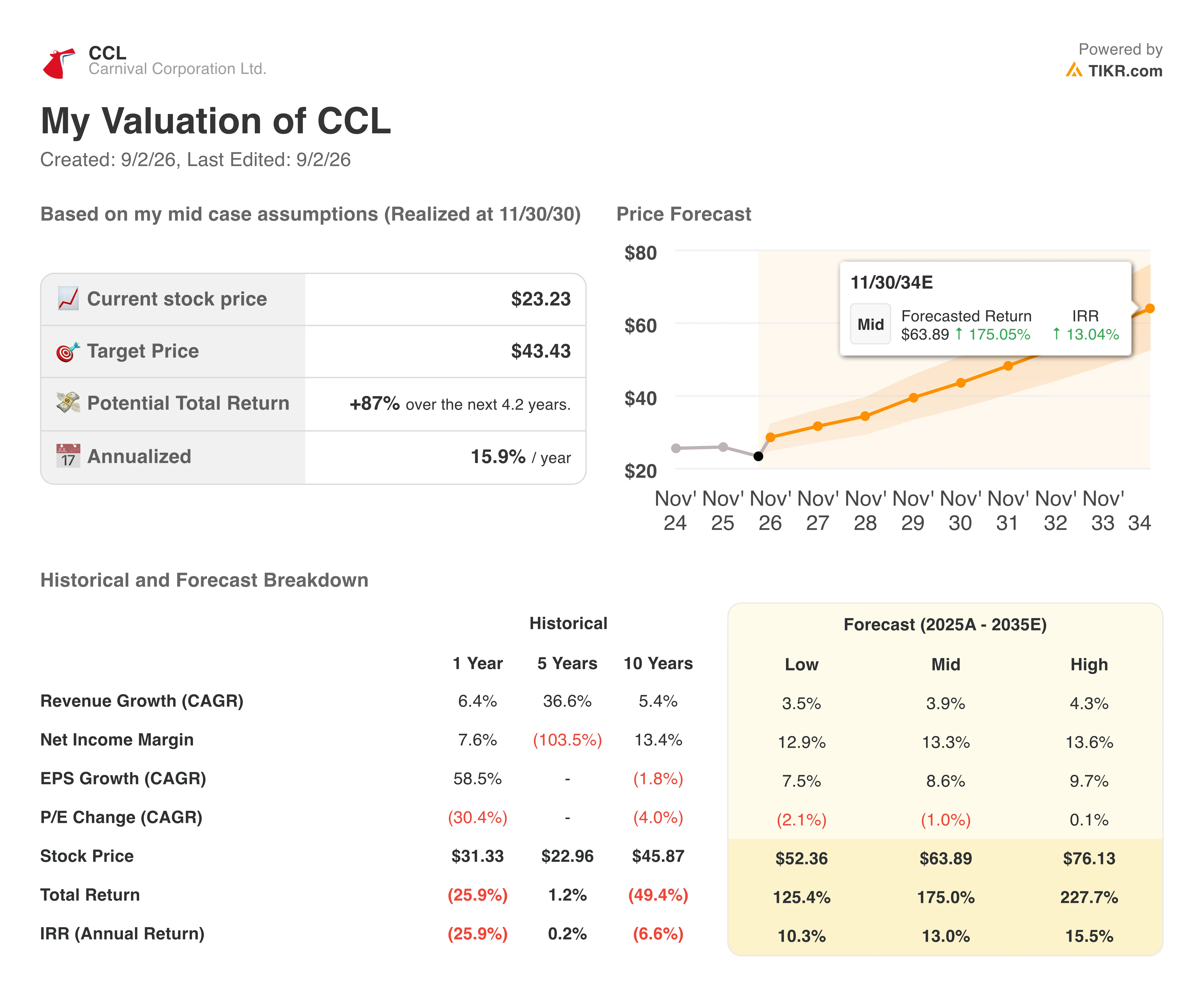
That annualized return sits well above what a mature travel and leisure name typically offers, reflecting how far the stock has drifted from both the Street’s mean target and TIKR’s own estimate of fair value.
The model’s case rests on the same argument management made in June: fuel-cost pressure and geopolitical booking disruption are cyclical, not permanent, while cost discipline (Carnival held cruise costs roughly flat year over year in the second quarter despite the fuel spike) and record customer deposits point to a business whose earnings power hasn’t actually shrunk to match the share price.
Should You Invest in Carnival Corporation Ltd.?
The only way to really know is to look at the numbers yourself. TIKR gives you free access to the same institutional-quality financial data that professional analysts use to answer exactly that question.
Pull up Carnival Corporation Ltd. stock and you’ll see years of historical financials, what Wall Street analysts expect for revenue and earnings in the quarters ahead, how valuation multiples have moved over time, and whether price targets are trending up or down.
You can build a free watchlist to track Carnival Corporation Ltd. alongside every other stock on your radar. No credit card required. Just the data you need to decide for yourself.
Access Professional Tools to Analyze CCL stock on TIKR for Free →
Looking for New Opportunities?
- See what stocks billionaire investors are buying so you can follow the smart money.
- Analyze stocks in as little as 5 minutes with TIKR’s all-in-one, easy-to-use platform.
- The more rocks you overturn… the more opportunities you’ll uncover. Search 100K+ global stocks, global top investor holdings, and more with TIKR.
Disclaimer:
Please note that the articles on TIKR are not intended to serve as investment or financial advice from TIKR or our content team, nor are they recommendations to buy or sell any stocks. We create our content based on TIKR Terminal’s investment data and analysts’ estimates. Our analysis might not include recent company news or important updates. TIKR has no position in any stocks mentioned. Thank you for reading, and happy investing!


