


Key Takeaways
- Kinetic Partners Management, a firm that manages $4.73 billion, made its three biggest third-quarter additions in Eli Lilly, Microsoft and CoreWeave, its 13F filed Nov. 16 shows.
- Since Sept. 30, Eli Lilly is up 17%, Microsoft is down 3% and CoreWeave has fallen 48%.
- Analysts see the most upside in CoreWeave, but CoreWeave can only get there if it keeps borrowing cheaply for years.
- The numbers back Microsoft best: its consensus target is at a one-year high, and the stock trades below its five-year average multiple.
A $4.7 billion fund just showed where it put more money in the third quarter, and its three biggest additions have gone in three different directions since.
Kinetic Partners Management’s 13F for the quarter ended Sept. 30, filed Nov. 16, shows that its three biggest added positions were Eli Lilly (LLY), Microsoft (MSFT) and CoreWeave (CRWV). The firm manages $4.73 billion in all, and its 13F holds $3.38 billion of US stocks across 50 positions.
Eli Lilly’s run leaves less room
The fund added 39% more Lilly shares in the quarter and ended September with 156,797 shares worth $181 million, 5.4% of its 13F stocks. The stock is up 17% from its Sept. 30 close. Tirzepatide, sold as Mounjaro and Zepbound, made 65% of Lilly’s first-half revenue, and Lilly now lets Hims & Hers sell Zepbound at self-pay prices starting at $299 a month. Over the past month, analysts raised their 2027 EPS estimate to $50.80 from $47.22. The consensus target has climbed all year, to a new high of $1,470:
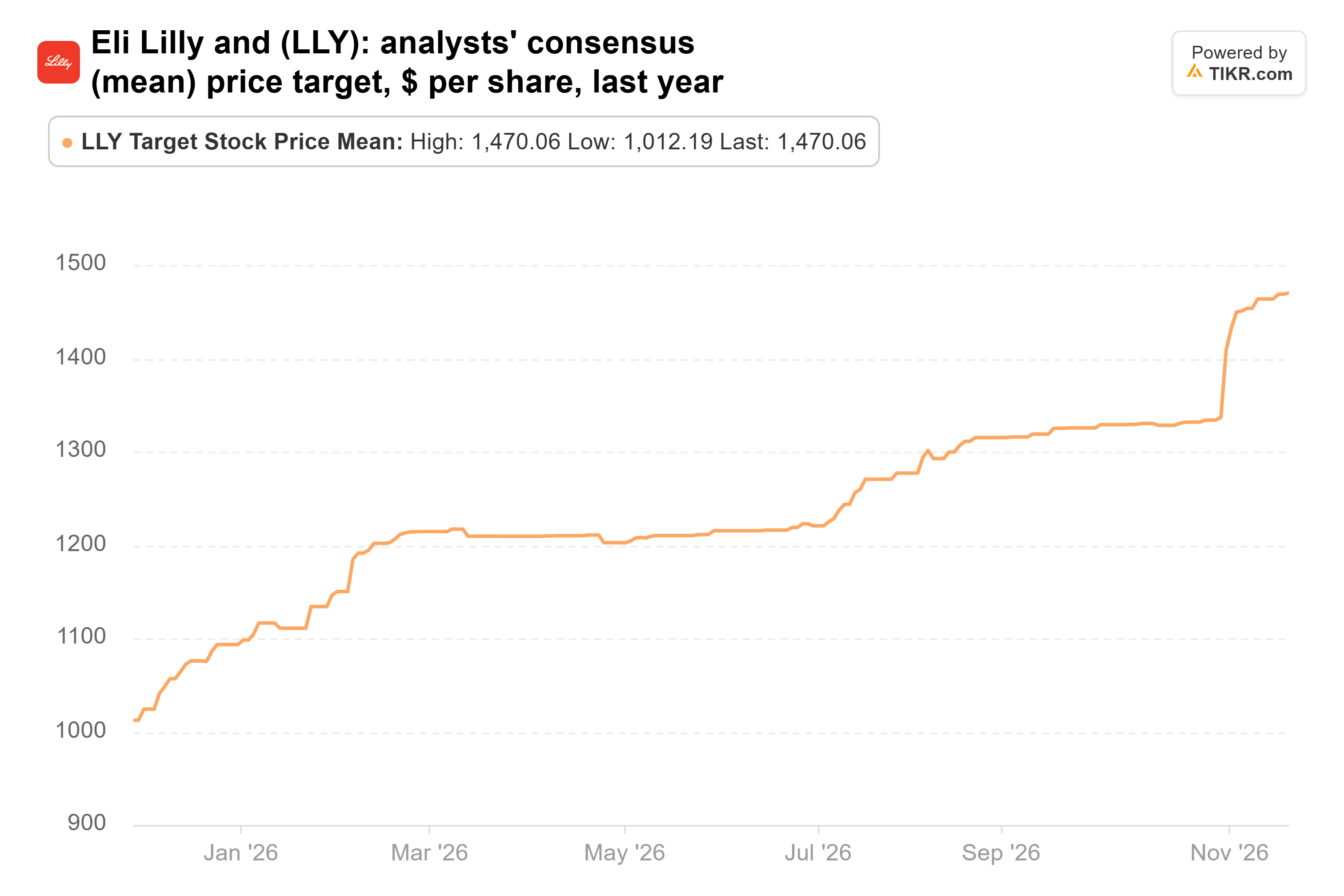
That target is only 9% above the last close, though. At about 29x forward earnings, Lilly trades right around its 12-year average, so from here the stock needs earnings to keep growing.
TIKR tracks 31 analysts on Eli Lilly. How many say “Buy”?
See the full breakdown of Buy, Hold, and Sell ratings on Eli Lilly, along with Wall Street’s revenue and earnings estimates, all in one place. More than 500,000 investors use TIKR to research stocks like this one. See Eli Lilly’s Analyst Ratings
Microsoft’s estimates keep rising
The fund more than doubled its Microsoft stake, adding 116%, and ended September with 294,521 shares worth $151 million, 4.5% of its 13F stocks. The stock has slipped 3% since Sept. 30 and sits 11% below its 52-week high. In the September quarter, Microsoft 365 commercial cloud revenue grew 17% while seats grew 5%, as customers moved to pricier plans that include Copilot. RBC Capital Markets’ Rishi Jaluria calls that pricing the “next leg” for Office. Analysts have raised their fiscal 2027 EPS estimate to $20.01 from $19.76, and the consensus target has recovered from its July low of $556 to $636, its high for the year:
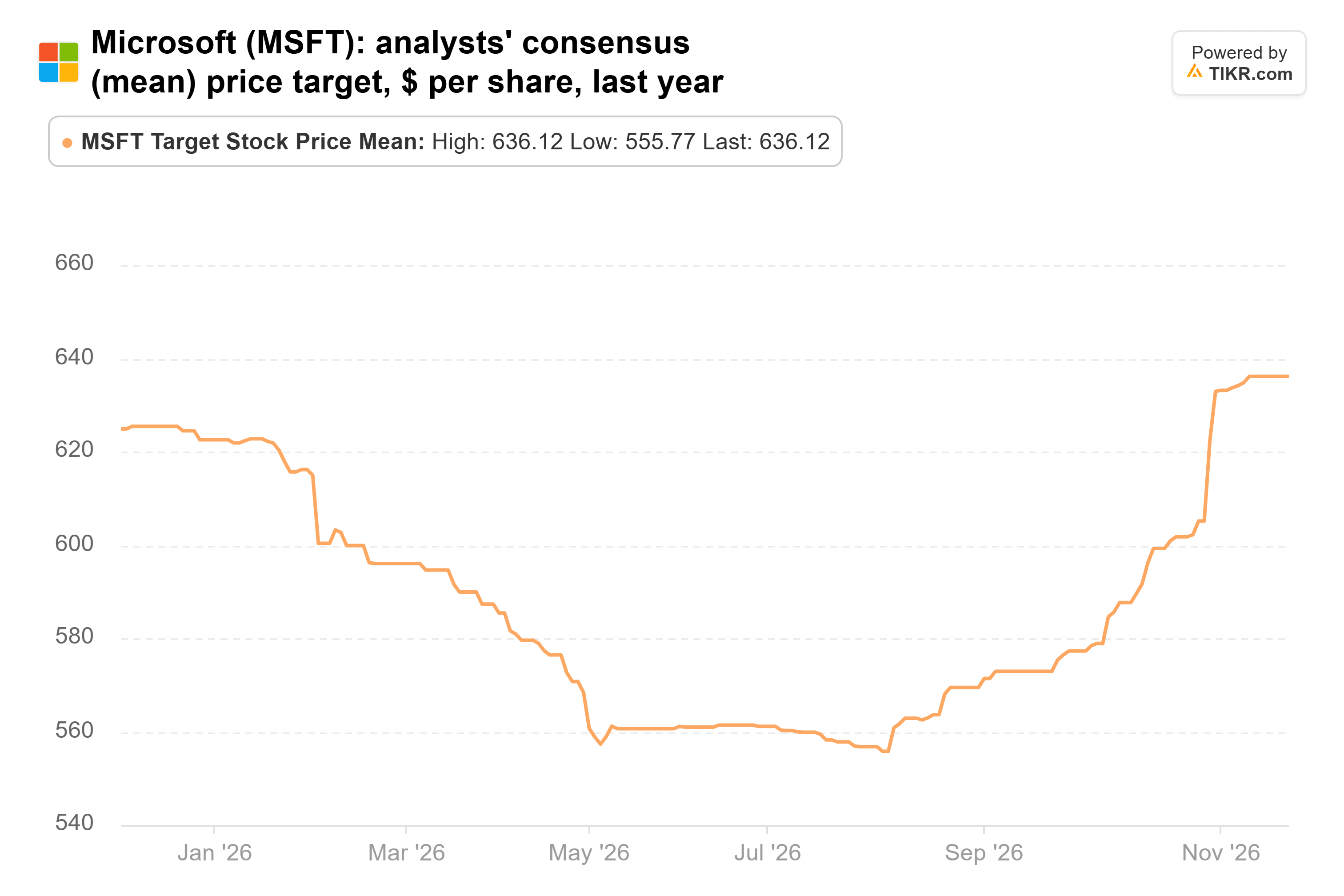
That’s 28% above the last close. At about 24x forward earnings, Microsoft trades below its five-year average of 30x. The weak spot is cash: Microsoft spent $115.9 billion on capex in fiscal 2026, and analysts expect free cash flow to fall to $32.7 billion this fiscal year from $67.0 billion.
CoreWeave needs cheap money
CoreWeave is the riskiest of the three, and the fund still added 55%, ending September with 1.40 million shares worth $122 million, 3.6% of its 13F stocks. The stock has fallen 48% since Sept. 30 and sits 68% below its 52-week high. That’s despite a breakout third quarter in which its largest customer’s share of revenue fell to 30%, from 36% the quarter before.
Funding is the worry. Analysts expect CoreWeave’s free cash flow to stay negative every year through 2030, so it has to keep borrowing. On Nvidia’s Nov. 17 call, interim CEO Colette Kress said Nvidia is “taking a very strong look” at which companies it helps finance. Analysts have cut the consensus target to $115, its low for the year, from an August peak of $144:
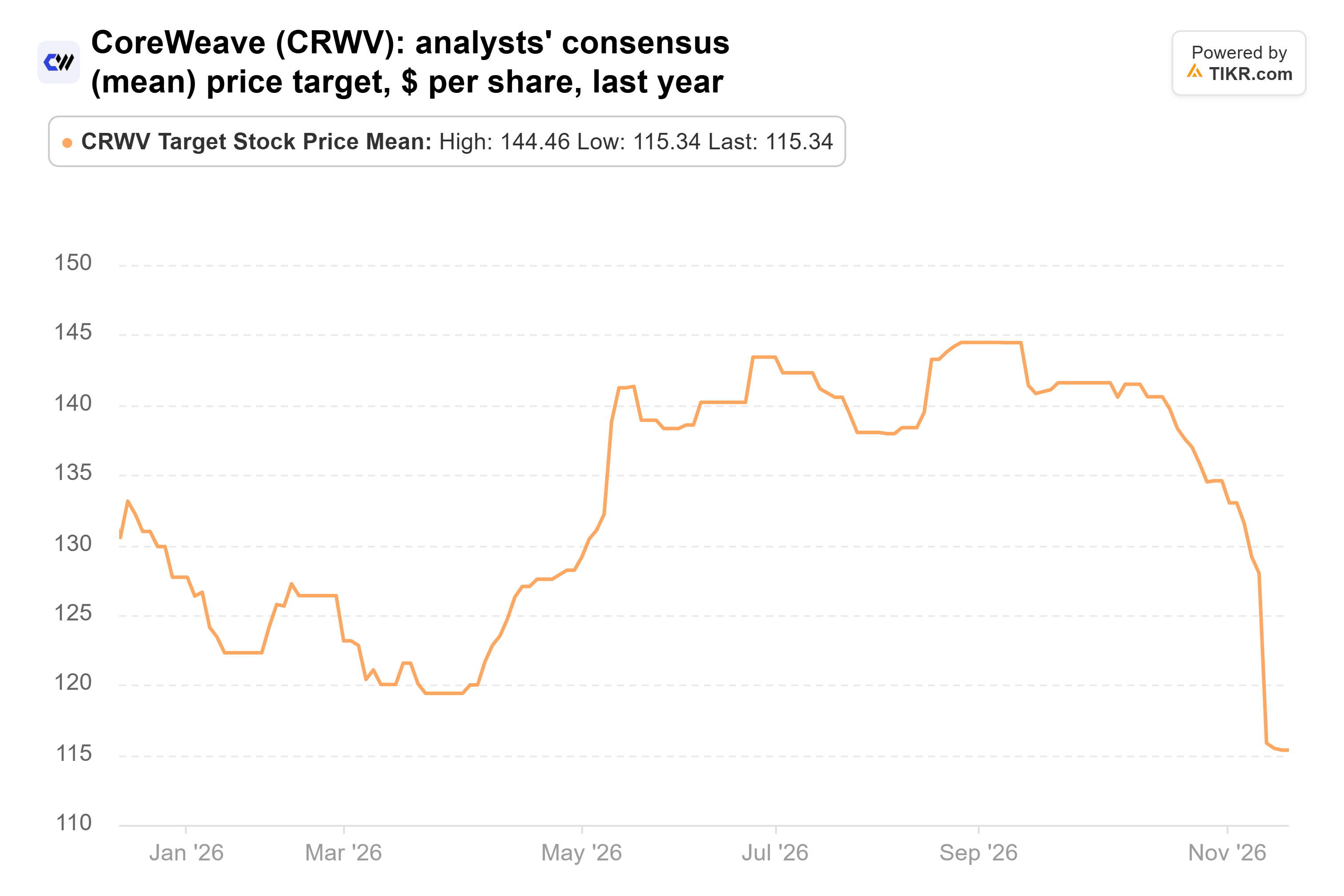
That’s still 157% above the last close, but the lowest target, $39, sits below the stock. CoreWeave said on Nov. 12 that it expects to launch its next contract-backed loan in the coming weeks at a yield of 7% to 7.5%. A loan that prices in that range would show lenders are still willing to fund the buildout.
If I could only buy one, it’s Microsoft
Lilly has the strongest business of the three, but the stock has already climbed close to where analysts see it going. CoreWeave has the most upside on paper, but it needs lenders, and possibly Nvidia, to keep the money coming for years before its contracts pay the bills.
Microsoft is the one I’d buy. Analysts keep raising its estimates, and the stock still trades below its usual multiple. The risk is that its spending keeps running ahead of its cash, which would stretch the free cash flow dip past this fiscal year. Microsoft’s fiscal second-quarter report, expected in late January, will show whether it’s on pace for analysts’ free cash flow estimate. Kinetic’s next 13F, due by mid-February, will show whether the fund kept adding.
So what is Eli Lilly stock actually worth?
TIKR lets you forecast the future price of any stock in less than a minute. Just enter a few assumptions into TIKR’s valuation model and see what Eli Lilly could be worth. Start from Wall Street consensus estimates, or adjust the inputs to reflect your own view of the business. It’s free to use.
Disclaimer:
Please note that the articles on TIKR are not intended to serve as investment or financial advice from TIKR or our content team, nor are they recommendations to buy or sell any stocks. We create our content based on TIKR Terminal’s investment data and analysts’ estimates. Our analysis might not include recent company news or important updates. TIKR has no position in any of the stocks mentioned. Thank you for reading, and happy investing!


