Key Takeaways
- A fund with $4.41 billion of US stocks added to Microsoft, Sandisk and Alphabet in the third quarter, its three biggest new or added positions.
- All three trade below their Sept. 30 prices, so anyone following the fund today pays less than the stakes’ quarter-end values.
- Sandisk looks cheapest at about 3x forward earnings, but analysts expect its earnings to fall by about half in fiscal 2030.
- The numbers back Microsoft best: it trades below its long-term average multiple while analysts’ price targets keep rising.
Most investors have never heard of this fund. In the third quarter it added to three of the market’s most-watched tech stocks, and all three have sold off since.
Nearwater Capital Markets’ 13F for the quarter ended Sept. 30, filed Nov. 16, shows its three biggest new or added positions were Microsoft (MSFT), Sandisk (SNDK) and Alphabet (GOOG). The filing lists $4.41 billion of US stocks across 60 positions, at quarter-end prices.
Each stock has fallen since Sept. 30, so anyone who wants to follow the fund can buy in below its quarter-end values.
Microsoft got cheaper while its targets rose
Microsoft is the largest of the three stakes: 573,000 shares worth $294 million at Sept. 30, 6.7% of the fund and its third-biggest holding. The fund held 36% more shares than it did the quarter before.
The stock is down 6% since the quarter ended. It trades at about 23x forward earnings, below its 26x average at quarter-ends since 2014 and its 30x average over the past five years. Analysts have moved the other way, lifting their average price target from $625 a year ago to a high of $636 this month:

That’s 31% above the last close. In the September quarter, Microsoft 365 commercial cloud revenue grew 17% while commercial seats grew 5%, as customers moved to pricier plans including Copilot. (That revenue line now includes GitHub’s cloud business too.) Cash is the catch. Analysts have cut their free cash flow estimate for the fiscal year ending June 2027 three times since late October, to $32.0 billion.
TIKR tracks 58 analysts on Microsoft. How many say “Buy”?
See the full breakdown of Buy, Hold, and Sell ratings on Microsoft, along with Wall Street’s revenue and earnings estimates, all in one place. More than 500,000 investors use TIKR to research stocks like this one. See Microsoft’s Analyst Ratings
Sandisk’s 3x multiple prices in a bust
The fund’s Sandisk stake was 141,000 shares worth $245 million at Sept. 30, after it added 28% more shares in the quarter. That made it 5.6% of the fund and its fourth-biggest holding. Sandisk’s 8-for-1 stock split took effect Nov. 20, so that’s 1,128,000 shares today.
The stock now sits 73% below its June high as memory stocks sold off. The business hasn’t cracked, though. Sandisk’s non-GAAP gross margin hit 85.1% in the quarter ended Oct. 2, against 29.9% a year earlier, as flash prices soared. Analysts’ average target went from $32 a year ago to a peak of $278 in July, and it’s still far above the stock:
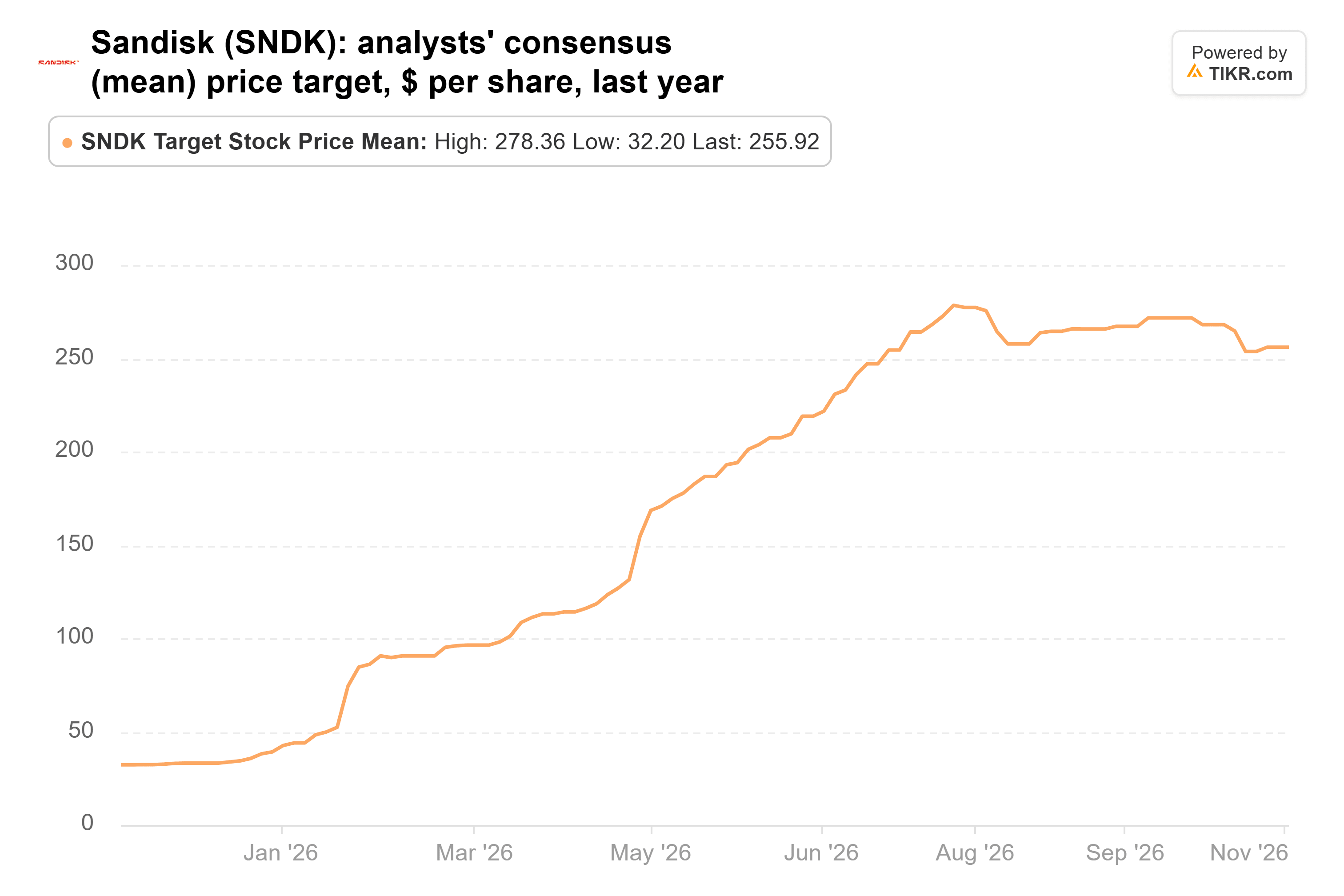
The $248 average target is 213% above the last close. The stock trades at about 3x forward earnings, the bottom of its range since it listed in February 2025. At that price, investors are betting the memory cycle turns hard, and analysts’ own estimates have earnings falling 49% from fiscal 2029 to fiscal 2030. Sandisk’s defense is its multiyear contracts: $88.9 billion of remaining obligations at floor prices, which management says still earn about an 80% gross margin. But the oldest contract dates only to January 2026, so none of them has been through a downturn yet.
Alphabet’s big add comes with a dilution bill
Alphabet got the biggest increase of the three. The fund more than quintupled its stake in the quarter, to 536,200 shares worth $183 million at Sept. 30. That’s 4.1% of the fund, its seventh-biggest holding.
The stock is down 23% since then and closed at its lowest in a year. It trades at about 19x forward earnings, below its 23x average at quarter-ends since 2014. Analysts’ average target has slipped from its July peak, though it’s still above where it stood a year ago:
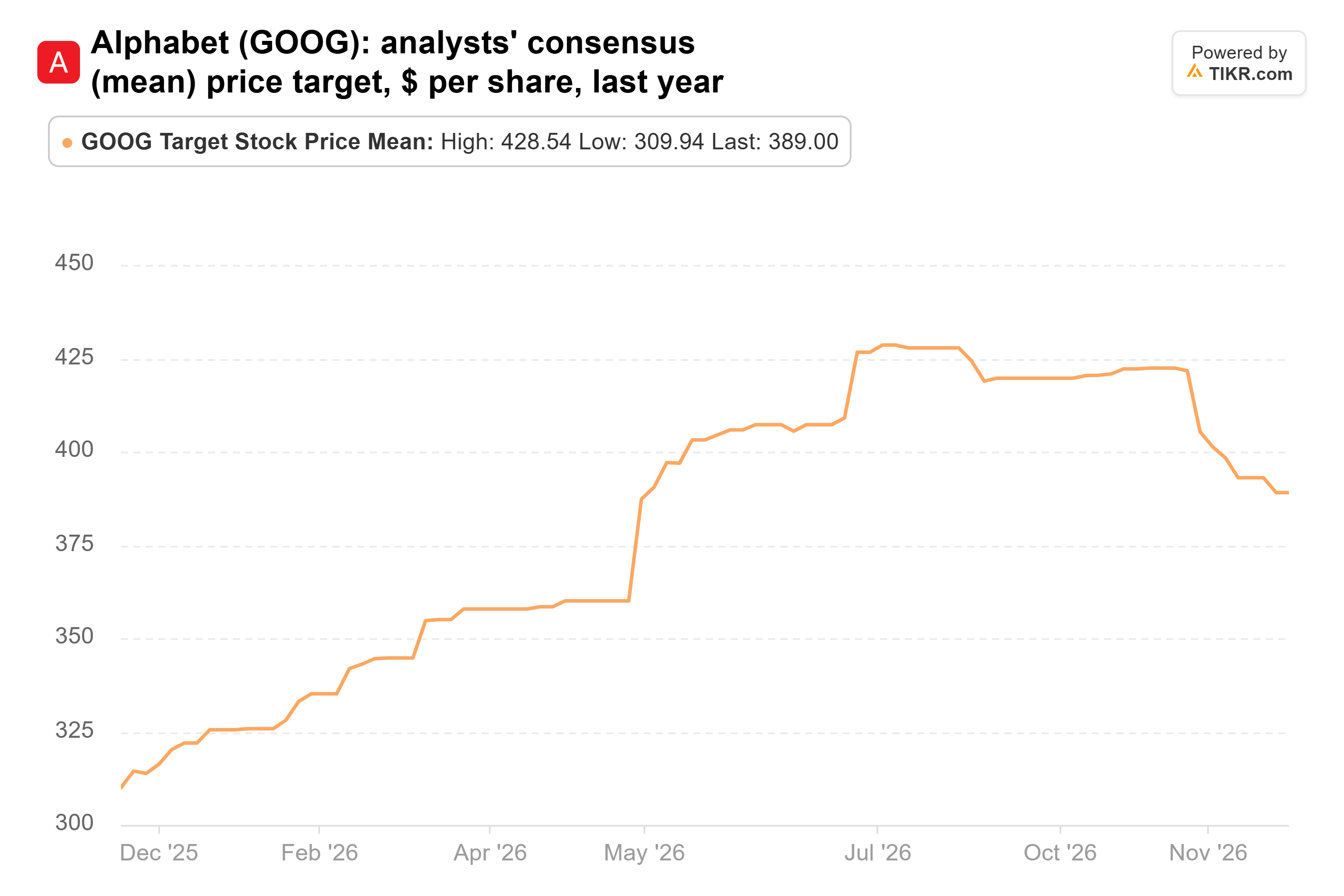
The $397 average target is 50% above the last close. Part of the value sits outside the core business. Alphabet owns nearly 14% of Anthropic, which priced its IPO at $83 a share on Nov. 17 and has committed to at least $121 billion of Google hosting through July 2033. The cost is dilution. Alphabet has announced plans to raise $80 billion from stock sales after generating $19.7 billion of free cash flow over the 12 months to September, and analysts expect its free cash flow to go negative in 2027.
Microsoft is the one I’d follow
Each stock has a clear risk: cash flow at Microsoft, the memory cycle at Sandisk, and a growing share count at Alphabet.
If I could only follow the fund into one, it’d be Microsoft. It trades below its long-term average multiple while analysts’ average target sits at its high for the year, and it doesn’t need a stock sale or a kind memory market to get there. Alphabet is a close second at a cheaper multiple, but $80 billion of new stock is a lot to absorb. Sandisk has the most upside if its contracts hold, and the furthest to fall if they don’t.
Microsoft’s December-quarter report in late January is the next test. Analysts’ $32.0 billion free cash flow estimate leaves only about $13.4 billion for the next three quarters combined, after $18.6 billion in the September quarter alone. If the December quarter comes anywhere near that pace again, the estimates look too low. The fund’s next 13F, due in mid-February, will show whether it’s still adding.
So what is Microsoft stock actually worth?
TIKR lets you forecast the future price of any stock in less than a minute. Just enter a few assumptions into TIKR’s valuation model and see what Microsoft could be worth. Start from Wall Street consensus estimates, or adjust the inputs to reflect your own view of the business. It’s free to use.
Disclaimer:
Please note that the articles on TIKR are not intended to serve as investment or financial advice from TIKR or our content team, nor are they recommendations to buy or sell any stocks. We create our content based on TIKR Terminal’s investment data and analysts’ estimates. Our analysis might not include recent company news or important updates. TIKR has no position in any of the stocks mentioned. Thank you for reading, and happy investing!