


Key Takeaways
- SpaceX’s 180-day IPO lock-up ends Dec. 8, when up to 797.6 million shares become eligible for sale, about 5.9% of the shares outstanding.
- Dec. 8 ends a staged release, and the stock has already fallen about as far as big IPOs typically do in year one.
- Negative $10.0 billion of third-quarter free cash flow is a bigger supply question than the unlock.
- The catch also matters for Rocket Lab’s Neutron pricing and AST SpaceMobile’s launches.
SpaceX (SPCX) caught a Starship with its launch tower after a trip to orbit. The stock’s next test is less glamorous: on Dec. 8, its 180-day IPO lock-up ends.
On Nov. 9, Rocket Lab (RKLB) said it was lifting the base price of its unflown Neutron to $70 million for several missions “as industry launch capacity tightens.” The same day, AST SpaceMobile (ASTS) said three of its satellites were at Cape Canaveral, waiting on a launch date from SpaceX.
SpaceX’s Dec. 8 Is the Easy Part
The prospectus puts the last tranche of the 180-day lock-up at up to 797.6 million shares. That’s about 5.9% of the 13.58 billion shares outstanding as of Oct. 15, worth about $113 billion at the Nov. 17 close of $141.70, and more than the 638.9 million shares SpaceX sold in the IPO.
But the lock-up has been releasing shares in stages since August, and Dec. 8 is the final step. On the Facts vs Feelings podcast this week, Carson Group’s chief market strategist, Ryan Detrick, said about 35 major IPOs since Google’s had a “negative 55% average max drawdown some point over the next 12 months after that first day IPO.” SpaceX fell about 54% from its June high to its low.
The bigger overhang comes in 2027. About 7.8 billion shares, including all of Elon Musk’s, sit under longer lock-ups, with Musk’s stake locked until June 2027.
TIKR Tracks 40 Analysts on SpaceX. How Many Say “Buy”?
See the full breakdown of Buy, Hold, and Sell ratings on SpaceX, along with Wall Street’s revenue and earnings estimates, all in one place. More than 500,000 investors use TIKR to research stocks like this one. See SpaceX’s Analyst Ratings
The Catch Helps SpaceX’s Long-Term Case
SpaceX caught Starship’s upper stage on Nov. 14, though the booster catch failed. Reuse drives cheap Starlink launches, and Musk has guided to weekly Starship flights in the first half of 2027.
That’s a problem for Rocket Lab. It signed over $515 million of Neutron contracts last quarter, but Neutron won’t fly before 2027, the same year Starship could be flying weekly. AST’s next three satellites are waiting on a SpaceX launch date, while Starship is already deploying satellites for Starlink, AST’s rival in phone service from space.
Analysts expect revenue to nearly quadruple next year as the compute business ramps:

SpaceX guided first-quarter 2027 revenue to $33 billion to $37 billion. Even at the $37 billion high end, SpaceX would need to average about $48 billion a quarter for the rest of the year to reach the $182 billion consensus for 2027.
The Supply That Matters for SpaceX Stock
The Dec. 8 tranche is a one-time addition. SpaceX’s funding needs come back every quarter, and free cash flow has been deeply negative in each quarter shown:
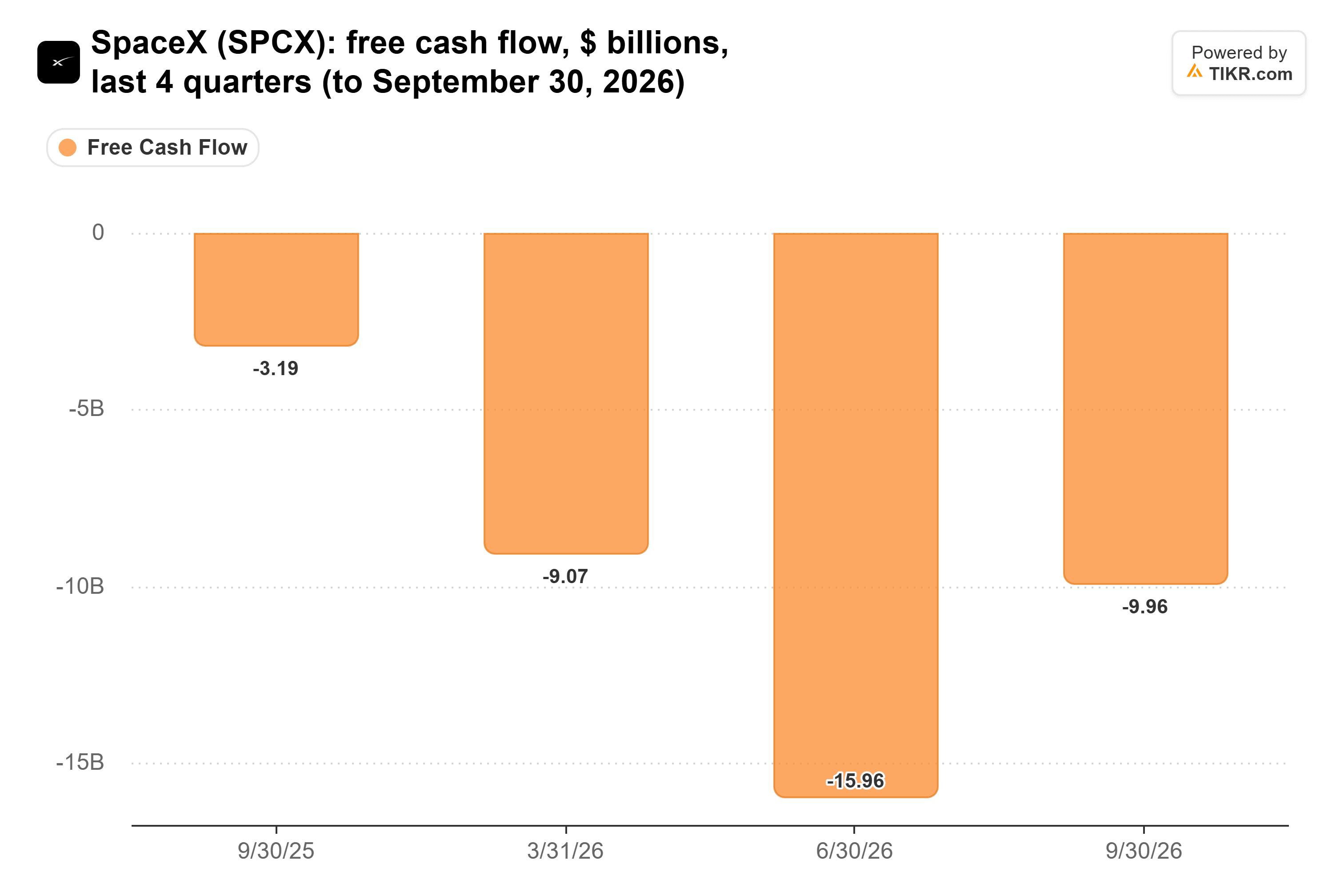
Management guided fourth-quarter capex to $35 billion to $40 billion, up from $19.6 billion in the third quarter, against $89.9 billion of cash and marketable securities at Sept. 30. Analysts expect negative free cash flow of $150 billion in 2027.
So no, Dec. 8 won’t swamp the catch. The real supply risk is how SpaceX pays for its buildout, with new debt or new stock. Fourth-quarter results in early 2027 will show whether capex stays inside the guide and how much of that $89.9 billion is left.
So What Is SpaceX Stock Actually Worth?
TIKR lets you forecast the future price of any stock in less than a minute. Just enter a few assumptions into TIKR’s valuation model and see what SpaceX could be worth. Start from Wall Street consensus estimates, or adjust the inputs to reflect your own view of the business. It’s free to use.
Disclaimer:
Please note that the articles on TIKR are not intended to serve as investment or financial advice from TIKR or our content team, nor are they recommendations to buy or sell any stocks. We create our content based on TIKR Terminal’s investment data and analysts’ estimates. Our analysis might not include recent company news or important updates. TIKR has no position in any of the stocks mentioned. Thank you for reading, and happy investing!


