


Key Takeaways
- Only about 2% of US households pay for AI. TBPN’s John Coogan gave that figure this month, and a16z’s Sarah Wang gave the same one from a recent survey.
- With so few people paying, ads look like the way consumer AI gets paid for, and that plays to what Meta and Alphabet already do best.
- Meta earned about 98% of its $201 billion 2025 revenue from advertising, and Alphabet’s operating margin was 32% last year.
- Anthropic says about 80% of its revenue comes from business customers, which leaves the free consumer market to whoever can make it pay.
Here’s a stat that should make Meta Platforms (META) and Alphabet (GOOG) shareholders smile.
On TBPN’s Oct. 2 episode, co-host John Coogan put it plainly:
“Only 2% of US households pay for AI.”
To be clear, this isn’t a one-off number, either. a16z’s Sarah Wang cited a recent survey that put it at just over 2% on the firm’s State of Markets podcast, and it’s a number that shouldn’t really be a surprise.
Coogan read that as a vindication of the ads model, and I agree. When almost nobody pays for a product directly, the edge goes to the companies that already know how to make free pay.
Free has always worked for these two
Think about how Google Search and Instagram work. You search for something or scroll through your feed, and advertisers are the ones paying for the experience. That model has been incredibly profitable.
Meta generated $196.2 billion of its $201 billion in revenue last year from advertising, or about 98% of the total, and turned $83.3 billion of that into operating income. Wall Street expects the top line to keep growing, from $201 billion in 2025 to $363 billion by 2028, an increase of about 80%.
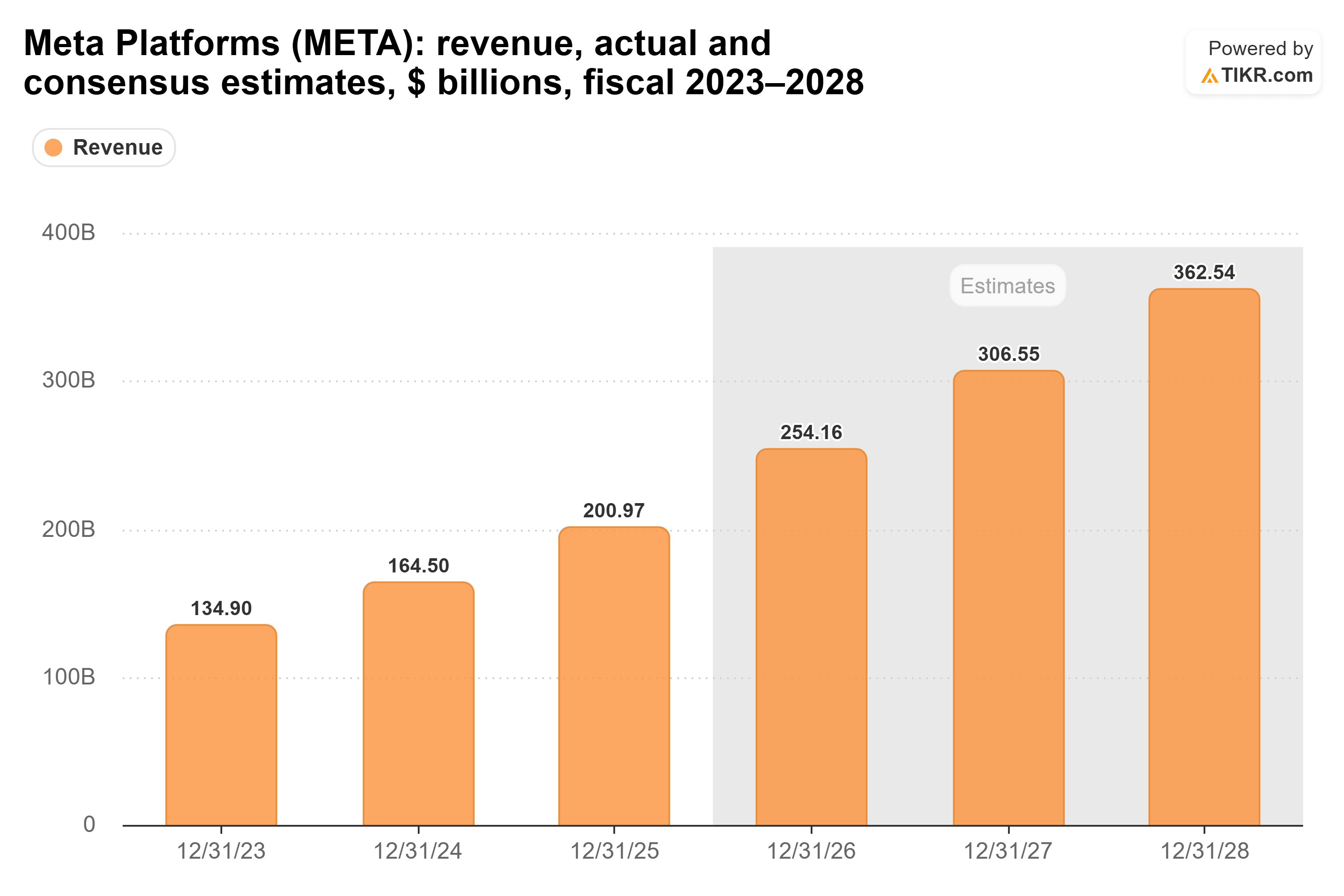
A 2% subscription rate shouldn’t move those estimates at all, since Meta barely relies on subscribers today.
Alphabet can afford to give it away
Alphabet makes money in more ways than Meta, but advertising still drives both businesses. The difference is that Meta is almost entirely dependent on ads, while Alphabet has a bigger cushion from Cloud and subscriptions. Ads brought in $294.7 billion of Alphabet’s $402.8 billion in revenue last year, or about 73%, compared with roughly 98% for Meta.
Alphabet also runs the broader business at a strong, steady margin. Its operating margin has stayed between roughly 27% and 32% over the past five years, landing at 32% last year.
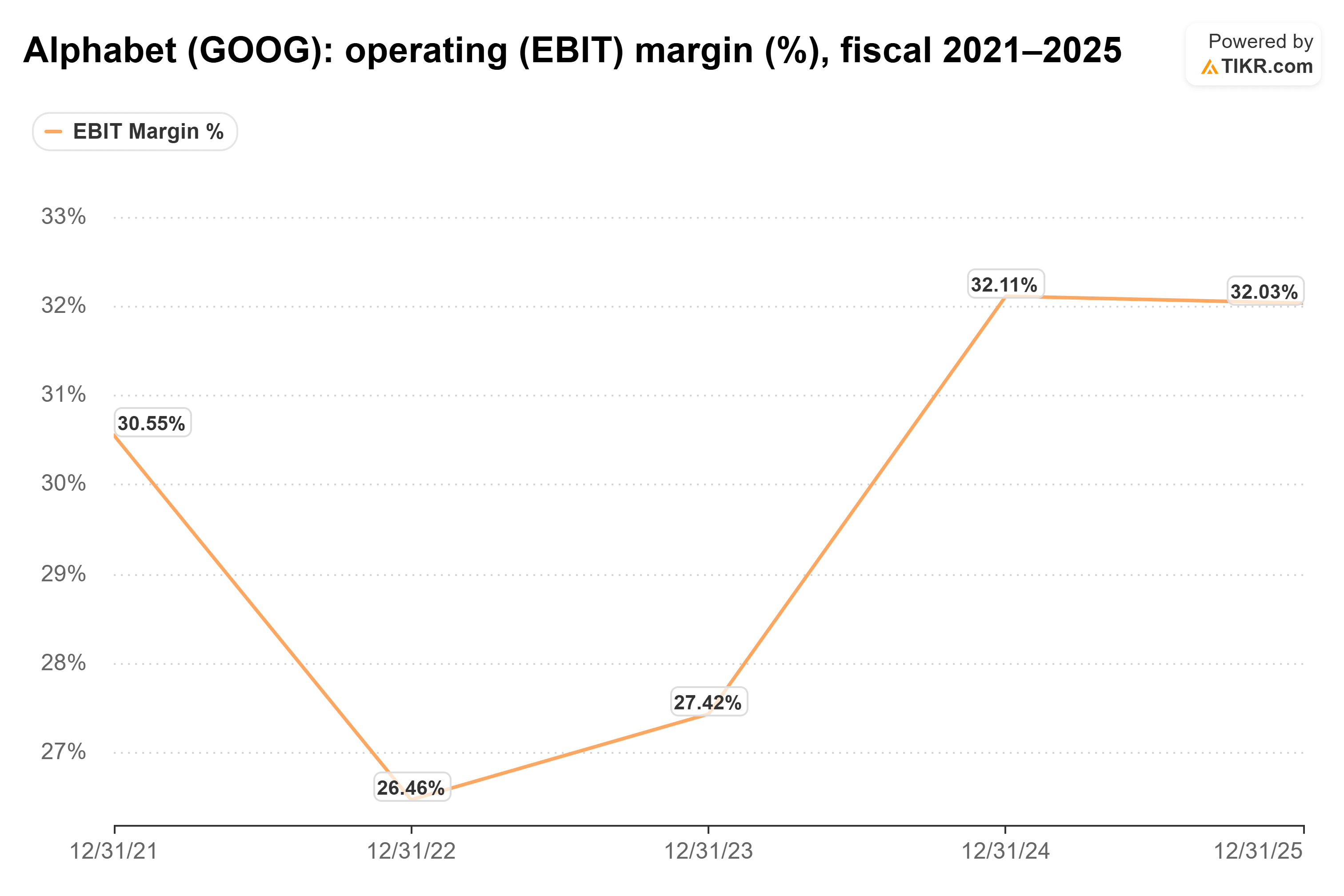
That’s a big cushion for a company that wants to run AI for billions of people. Put differently, Alphabet can give its AI to users for free and let search and YouTube ads cover the cost.
“But the labs make their money from business”
That’s the obvious objection, and it’s a fair one. Anthropic, which has filed to go public, says about 80% of its revenue comes from business customers. A tiny consumer subscription rate doesn’t hurt much when most of your customers are companies.
Coogan made a related point on the show: the people who do upgrade are mostly using AI for work. (He said he used to expense his own subscription to a business.)
Here’s the thing: that makes the case for Meta and Alphabet stronger. If the paying customers are businesses, then the other 98% of households are a market that subscriptions barely reach. Serving billions of free users costs a fortune in compute, and the proven way to make free users pay for themselves is advertising.
Google worked that out with search more than two decades ago, and Meta did it again with Facebook and Instagram. Same playbook here.
The upshot
Almost no households are paying for AI today, which makes consumer AI look a lot like search and social media did: free for users and paid for by advertisers. That puts Meta and Alphabet in a strong position. Both already run enormous ad businesses and can afford to keep AI free while they figure out the ads.
Of course, putting ads inside AI answers without driving users away is still a work in progress, and the labs could still find a consumer pricing model that sticks.
So what is Meta Platforms stock actually worth?
TIKR lets you forecast the future price of any stock in less than a minute. Just enter a few assumptions into TIKR’s valuation model and see what Meta Platforms could be worth. Start from Wall Street consensus estimates, or adjust the inputs to reflect your own view of the business. It’s free to use.
Disclaimer:
Please note that the articles on TIKR are not intended to serve as investment or financial advice from TIKR or our content team, nor are they recommendations to buy or sell any stocks. We create our content based on TIKR Terminal’s investment data and analysts’ estimates. Our analysis might not include recent company news or important updates. TIKR has no position in any of the stocks mentioned. Thank you for reading, and happy investing!


