Key Takeaways
- Stanley Druckenmiller’s Duquesne Family Office sold all of its Alphabet, United Airlines and Sandisk shares in the third quarter, its latest 13F shows.
- All three stocks have fallen hard since Sept. 30, and analysts’ average targets sit 36% to 153% above their latest prices.
- He kept buying elsewhere: Amazon ended the quarter as the fund’s third-largest position after he added to it.
- Sandisk’s earnings depend on a flash-price cycle nobody controls, while Alphabet’s drop looks like the one worth buying.
Stanley Druckenmiller’s latest 13F is out, and three stocks are gone from it: Alphabet (GOOGL), United Airlines (UAL) and Sandisk (SNDK).
Duquesne Family Office’s 13F for the quarter ended Sept. 30, filed Nov. 16, shows $4.15 billion of US stocks across 60 positions, and none of those three. He was still buying, though. He added 43% to his Amazon (AMZN) shares, on top of call options with a notional value of $114 million, and 38% to his Fox (FOXA) shares. That left each at 4.6% of the fund.
A 13F only shows what a fund held on the quarter’s last day, so we don’t know when in the quarter he sold or what he got. We do know that all three stocks trade well below their Sept. 30 prices.
Alphabet’s problem is the spending bill
Duquesne held 336,300 Alphabet shares worth $120 million at June 30, 2.8% of the fund. By Sept. 30, it held none, and the stock has fallen 21% from its quarter-end price since then.
Most of that drop followed Alphabet’s third-quarter report on Oct. 28. In the quarter, Alphabet spent $51.4 billion on capital projects, more than the $42.3 billion of cash its operations brought in, and the stock fell 13% the next day.
Analysts haven’t given up, though. Their average target has climbed over the past year while the stock went nowhere:
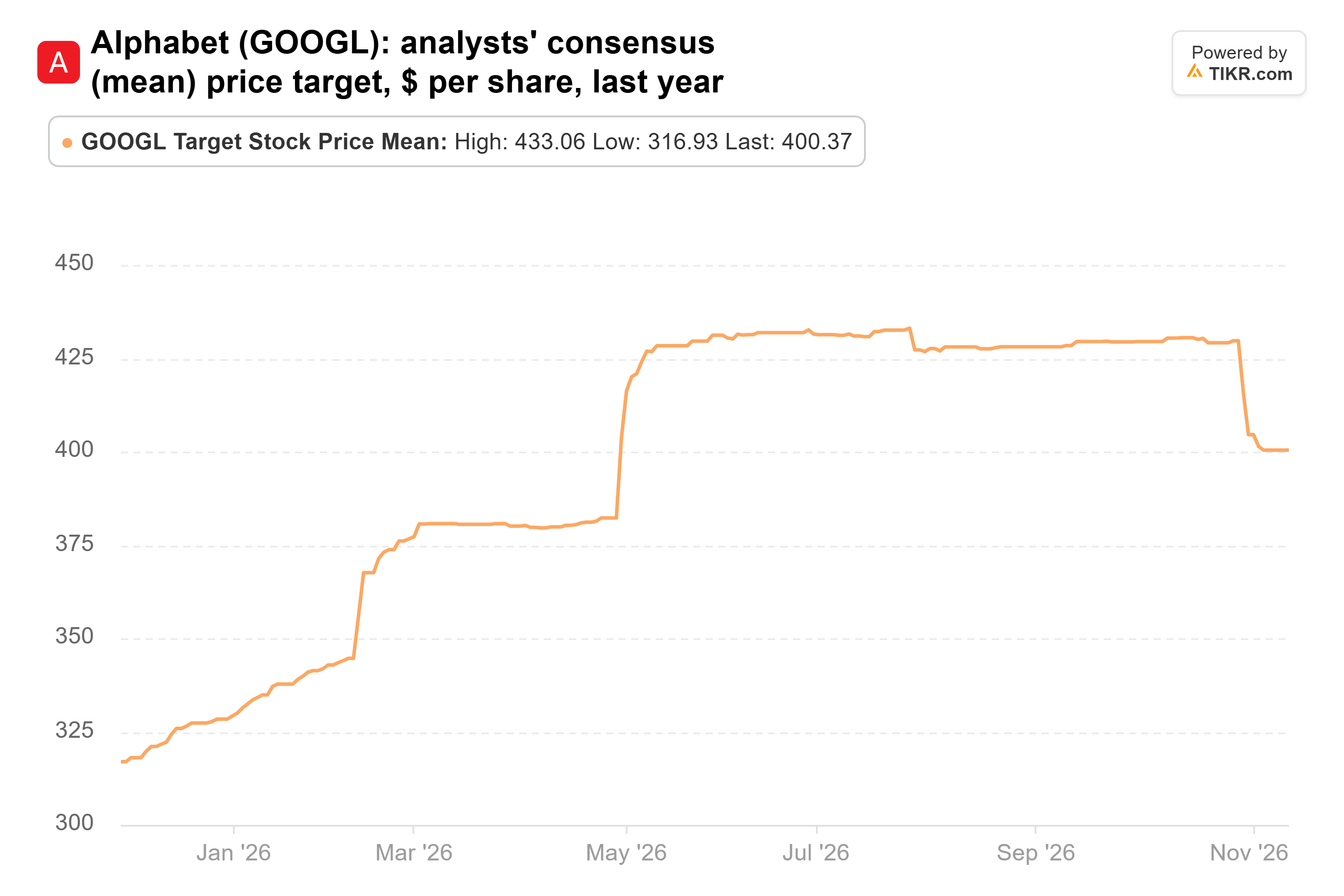
That consensus is $400 from 58 analysts, 41% above the last close, for a stock that’s at about the same price as a year ago. Alphabet trades at about 21x forward earnings, and Morgan Stanley sees its TPU chip sales jumping to $84 billion.
TIKR tracks 58 analysts on Alphabet. How many say “Buy”?
See the full breakdown of Buy, Hold, and Sell ratings on Alphabet, along with Wall Street’s revenue and earnings estimates, all in one place. More than 500,000 investors use TIKR to research stocks like this one. See Alphabet’s Analyst Ratings
United’s costs are climbing faster than its fares
United Airlines was a bet of about the same size. Duquesne held 794,795 shares worth $108 million at June 30, 2.5% of the fund, and none at Sept. 30. The stock is down 19% since then.
The business itself is growing. United’s third-quarter revenue rose 17.4% to $17.9 billion, helped by a 16.8% jump in yield. But operating expenses rose 18.8%, and back in July management said it expected to recover only 80% to 90% of higher fuel prices in the third quarter, and all of them by the fourth.
Analysts have kept raising their targets anyway:
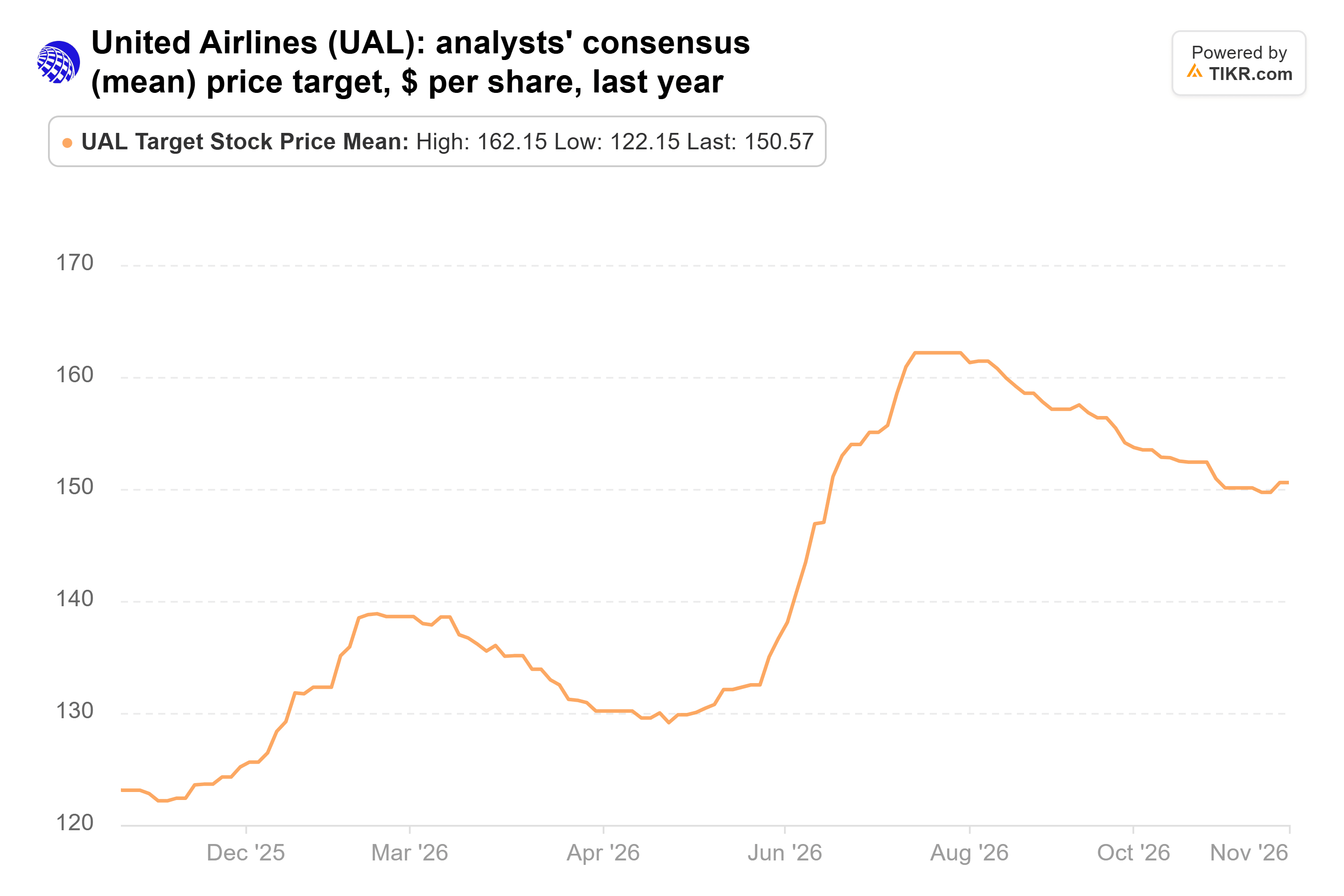
The average target is $151 from 25 analysts, 36% above the last close, and United trades at about 14x forward earnings. That’s a fair price if the fuel recovery management promised shows up in the fourth quarter.
Sandisk’s cheap multiple comes with a catch
Sandisk was the smallest of the three sales, but it has fallen the furthest since. Duquesne held 34,900 shares worth $79 million at June 30, 1.8% of the fund. The stock has fallen 64% since Sept. 30 and sits 66% below its 52-week high.
Flash prices built this run. Sandisk’s non-GAAP gross margin hit 85.1% in the quarter ended Oct. 2, up from 29.9% a year earlier. But its fab partner Kioxia saw its NAND price gains cool to the mid-20s percent in the September quarter, from about 70%.
Wall Street’s average target is still close to its July peak:
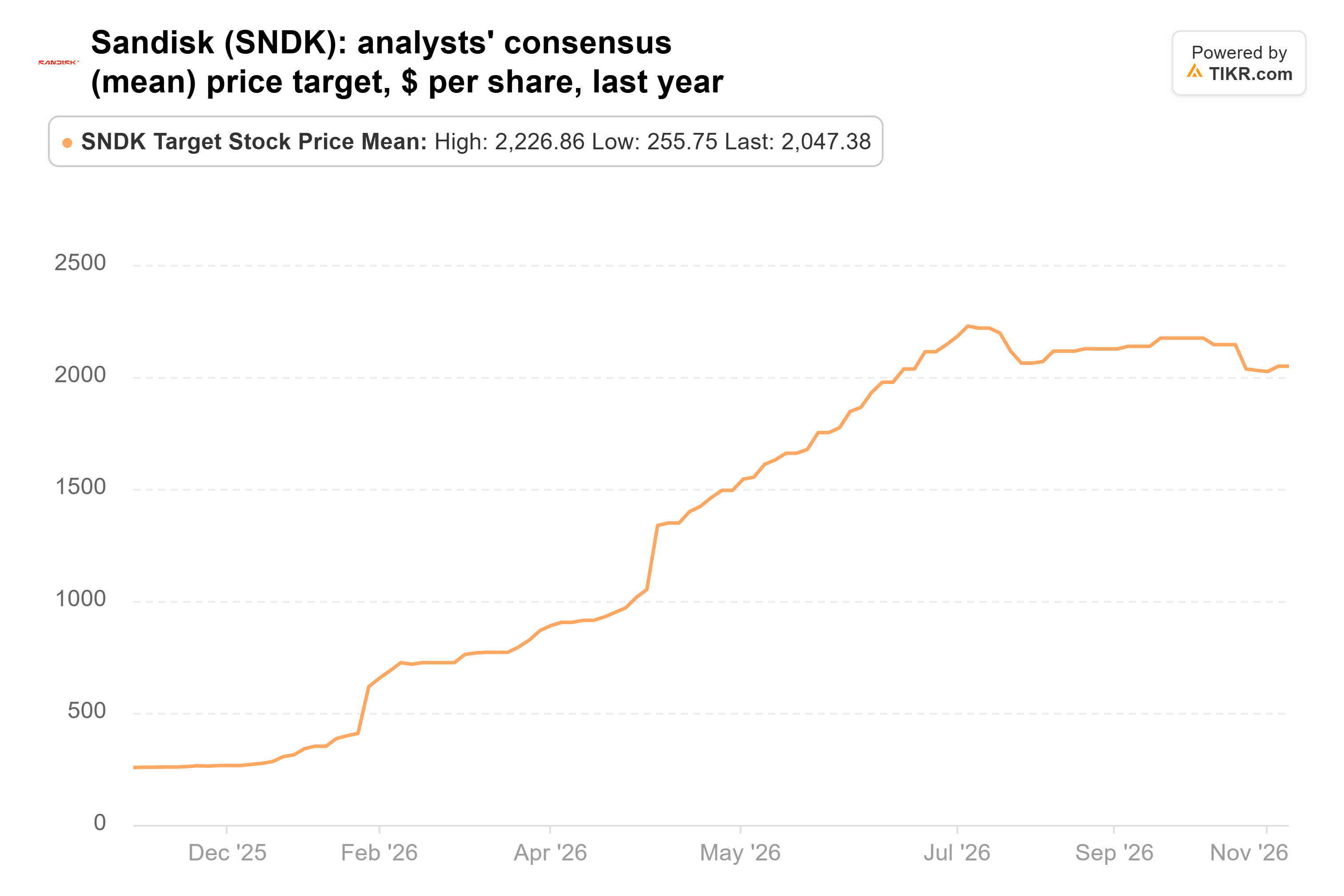
The consensus is $2,047 from 25 analysts, 153% above the last close, and even the lowest target, $870, is above the stock’s $809.
At about 3x forward earnings, Sandisk trades far below its average of 14x since it listed in February 2025. I’d guess the market expects the cycle to turn: the three analysts with fiscal 2030 estimates expect earnings per share of $155.11, 49% below the $305.34 consensus for fiscal 2029. Management says the floor prices in its multiyear contracts still yield a gross margin of about 80%, and that’s the claim the stock depends on.
I’d buy back Alphabet first
Alphabet’s spending could keep running ahead of its cash for a while, and the stock may not wait for the payoff. Even so, if I could buy back only one of the three right now, it’d be Alphabet. Alphabet chose its spending and can slow it. Sandisk’s earnings depend on flash prices and United’s on fuel, and neither company controls those.
Sandisk is the cheapest of the three by far, and if those contract floors hold through a downturn, the bears will be badly wrong. Meanwhile, the two stocks Druckenmiller added have held up: Amazon is up 3% from its Sept. 30 price, and Fox is up 8%.
Of course, a lot can change by spring. Sandisk’s late-January report will show whether flash prices are still rising, and Duquesne’s next 13F, due in mid-February, will show whether Druckenmiller has come back to any of them.
So what is Alphabet stock actually worth?
TIKR lets you forecast the future price of any stock in less than a minute. Just enter a few assumptions into TIKR’s valuation model and see what Alphabet could be worth. Start from Wall Street consensus estimates, or adjust the inputs to reflect your own view of the business. It’s free to use.
Disclaimer:
Please note that the articles on TIKR are not intended to serve as investment or financial advice from TIKR or our content team, nor are they recommendations to buy or sell any stocks. We create our content based on TIKR Terminal’s investment data and analysts’ estimates. Our analysis might not include recent company news or important updates. TIKR has no position in any of the stocks mentioned. Thank you for reading, and happy investing!