
Key Takeaways
- Microsoft offered voluntary buyouts to about 60,000 employees, 27% of its 223,000-person workforce, two days before it reported 48% Azure growth.
- The buyouts protect Microsoft’s margins: they trim people costs as analysts expect depreciation, amortization and other charges to reach $54.8 billion this fiscal year.
- Revenue rose from $198 billion to $332 billion over four fiscal years while headcount barely moved, and operating margin climbed to 46.8%.
- Far fewer than 60,000 people are likely to accept, and severance comes before savings. The December-quarter report will be the first test.
Microsoft (MSFT) is paying people to leave, and potentially a lot of them.
On Monday, Oct. 26, Chief People Officer Amy Coleman opened a voluntary exit offer to about 60,000 employees, roughly 27% of Microsoft’s 223,000-person workforce. Two days later, Microsoft reported 48% Azure growth for the September quarter, ahead of the roughly 45% it had guided.
Prof G Markets co-host Ed Elson put the offer in historical terms on the Oct. 29 episode:
“If Microsoft actually eliminates 27% of its workforce, like they’re suggesting, then their total headcount will actually be lower than what it was before the pandemic.”
The math doesn’t quite get there. But a company shrinking its workforce while Azure grows this fast is worth a closer look.
Microsoft’s Earnings Path Still Points Up
Azure’s beat came with a big bill. Microsoft spent $45.2 billion on capex in the September quarter, finance leases included. CFO Amy Hood said on the Oct. 28 call that this came in under the guide of more than $50 billion because some third-party capacity deliveries were delayed. She guided December-quarter capex above $50 billion.
Analysts still expect earnings per share to rise quickly:
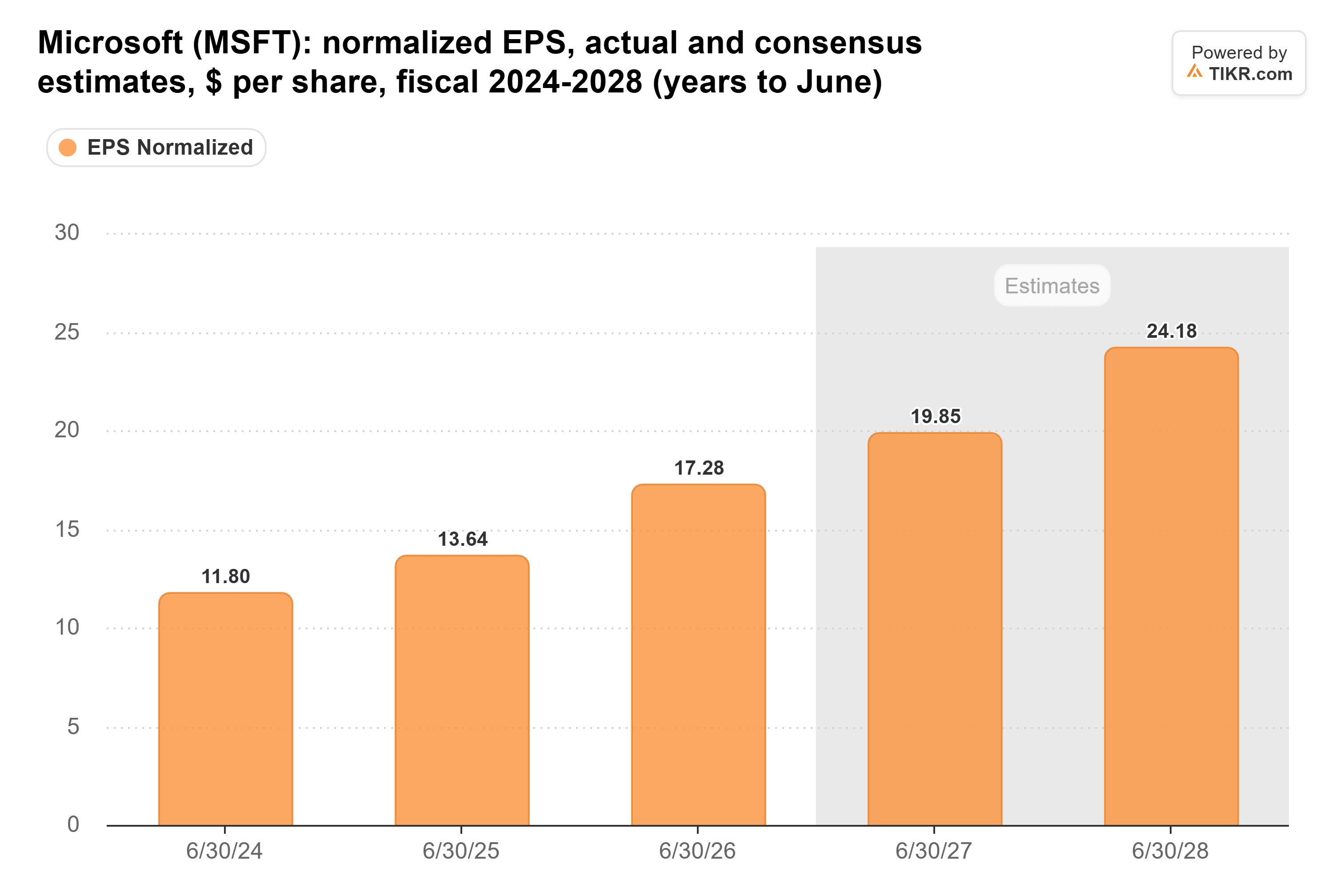
Consensus has normalized EPS going from $17.28 in fiscal 2026 to $24.18 in fiscal 2028, a 40% gain in two years. Getting there while the data-center bill grows means holding the line on everything else.
Depreciation Up, Payroll Down
Depreciation, amortization and other charges rose from $29.4 billion in fiscal 2025 to $38.5 billion in fiscal 2026, and analysts expect $54.8 billion this fiscal year. Yet Microsoft’s operating margin has kept climbing:
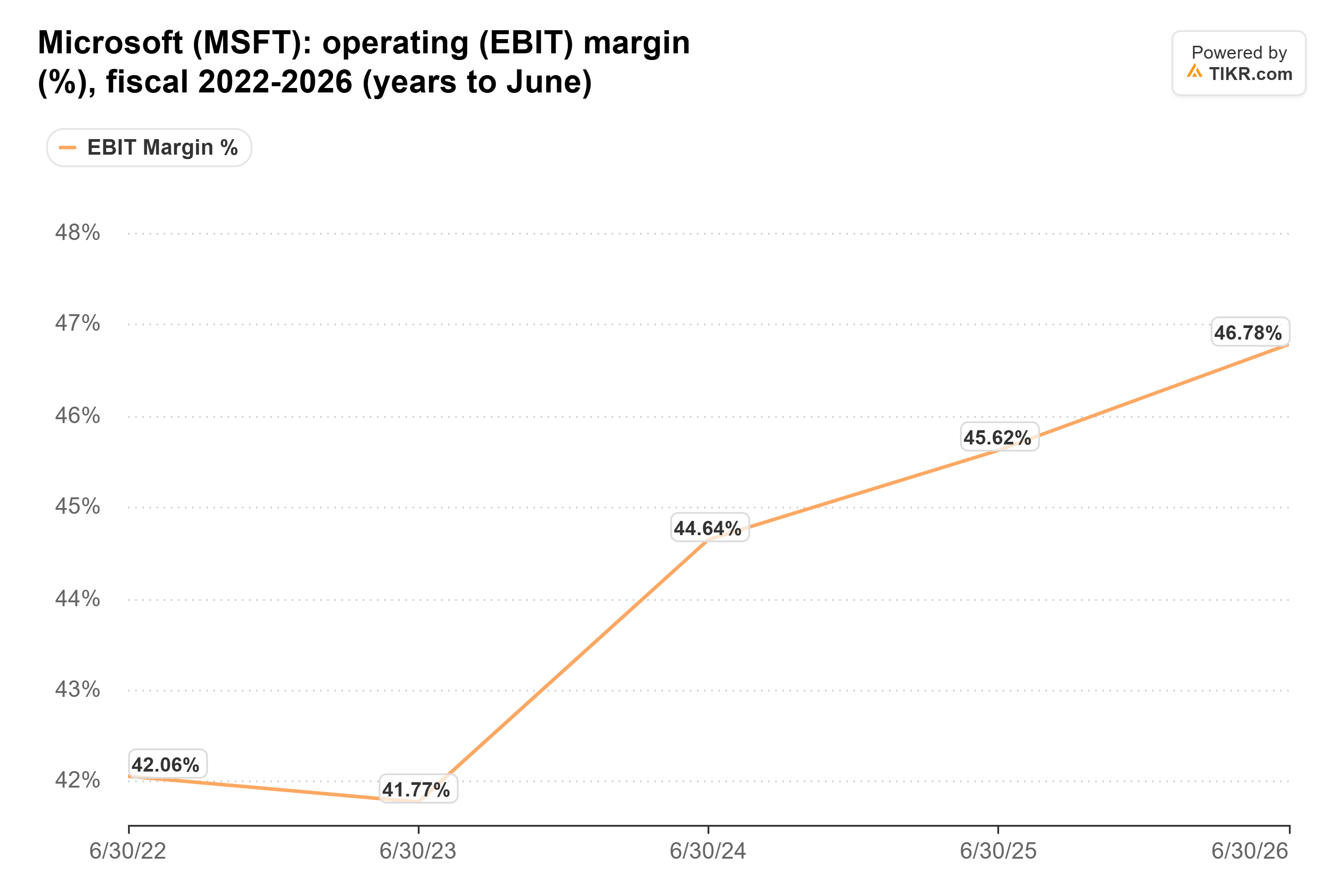
Microsoft got to 46.8% in fiscal 2026 by growing operating expenses 7% against 18% revenue growth, while headcount fell 2%, from 228,000 to 223,000. On the July call, management guided fiscal 2027’s operating margin down by less than 1 point, even with capex rising again.
The buyouts push that same lever harder. Every employee who leaves is a cost Microsoft no longer has to set against a depreciation bill analysts see rising by about $16 billion this year. (The building side of that bill grows more slowly now: since July, Microsoft depreciates its data centers and office buildings over 25 years instead of 15.)
TIKR Tracks 57 Analysts on Microsoft. How Many Say “Buy”?
See the full breakdown of Buy, Hold, and Sell ratings on Microsoft, along with Wall Street’s revenue and earnings estimates, all in one place. More than 500,000 investors use TIKR to research stocks like this one. See Microsoft’s Analyst Ratings
Revenue Up $134 Billion, Headcount Up 2,000
Microsoft’s revenue rose 67% over the last four fiscal years:

Over the same stretch, from June 30, 2022, to June 30, 2026, headcount went from about 221,000 to about 223,000. That gap is what worries Elson’s co-host, Scott Galloway. On the Nov. 2 episode, he said:
“This is the frightening part about AI, is you can massively grow your top line, beats on top and bottom, and the CEO says, oh, and try and reduce our headcount by 60,000 people?”
(It was Coleman, not CEO Satya Nadella, who announced the offer.)
Where Elson’s Math Lands
Take 60,000 from 223,000 and you get 163,000. That’s exactly Microsoft’s count on June 30, 2020, more than three months into the pandemic. A year earlier, it was 144,000. So even if every eligible employee left, Microsoft would still be about 19,000 people above its pre-pandemic size. What a full uptake would do is erase every net hire since mid-2020.
Don’t Expect 60,000 Microsoft Exits
It won’t come to that. Microsoft has set no target for acceptances, and it told GeekWire it expects a much smaller share to accept than the more than 30% who took its April retirement offer. Even at 30%, about 18,000 people would leave, roughly 8% of the workforce.
The package matches Microsoft’s standard severance, and the company hasn’t said what the offer will cost or save. Employees decide in early December and leave on Dec. 31. So the severance bill comes first, and the savings start in the March 2027 quarter at the earliest.
Microsoft’s Margin Math Just Got Easier
Headcount won’t fall below pre-pandemic levels, and a cut far smaller than 60,000 looks likelier. The direction still holds. Microsoft grew revenue 18% last fiscal year with 5,000 fewer people, and that’s how it kept its operating margin rising through a build-out this big.
The buyouts make the consensus path to $24.18 of EPS easier to believe. If Microsoft keeps adding Azure capacity without adding people, a $54.8 billion depreciation bill looks a lot more manageable. The December-quarter report gives the first read on how many people took the offer and what it did to operating expenses.
So what is Microsoft stock actually worth?
TIKR lets you forecast the future price of any stock in less than a minute. Just enter a few assumptions into TIKR’s valuation model and see what Microsoft could be worth. Start from Wall Street consensus estimates, or adjust the inputs to reflect your own view of the business. It’s free to use.
Disclaimer:
Please note that the articles on TIKR are not intended to serve as investment or financial advice from TIKR or our content team, nor are they recommendations to buy or sell any stocks. We create our content based on TIKR Terminal’s investment data and analysts’ estimates. Our analysis might not include recent company news or important updates. TIKR has no position in any of the stocks mentioned. Thank you for reading, and happy investing!