


Key Takeaways
- Jeremy Giffon spent 18 months talking to founders and the capital behind them, and his conclusion is that institutions will only survive if they are timeline native.
- Some management teams, like Tesla, Palantir, and Coinbase, have made narrative a product, using the CEO’s public voice as a marketing channel, recruiting tool, and investor relations function rolled into one.
- The practical takeaway is a new screen for your research process: does management engage with the public narrative, and do they do it with clear strategic intent?
Jeremy Giffon spent 18 months having hundreds of conversations with founders and the people backing them. His conclusion, shared on the Invest Like the Best podcast with Patrick O’Shaughnessy, is one of the more interesting frameworks to come out of that kind of research: the institutions that survive will be the ones that are timeline native. Not just present on social media. Built around it.
It’s worth unpacking what he actually means by that. A timeline-native institution monitors X, formerly Twitter, constantly, and its own actions feed back into the conversation it’s reading. It’s a loop, and what management says publicly shapes how markets, media, and competitors respond, which then shapes what management does next. Giffon’s argument is that X has effectively become the global newspaper that influential capital allocators, politicians, and journalists read every morning.
For public market investors, this is actually a useful lens. Some management teams have figured out how to shape narrative in real time and use it to their advantage. Others are still treating the quarterly earnings call as their primary communication channel, which in today’s market is a little like sending a fax. That gap matters because it shows up in how stocks get priced, how sentiment builds, and, over time, in outcomes.
Now Live: Discover how much upside your favorite stocks could have using TIKR’s new Valuation Model (It’s free)>>>
The Companies That Have Made Narrative a Product
Tesla (TSLA) is the most obvious example, as Elon Musk’s posts have moved the stock more times than anyone can count, and at this point, the company’s narrative lives as much on X as it does in earnings calls or press releases. This isn’t accidental. It’s just now how Tesla communicates, keeps its fanbase engaged, and signals where things are headed, all at the same time.

Palantir (PLTR) fits the same mold, as Alex Karp’s public appearances and deliberately provocative commentary are inseparable from the company’s positioning, both as a technology firm and as a philosophical statement about how data should be used.
Coinbase (COIN), under Brian Armstrong, has used public discourse to shape regulatory narratives in real time, often outpacing regulatory bodies. Netflix (NFLX), with its leadership willing to engage publicly on controversial content decisions, belongs in this group as well.
What these management teams share is that they treat narrative as a product. The CEO’s public voice functions as a distribution channel, a recruiting tool, and an investor relations function rolled into one. That is a compounding advantage, and it shows up in how the market prices these businesses over time.
Build your own Valuation Model to value any stock (It’s free!) >>>
The Companies Getting Priced in Real Time While Management Sleeps
On the other hand, legacy consumer brands, many industrials, and large financials still communicate almost exclusively through quarterly earnings calls and carefully worded press releases. That cadence was built for a world where institutional investors moved slowly, analyst notes took days to circulate, and retail sentiment was largely irrelevant. None of those things is true anymore.
In a market where narrative can be priced within hours, companies that communicate on a quarterly schedule may be structurally disadvantaged.
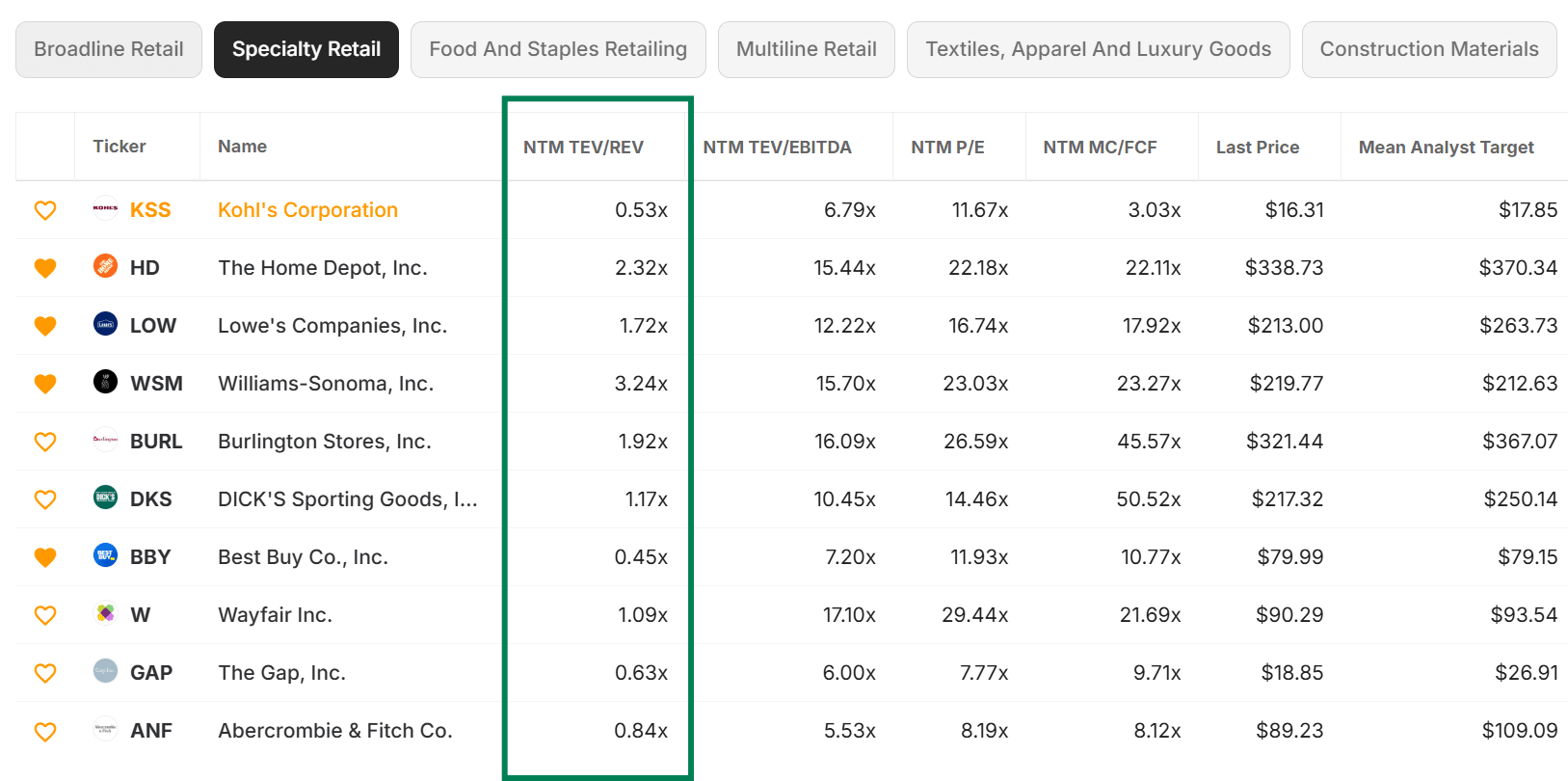
Kohl’s (KSS) is a useful case study. Years of muddled public messaging and management that never shaped a coherent real-time narrative contributed to a steady erosion of investor confidence that the fundamentals alone don’t fully explain. When the timeline moved around them, they weren’t there to shape it.

The point is not that silence is always a liability or that every CEO should be posting daily. It is that companies whose management teams lack fluency in real-time narrative are ceding ground they may not regain, and that gap often becomes visible in how they trade relative to peers.
See a stock’s true value in under 60 seconds (Free with TIKR) >>>
Add This to Your Research Process
The practical takeaway is straightforward: add a qualitative screen to your process. When evaluating a company, ask two questions. Does management engage with the public narrative around their business? And if so, do they do it with clear strategic intent or in ways that create more uncertainty than they resolve?
Poor engagement is a red flag. Disorganized messaging, slow responses to controversy, or a complete absence from the channels where sentiment is actually forming can all signal a management team operating behind the curve. Strong engagement can be a moat.
When a CEO’s public presence is itself a marketing channel, that advantage doesn’t appear cleanly in any financial statement, but it shows up in how the market prices the business over time.
TIKR gives you the tools to ground this qualitative read in hard data. Pull up the Valuation tab for any company you are evaluating and look at how its trading multiple has held relative to peers and to its own history.

Companies with narrative-driven management teams often trade at premium multiples that persist, and tracking whether that premium is expanding or contracting is a useful signal of how the market interprets management’s effectiveness.
Timeline Native Is Not the Same as Timeline Addicted
There is a meaningful distinction between management that shapes narrative and management that gets consumed by it. Musk has arguably crossed that line at various points, with posts generating legal exposure, distracting from operations, and producing volatility that served no long-term purpose. The timeline-native CEO who posts so frequently that it affects execution is not an asset.
The screen is not whether a CEO posts often. It is whether their public presence reflects clear strategic intent and translates into outcomes that hold up in the financials. A CEO whose posts are coordinated with product launches, regulatory milestones, or earnings context is building something. One who posts reactively or impulsively is introducing a different kind of risk. For investors, knowing the difference is increasingly part of the job.
Estimate a company’s fair value instantly (Free with TIKR) >>>
Looking for New Opportunities?
- See what stocks billionaire investors are buying so you can follow the smart money.
- Analyze stocks in as little as 5 minutes with TIKR’s all-in-one, easy-to-use platform.
- The more rocks you overturn… the more opportunities you’ll uncover. Search 100K+ global stocks, global top investor holdings, and more with TIKR.
Disclaimer:
Please note that the articles on TIKR are not intended to serve as investment or financial advice from TIKR or our content team, nor are they recommendations to buy or sell any stocks. We create our content based on TIKR Terminal’s investment data and analysts’ estimates. Our analysis might not include recent company news or important updates. TIKR has no position in any stocks mentioned. Thank you for reading, and happy investing!


