Key Takeaways
- Early Uber investor Jason Calacanis bought 15,000 Uber shares at $65 with a $120 target, and he expects Tesla to take 40% of the autonomous vehicle market, Uber 35% and Alphabet’s Waymo 15%.
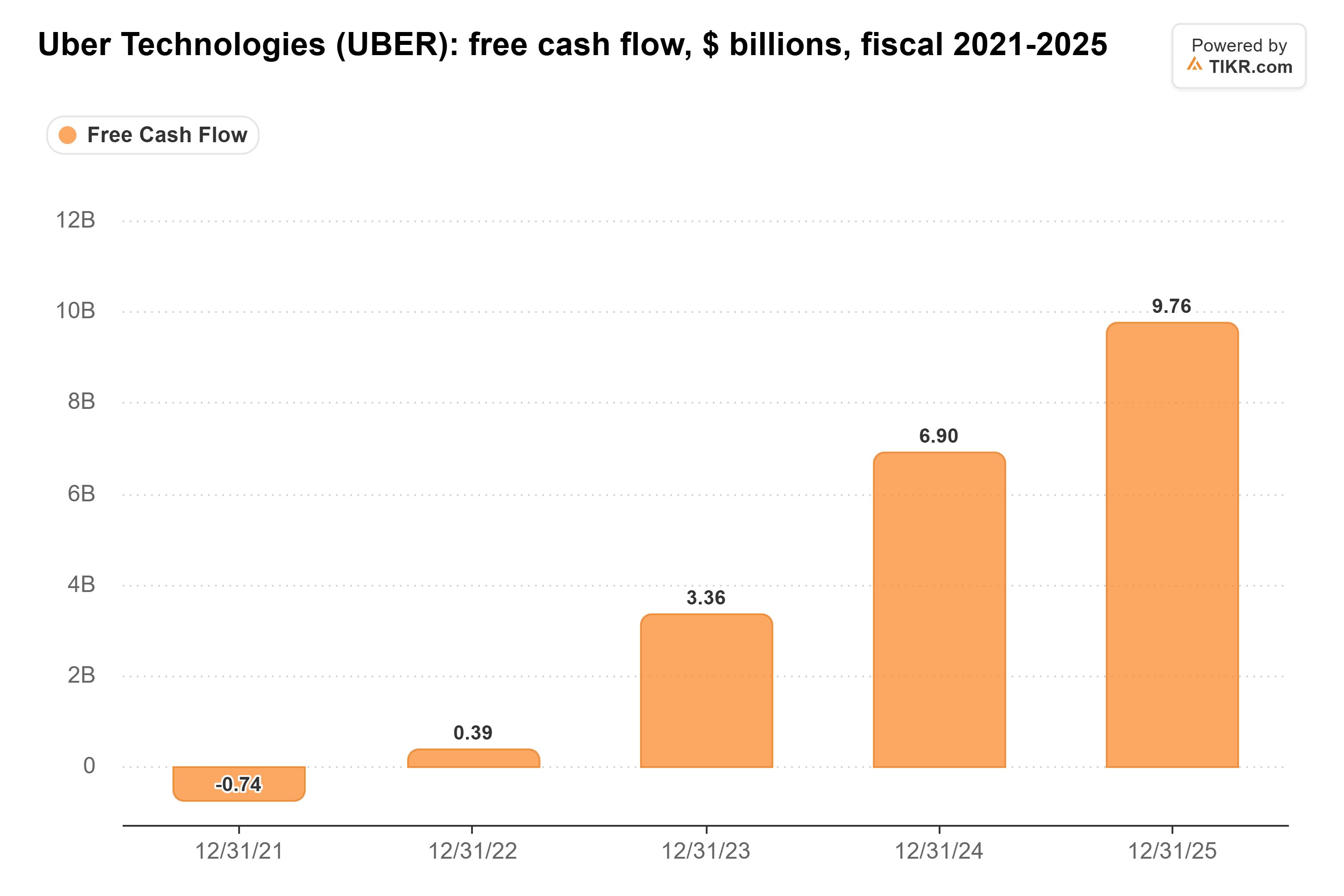
- Uber’s market value is now about the same as Waymo’s private valuation, which looks too gloomy for a company making about $10 billion a year in free cash flow.
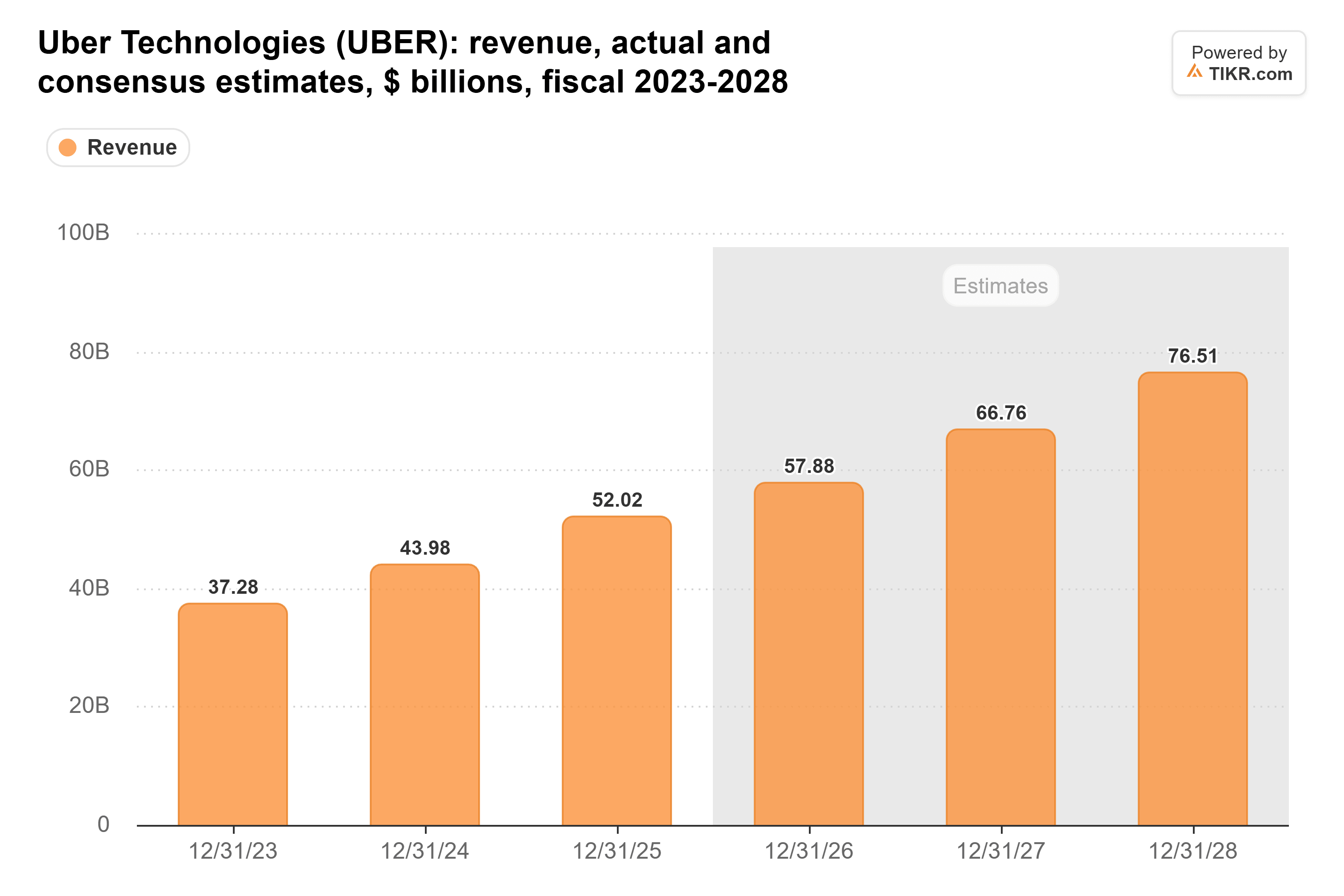
- Uber trades at 17x forward earnings, its lowest in three years, while analysts expect revenue to grow from $52.0 billion in 2025 to $76.5 billion in 2028.
- Watch whether Uber is live in 15 autonomous cities by year-end, and how its Austin and Atlanta rides hold up once Waymo starts its own service there in January 2028.
Uber (UBER) is back at 52-week lows, down 21% this year, and DoorDash (DASH) just agreed to buy Instacart (CART) for $17 billion after Uber walked away from its own talks. Angel investor Jason Calacanis, one of Uber’s earliest backers, is buying anyway, and he thinks Uber, not Alphabet’s Waymo, will be the big winner in robotaxis after Tesla.
In a post on X on October 26, he said he’d bought 15,000 Uber shares at $65 over the past two weeks, with a 12-month target of $120. He also bought 3,000 shares of Tesla (TSLA) at $357.
A follower said it was hard to back both. Calacanis replied: “Tesla and Uber will split 80% of the AV market.”
When another follower worried about Tesla’s robotaxi plans, Calacanis gave the split: Tesla at 40% of all AVs, “Uber with 20 partners” at 35%, and Waymo, owned by Alphabet (GOOG), at 15%. (Tesla and Uber come to 75% on those numbers, a bit short of 80%, but close enough.) In the same reply, he added: “Uber and Waymo currently trade at same valuation.”
If he’s anywhere close on the split, that’s a strange price.
Uber Is Priced Like It Already Lost
Uber’s market value has slipped under $135 billion. Waymo raised $16 billion at a $126 billion valuation in February. So investors are paying about the same for Uber as for a company Calacanis expects to end up with less than half Uber’s share.
TIKR Tracks 50 Analysts on Uber. How Many Say “Buy”?
See the full breakdown of Buy, Hold, and Sell ratings on Uber, along with Wall Street’s revenue and earnings estimates, all in one place. More than 500,000 investors use TIKR to research stocks like this one. See Uber’s Analyst Ratings
Uber’s business is still growing, too. Analysts expect revenue to climb from $52.0 billion in 2025 to $76.5 billion in 2028:
And Uber makes real money. Free cash flow went from negative in 2021 to $9.8 billion in 2025, and it passed $10 billion over the 12 months to June:
Calacanis thinks that cash makes Uber a target at this price. In a reply on October 28, he said “Waymo/google, Amazon, Tesla or a half dozen other companies will try and buy uber to own the 200m customers, eats/grocery business, free cash flow and global footprint.”
Even so, the stock trades at 17x forward earnings, its lowest in three years and far below its 25x average:
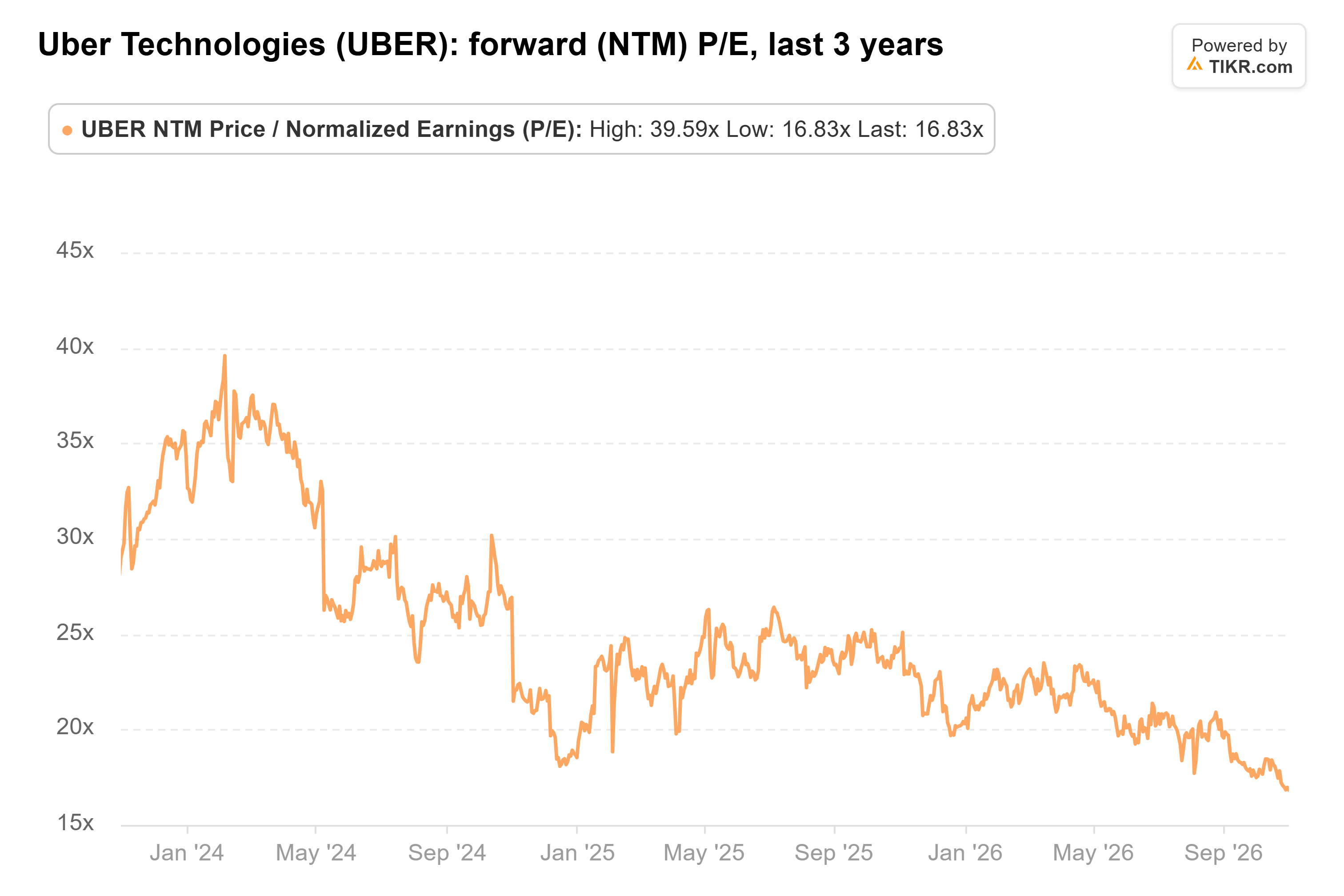
That’s cheap for earnings that analysts expect to more than double, from $2.45 a share in 2025 to $5.50 in 2028. Getting back to its three-year average multiple on the next 12 months’ expected earnings would put the stock around $96. Calacanis said he wouldn’t make this trade “if uber was at $100.”
Why Robotaxi Fleets Still Need Uber
The bigger question is whether robotaxi fleets need Uber. I think plenty of them do.
Uber’s management says autonomous vehicles on its network run 30% more trips per vehicle per day than they do on standalone networks. If you own a fleet, a busier car pays for itself faster. Uber already has more than 30 AV partners, well past Calacanis’s 20, and it has committed to at least 35,000 Lucid vehicles for a robotaxi service it’s building with Nuro. It aims to be live in 15 autonomous cities by year-end, up from seven in August.
Robotaxis are still a sliver of the business, at under 0.5% of Uber’s trips. Big cities are where robotaxis compete with Uber, but management says the top 20 US cities produce only 25% of Uber’s US profit. And 60% of Mobility gross bookings come from outside the US.
The risk is that the best fleets keep their riders for themselves. Waymo ended its Phoenix partnership with Uber earlier this year. It has also told Uber it plans to launch its own service in Austin and Atlanta from January 2028, though Uber expects to keep offering Waymo rides there until the agreement expires in May 2028. Tesla already runs its own robotaxi network. And Calacanis owns both stocks he’s talking up.
Why I’m With Calacanis on Uber Stock
No one knows yet who wins the robotaxi race, and Calacanis’s 35% is his own forecast. But Uber doesn’t need that much for the stock to work from here. At 17x forward earnings, the market already prices Uber as autonomy’s loser. If its partners keep sending rides through the app, I think the stock has plenty of room to run, even if $120 is a stretch: that’s about 31x next year’s expected earnings.
The first test comes fast: Uber reports third-quarter results on Wednesday, November 4. After that, watch whether it reaches 15 autonomous cities by December 31, and how its Austin and Atlanta rides hold up once Waymo starts taking bookings there itself in January 2028.
So what is Uber stock actually worth?
TIKR lets you forecast the future price of any stock in less than a minute. Just enter a few assumptions into TIKR’s valuation model and see what Uber could be worth. Start from Wall Street consensus estimates, or adjust the inputs to reflect your own view of the business. It’s free to use.
Disclaimer:
Please note that the articles on TIKR are not intended to serve as investment or financial advice from TIKR or our content team, nor are they recommendations to buy or sell any stocks. We create our content based on TIKR Terminal’s investment data and analysts’ estimates. Our analysis might not include recent company news or important updates. TIKR has no position in any of the stocks mentioned. Thank you for reading, and happy investing!