


Key Takeaways
- Microsoft unveiled its Maia 300 AI chip on Oct. 12, and Chamath Palihapitiya says even Google is short on memory because Nvidia has locked up most of the supply.
- Big Tech’s custom chips can only scale as fast as they can get memory and packaging, and right now Nvidia controls most of both.
- Micron has signed agreements for the vast majority of its 2027 HBM supply, and its capital spending nearly doubled to $30.7 billion in fiscal 2026.
- Micron says most of its added spending goes to cleanroom space arriving in late 2028 and beyond. That’s when rival chips could start to scale faster.
Big Tech has a plan to cut its dependence on Nvidia (NVDA): build its own chips.
On Oct. 12, Microsoft (MSFT) unveiled Maia 300, its third-generation AI chip, and said it will scale its Maia chips to multi-gigawatt deployments starting in 2027. Microsoft isn’t the only one doing this. As Jonathan Ferro put it on the Oct. 13 episode of Bloomberg Surveillance: “I can’t think of a big tech company that isn’t building their own chips right now.”
But a chip design only gets you so far. Someone still has to package it, and it still needs memory to run.
That’s where Chamath Palihapitiya, the venture capitalist and All-In co-host, comes in. On the Oct. 16 episode of the All-In podcast, he said of Nvidia:
“All the packaging capacity is them, all the HBM capacity is mostly them, like even Google tin cups for memory right now because Nvidia has clogged it all up.”
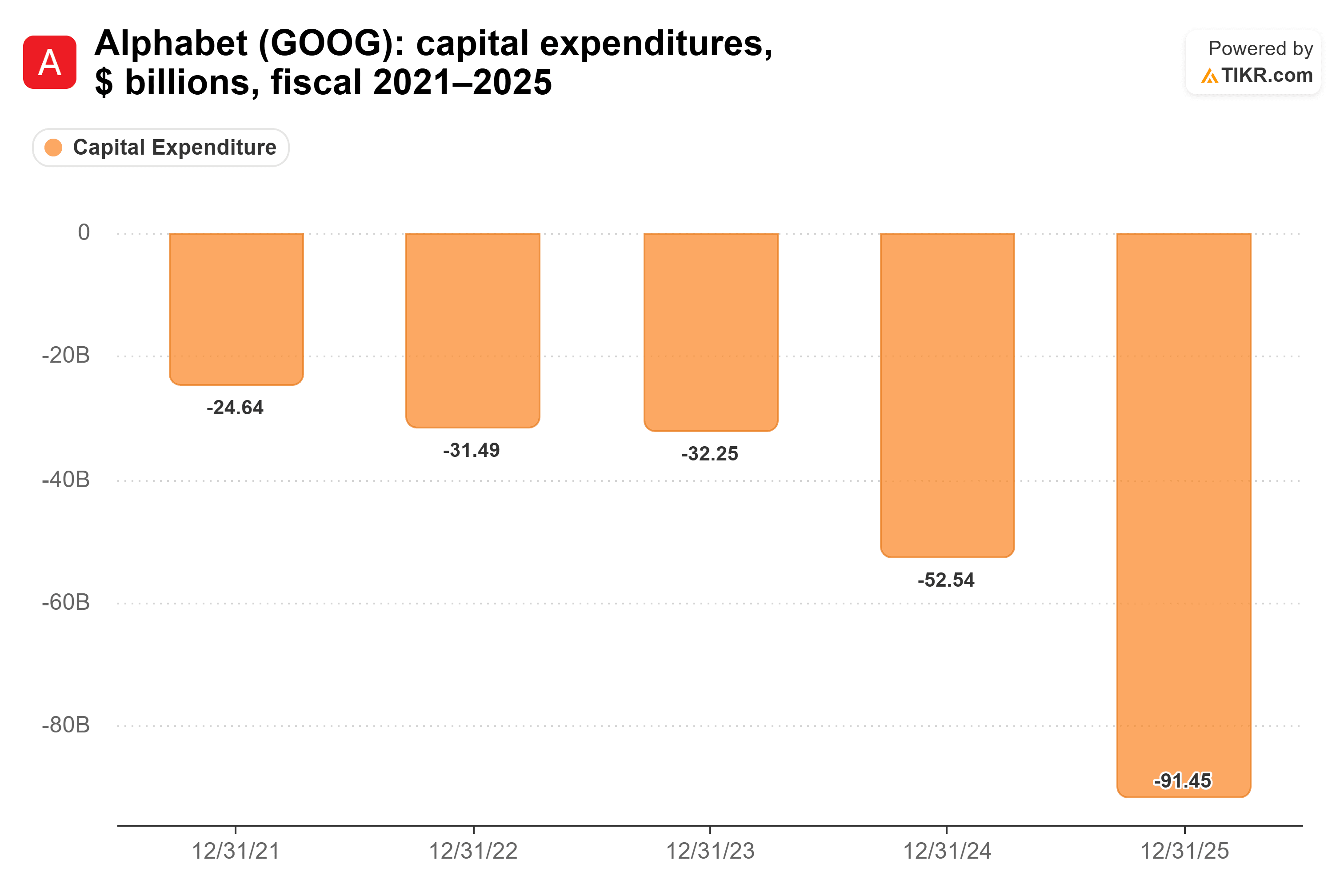
Even Google! That’s quite a claim to make about Alphabet (GOOG), which spent $91.5 billion on capital expenditures in 2025.
Even $91.5 billion waits in line
Alphabet’s capex nearly tripled in two years, from $32.3 billion in 2023 to $91.5 billion in 2025, as it built out data centers and its own TPUs…
…and the memory makers say they’ve already sold most of what they can make. Here’s Bloomberg Intelligence’s Vasu Kasibhotla on the Oct. 15 episode of his firm’s podcast, talking about the chip, optical, and memory companies that supply AI data centers, Micron among them:
“They all sold out capacity in 27 and probably a lot of 28 as well”
Micron Technology (MU) backs that up. With its latest quarterly results, Micron said it has completed agreements for the vast majority of its calendar 2027 HBM supply, at significantly higher prices than last year.
Now think about Maia 300. Microsoft says it has 2.5x the memory bandwidth of Maia 200 and roughly 2x the HBM bandwidth per watt. Microsoft built this chip to use more memory, and it ships in a year when most of that memory is already spoken for.
That’s what control looks like
Nvidia’s gross margin shows who holds the cards. It jumped from 56.9% in fiscal 2023 to 72.7% in fiscal 2024 and has stayed above 70% since, including 71.1% in the year ended January 2026…
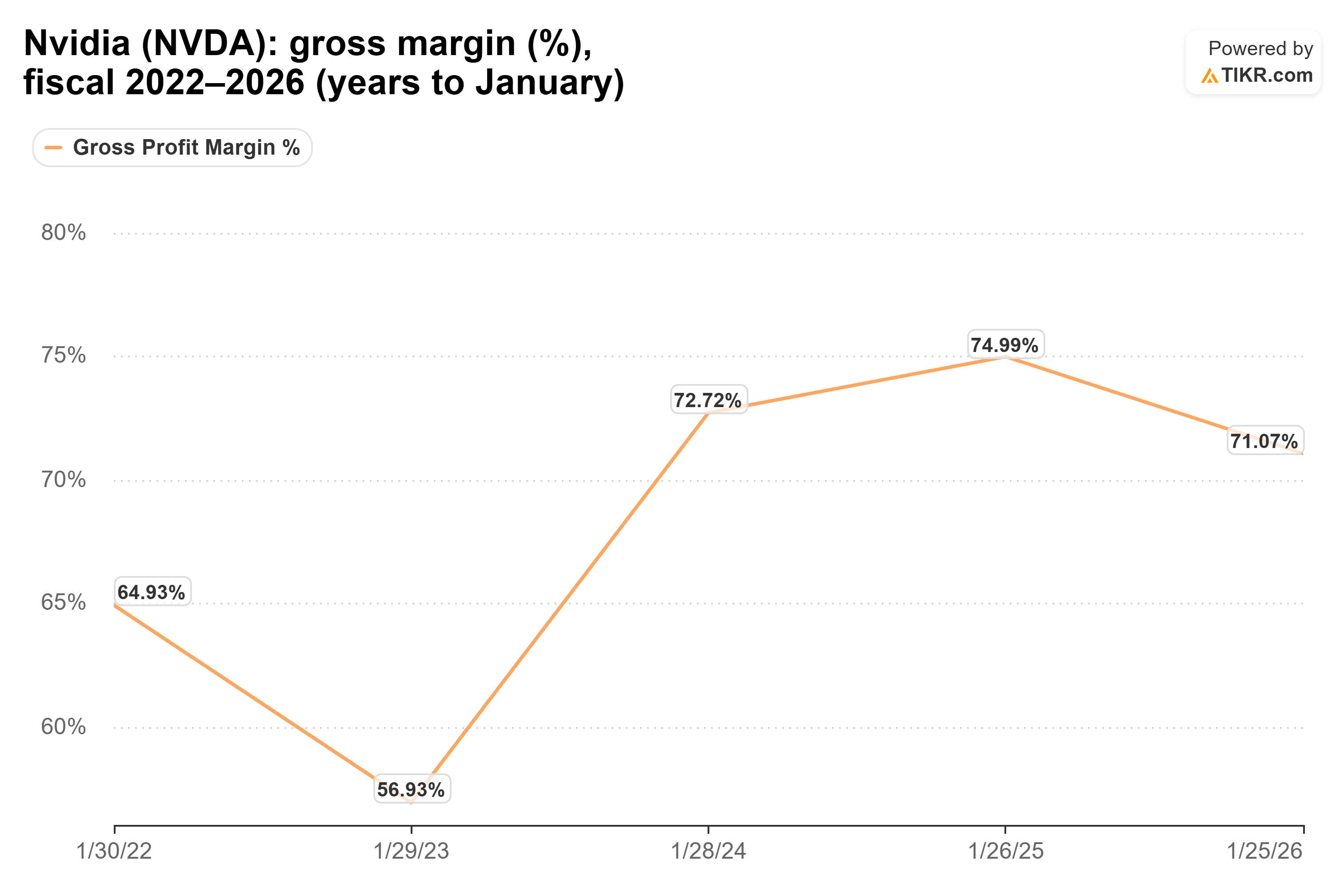
Those are the margins of a company that sells the best chip and also controls much of the supply its rivals need to build their own. As Chamath put it, Nvidia is “in complete ball control here.”
The window opens in late 2028
Of course, a supply lock only lasts until someone builds more supply, and Micron is building fast. Its capex nearly doubled, from $15.9 billion in fiscal 2025 to $30.7 billion in the year ended Sept. 3, 2026…
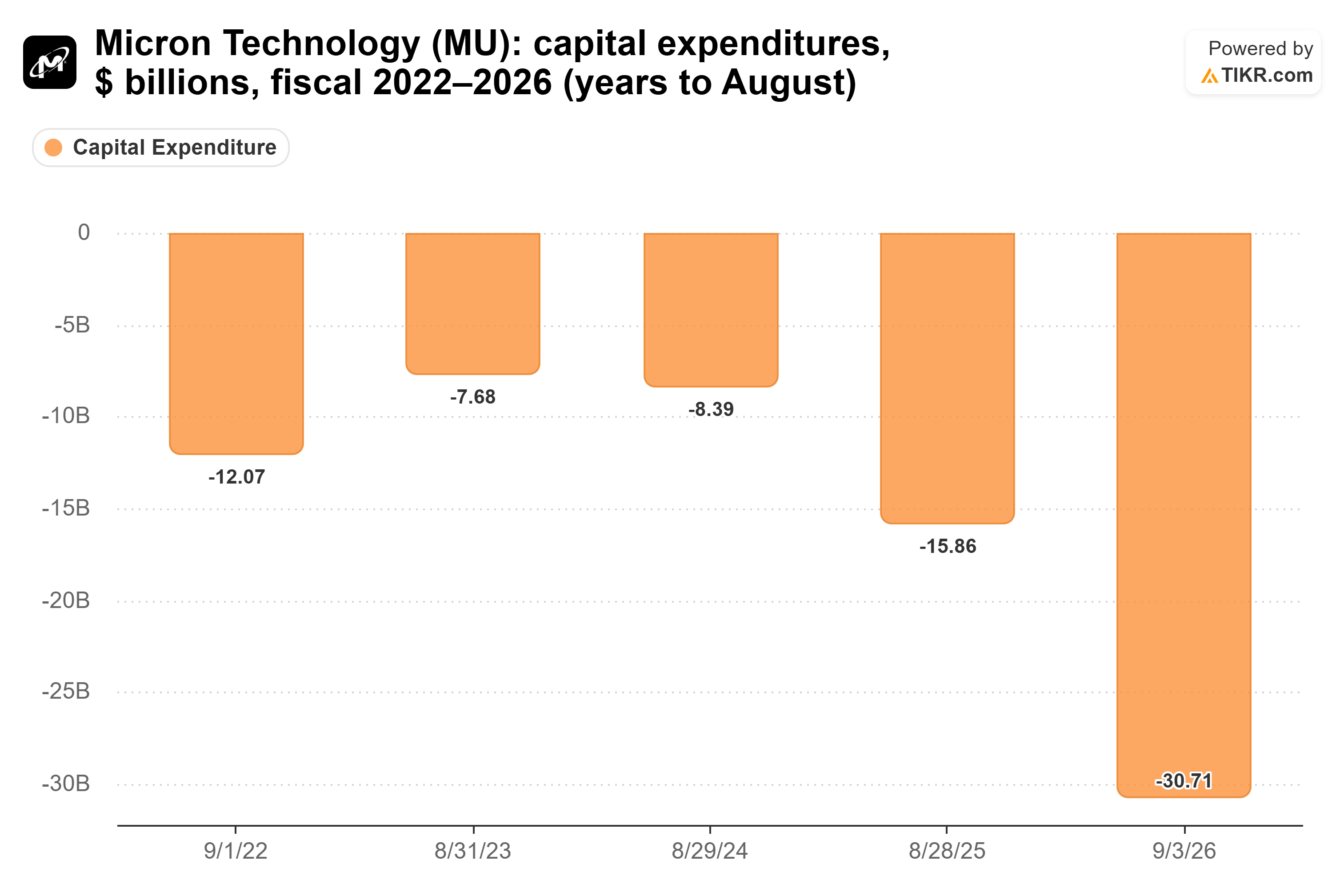
…and it expects about $25 billion in the first half of fiscal 2027 alone.
New memory capacity is still a long way off. Micron CEO Sanjay Mehrotra said most of the planned increase in fiscal 2027 spending is for construction, “most of which is to help accelerate clean room space availability in late calendar 2028 and beyond.”
I think Microsoft, Google, and the rest will keep designing better chips, but through 2027, and probably much of 2028, they can only scale as fast as they can find memory, and Nvidia is first in line. Nvidia gets roughly two more years of an edge built on supply, on top of the one built on design.
Ferro named the risk himself: “There is a risk that you just switch to abundance at some point because everyone’s doing the same thing.” Once the new clean rooms open and memory gets plentiful, Google’s TPUs and Microsoft’s Maia chips get room to scale, and Nvidia’s 70%-plus margins get tested.
Until then, I’d bet on Nvidia keeping control, though the window could close sooner if Micron and its rivals bring new capacity online faster than planned. Micron’s next quarterly report is the place to watch.
So what is Nvidia stock actually worth?
TIKR lets you forecast the future price of any stock in less than a minute. Just enter a few assumptions into TIKR’s valuation model and see what Nvidia could be worth. Start from Wall Street consensus estimates, or adjust the inputs to reflect your own view of the business. It’s free to use.
Disclaimer:
Please note that the articles on TIKR are not intended to serve as investment or financial advice from TIKR or our content team, nor are they recommendations to buy or sell any stocks. We create our content based on TIKR Terminal’s investment data and analysts’ estimates. Our analysis might not include recent company news or important updates. TIKR has no position in any of the stocks mentioned. Thank you for reading, and happy investing!


