
Key Takeaways
- Cantor Fitzgerald cut its IonQ price target to $60 from $70 on Nov. 6, a day after a third quarter in which revenue rose 336% to $173.8 million.
- IonQ stock has lost 43% in a year, even after a 23.4% jump on Nov. 6, as its share count nearly doubled from the end of 2024 and its gross margin fell.
- Cantor’s $60 target is about 38x forward sales, well below IonQ’s five-year average of 124x, but nearly half of last quarter’s revenue came from a chip foundry.
- A rebound makes sense, but the targets in the $40s look more realistic than Cantor’s $60.
IonQ (IONQ) stock has lost 43% in a year, and a record quarter didn’t stop analysts from cutting their targets. Cantor Fitzgerald lowered its target to $60 from $70 on Nov. 6 and kept its Overweight rating. Shares jumped 23.4% to $32.62 that day, and Cantor’s target still sits 84% above that close.
Growth paid for in shares
IonQ has paid for its deals and its runway mostly with stock. It had 221.92 million shares outstanding at the end of 2024 and 432.46 million on Oct. 28, 2026, after a $2.0 billion stock sale closed on Oct. 16. Its all-stock purchase of Elisity, which closed on Nov. 4, added another $1.15 billion in shares.
IonQ’s gross margin, before depreciation, also fell to 24.9% in the second quarter, from 59.8% a year earlier.
A beat, a raise and lower targets
Revenue rose 336% to $173.8 million in the third quarter, IonQ raised its 2026 guidance to $505-$515 million, and its backlog more than doubled to $1.2 billion. CEO Niccolo de Masi said on the Nov. 5 call that IonQ had “sold out” its 2027 capacity for the Superion 256, its newest quantum computer.
Cantor wasn’t alone in cutting the next morning: Needham went to $48 from $65, Mizuho to $42 from $52 and Morgan Stanley to $40 from $43.
TIKR tracks 14 analysts on IonQ. How many say “Buy”?
See the full breakdown of Buy, Hold, and Sell ratings on IonQ, along with Wall Street’s revenue and earnings estimates, all in one place. More than 500,000 investors use TIKR to research stocks like this one. See IonQ’s Analyst Ratings
Does $60 add up?
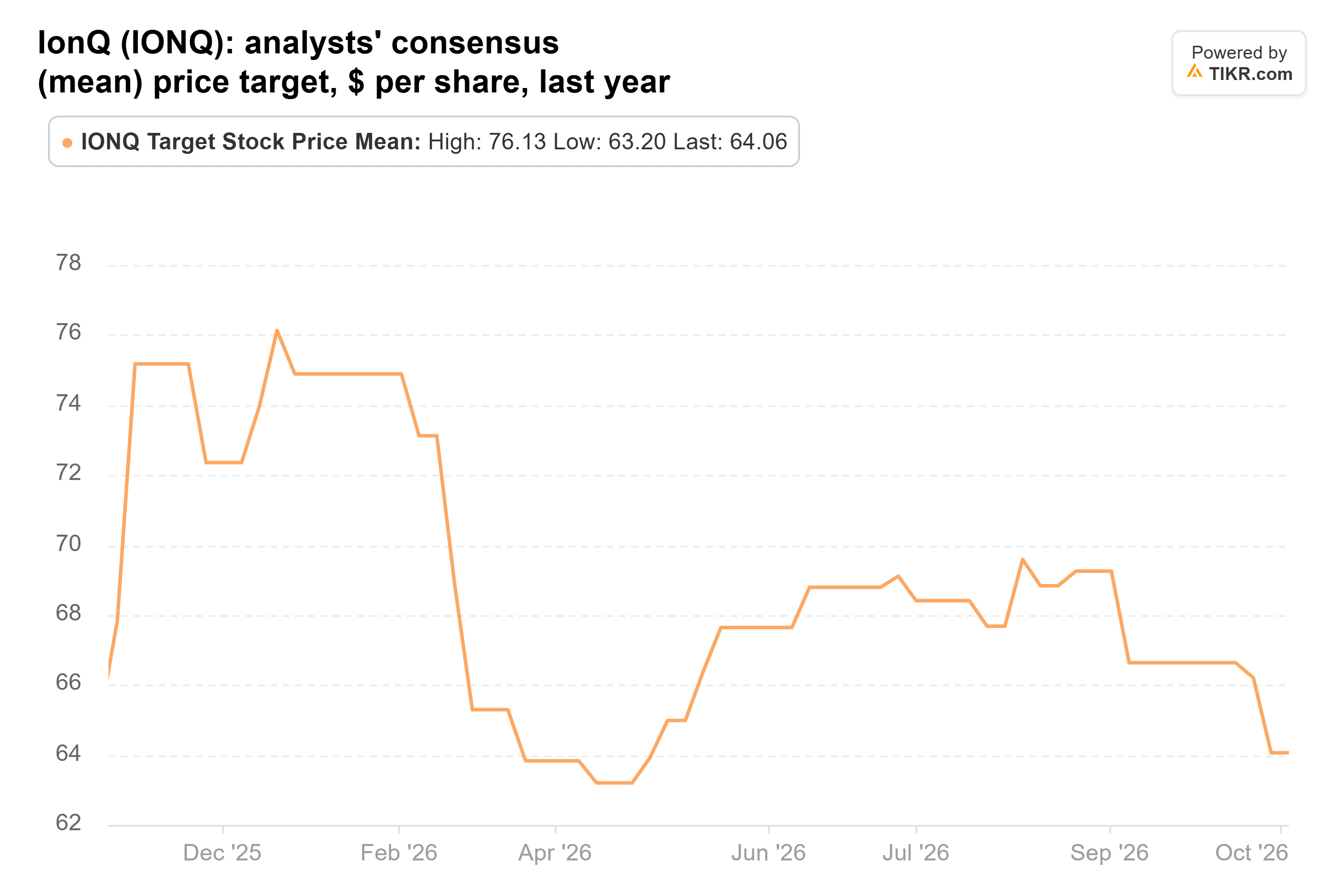
The consensus target barely followed the stock down. It was $68 a year ago and $64 on Oct. 29, before the report, when targets ranged from $42 to $100.
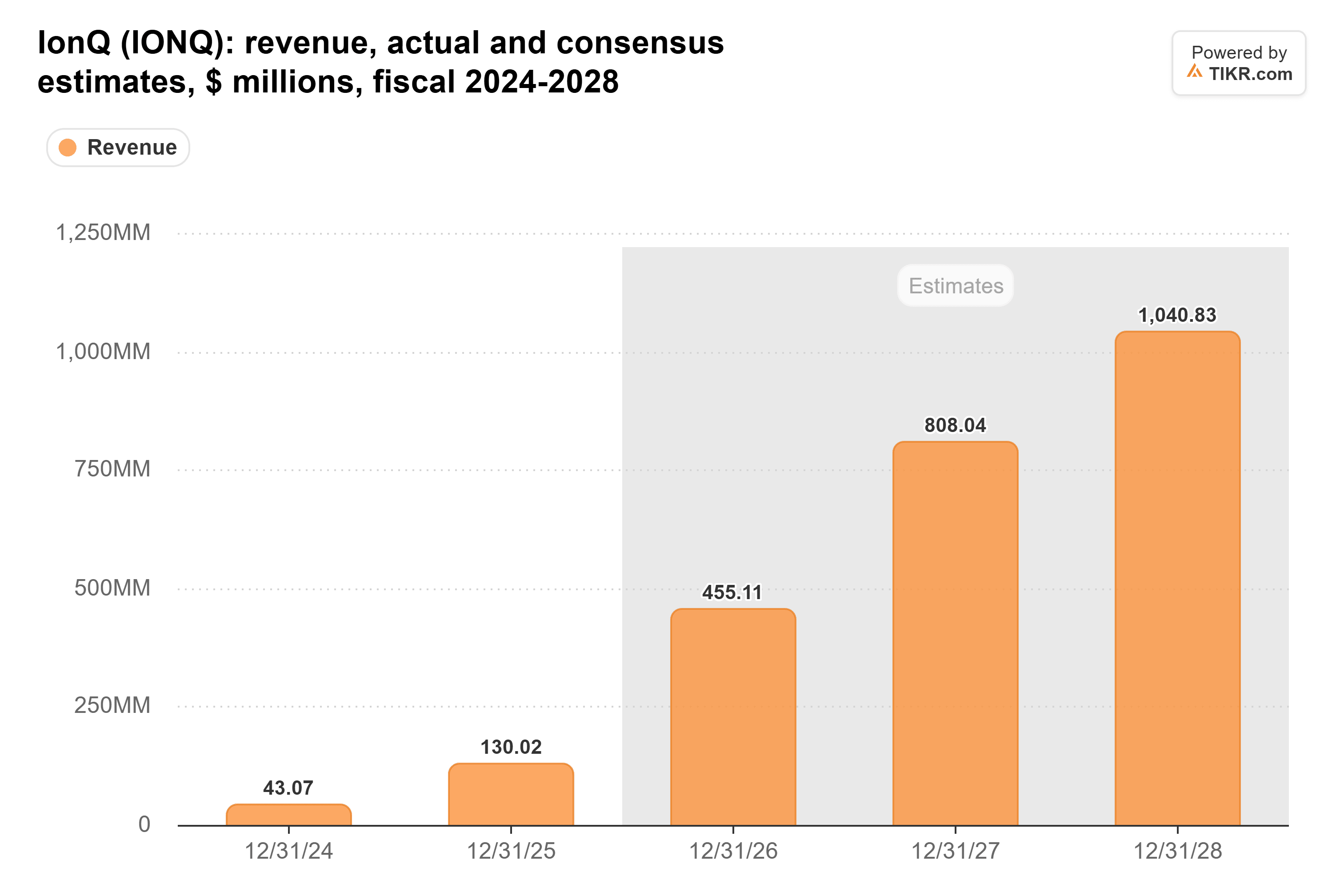
Going into the report, analysts expected revenue of $455 million this year, which IonQ’s new guidance already beats, then $808 million in 2027 and $1.04 billion in 2028.
On those estimates, IonQ traded at about 18x forward sales at the Nov. 2 close, its lowest in five years and far below its five-year average of 124x.
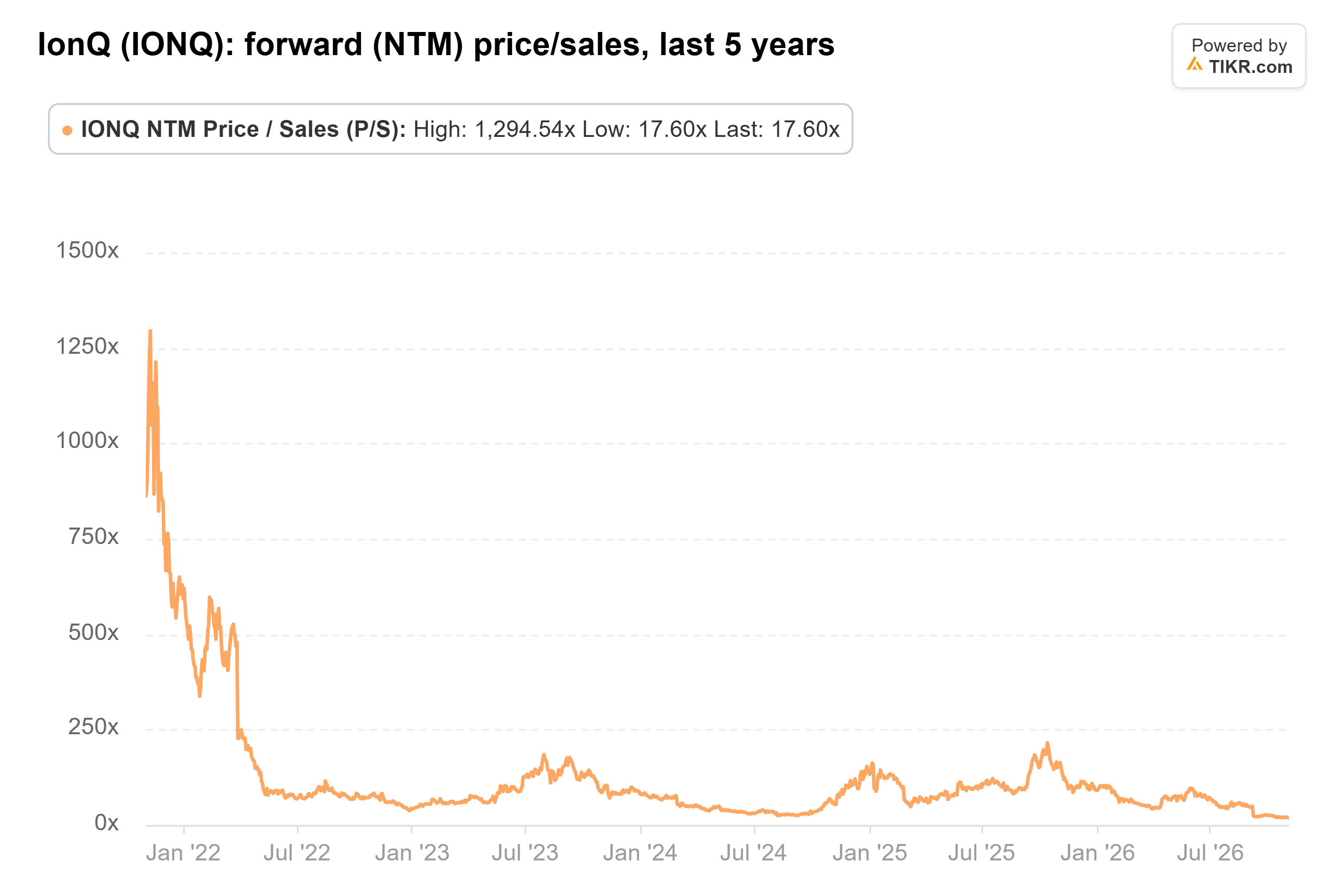
Cantor’s $60 works out to about 38x forward sales, well under that average. But the average comes from years when IonQ was a pure quantum company. Nearly half of third-quarter revenue, $83.5 million, came from the SkyWater foundry IonQ bought on July 31, a business BofA valued at 2x sales in September. Gross margin kept falling, too: 21.9% in the third quarter, against 46.7% a year earlier.
Closer to the $40s
IonQ still has losses to fund: analysts expect free cash flow of negative $743 million in 2027, which its $3.7 billion of pro forma cash covers for now.
The IonQ Platform segment grew 127% last quarter, so the Nov. 6 rebound from about 18x forward sales makes sense. But 38x is a rich price for a company that now gets nearly half its sales from a foundry, with a share count that keeps climbing. The targets in the $40s, where Morgan Stanley, Mizuho and Needham now sit, look closer to what the business supports today.
IonQ presents at Cantor’s conference in Miami on Nov. 11, and management has said it aims to demonstrate a 256-qubit system by the end of 2026. If that demonstration arrives on schedule, the quantum half of IonQ becomes much easier to pay up for.
So what is IonQ stock actually worth?
TIKR lets you forecast the future price of any stock in less than a minute. Just enter a few assumptions into TIKR’s valuation model and see what IonQ could be worth. Start from Wall Street consensus estimates, or adjust the inputs to reflect your own view of the business. It’s free to use.
Disclaimer:
Please note that the articles on TIKR are not intended to serve as investment or financial advice from TIKR or our content team, nor are they recommendations to buy or sell any stocks. We create our content based on TIKR Terminal’s investment data and analysts’ estimates. Our analysis might not include recent company news or important updates. TIKR has no position in any of the stocks mentioned. Thank you for reading, and happy investing!