Key Takeaways
- D-Wave Quantum (QBTS) stock surged 18% to $10.68 on November 6, rebounding after a 13% decline the previous session.
- Rigetti Computing (RGTI) jumped 19% to $11.75 on November 6, following a 12% decline as quantum computing shares experienced sharp swings.
- D-Wave’s revenue is projected to reach $42.5 million in 2026 and $80.6 million in 2027, although its previous three quarters missed consensus revenue estimates.
- D-Wave is scheduled to report third-quarter earnings before the market opens on November 10, while Rigetti reports after the close, putting revenue growth and commercial demand in focus.
What Happened?
D-Wave Quantum (QBTS) stock surged approximately 18% on November 6, closing at $10.68 as quantum computing shares recovered from a sharp technology-sector selloff.
Rigetti Computing (RGTI) jumped approximately 19% to $11.75 during the same session, following substantial losses the previous day.
The rebound also followed improved revenue guidance from quantum computing peer IonQ, which helped lift sentiment across the industry despite limited company-specific news from D-Wave and Rigetti.
D-Wave generated approximately $3.1 million in second-quarter revenue, compared with Rigetti’s $5.1 million.
Rigetti held approximately $541.3 million in cash, cash equivalents, and available-for-sale investments as of June 30, providing financial flexibility as it develops its quantum computing systems.
Analyst revisions have added pressure to D-Wave. On November 9, B. Riley lowered its price target from $27 to $22 while maintaining its Buy rating, following an earlier reduction from $40.
The revised target represented approximately 106% potential upside from D-Wave’s November 6 closing price, although execution risks remain substantial.
D-Wave also announced a non-binding agreement with LG CNS on October 28 to pursue quantum optimization opportunities in South Korea.
On November 4, the company introduced an upgraded Stride hybrid solver that produced better solutions in 15 seconds than its previous version achieved in 120 seconds during benchmark testing.
D-Wave’s Revenue Growth Faces a Critical Test
According to TIKR consensus estimates, annual revenue is projected to rise from $24.6 million in 2025 to $42.5 million in 2026 and $80.6 million in 2027.
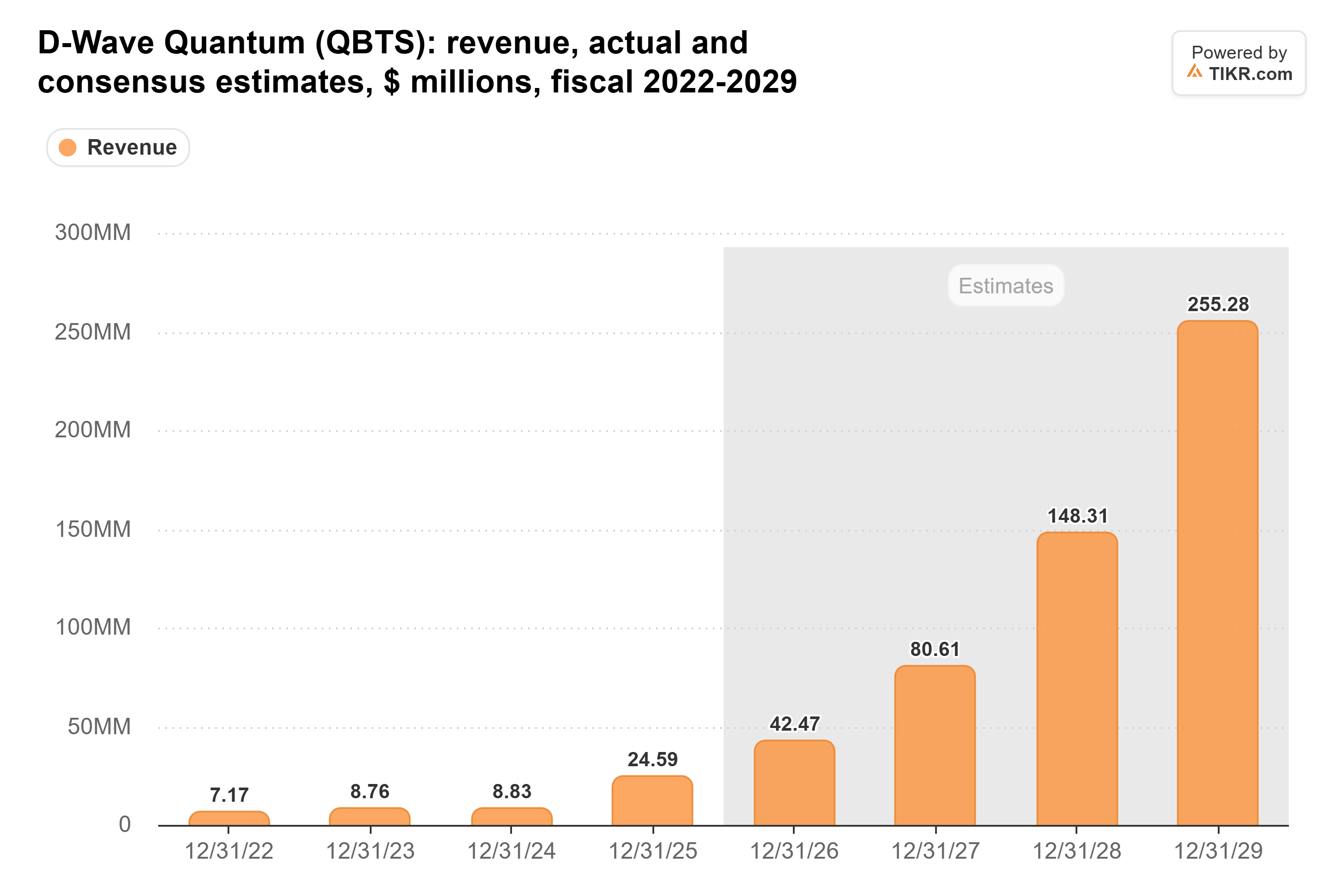
However, first-half 2026 revenue totaled just $5.9 million, leaving substantial growth necessary to meet the full-year consensus forecast.
D-Wave also missed TIKR consensus revenue estimates in its previous three quarters, including second-quarter revenue of $3.08 million against expectations of approximately $4.02 million.
Management previously anticipated two system deliveries during the fourth quarter, making their timing particularly important.
Second-quarter quantum computing as a service (QCaaS) revenue reached approximately $1.86 million, another benchmark for evaluating customer demand.
CEO Alan Baratz described the company’s progress as “stronger bookings and engagements with major global organizations” in its second-quarter announcement.
First-half bookings totaled $35.5 million, up 1,120% year over year. However, bookings do not necessarily translate into immediate recognized revenue.
D-Wave’s November 10 results will test whether its growing bookings can translate into stronger revenue, while progress on fourth-quarter system deliveries will be critical to meeting Wall Street’s expectations.
Is D-Wave Stock Undervalued or Overvalued?
D-Wave traded at approximately 58 times forward sales on November 2, substantially below its three-year historical average of approximately 152 times, according to TIKR.
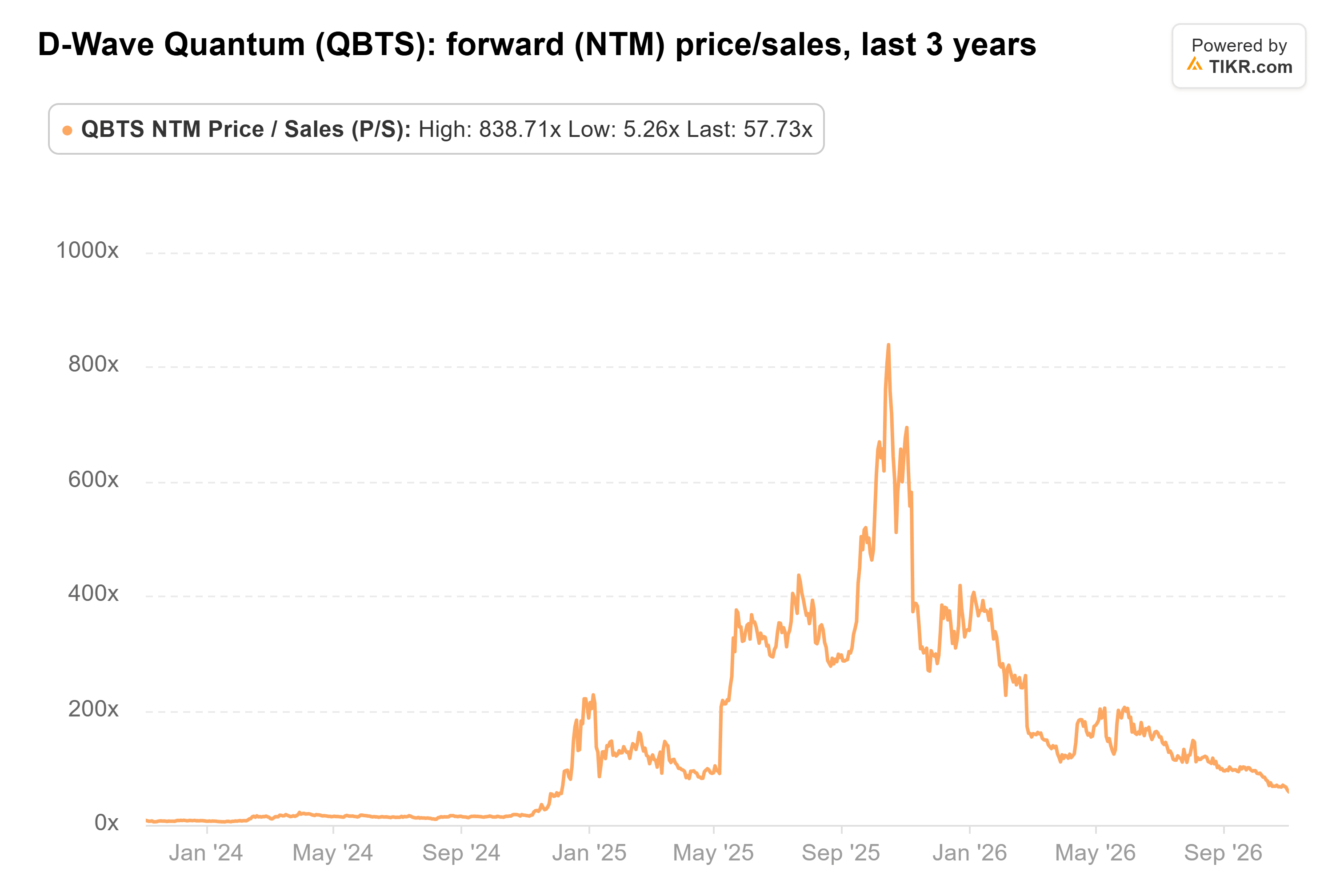
Projected revenue growth could eventually support a premium valuation if system deliveries accelerate and recurring quantum cloud revenue expands over the next 12 months.
However, additional revenue misses, delayed deployments, or continued operating losses could pressure its shares.
D-Wave therefore appears expensive relative to its current revenue, despite trading below its historical valuation multiple. Accelerating system deliveries and recurring cloud revenue could improve its outlook over the next 12 months, but additional revenue misses would make its premium valuation harder to justify.
So what is D-Wave stock actually worth?
TIKR lets you forecast the future price of any stock in less than a minute. Just enter a few assumptions into TIKR’s valuation model and see what D-Wave could be worth. Start from Wall Street consensus estimates, or adjust the inputs to reflect your own view of the business. It’s free to use.
Disclaimer:
Please note that the articles on TIKR are not intended to serve as investment or financial advice from TIKR or our content team, nor are they recommendations to buy or sell any stocks. We create our content based on TIKR Terminal’s investment data and analysts’ estimates. Our analysis might not include recent company news or important updates. TIKR has no position in any of the stocks mentioned. Thank you for reading, and happy investing!