Key Takeaways
- Advanced Micro Devices (AMD) declined 16% in the month through October 23, while Intel (INTC) fell 29% and the Nasdaq 100 lost 5%, as investors questioned the sustainability of AI infrastructure spending.
- AMD dropped 10.9% on October 30, closing near $505 after Intel’s disappointing outlook intensified concerns about semiconductor demand.
- TIKR’s October 21 consensus estimates projected AMD’s normalized earnings per share to rise from approximately $8 in 2026 to $16 in 2027, supported by expected growth in AI accelerators and data center infrastructure.
- AMD traded at approximately 46x forward earnings as of October 22, above its five-year average of 35x, making the decline a potential long-term buying opportunity rather than an outright bargain.
What Happened?
Advanced Micro Devices (AMD) stock fell 16% in the month through October 23, closing around $517 as concerns about AI infrastructure financing and elevated semiconductor valuations weighed on investor sentiment.
The decline was smaller than Intel (INTC) stock’s 29% drop and considerably worse than the Nasdaq 100’s 5% pullback, highlighting growing uncertainty over whether AI infrastructure spending could support chipmakers’ valuations.
Concerns intensified on October 8 after a Financial Times report indicated that OpenAI’s annualized revenue was approaching $50 billion, approximately $20 billion below figures previously circulating in the market.
The discrepancy, partly related to revenue accounting methods, raised questions about the financing capacity of major AI customers. OpenAI is particularly important to AMD because of its multigigawatt GPU supply agreement.
Further pressure emerged on October 14 when weakness in CoreWeave’s bonds intensified concerns about financing expensive data centers. On October 16, all 30 Philadelphia Semiconductor Index constituents declined, extending the index’s losing streak to eight sessions, its longest since 2008.
AMD also faced scrutiny over its involvement in customer financing. On October 13, the company signed a credit-support agreement involving Fermi’s 222-megawatt Texas data center campus, which is intended to accommodate AMD-powered infrastructure.
AMD has also committed to invest up to $5 billion in Anthropic and issued performance-based warrants allowing OpenAI and Meta to purchase up to 160 million AMD shares each, subject to GPU deployment and other conditions.
Baird technology strategist Ted Mortonson captured investor concerns on Bloomberg Surveillance, saying his clients “hate the bank of AMD,” highlighting skepticism about chipmakers supporting the financing of their own customers.
Semiconductor selling intensified on October 30, when AMD dropped 10.9% to approximately $505 after Intel forecast fourth-quarter revenue of $15 billion to $16 billion, more than $1 billion below Wall Street expectations.
Intel’s warning about weaker PC demand weighed on AMD because both companies compete in PC processors, although Intel’s server CPU supply constraints also highlighted strong data center demand that could benefit AMD.
Analysts Still Expect Strong Earnings Growth
Despite the decline, Wall Street continues to forecast substantial earnings growth as AMD expands its AI accelerator and data center businesses.
According to TIKR’s October 21 consensus estimates, AMD’s normalized earnings per share were projected to increase from $7.59 in 2026 to $15.76 in 2027, more than doubling as major AI infrastructure deployments expand.

Analysts have also maintained optimistic targets. Susquehanna raised its AMD price target to $620 from $550 on October 21, while Citi and Stifel earlier increased their targets to $800 and $700, respectively.
AMD’s consensus analyst price target stood near $638 as of October 21, suggesting approximately 26% upside from its October 30 closing price of $505.
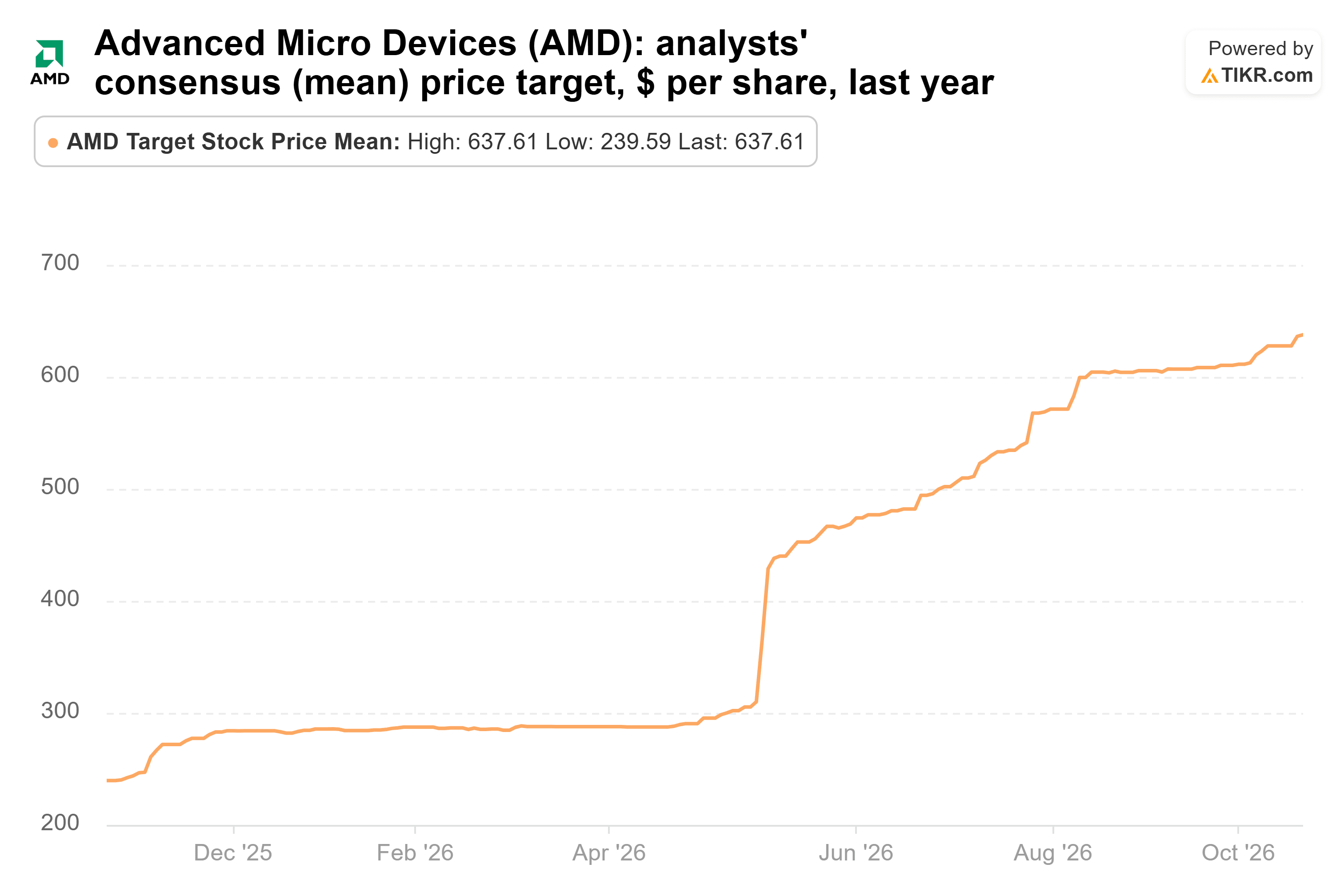
These forecasts suggest confidence in AMD’s earnings potential, but their realization depends on major customers successfully financing and deploying the infrastructure behind their GPU commitments.
Is AMD Stock Undervalued or Overvalued?
AMD traded at approximately 46x forward earnings as of October 22, below its June peak of 67x but above its five-year average of 35x, suggesting the shares remained relatively expensive despite the correction.

The premium reflects expectations for rapid AI accelerator adoption, stronger data center sales, and substantial earnings growth over the next 12 months, although delayed deployments could pressure those forecasts.
AMD’s November 3 third-quarter earnings report will provide an important test of GPU demand, shipment progress, and management’s outlook for AI infrastructure growth.
Compared with Intel, AMD offers more direct exposure to the expanding AI accelerator market, but its higher growth expectations and valuation leave less room for disappointing results.
AMD appears more attractive after the decline, making gradual buying a reasonable long-term approach, but its premium valuation and reliance on major AI customers argue against aggressively loading up before earnings.
So what is AMD stock actually worth?
TIKR lets you forecast the future price of any stock in less than a minute. Just enter a few assumptions into TIKR’s valuation model and see what AMD could be worth. Start from Wall Street consensus estimates, or adjust the inputs to reflect your own view of the business. It’s free to use.
Disclaimer:
Please note that the articles on TIKR are not intended to serve as investment or financial advice from TIKR or our content team, nor are they recommendations to buy or sell any stocks. We create our content based on TIKR Terminal’s investment data and analysts’ estimates. Our analysis might not include recent company news or important updates. TIKR has no position in any of the stocks mentioned. Thank you for reading, and happy investing!