Key Takeaways
- Viking Global Investors, which manages $78.2 billion, sold out of Charles Schwab, Union Pacific and Microsoft by Sept. 30, its latest 13F shows.
- Microsoft is up 36% since June 30, the last date Viking’s filings show it holding the stock, while Charles Schwab is up just 0.3% and Union Pacific 11%.
- Analysts see the most upside in Schwab, 26% to their average target, and the least in Union Pacific, at 10%.
- The numbers back the Union Pacific exit best and argue hardest against the Schwab sale.
If you own Charles Schwab (SCHW), Union Pacific (UNP) or Microsoft (MSFT), one of the big hedge funds has left the room. Andreas Halvorsen’s Viking Global Investors held all three at June 30 and none of them at Sept. 30, according to its 13F for the quarter ended Sept. 30, filed Nov. 16.
The firm manages $78.2 billion in all, and its 13F listed $32.7 billion of US stocks across 79 positions.
Schwab’s business is humming
Schwab was the biggest of the three. Viking held 10.64 million shares worth $982 million at June 30, 2.8% of its 13F stocks.
The quarter that followed was a strong one. Schwab’s third-quarter net revenue hit a record $7.2 billion, up 17% from a year earlier, and GAAP EPS rose 29% to $1.62, per its third-quarter release. Clients brought in a record $190.4 billion of core net new assets, up 38%.
Even so, the stock is up just 0.3% since June 30 and sits 19% below its 52-week high. Analysts’ average target has gone from $112.05 a year ago to $116.64, after peaking at $125.45 in September:
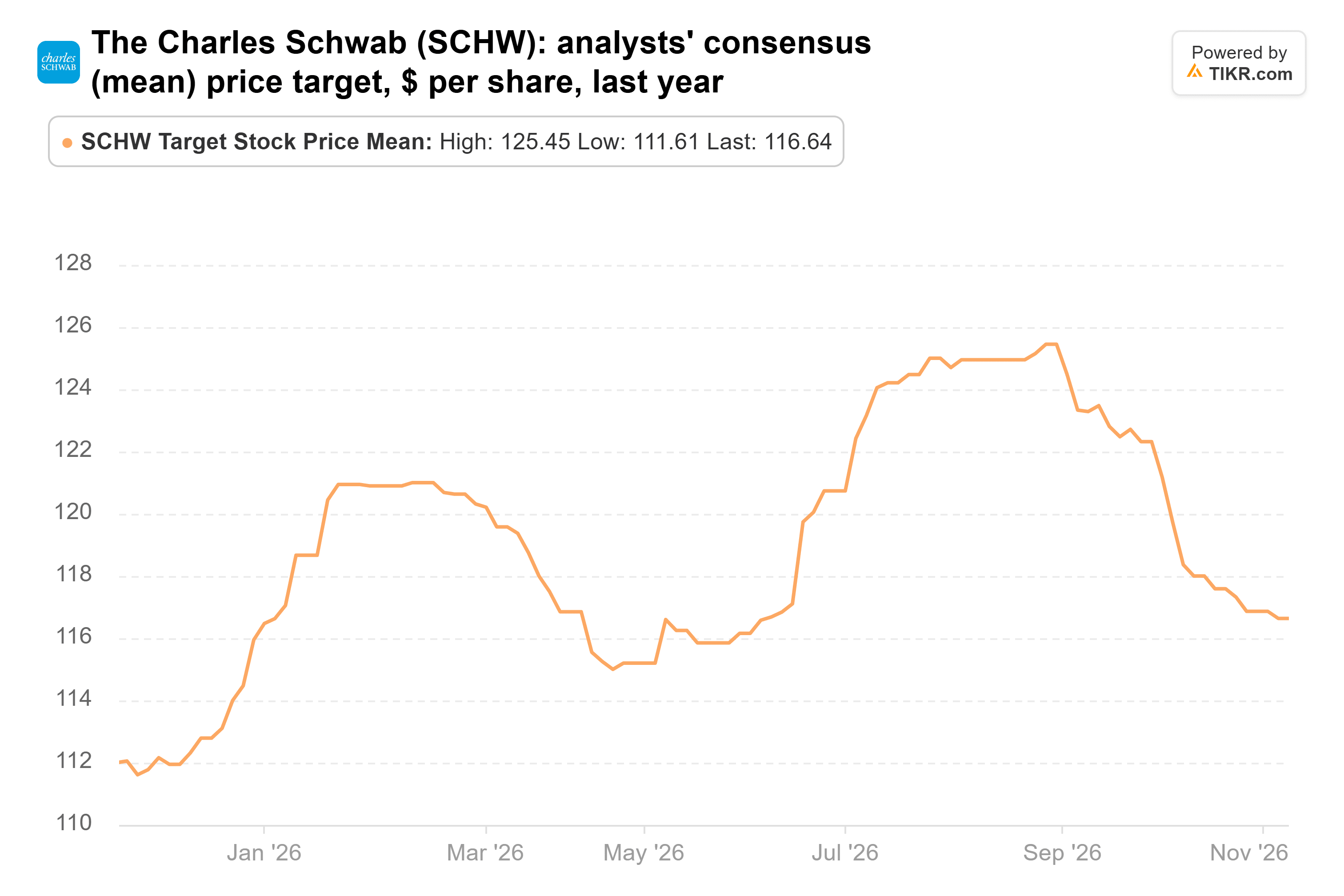
That average sits 26% above today’s price, with individual targets running from $82 to $147.
TIKR tracks 24 analysts on Charles Schwab. How many say “Buy”?
See the full breakdown of Buy, Hold, and Sell ratings on Charles Schwab, along with Wall Street’s revenue and earnings estimates, all in one place. More than 500,000 investors use TIKR to research stocks like this one. See Charles Schwab’s Analyst Ratings
Union Pacific has already run
Union Pacific was a smaller position: 2.05 million shares worth $557 million at June 30, 1.6% of Viking’s 13F stocks. The stock is up 11% since then and trades 5% below its 52-week high.
The big open question is the railroad’s $85 billion deal for Norfolk Southern, which still needs the Surface Transportation Board’s approval. In September, the board turned down motions to throw out the revised merger application. But opponents, from five state attorneys general to the Progressive Policy Institute, are still pushing it to reject the deal.
Analysts have raised their targets right along with the stock. Their average target climbed from $260.42 a year ago to $329.96:
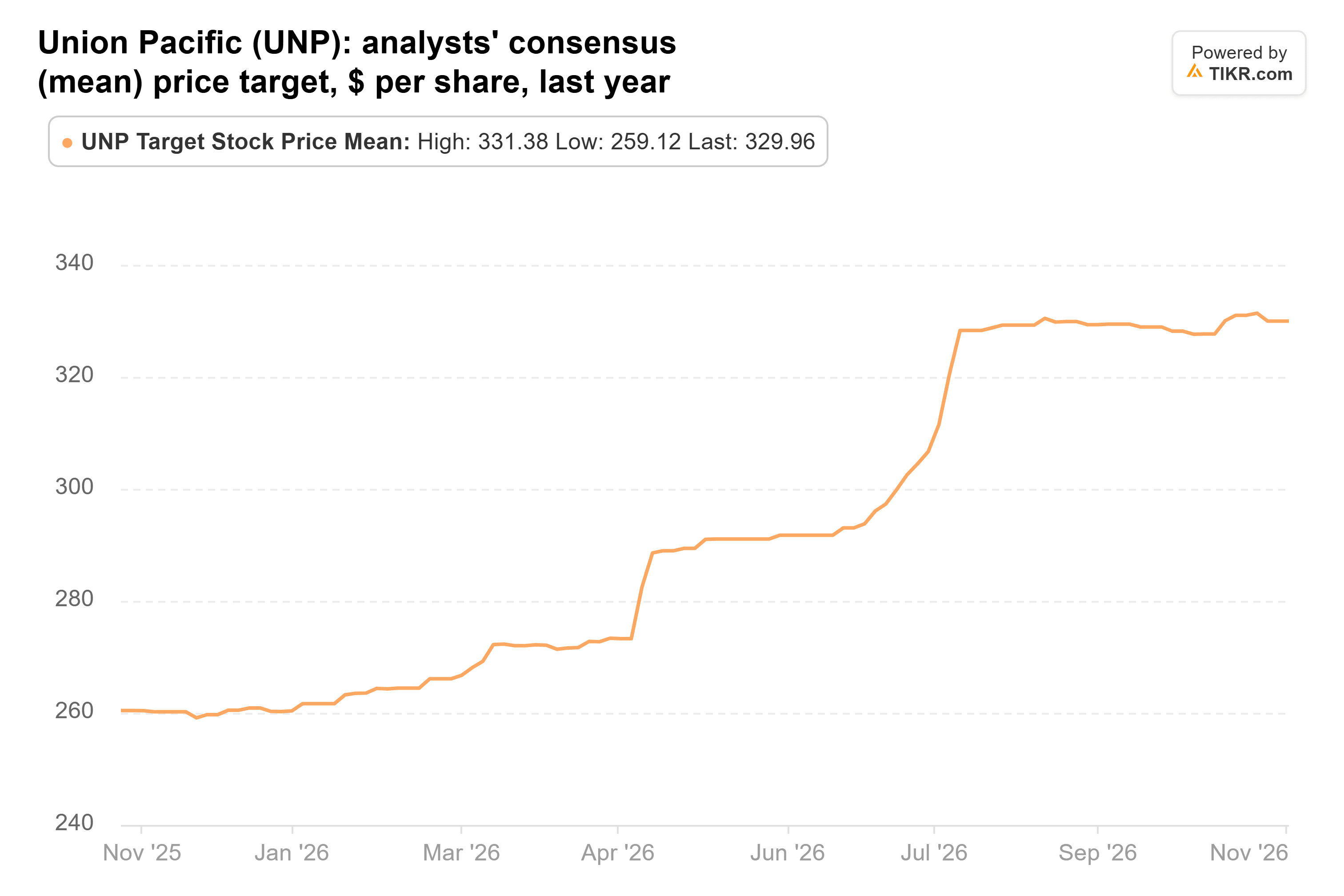
That’s only 10% above today’s price, the least upside of the three.
Microsoft’s estimates keep rising
Microsoft rounds out the three: 1.46 million shares worth $544 million at June 30, also 1.6% of Viking’s 13F stocks. Since June 30, the stock is up 36%, though it’s 9% below its 52-week high.
The AI bill is still the debate. Consensus free cash flow for the year ending June 2027 has been cut twice, to $32.7 billion, as capital spending climbs. Earnings are moving the other way: analysts now expect normalized EPS of $20.01 for that year and $24.20 the year after, both up from October. And in the September quarter, Microsoft 365 commercial cloud revenue grew 17% on seats up 5%, as customers moved to pricier plans.
The Street’s average target has climbed with those estimates, to $636.12, its high for the year:
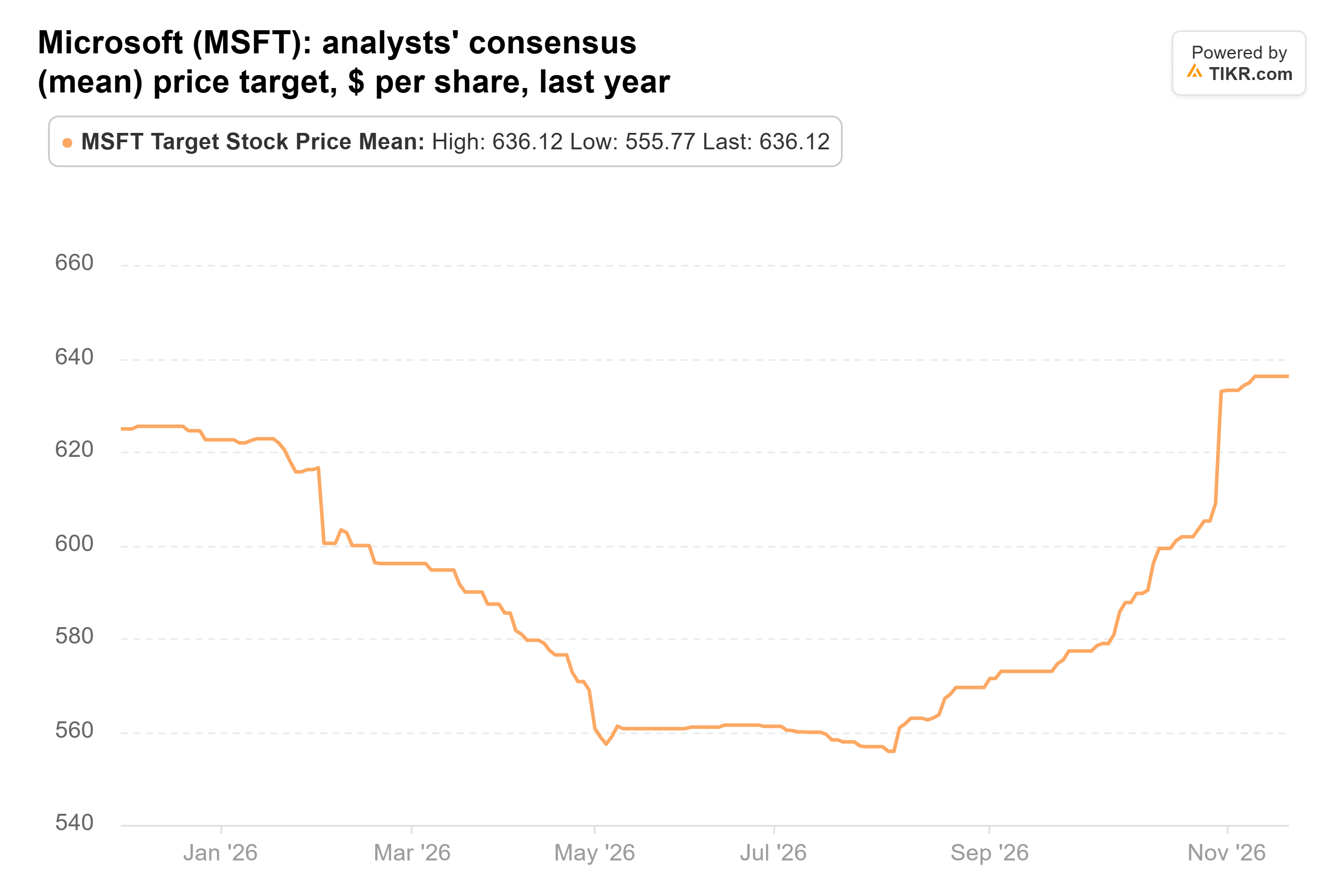
That’s 25% above today’s price, with targets from $440 to $870.
Do the numbers back the exits?
For two of the three, mostly yes.
Union Pacific trades at about 21x forward earnings after a big run, and the Street’s targets leave little room above today’s price. I’d want more than 10% upside to sit through a merger review with organized opposition.
Microsoft is the closer call. At about 24x forward earnings, it trades right around its 1-year average of 25x and below its 5-year average of 29x, on estimates that keep going up. The catch is the cash: free cash flow is expected to shrink while the data center build runs.
Schwab is the one the numbers argue against. It trades at about 12x forward earnings, coming off a record quarter, with EPS growing faster than revenue and the Street seeing 26% upside. The main risk is interest rates, since net interest revenue made up $3.5 billion of the third quarter’s $7.2 billion.
If I could only buy one of the three right now, it’d be Schwab. A record quarter at 12x forward earnings is a lot to walk away from.
Its fourth-quarter report in January is the next test: core net new assets near the third quarter’s $190.4 billion pace would back the case. Viking’s next 13F, due in mid-February, will show whether it came back to any of these three.
So what is Charles Schwab stock actually worth?
TIKR lets you forecast the future price of any stock in less than a minute. Just enter a few assumptions into TIKR’s valuation model and see what Charles Schwab could be worth. Start from Wall Street consensus estimates, or adjust the inputs to reflect your own view of the business. It’s free to use.
Disclaimer:
Please note that the articles on TIKR are not intended to serve as investment or financial advice from TIKR or our content team, nor are they recommendations to buy or sell any stocks. We create our content based on TIKR Terminal’s investment data and analysts’ estimates. Our analysis might not include recent company news or important updates. TIKR has no position in any of the stocks mentioned. Thank you for reading, and happy investing!