Key Takeaways
- Ardmore Road Asset Management, a firm that manages $2.83 billion, held no Taiwan Semiconductor, Microsoft or Lam Research by Sept. 30, after owning all three at June 30.
- Its two biggest positions at Sept. 30 were Amazon and one other stock, and it added to both in the quarter.
- Since June 30, Lam has fallen 51% and Taiwan Semiconductor 25%, while Microsoft has gained 36%.
- Analysts’ average targets sit 26% to 72% above all three stocks today, and Taiwan Semiconductor makes the best case to buy.
Ardmore Road Asset Management owned Taiwan Semiconductor (TSM), Microsoft (MSFT) and Lam Research (LRCX) on June 30. By Sept. 30, it had sold every share, according to its 13F for the quarter ended Sept. 30, filed Nov. 16.
The firm manages $2.83 billion in all, and its 13F lists $2.22 billion of US stocks in 80 positions. At the top of that list now sit the fund’s No. 1 holding and Amazon (AMZN).
Taiwan Semiconductor’s targets keep climbing
Taiwan Semiconductor was the biggest of the three at June 30: 112,800 shares worth $54 million, or 3.2% of its 13F stocks. The stock is down 25% since then. (A 13F doesn’t show what the fund sold for, so that’s the stock’s move alone.) But the business hasn’t slowed down, with October revenue up 59.7% from a year earlier to NT$586.89 billion, a 2026 high.
Analysts have moved the other way from the stock, lifting their average target from $340 a year ago to $587:
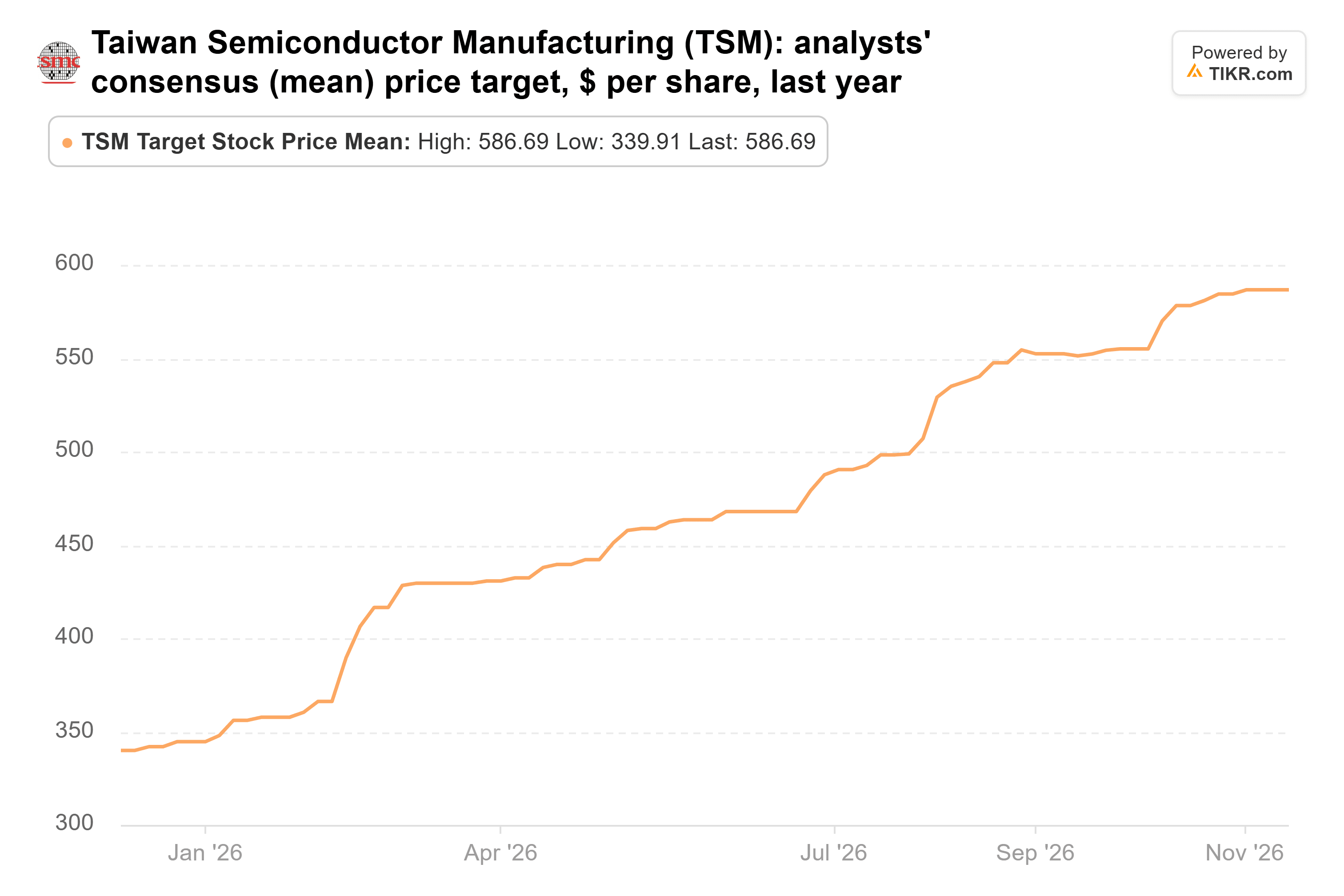
Even the lowest target, $440, is 22% above today’s price. And at about 17x forward earnings, Taiwan Semiconductor trades below its 1-, 3- and 5-year averages on TIKR, which run from 18x to 21x.
TIKR tracks 21 analysts on TSMC. How many say “Buy”?
See the full breakdown of Buy, Hold, and Sell ratings on TSMC, along with Wall Street’s revenue and earnings estimates, all in one place. More than 500,000 investors use TIKR to research stocks like this one. See TSMC’s Analyst Ratings
Microsoft kept running without it
Microsoft was 117,300 shares worth $44 million at June 30, or 2.6% of its 13F stocks. It’s up 36% since then, though it’s still 9% below its 52-week high. Analysts have raised their earnings estimates along the way: consensus normalized EPS for the year ending June 2027 is $20.01, up from $19.76 in late October.
The average target dipped over the summer and has since climbed back to a new high of $636:
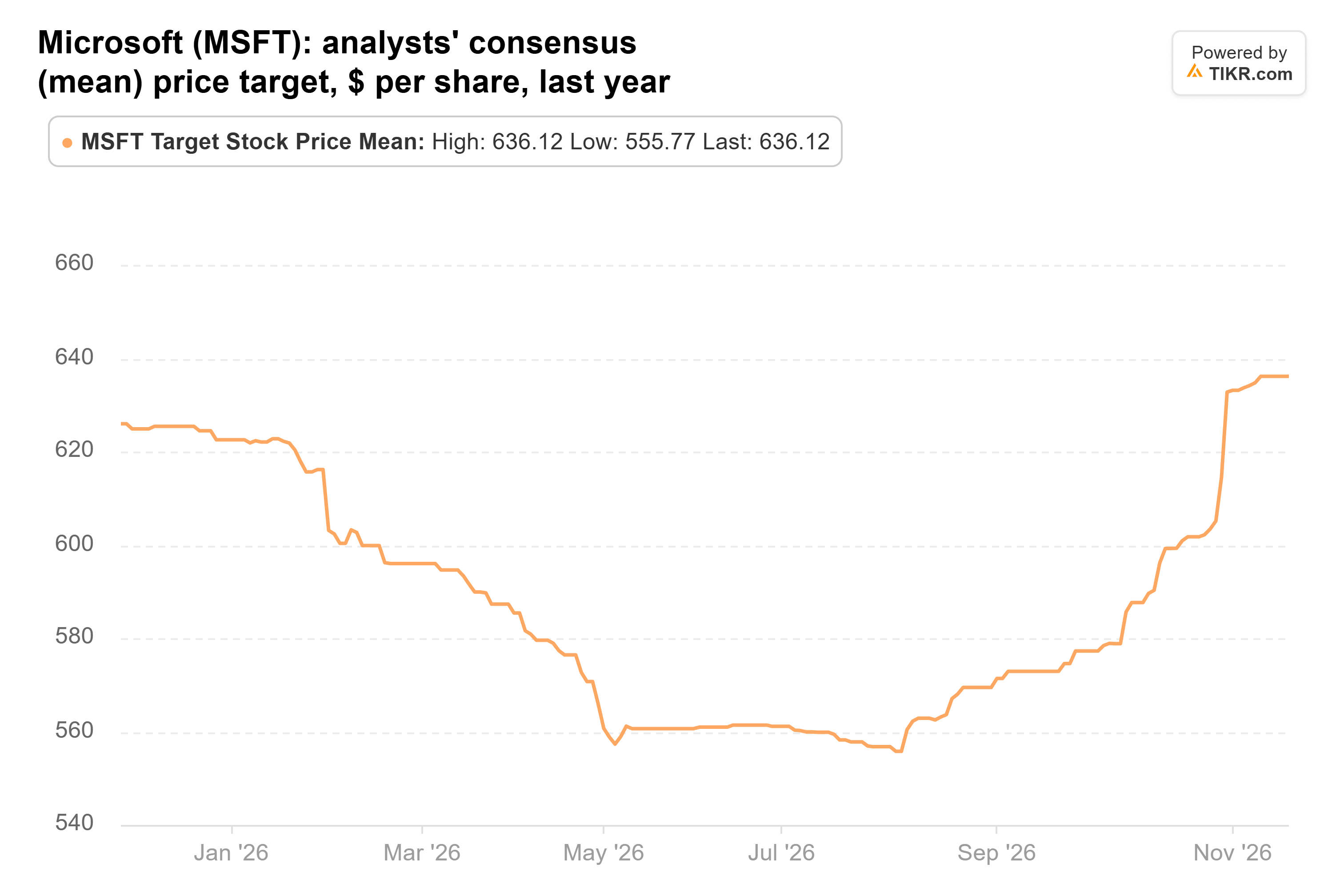
That’s 26% above today’s price, with targets running from $440 to $870. At about 24x forward earnings, Microsoft also trades below its 3- and 5-year averages on TIKR, both about 30x.
Free cash flow is the weak spot. Analysts expect $32.7 billion in fiscal 2027, roughly half of fiscal 2026’s $67.0 billion, after two cuts in recent weeks, as Microsoft keeps pouring money into AI data centers.
Lam Research has been cut in half
Lam Research was 97,000 shares worth $42 million at June 30, or 2.5% of its 13F stocks. It has fallen 51% since then, and it’s 52% below its 52-week high. The selling got worse in early November’s chip-stock rout after the midterms, when Micron paused a $4.5 billion Taiwan plant, per Bloomberg. Lam’s tools depend on exactly that kind of spending, and Lam answered with a $25 billion buyback, nearly a tenth of its market value.
Analysts have barely followed the stock down. Their average target peaked at $378 in October and sits at $362 now:
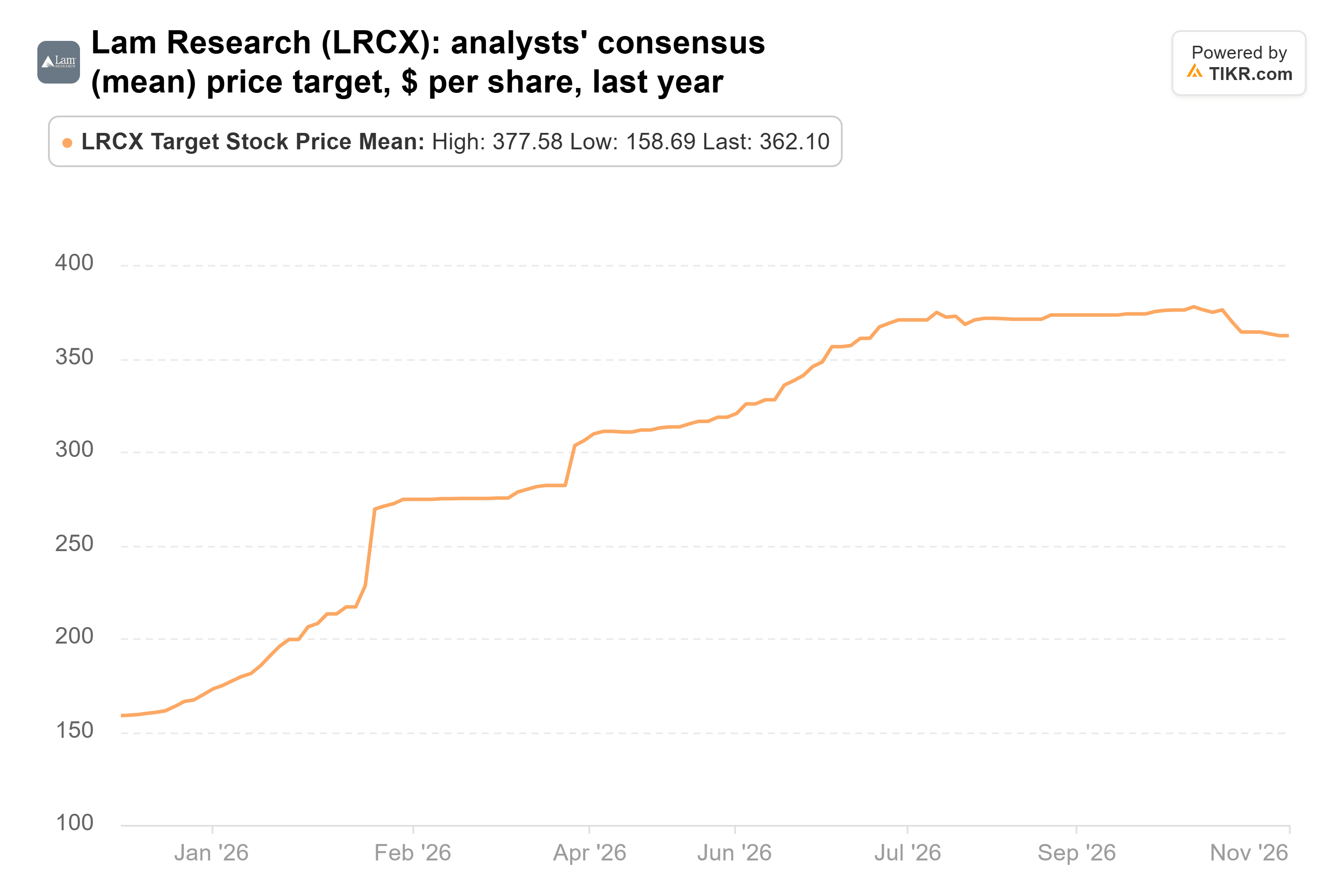
That’s 72% above today’s price, and even the lowest target, $255, is 21% above it. At about 20x forward earnings, the stock isn’t expensive if those estimates hold.
T-Mobile and Amazon lead the 13F now
T-Mobile US (TMUS) was the 13F’s No. 1 holding at Sept. 30: 660,002 shares worth $108 million, or 4.9% of its 13F stocks, after the fund added 71% to its shares in the quarter. Amazon was No. 2, with 425,000 shares worth $106 million, or 4.8%, after the fund more than doubled its stake. Both stocks have barely moved since Sept. 30, with T-Mobile up 3% and Amazon up 4%.
Analysts are cooler on T-Mobile. Its average target has fallen from $275 a year ago to $225:
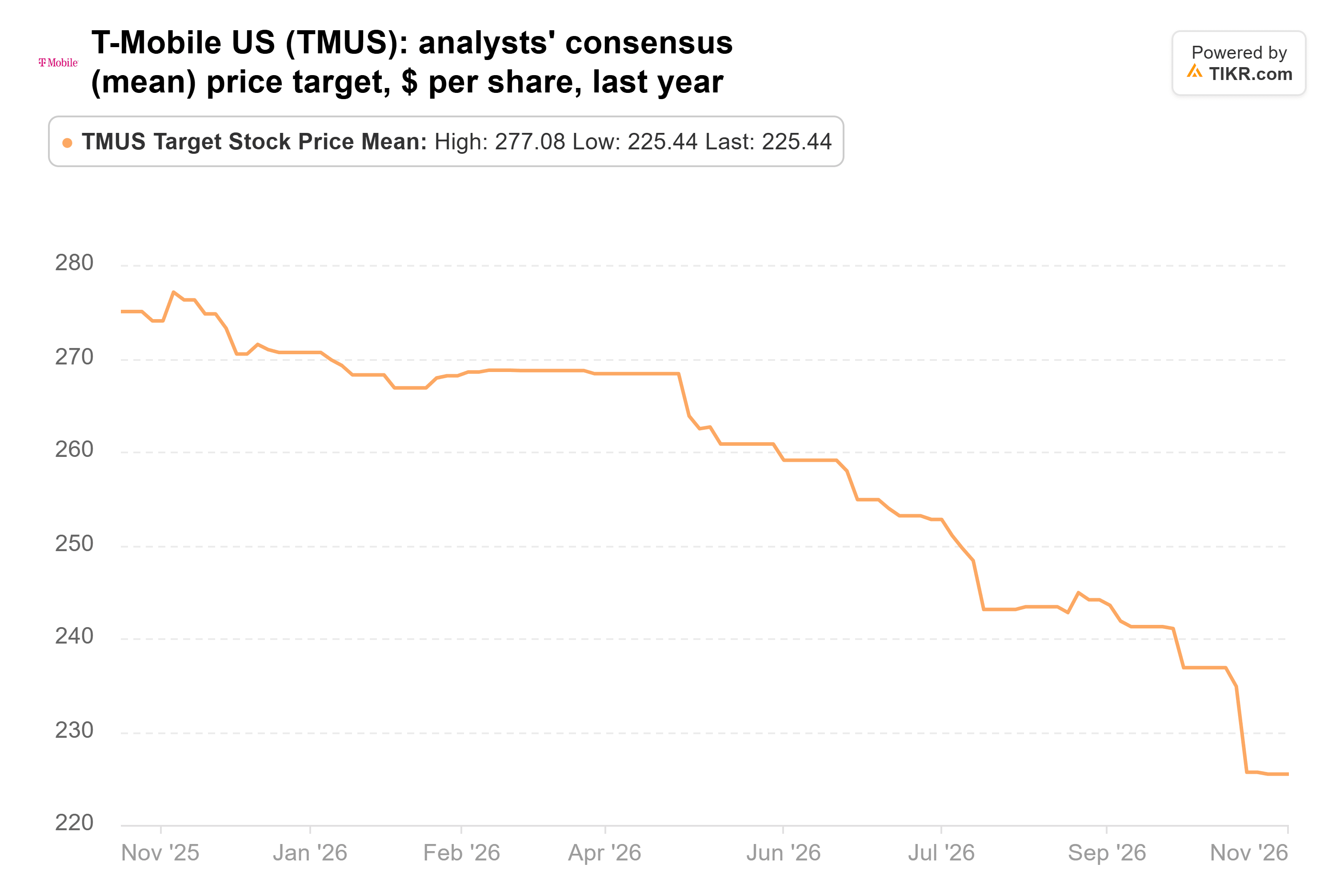
SpaceX’s reported talks to buy Boost Mobile could bring a deep-pocketed new rival into wireless. Still, at about 12x forward earnings, T-Mobile isn’t priced for much.
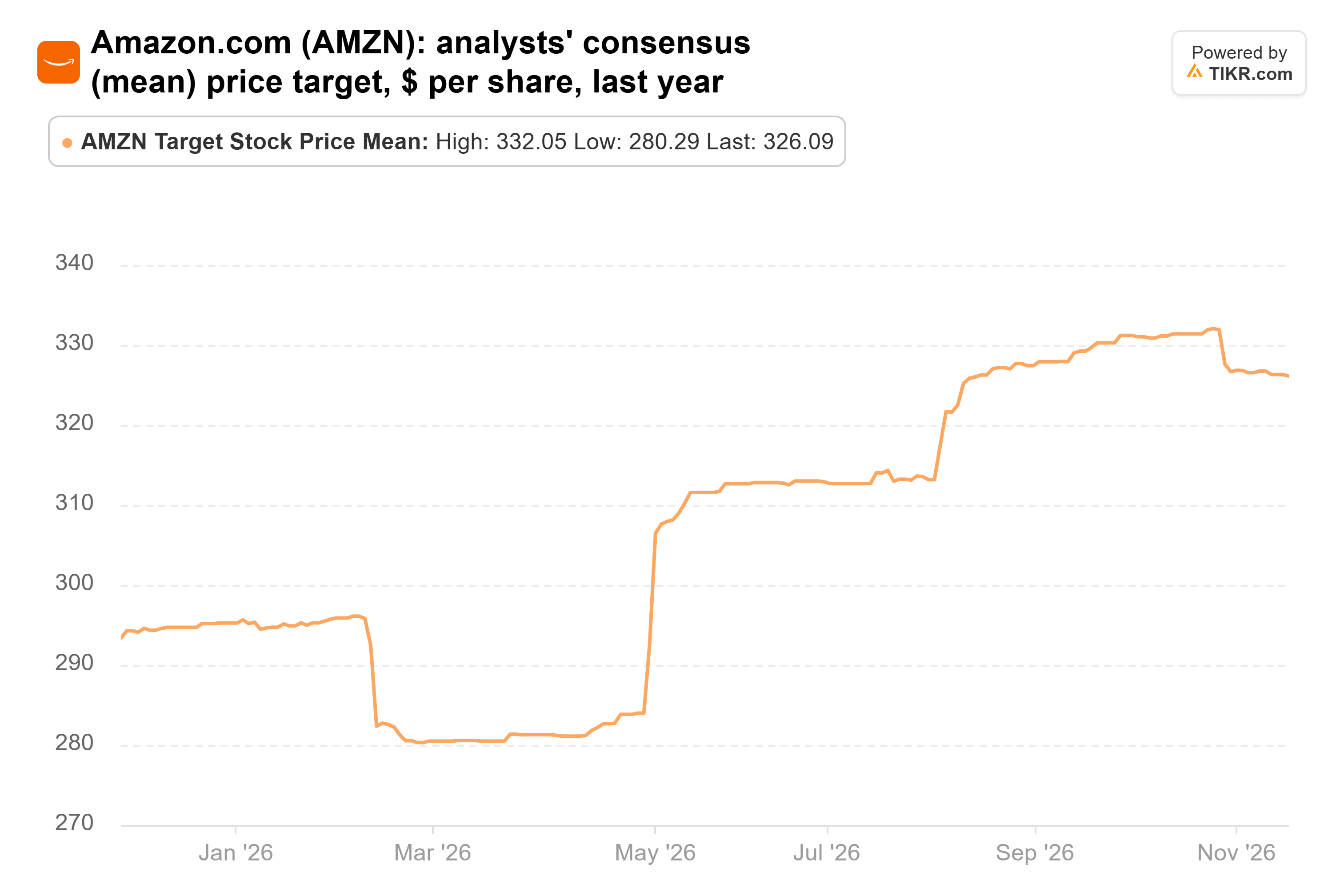
Amazon’s average target has gone the other way, rising from $293 a year ago to $326:
AWS grew 39% in the third quarter, its fastest in five years.
Taiwan Semiconductor is the one I’d buy
If I could only buy one of the three right now, it’d be Taiwan Semiconductor. Its sales are still setting records, analysts keep raising their targets, and it trades below its own average multiple.
Lam has more upside on paper. But plant budgets are the first thing chipmakers cut when things turn, as Micron just showed. Microsoft also still has to show that its AI spending turns back into free cash flow.
The risk with Taiwan Semiconductor is concentration: two customers made 36% of its 2025 revenue, so a slowdown at either one would show up fast. November revenue, due in early-to-mid December, is the next test. It needs at least NT$538 billion in each of November and December to reach the low end of the fourth-quarter guide. Ardmore Road’s next 13F, for the quarter ending Dec. 31, is due in mid-February.
So what is Taiwan Semiconductor stock actually worth?
TIKR lets you forecast the future price of any stock in less than a minute. Just enter a few assumptions into TIKR’s valuation model and see what Taiwan Semiconductor could be worth. Start from Wall Street consensus estimates, or adjust the inputs to reflect your own view of the business. It’s free to use.
Value Taiwan Semiconductor for free
Disclaimer:
Please note that the articles on TIKR are not intended to serve as investment or financial advice from TIKR or our content team, nor are they recommendations to buy or sell any stocks. We create our content based on TIKR Terminal’s investment data and analysts’ estimates. Our analysis might not include recent company news or important updates. TIKR has no position in any of the stocks mentioned. Thank you for reading, and happy investing!