Key Takeaways
- Dan Ives of Yorkville Ives & Co. now expects Big Tech’s capex growth to peak in 2027, and free cash flow at Microsoft, Meta, Alphabet and Amazon to bottom in the first half of that year.
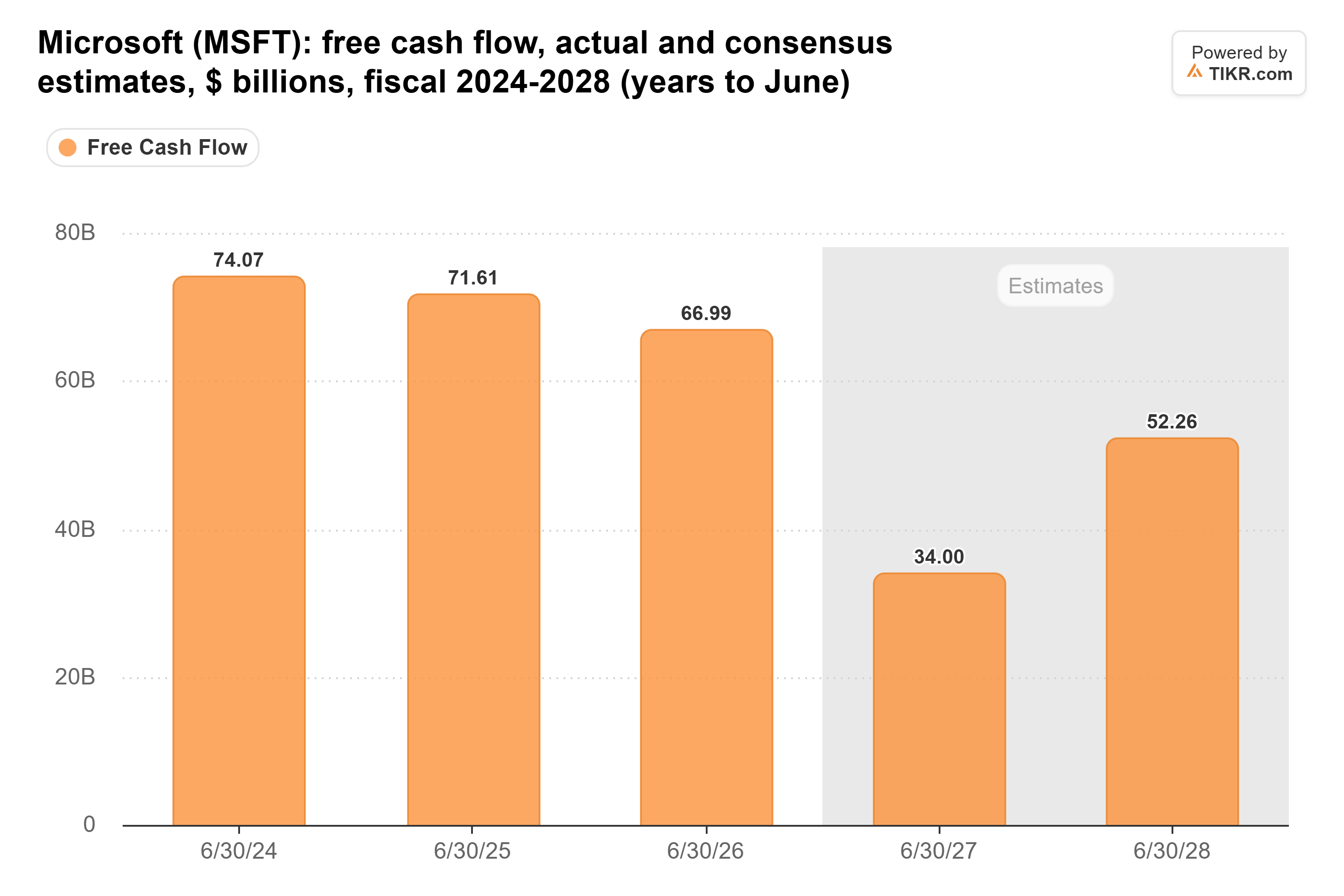
- Analysts’ consensus for Microsoft already shows the trough and rebound Ives describes.
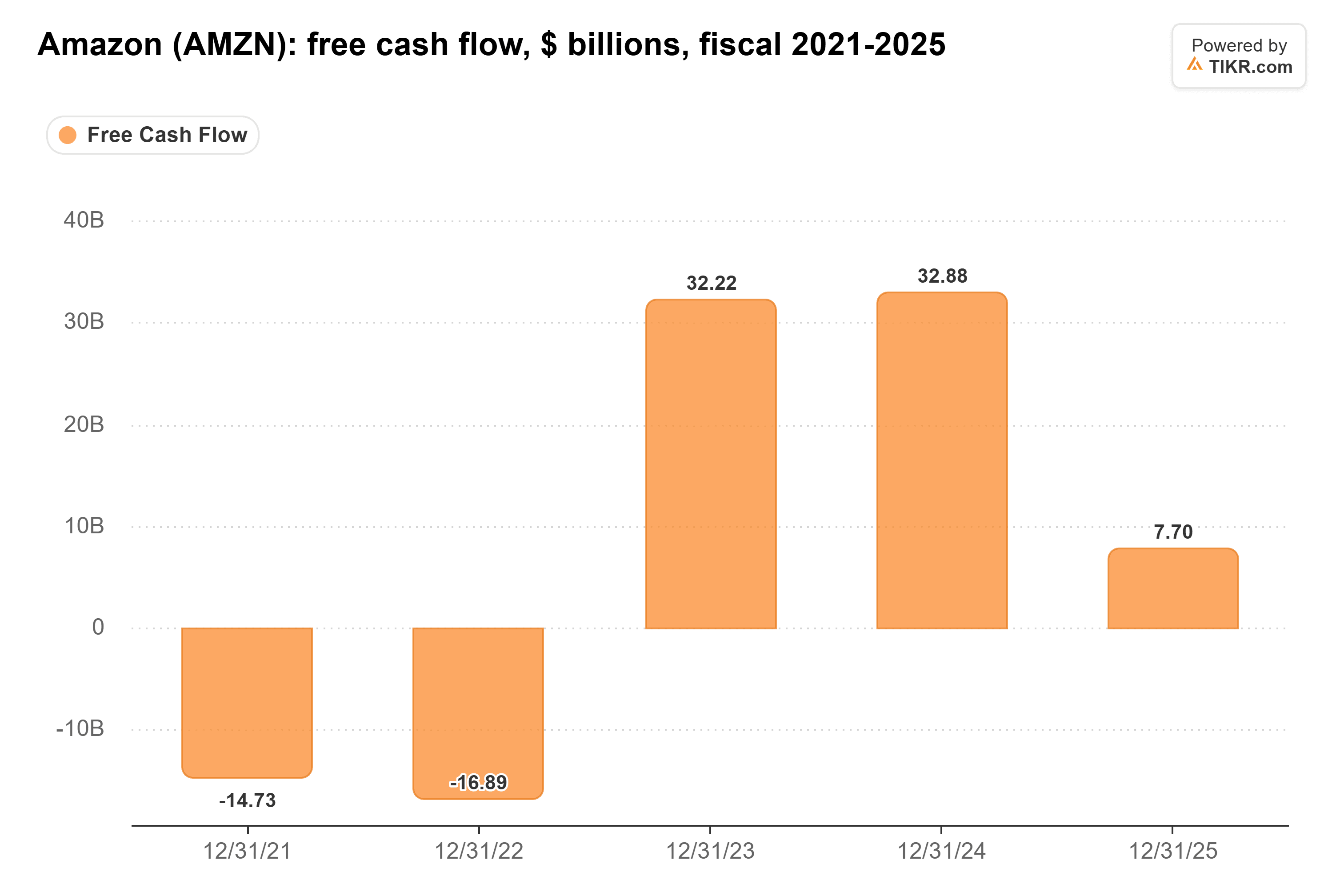
- Amazon and Meta are deeper in the hole: Meta’s third-quarter capex outran its operating cash, and Amazon’s free cash flow, on TIKR’s measure, fell to $7.7 billion in 2025.
- Ives has the bottom about right, but the full payoff still looks like a 2029 story.
Dan Ives of Yorkville Ives & Co. now thinks the cash squeeze at Microsoft (MSFT), Meta Platforms (META), Alphabet (GOOG) and Amazon (AMZN) will end sooner than he expected.
In a post on X on Nov. 5, he wrote that “Big Tech capex growth rate now peaks in 2027 vs our previous view that would not happen until 2028/2029.” He pointed to the midterm results, especially in Texas, where he expects the data center buildout to slow.
In a follow-up, he tied it to cash: “Free cash flow will trough in 1H2027 and starting in the 2H of next year will start to show a trajectory towards a major rebound in 2028 and massive FCF ramp in 2029-2030.”
Bloomberg Intelligence’s Mandeep Singh put a number on it. On the Bloomberg Intelligence podcast on Nov. 4, he pointed to Texas data centers and said: “2027 capex could be revised lower by 5 to 7%.”
Microsoft’s Numbers Already Look Like This
Microsoft’s fiscal year ends in June, so its fiscal 2027 includes the first half of 2027, where Ives puts the trough. Analysts expect free cash flow to fall to $34.0 billion that year, about half of fiscal 2026’s $67.0 billion, then rebound to $52.3 billion in fiscal 2028.
Microsoft’s free cash flow already fell to $18.6 billion in its September quarter from $25.7 billion a year earlier, and a day after that report it sold $25 billion of bonds, its first US investment-grade sale since 2017.
Microsoft was the only one of the five biggest hyperscalers, counting Oracle, whose free cash flow stayed positive in the third quarter.
Amazon and Meta Have the Deeper Hole
On TIKR’s measure, Amazon’s free cash flow fell to $7.7 billion in 2025, from $32.9 billion in 2024.
Meta’s purchases of property and equipment nearly doubled to $69.7 billion in 2025, from $37.3 billion.
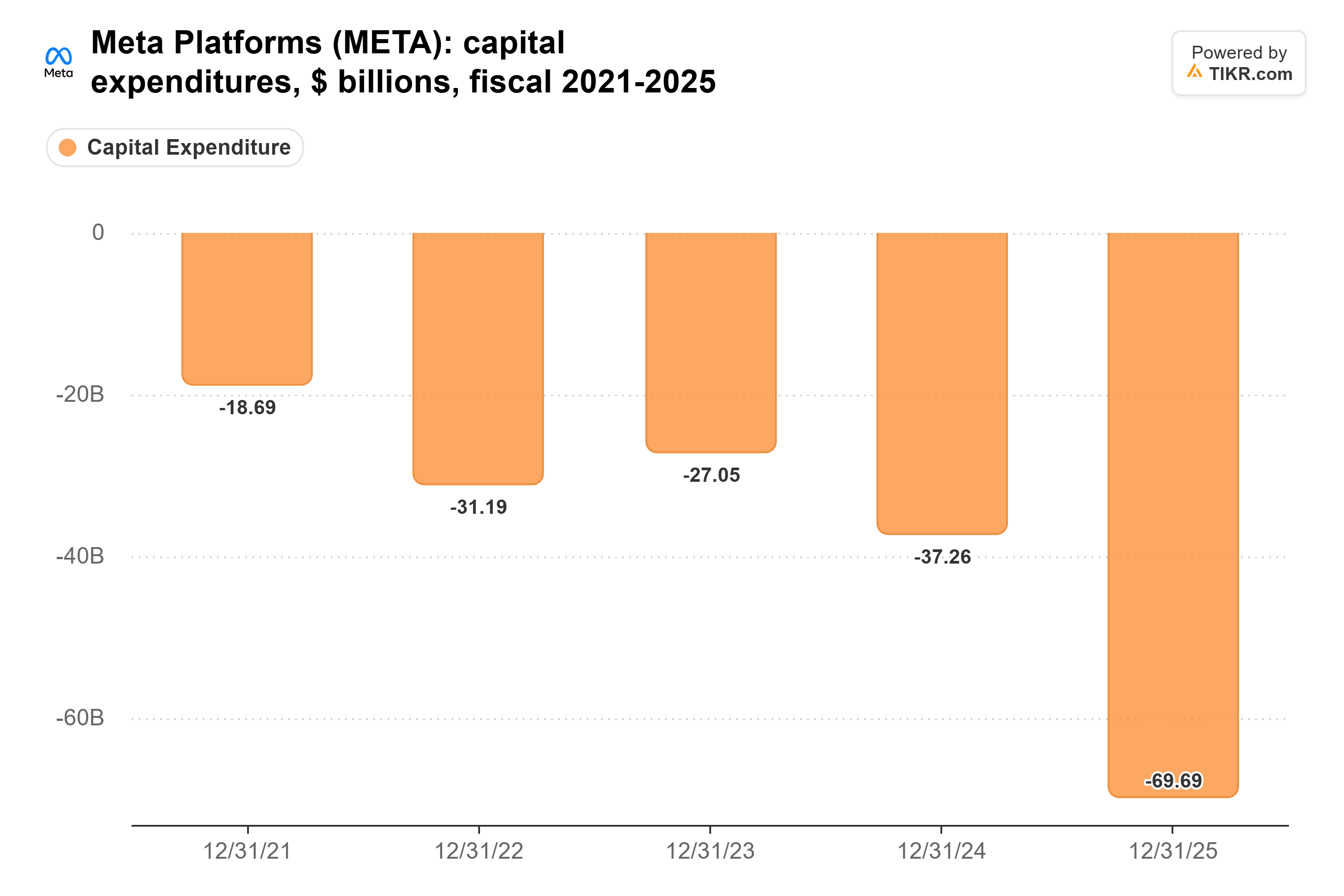
Meta’s third-quarter capex, including finance-lease principal payments, rose 80% to $34.9 billion, more than the $32.8 billion its operations brought in, and on Oct. 26 it said it plans to sell up to $95 billion of stock. Alphabet burned $9.07 billion of cash in the quarter, according to Reuters.
TIKR Tracks 57 Analysts on Microsoft. How Many Say “Buy”?
See the full breakdown of Buy, Hold, and Sell ratings on Microsoft, along with Wall Street’s revenue and earnings estimates, all in one place. More than 500,000 investors use TIKR to research stocks like this one. See Microsoft’s Analyst Ratings
The Full Payoff Is Still a 2029 Story
Citi’s Heath Terry, global head of tech and communications research, spoke on Bloomberg Surveillance on Nov. 3. He sees this cash drain as a one-time catch-up: “we think it’s 2029 where that crossover happens, where the cash flow generating assets are bigger than the incremental cost of new assets.”
JPMorgan’s Doug Anmuth projects Amazon’s capex at $395 billion in 2027, up 77%, then $476 billion in 2028, up 20%. That peaks Amazon’s capex growth in 2027, as Ives expects, but leaves a lot of cash to cover.
Ives Has the Bottom About Right
Ives and Terry are describing the same curve. Ives calls the bottom in early 2027; Terry calls the 2029 point when new data centers throw off more cash than the next round costs. Slower capex growth makes both dates easier to hit.
Microsoft is the one I’d trust to follow it: its free cash flow never went negative, and analysts expect a rebound. Amazon and Meta still have to prove it.
The 2027 capex plans arrive with reports early next year. If Texas slows the buildout less than Ives expects, the peak could slide back toward 2028.
So What Is Microsoft Stock Actually Worth?
TIKR lets you forecast the future price of any stock in less than a minute. Just enter a few assumptions into TIKR’s valuation model and see what Microsoft could be worth. Start from Wall Street consensus estimates, or adjust the inputs to reflect your own view of the business. It’s free to use.
Disclaimer:
Please note that the articles on TIKR are not intended to serve as investment or financial advice from TIKR or our content team, nor are they recommendations to buy or sell any stocks. We create our content based on TIKR Terminal’s investment data and analysts’ estimates. Our analysis might not include recent company news or important updates. TIKR has no position in any of the stocks mentioned. Thank you for reading, and happy investing!