Key Takeaways
- Carvana (CVNA) stock surged 27% from October 26 through November 2 after reporting record quarterly retail sales of 217,385 vehicles, up 39% year over year.
- CarMax (KMX) reported 13% comparable-store used vehicle sales growth, although gross profit per retail vehicle declined $111.
- Credit Acceptance (CACC) fell 20% on October 30 after reducing expected loan collections by $291.2 million, highlighting auto-financing risks.
- Carvana generated record adjusted EBITDA of $800 million, but declining profit per vehicle remains an important concern.
Carvana (CVNA) stock surged approximately 27% from October 26 through November 2, climbing from $56.61 to $72 after the online used-car retailer delivered record third-quarter results.
The rally followed its October 28 earnings announcement, which showed substantial market share gains despite relatively flat demand across the broader used-car market.
While CarMax (KMX) also reported stronger vehicle sales, weaker loan expectations at Credit Acceptance (CACC) highlighted financing risks that could affect Carvana’s future profitability.
What Happened?
Carvana reported record third-quarter retail vehicle sales of 217,385 units, representing 39% year-over-year growth and its first quarter exceeding 200,000 vehicles.
Revenue climbed 42% to $8.04 billion, while adjusted EBITDA reached a record $800 million, compared with $637 million a year earlier.
In its third-quarter shareholder letter, CEO Ernie Garcia and CFO Mark Jenkins described the company’s improving competitive position, writing, “The moat is widening.”
Management highlighted broader vehicle selection, faster deliveries, and more competitive financing as factors supporting growth.
With the overall used-car market approximately flat, Carvana’s 39% sales increase suggests it captured meaningful market share.
However, that expansion came with a profitability trade-off.
Total gross profit per retail vehicle declined $365 to $6,997. Retail gross profit per vehicle increased $100, but other gross profit per vehicle, largely reflecting loan-sale gains, declined $307 as the company offered more competitive financing.
CarMax faced similar pressure. Its comparable-store used vehicle sales increased 13% in the quarter ended August 31, while gross profit per retail vehicle declined $111.
CarMax subsequently introduced its Shift into GEAR strategy, targeting mid-single-digit annual used retail unit growth through fiscal 2030.
Meanwhile, Credit Acceptance reduced its forecast of future loan collections by $291.2 million, sending shares down 20% on October 30.
Because Carvana sells most originated loans to outside investors, deteriorating credit conditions could pressure loan-sale profitability.
Nevertheless, management expects full-year adjusted EBITDA toward the higher end of its $2.7 billion to $3.0 billion guidance range.
Carvana’s record sales demonstrate its growing market share, but protecting financing margins will be just as important as increasing vehicle volumes.
Is Carvana Stock Undervalued or Overvalued?
Carvana appears fairly valued with potential upside, supported by rapid vehicle sales growth and expanding operating scale, although financing risks remain significant.
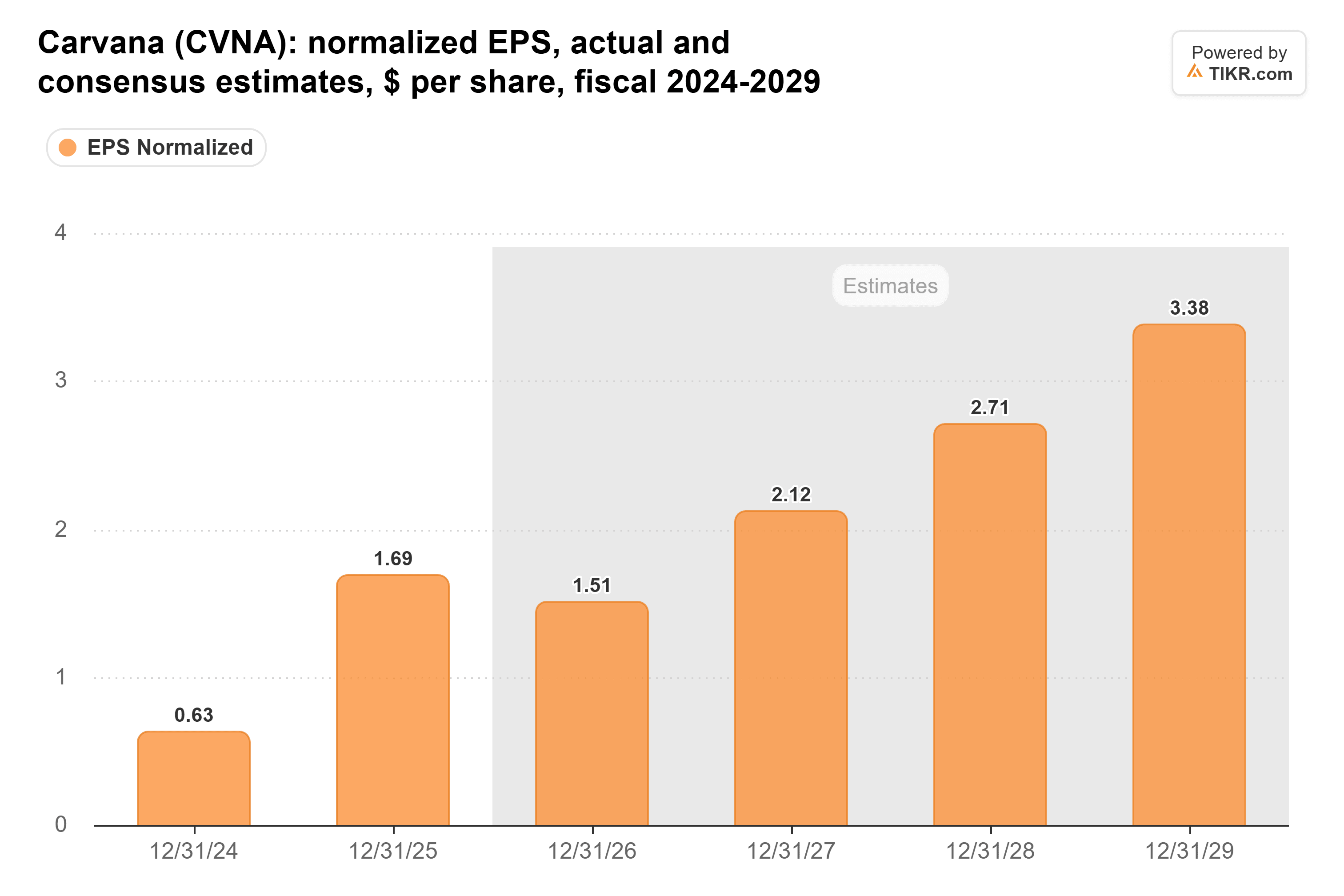
According to TIKR’s October 30 consensus data, analysts forecast normalized earnings per share of $1.51 in 2026, $2.12 in 2027, and $2.71 in 2028.
Carvana traded at approximately 32x forward earnings on October 30, below its roughly 46x average over the preceding year.
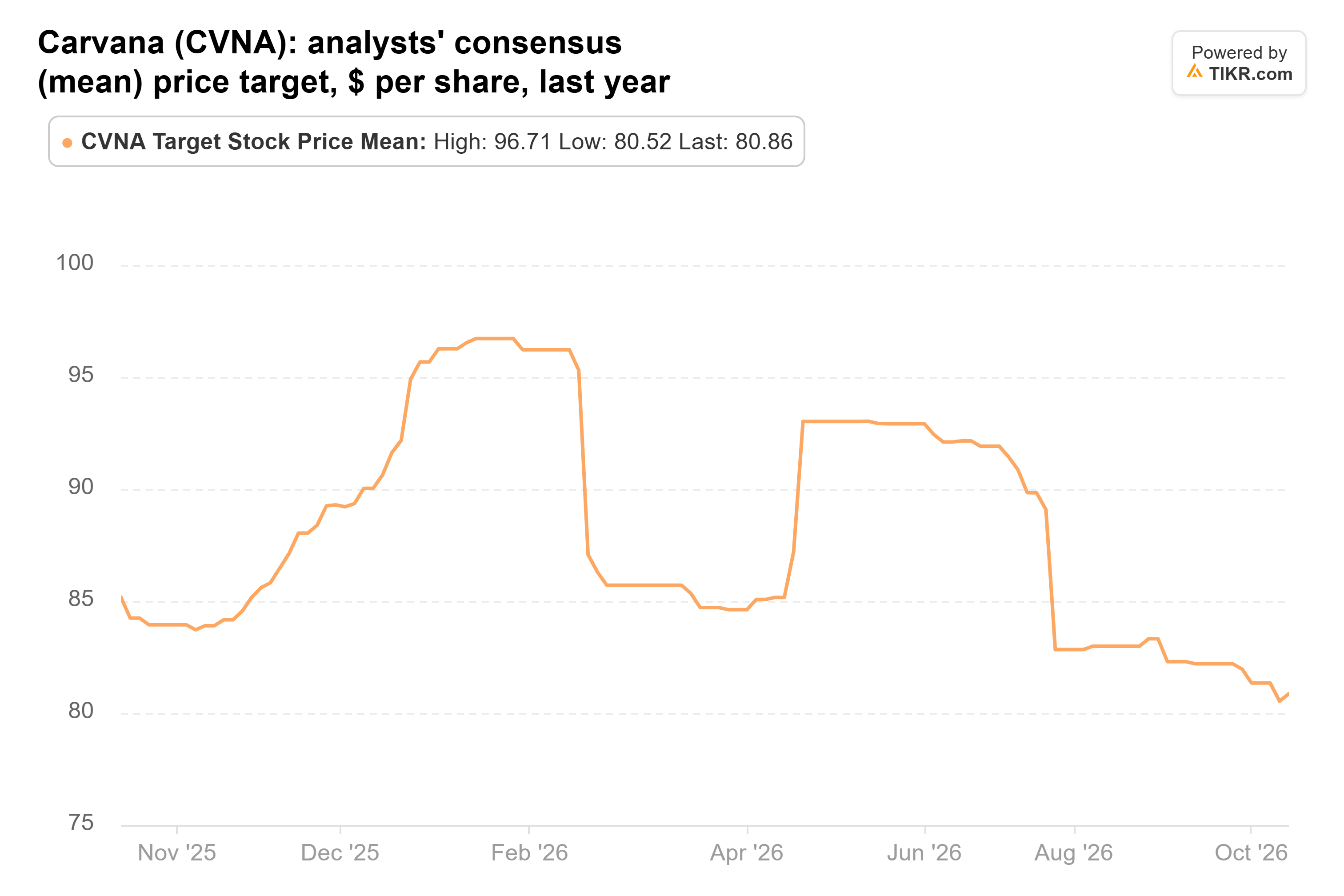
As of October 30, TIKR’s average analyst price target was approximately $81, implying roughly 12% upside relative to Carvana’s November 2 closing price of $72.
Over the next 12 months, Carvana’s performance will depend on continued market share gains, operating efficiency, and stronger financing profitability.
Adjusted EBITDA per retail vehicle declined to approximately $3,680 from $4,085 a year earlier, demonstrating that higher sales volumes have not translated into stronger profitability per vehicle.
Carvana appears fairly valued at these historical prices, with potential upside supported by its growth outlook. However, continued pressure on loan-sale profits could limit future returns unless per-vehicle profitability improves.
So what is Carvana stock actually worth?
TIKR lets you forecast the future price of any stock in less than a minute. Just enter a few assumptions into TIKR’s valuation model and see what Carvana could be worth. Start from Wall Street consensus estimates, or adjust the inputs to reflect your own view of the business. It’s free to use.
Disclaimer:
Please note that the articles on TIKR are not intended to serve as investment or financial advice from TIKR or our content team, nor are they recommendations to buy or sell any stocks. We create our content based on TIKR Terminal’s investment data and analysts’ estimates. Our analysis might not include recent company news or important updates. TIKR has no position in any of the stocks mentioned. Thank you for reading, and happy investing!