Key Takeaways
- Sora Investors, which manages $2.6 billion, added most to Nvidia, Mastercard and MKS in the third quarter, its latest 13F shows.
- Since Sept. 30, Nvidia is down 45% and MKS 30%, while Mastercard is up 13%.
- Nvidia trades at about 9x forward earnings after its CEO resigned, far below its own history, even as analysts raise their estimates.
- Nvidia is the pick the numbers back best, with its leadership and its customers’ credit as the risks to watch.
A fund that manages $2.6 billion just showed Nvidia (NVDA) as its biggest holding at the end of September. Since then, the stock is down 45%.
Sora Investors’ 13F for the quarter ended Sept. 30, filed Nov. 16, shows its three biggest new or added positions were Nvidia, Mastercard (MA) and MKS (MKSI). MKS is down 30% since Sept. 30 as well, while Mastercard is up 13%, so anyone following the fund today pays very different prices from the quarter-end ones.
A new No. 1, then a new CEO
Sora ended September with 214,142 Nvidia shares, 140% more than in June, worth $49 million, or 3.8% of its 13F stocks. Its 13F holds $1.29 billion of US stocks across 80 positions, and Nvidia was the largest of them.
A lot has happened since. Jensen Huang resigned as CEO on Nov. 12, amid reports about his relationship with an alleged Chinese spy, and CFO Colette Kress is interim CEO. Nvidia didn’t give a reason when it announced the change.
The business held up in the meantime: third-quarter revenue of $115.8 billion, reported Nov. 17, beat the top of Nvidia’s own guidance range. But receivables jumped to $81 billion from $63.1 billion in late July, so Nvidia is carrying more of its customers’ bills.
Analysts have backed off. Their average target peaked at $328.95 on Oct. 23 and has fallen to $244.18:
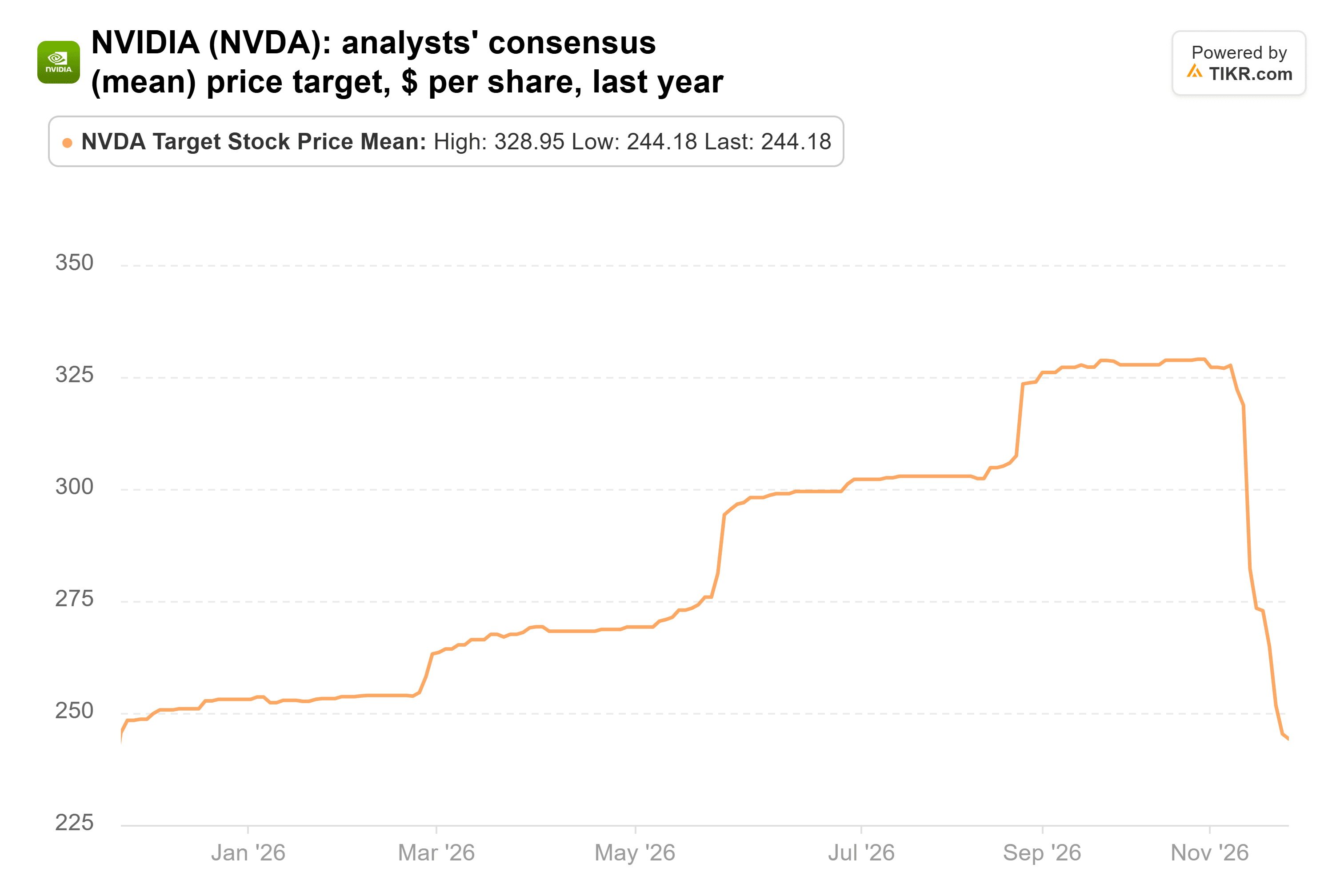
That’s still 95% above the last close, and even the lowest target, $130, sits above the price.
TIKR tracks 63 analysts on Nvidia. How many say “Buy”?
See the full breakdown of Buy, Hold, and Sell ratings on Nvidia, along with Wall Street’s revenue and earnings estimates, all in one place. More than 500,000 investors use TIKR to research stocks like this one. See Nvidia’s Analyst Ratings
Mastercard just keeps compounding
Mastercard was the steadier add. Sora held 82,525 shares at quarter-end, 44% more than in June, worth $46 million, or 3.5% of its 13F stocks and its third-largest position.
It’s also the only one of the three that’s up since Sept. 30. In its third-quarter report on Oct. 29, net revenue rose 14% and services 19%, and Bill Ackman has called Mastercard one of the greatest businesses in the world.
Winning business keeps getting pricier, though. Rebates and incentives paid to banks rose 18% in the third quarter, and analysts expect free cash flow to grow only about 3% this year.
Analysts have raised their targets anyway, and the average now sits at $720.69, up from $656.51 a year ago:
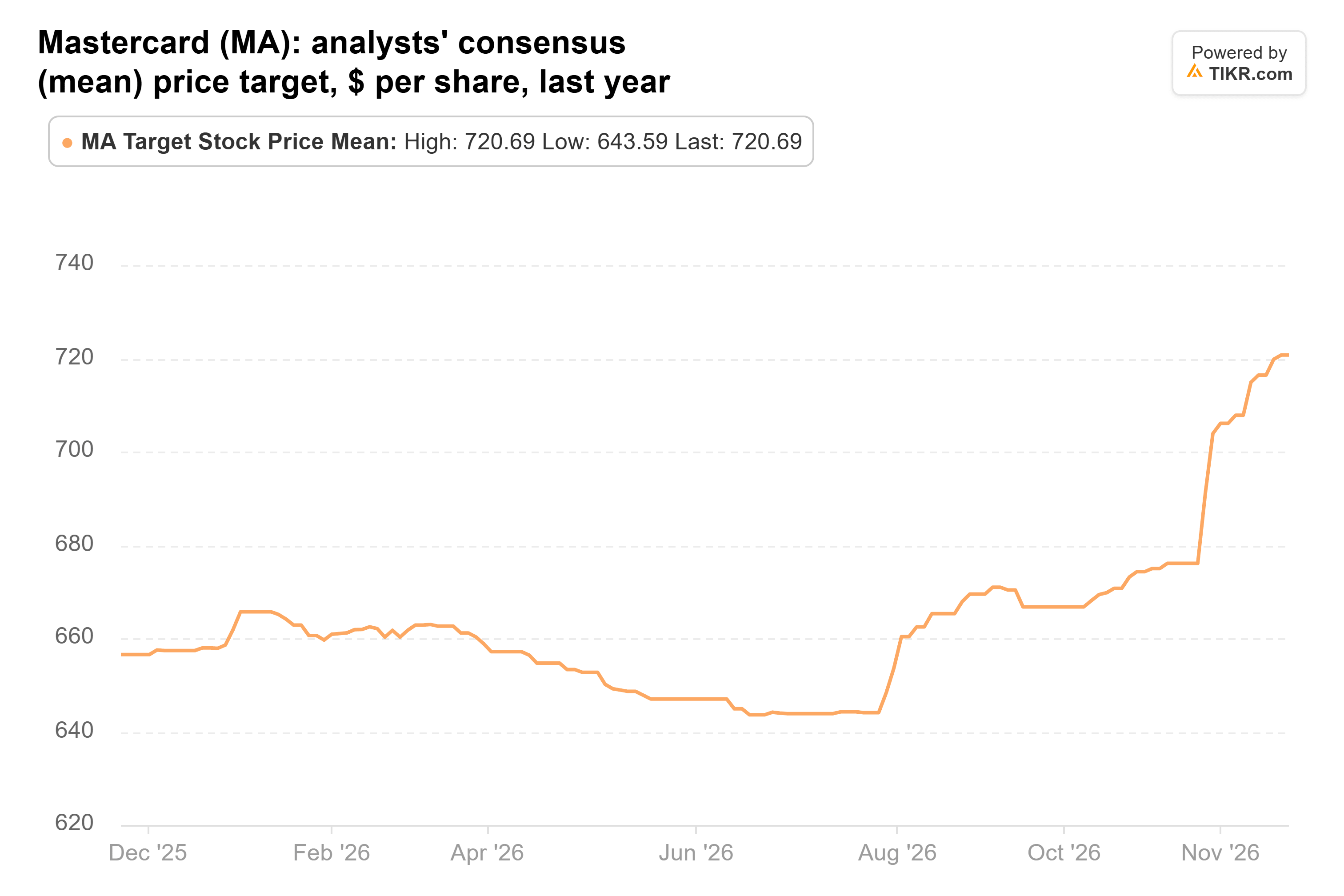
That’s 15% above the last close.
MKS is the hardest of the three to read
MKS was the smallest of Sora’s three big adds: 139,477 shares at quarter-end, 30% more than in June, worth $37 million, or 2.9% of its 13F stocks and its seventh-largest position. Sora had company there, too, since six big funds bought MKS last quarter.
The stock hasn’t cooperated. It’s down 30% since Sept. 30 and 59% below its 52-week high of $444.80, set on June 30.
Analysts have trimmed their targets, too. The average peaked at $419.71 in August and has fallen to $332.71:
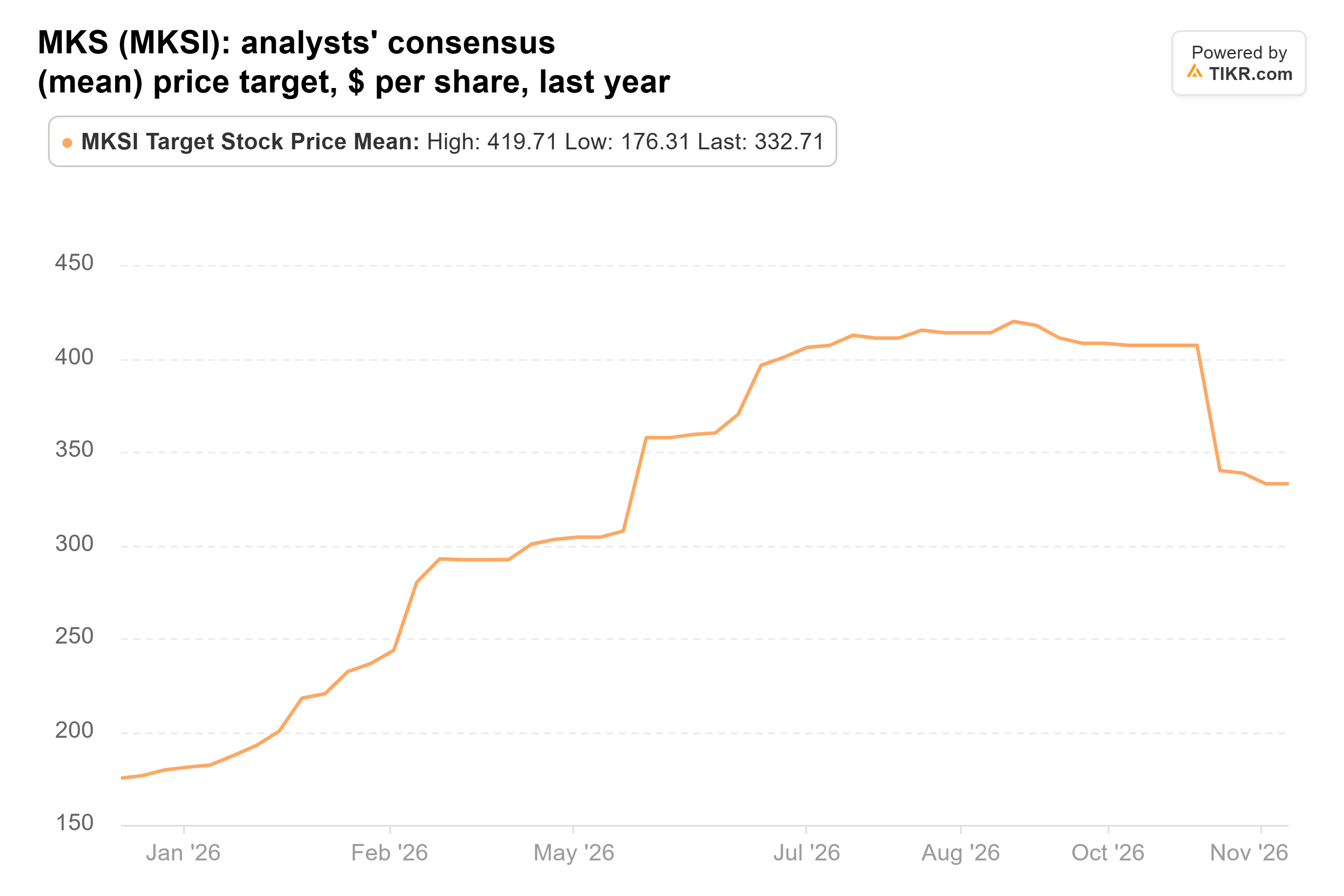
That still leaves 80% upside to the average, though targets running from $195 to $499 show how little the Street agrees on MKS.
Nvidia’s numbers make the strongest case
Mastercard and Nvidia both trade below their own histories, by very different margins.
Mastercard trades at about 28x forward earnings, a bit under its 30.8x average at quarter-ends since 2014. Analysts expect EPS of $23.13 in 2027 and $26.89 in 2028, so its 15% upside needs only those earnings to arrive.
MKS trades at about 10x forward earnings, though its falling targets make that cheap multiple harder to lean on.
Nvidia is the extreme. It traded at 19x forward earnings on Sept. 30, by TIKR’s figures, and at about 9x now, well under the 14.3x low among TIKR’s quarter-end readings going back to 2014. Analysts are still raising their numbers, too: consensus revenue for the fiscal year ending January 2028 rose to $724 billion from $709 billion after the report.
The risk is plain enough. Nvidia now has an interim CEO, more of its customers’ bills on its own balance sheet, and $150 billion of Anthropic’s Nvidia-tied compute that can be ended on short notice.
Still, if I could follow Sora into only one of these today, it’d be Nvidia. At about 9x earnings that analysts are still raising, investors are already pricing in a lot going wrong.
The next tests are who Nvidia names as its permanent CEO, and whether receivables, now $81 billion, grow more slowly than revenue when it reports again in late February. Sora’s next 13F, due in mid-February, will show whether it held on.
So what is Nvidia stock actually worth?
TIKR lets you forecast the future price of any stock in less than a minute. Just enter a few assumptions into TIKR’s valuation model and see what Nvidia could be worth. Start from Wall Street consensus estimates, or adjust the inputs to reflect your own view of the business. It’s free to use.
Disclaimer:
Please note that the articles on TIKR are not intended to serve as investment or financial advice from TIKR or our content team, nor are they recommendations to buy or sell any stocks. We create our content based on TIKR Terminal’s investment data and analysts’ estimates. Our analysis might not include recent company news or important updates. TIKR has no position in any of the stocks mentioned. Thank you for reading, and happy investing!