Key Takeaways
- A $2.5 billion fund added to Microsoft, Alphabet and Amazon in the third quarter, and the three are now its biggest positions.
- Alphabet is down 23% since Sept. 30 and has announced plans to raise $80 billion by selling stock.
- All three trade below their usual forward earnings multiples, and analysts’ average targets sit 31% to 50% above today’s prices.
- Alphabet is the one the numbers back best, though dilution and the AI threat to Search are real risks.
Most investors don’t know the name Keystone Investors. But its latest moves are as familiar as it gets: it added to Microsoft (MSFT), Alphabet (GOOG) and Amazon (AMZN) in the third quarter.
Its 13F for the quarter ended Sept. 30, filed Nov. 16, shows $2.51 billion of US stocks across 70 positions. Those three are now its biggest, at 15.0%, 11.0% and 8.8% of the total.
Microsoft got the biggest boost
Keystone grew its Microsoft stake 458%, to 733,701 shares worth $376 million at Sept. 30. The stock is down 6% since then. At about 23x forward earnings, it trades below its 26x quarter-end average since 2014.
The business news is mostly good. Microsoft 365 commercial cloud revenue grew 17% in the September quarter as customers moved to pricier plans, including Copilot. The problem is cash. Analysts have cut their free cash flow estimate for the fiscal year ending next June to $32.0 billion from $34.6 billion, as capex keeps climbing.
Analysts’ average price target has edged up over the past year, from $625 to $636:

That’s 31% above today’s price, and the target is at its high for the year.
TIKR tracks 58 analysts on Microsoft. How many say “Buy”?
See the full breakdown of Buy, Hold, and Sell ratings on Microsoft, along with Wall Street’s revenue and earnings estimates, all in one place. More than 500,000 investors use TIKR to research stocks like this one. See Microsoft’s Analyst Ratings
Alphabet got a lot cheaper
Keystone more than doubled its Alphabet stake, to 806,425 shares worth $275 million at Sept. 30. The stock has fallen 23% since then and sits 35% below its 52-week high.
A lot has happened since. Alphabet has announced plans to raise $80 billion from stock sales. Its capex is guided to $195 billion to $205 billion this year, and its free cash flow over the 12 months to September was $19.7 billion. Altimeter’s Brad Gerstner also estimates OpenAI now handles 25% of Google’s search volume. That’s a direct threat to the Search business, which brought in 55.7% of Alphabet’s revenue last year.
The market has priced a lot of that in. At about 19x forward earnings, Alphabet trades below its 23x quarter-end average since 2014. Analysts’ average target has slipped from its July peak of $429:
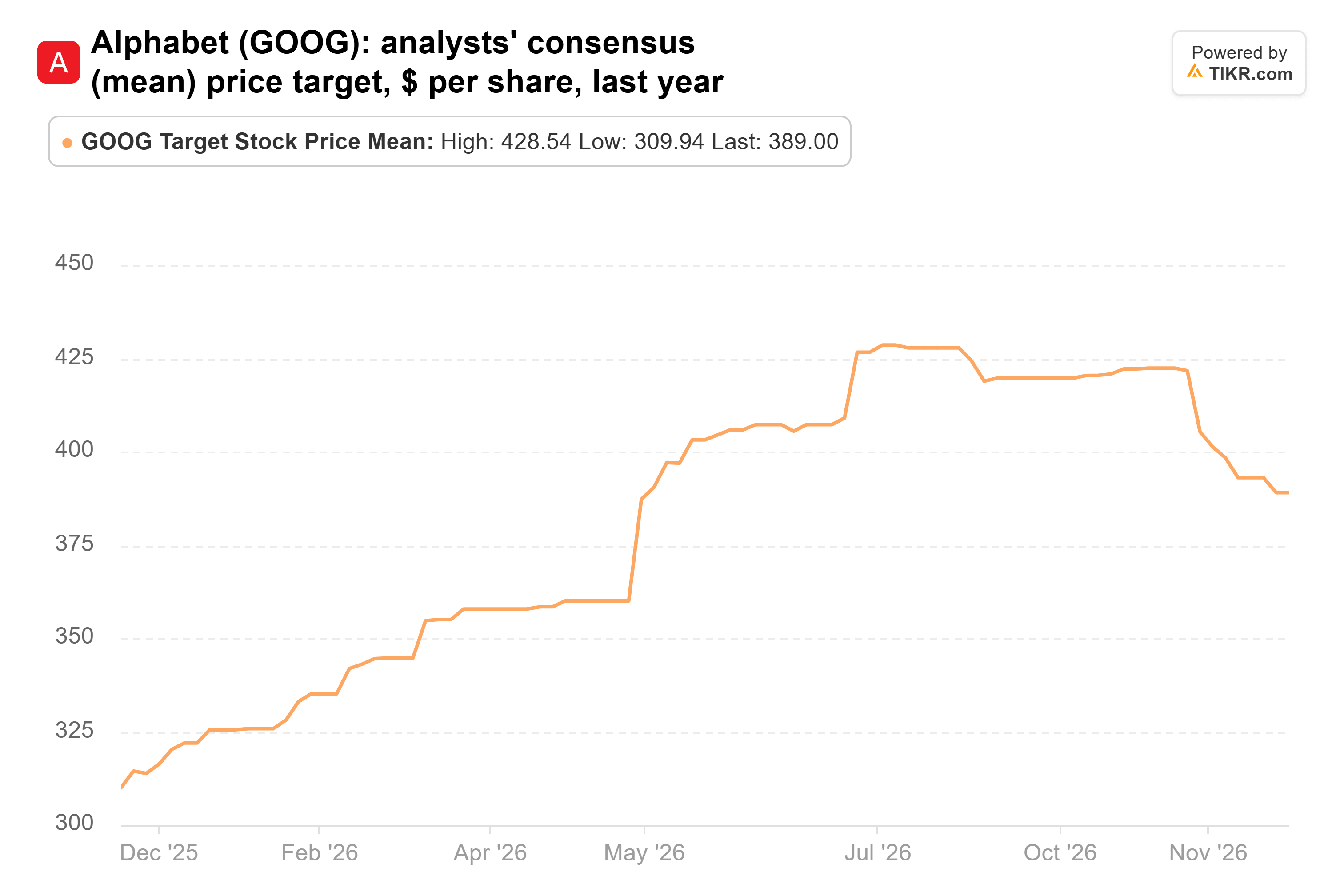
Even so, that average is $397, 50% above today’s price. Even the lowest target on TIKR, $320, sits above the stock.
Amazon barely moved
Keystone added 51% to its Amazon stake, to 884,234 shares worth $220 million at Sept. 30. Amazon is down just 0.9% since then. Yet at about 25x forward earnings, it trades below 27x, its lowest quarter-end reading since 2014.
My read: it’s the spending. Amazon expects about $220 billion of capex this year, and Andy Jassy has said next year’s will be meaningfully higher. Analysts expect a $41.2 billion free cash flow outflow this year, and they don’t see free cash flow turning positive until 2028, at $35.7 billion.
Third Point went the other way. Its 13F shows it sold out of Amazon in the third quarter. Dan Loeb’s latest letter lays out the bear case: AI spending would need $2 trillion to $3 trillion of new yearly revenue to pay off.
Analysts are more upbeat. Their average target has climbed from $294 to $327 over the past year:
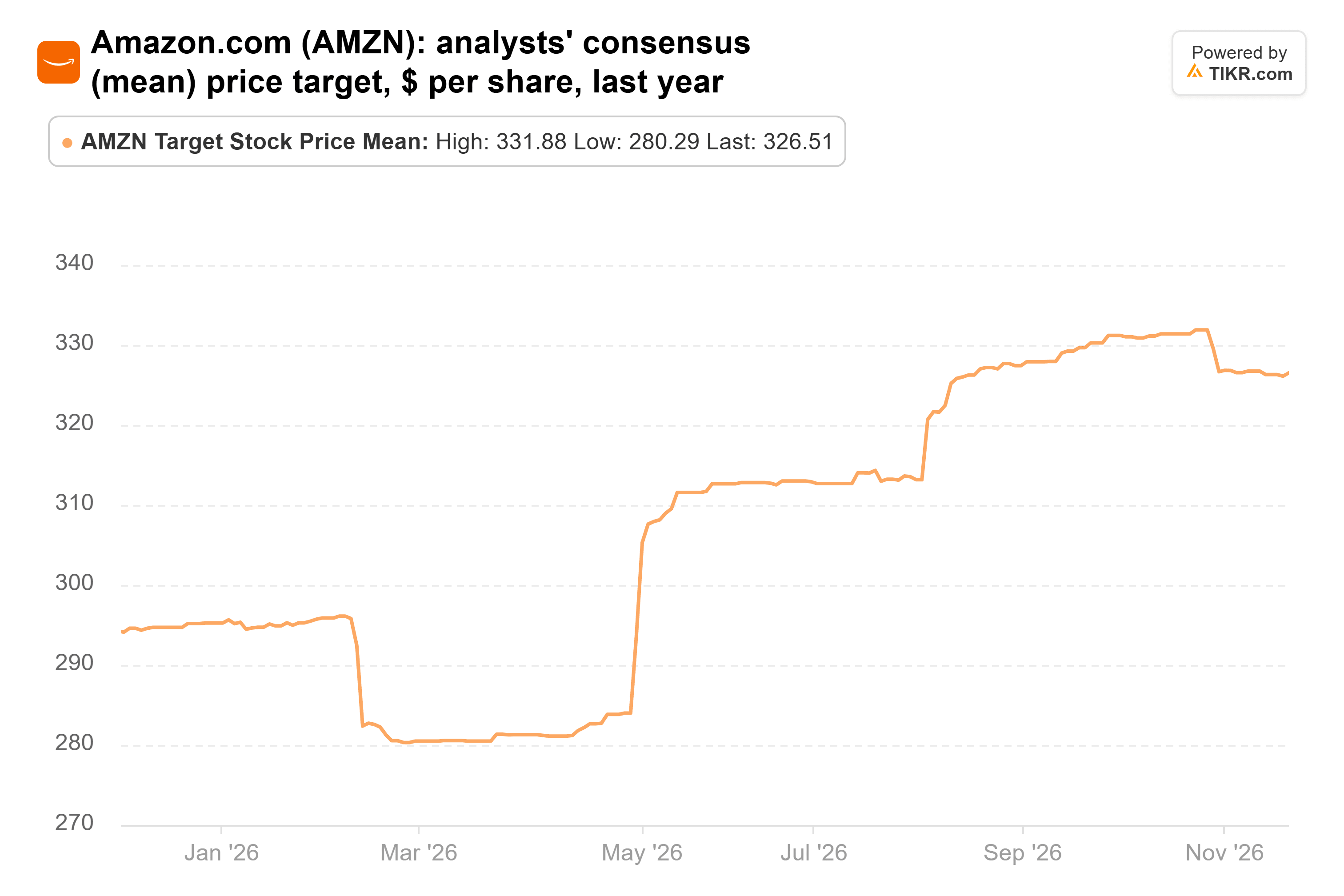
That’s 32% above today’s price.
If I could only buy one
All three trade below their usual multiples, and analysts see at least 31% upside in each. What sets them apart is how much worry is already in the price.
If I could only buy one right now, it’d be Alphabet. Its 23% drop since Sept. 30 leaves a lot of bad news in the price, and analysts’ targets point to more upside than for the other two.
The risk is dilution: $80 billion of new stock is real money, even for a company worth $3.25 trillion. And if Search growth slows when Alphabet reports in early February, the discount could stick.
Microsoft’s Office business makes it the steadier of the other two, and Amazon looks cheap against its own history. But both have to get through a stretch of shrinking free cash flow first.
Microsoft reports its December quarter in late January, and Alphabet and Amazon report in early February. Search revenue still growing at a double-digit pace would go a long way for Alphabet. Keystone’s next 13F, due in mid-February, will show whether it still held all three at the end of the year.
So what is Microsoft stock actually worth?
TIKR lets you forecast the future price of any stock in less than a minute. Just enter a few assumptions into TIKR’s valuation model and see what Microsoft could be worth. Start from Wall Street consensus estimates, or adjust the inputs to reflect your own view of the business. It’s free to use.
Disclaimer:
Please note that the articles on TIKR are not intended to serve as investment or financial advice from TIKR or our content team, nor are they recommendations to buy or sell any stocks. We create our content based on TIKR Terminal’s investment data and analysts’ estimates. Our analysis might not include recent company news or important updates. TIKR has no position in any of the stocks mentioned. Thank you for reading, and happy investing!