Key Takeaways
- Visa raised its quarterly dividend 16% to $0.78 a share, but after a 30% gain over the past year the stock yields just 0.71%.
- The dividend took 23% of Visa’s free cash flow in fiscal 2026, so it has room to keep growing at a mid-teens pace.
- Buybacks are the bigger lever for shareholders, and together with the dividend they’ve spent more than Visa’s free cash flow, with net debt rising to $11.5 billion by June 30.
- At today’s price, each buyback dollar retires about 25% fewer shares, so the share count should shrink more slowly even if free cash flow climbs as analysts expect.
Visa (V) raised its quarterly dividend 16% to $0.78 a share with its fiscal fourth-quarter results on Oct. 27. That’s a big raise for a stock that yields just 0.71% after a 30% run over the past year.
The dividend is the smaller part of what Visa pays out. CFO Chris Suh said on the earnings call that Visa intends to “return excess free cash flow to shareholders through buybacks.” With the stock at a 52-week high, the question is whether free cash flow can keep paying for both at this pace.
Earnings have to keep up
Visa’s normalized EPS rose 16% to $13.27 in fiscal 2026 (the year ended in September), so the raise matched last year’s earnings growth. Analysts expect normalized EPS of $15.02 in fiscal 2027 and $17.13 in fiscal 2028, gains of 13% and 14%:
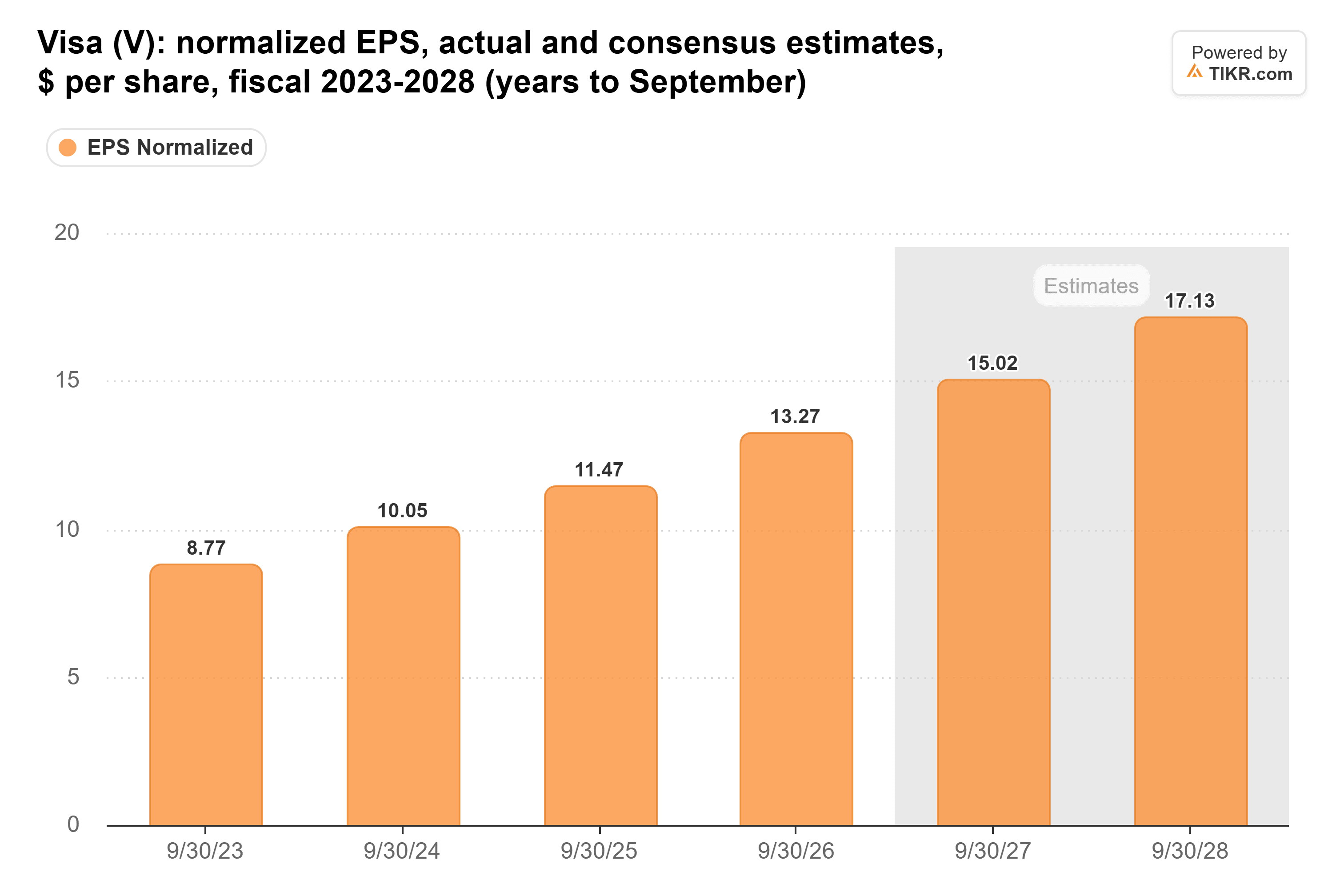
That fiscal 2027 figure is at the top of the range Visa guided to on Oct. 27. On the same call, the CFO warned that client incentives will grow faster in fiscal 2027, with about 25% of Visa’s payment volume up for renewal.
Even so, the new $3.12 annual rate is about 21% of next year’s expected earnings. A few more mid-teens raises would push that share up only a little.
TIKR tracks 40 analysts on Visa. How many say “Buy”?
See the full breakdown of Buy, Hold, and Sell ratings on Visa, along with Wall Street’s revenue and earnings estimates, all in one place. More than 500,000 investors use TIKR to research stocks like this one. See Visa’s Analyst Ratings
The dividend takes less than a quarter of the cash
Visa pays its dividend out of free cash flow. Over the past decade, dividends grew faster than free cash flow did. They went from $1.58 billion in fiscal 2017 to $5.11 billion in fiscal 2026, while free cash flow went from $8.61 billion to $22.1 billion:
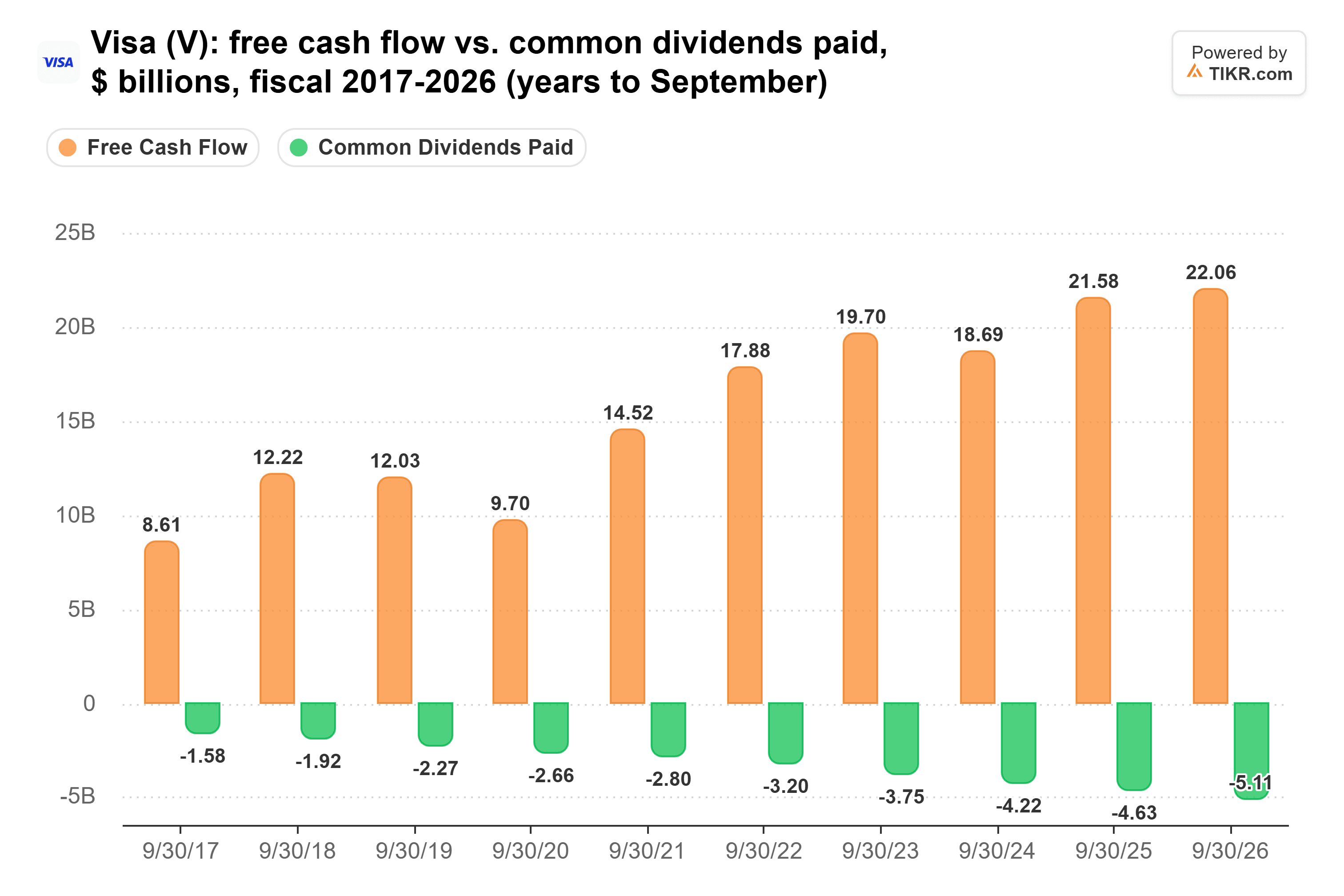
As a result, the dividend’s share of free cash flow rose from 18% to 23%. That’s still well covered.
But at a 0.71% yield, the dividend adds very little to an investor’s return. Buybacks do most of that work.
Buybacks have outrun the cash
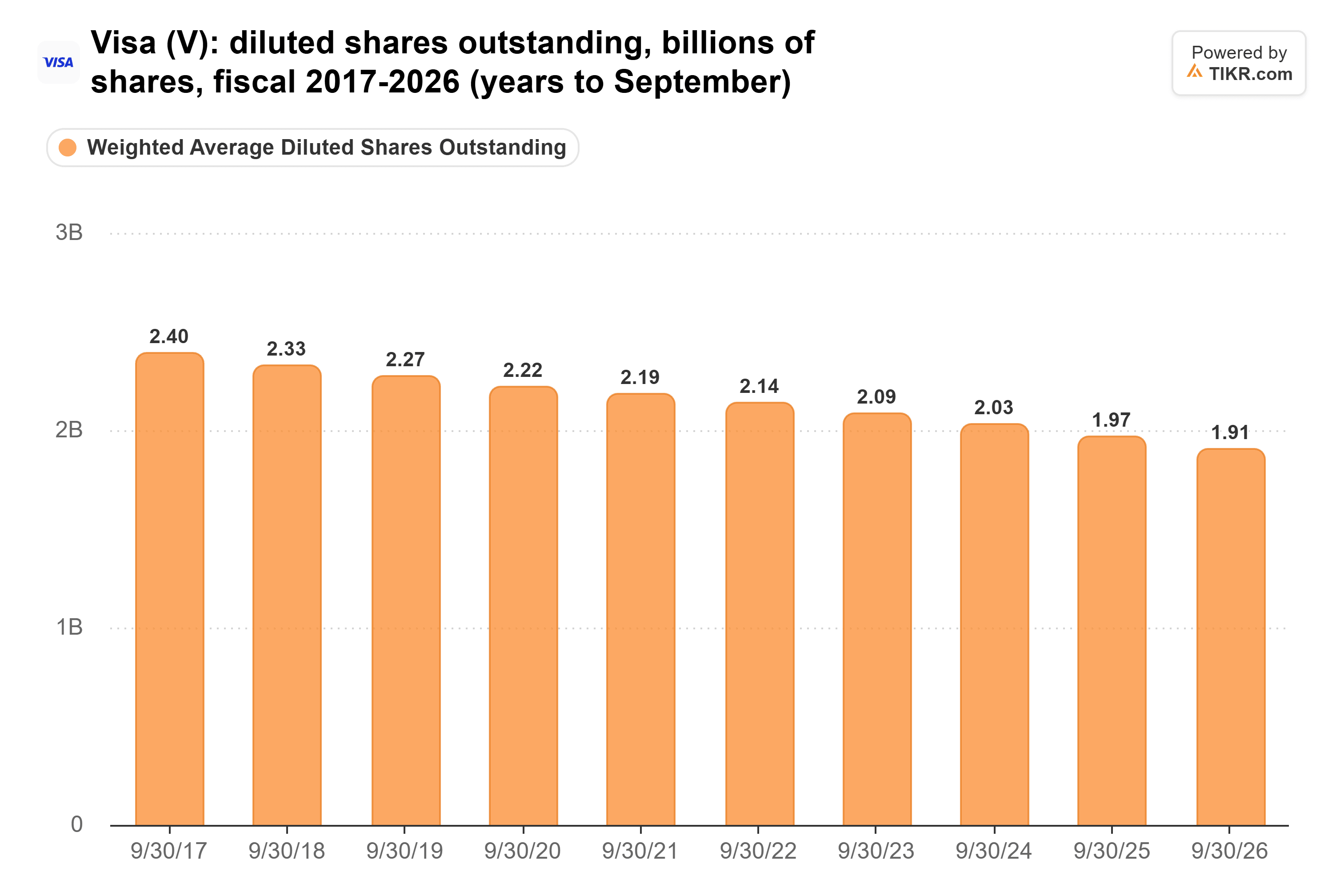
Visa has cut its diluted share count by about a fifth over the past decade, from 2.40 billion in fiscal 2017 to 1.91 billion in fiscal 2026:
Lately, those buybacks have cost more than the business brings in. Visa spent about $20.5 billion on buybacks in fiscal 2026, plus $5.11 billion on dividends. Together that’s about 116% of its free cash flow, after 108% in fiscal 2025.
Legal bills made the gap wider. Visa paid $3.1 billion for legal matters in the first nine months of fiscal 2026, against $1.1 billion a year earlier. That helps explain why free cash flow grew just 2% while net revenue grew 15%. Visa borrowed to cover the difference, and net debt rose from $8.0 billion on Sept. 30, 2025, to $11.5 billion on June 30, 2026.
The same dollars buy less stock now
In the first nine months of fiscal 2026, Visa paid an average of $328.29 a share for its buybacks. At Wednesday’s close of $436.57, each dollar retires about 25% fewer shares.
Analysts expect free cash flow of $27.2 billion in fiscal 2027. If Visa hits that, the new dividend would cost about $6 billion and leave about $21 billion for buybacks. That’s roughly what Visa spent in fiscal 2026, without adding debt. Visa has $24.4 billion left on its buyback authorization.
At today’s price, though, $21 billion buys back about 2.5% of the shares, against the 3% drop in the diluted share count in fiscal 2026. That’s less help for earnings per share each year.
Room for more raises, slower shrinking
The way I see it, another mid-teens raise is the easy part to repeat. The dividend takes less than a quarter of Visa’s cash, and analysts expect earnings to grow in the low-to-mid teens. Buyback investors should expect less. Visa can keep spending about the same amount if free cash flow grows as expected, but at a 52-week high those dollars shrink the share count more slowly, and Visa has already borrowed to keep them going.
The bigger threat is in Washington. President Trump has pledged to sign the Credit Card Competition Act, which would let merchants route credit card payments over rival networks.
Visa’s fiscal first-quarter report, due in late January, will show whether rising incentives are cutting into the earnings growth that more 16% raises would need.
So what is Visa stock actually worth?
TIKR lets you forecast the future price of any stock in less than a minute. Just enter a few assumptions into TIKR’s valuation model and see what Visa could be worth. Start from Wall Street consensus estimates, or adjust the inputs to reflect your own view of the business. It’s free to use.
Disclaimer:
Please note that the articles on TIKR are not intended to serve as investment or financial advice from TIKR or our content team, nor are they recommendations to buy or sell any stocks. We create our content based on TIKR Terminal’s investment data and analysts’ estimates. Our analysis might not include recent company news or important updates. TIKR has no position in any of the stocks mentioned. Thank you for reading, and happy investing!