Key Takeaways
- Visa reported fiscal fourth-quarter adjusted EPS of $3.48, beating the $3.44 estimate, and capped a record year with $45.9 billion in net revenue.
- Client incentives jumped 21% to $5.1 billion in the quarter, and Seaport called them “the one thing to nitpick” in the results.
- About 25% of payments volume comes up for renewal in fiscal 2027, so Visa guided to slower EPS growth despite $20.5 billion in buybacks.
- The fiscal first-quarter report, expected in late January, will show whether incentives keep outrunning revenue.
Visa just finished its strongest revenue year in more than 15 years, excluding the pandemic rebound and acquisitions. Investors still held back.
Visa (V) reported fiscal fourth-quarter adjusted EPS of $3.48 on October 27, beating the $3.44 analysts expected. Yet shares slipped about 1.4% after hours, after gaining 14.6% this year through that day’s close.
The sticking point was client incentives, the payments Visa makes to banks to win and renew business. They jumped 21% in the quarter, well ahead of revenue.
Demand clearly isn’t the issue. Closest rival Mastercard (MA) grew third-quarter net revenue 14% to $9.8 billion two days later, so the card economy still looks healthy.
A record year, quarter by quarter
Visa’s September quarter closed out a record fiscal year. Here are the key numbers:
- Net revenue rose 13% to $12.1 billion.
- Cross-border volume excluding intra-Europe climbed 14% in constant dollars.
- Processed transactions grew 10% to 74.2 billion.
For the full year, net revenue rose 15% to $45.9 billion. Adjusted EPS climbed 16% to $13.27, and the board raised the quarterly dividend 16% to $0.78.
Revenue grew sequentially in every quarter of the fiscal year…
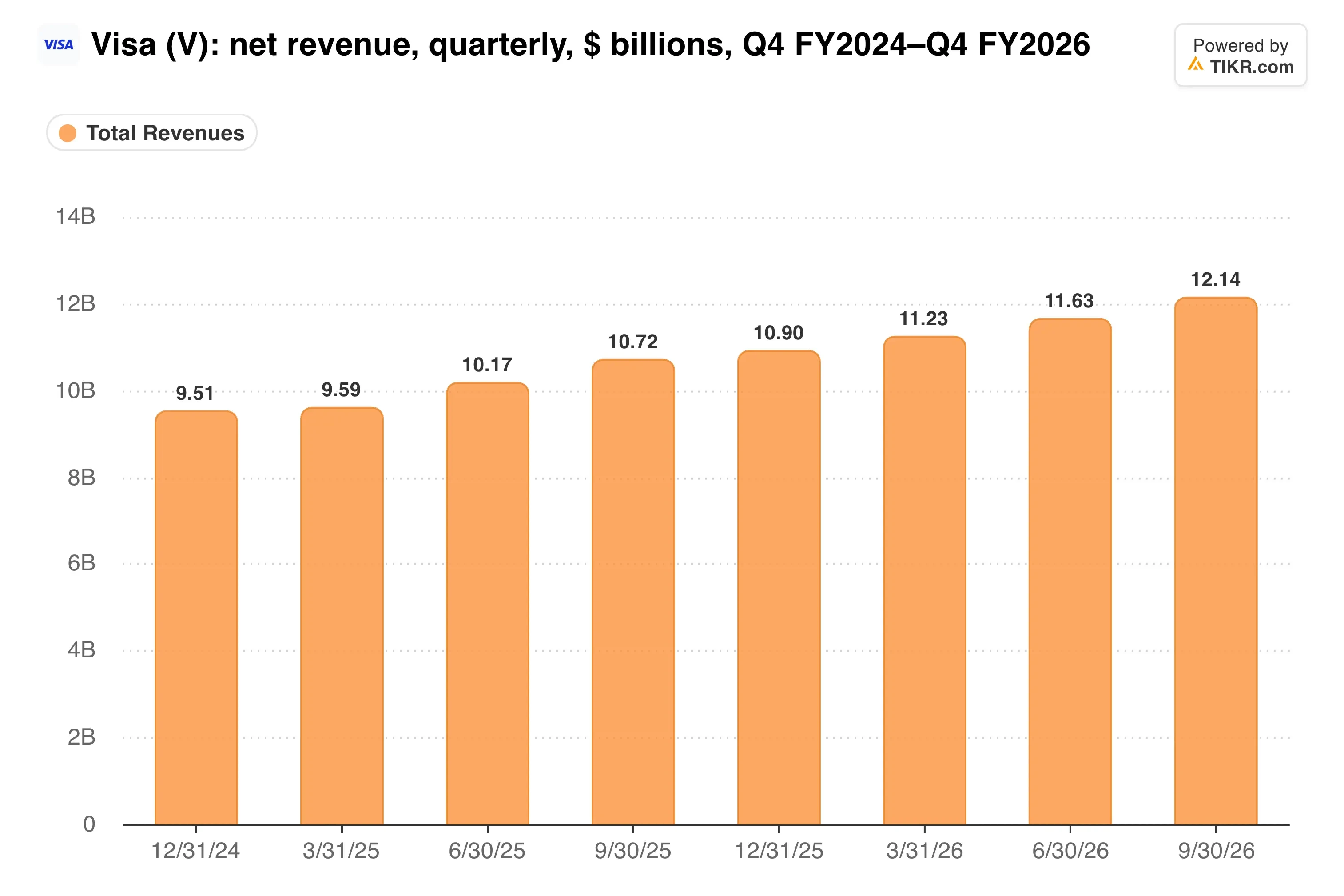
Growth did cool from 17% in the March quarter, although the World Cup and a travel rebound kept cross-border spending strong.
Selling trust to AI shoppers
CEO Ryan McInerney called trust “the next growth vector for Visa” in the earnings release. He is spending to back that up.
In August, Visa agreed to buy fraud intelligence firm BioCatch for $2.4 billion in cash. The deal should close by the end of fiscal Q2 2027. Meanwhile, other revenue jumped 40% to $5.7 billion for the year.
On November 5, Visa also published an agentic commerce benchmark. AI shopping agents from 12 labs failed 42.8% of test runs, and 54% of those failures still ended in a purchase.
That result looks bad for AI shopping. However, it makes a neat sales case for a network that sells verification and fraud tools.
So how does Visa’s growth compare with its closest rival?
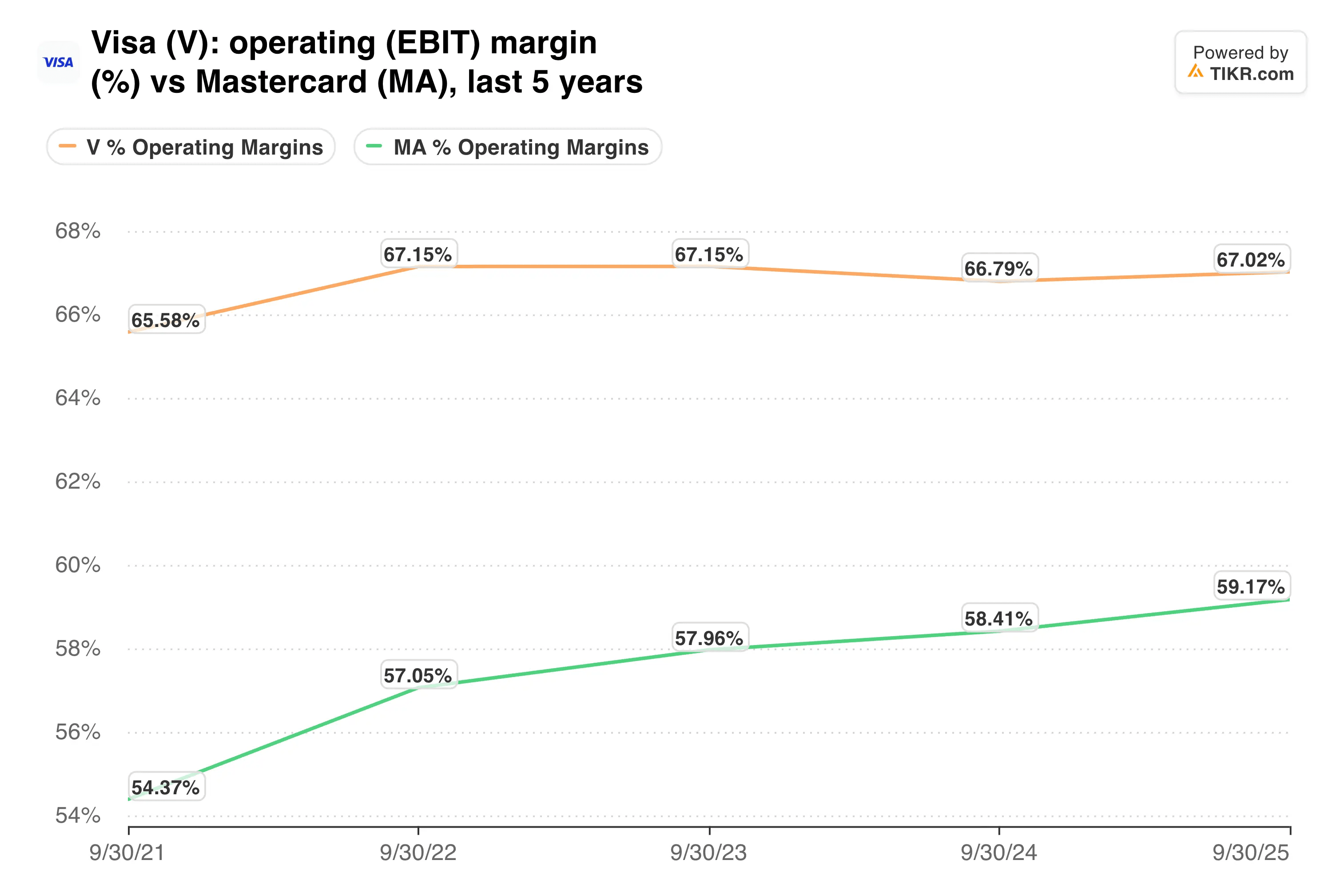
Mastercard edged ahead last quarter with 14% growth against Visa’s 13%. Visa still keeps more of each dollar, though, with a 66.6% adjusted operating margin versus Mastercard’s 60.5%.
TIKR tracks 40 analysts on Visa. How many say “Buy”?
See the full breakdown of Buy, Hold, and Sell ratings on Visa, along with Wall Street’s revenue and earnings estimates, all in one place. More than 500,000 investors use TIKR to research stocks like this one. See Visa’s Analyst Ratings
Incentives eat into 2027
Client incentives reached $18.3 billion in fiscal 2026, up 16%. In the fourth quarter alone, they rose 21% to $5.1 billion.
“The one thing to nitpick is client incentives, which were above expectations,” Seaport analyst Jeff Cantwell told Reuters.
That pressure should build. CFO Chris Suh expects about 25% of payments volume to come up for renewal in fiscal 2027, up from 20% this year. Therefore, Visa guided to low double-digit revenue growth and EPS growth from low double digits to low teens.
Buybacks soften the blow, but they can only do so much…
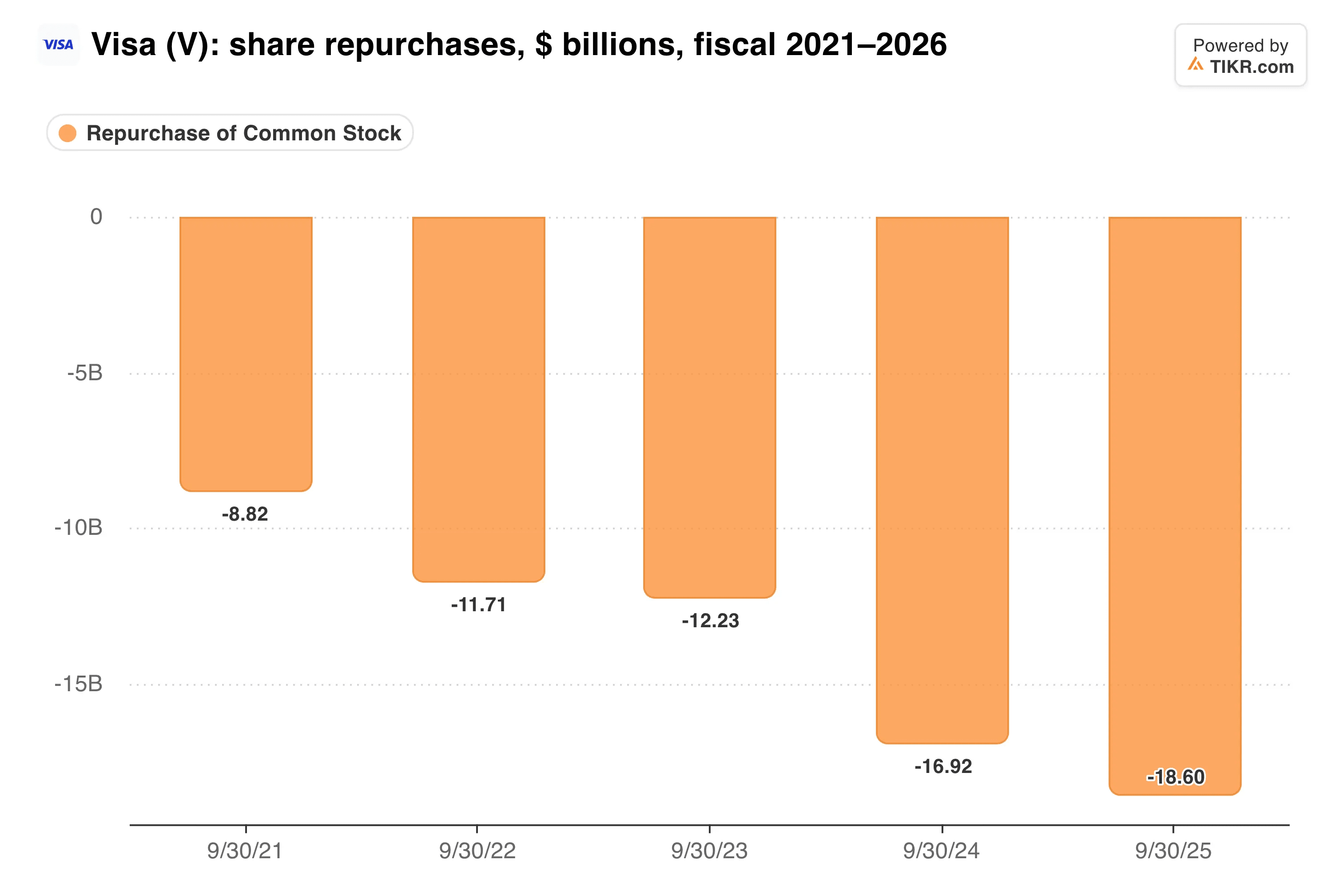
Visa repurchased $20.5 billion of stock in fiscal 2026, yet the guide still implies slower EPS growth than this year’s 16%. KBW analysts argued the softer outlook likely reflects a choice to keep investing for longer growth.
Litigation adds another drag. Visa booked $1.7 billion in litigation provisions this year, tied to the interchange case and other legal matters.
My take: Visa remains one of the highest quality businesses in the market, and 13% growth at this scale is impressive. But paying more to renew big clients while funding fraud and AI deals likely caps margin gains next year. So I’d hold here and wait for a pullback before adding.
Visa’s fiscal first-quarter report, expected in late January, will show whether incentives keep outrunning revenue as those renewals begin.
So what is Visa stock actually worth?
TIKR lets you forecast the future price of any stock in less than a minute. Just enter a few assumptions into TIKR’s valuation model and see what Visa could be worth. Start from Wall Street consensus estimates, or adjust the inputs to reflect your own view of the business. It’s free to use.
Disclaimer:
Please note that the articles on TIKR are not intended to serve as investment or financial advice from TIKR or our content team, nor are they recommendations to buy or sell any stocks. We create our content based on TIKR Terminal’s investment data and analysts’ estimates. Our analysis might not include recent company news or important updates. TIKR has no position in any stocks mentioned. Thank you for reading, and happy investing!