Key Takeaways
- Eight Nvidia B300 chips for a server now list for nearly $3 million in China, more than five times the U.S. price of a B300 server.
- Riedel Research’s David Riedel says that’s “very bad” for Alibaba, as Washington moves to curb its offshore access to Nvidia chips.
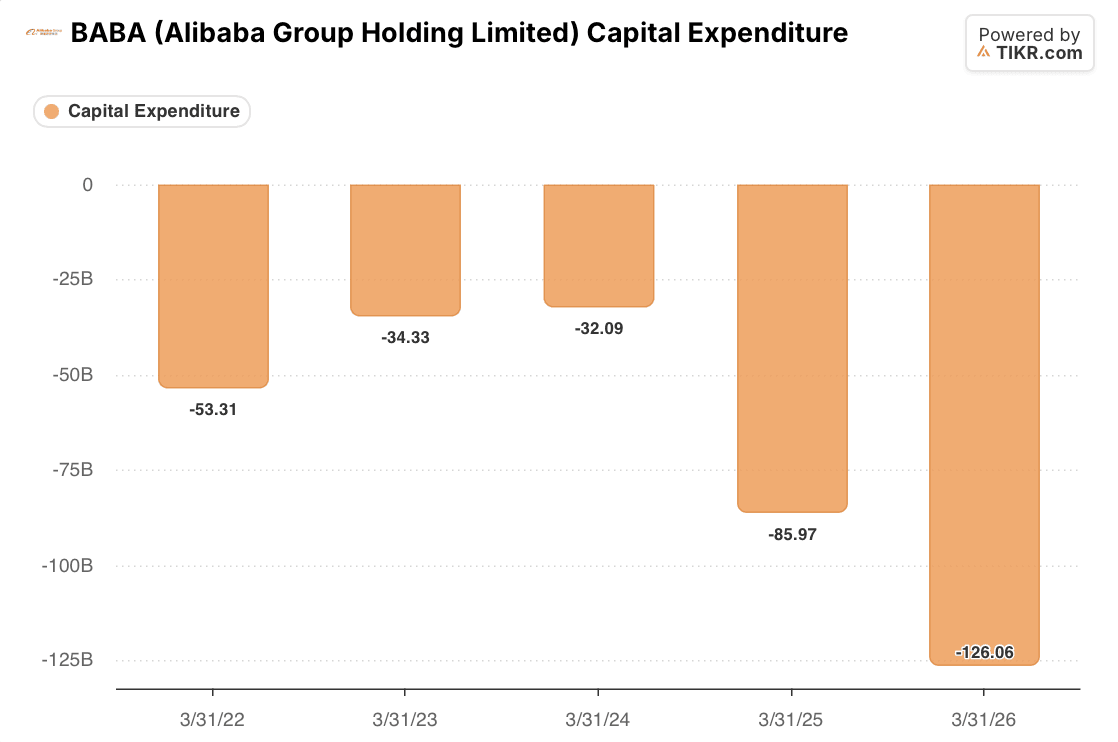
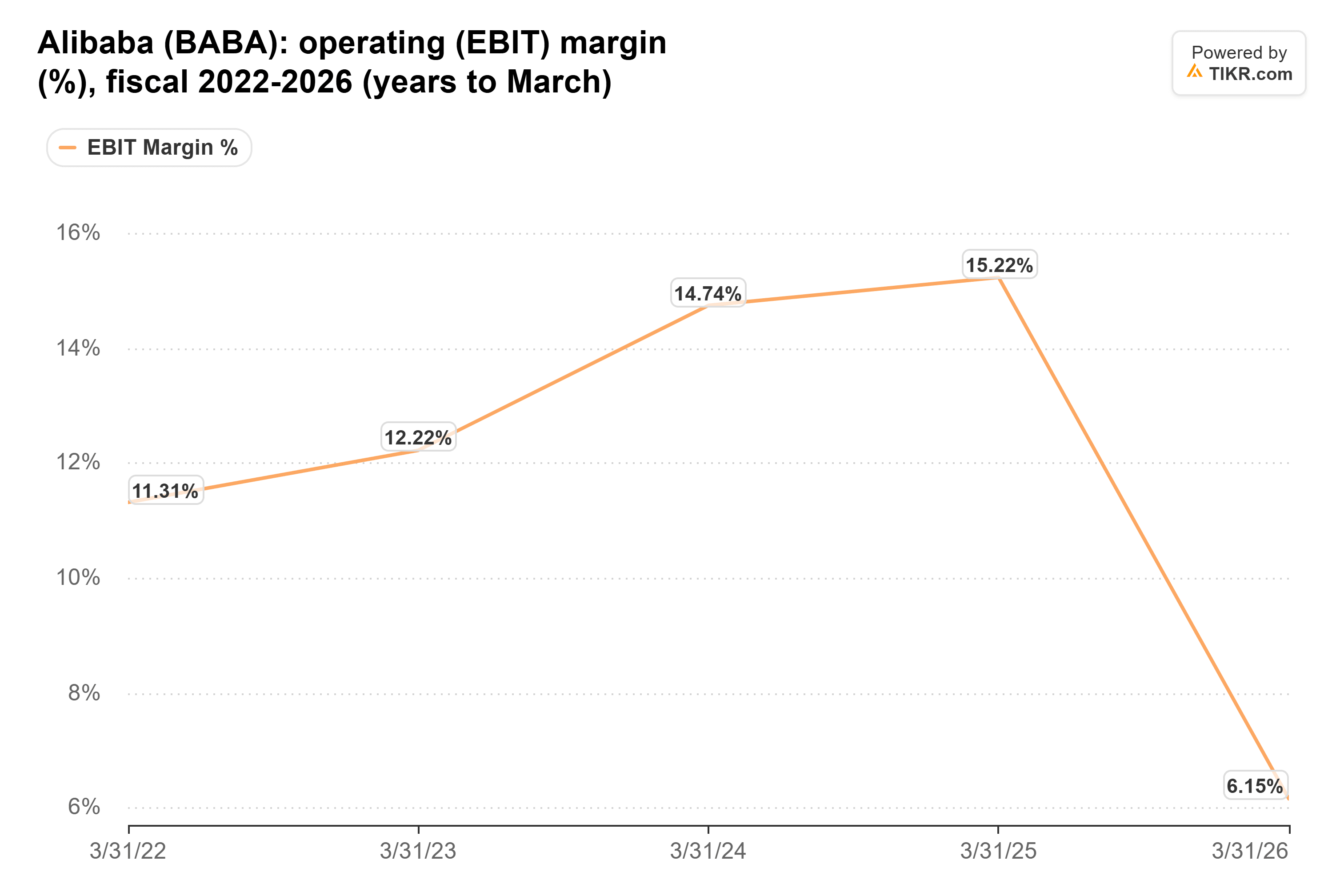
- Alibaba’s capex nearly quadrupled in two years while its EBIT margin fell to 6.2%.
Nvidia (NVDA) chips just hit a price in China that should worry Alibaba (BABA) shareholders far more than Nvidia’s. CNBC Beijing bureau chief Eunice Yoon reported the number from Chinese listings on Squawk on the Street on Nov. 12:
“The price of a set of eight Blackwell B300 chips for a server is now at nearly $3 million. This is up five times from May and nearly six times higher than the official U.S. price of $550,000.”
David Riedel, founder and president of Riedel Research, told Closing Bell who that hurts: “I don’t think it has a huge impact on NVIDIA’s business… But for the Chinese, for Alibaba in particular, it’s very bad.”
He’s right about Nvidia. The B300 is restricted from sale in China, so none of that markup reaches it.
Alibaba’s Offshore Route Is Narrowing
Alibaba can’t legally buy Nvidia’s top chips, so renting them abroad has been its workaround. It was the founding and still biggest customer of Megaspeed, a Singapore company renting out Nvidia-based computing, the Financial Times reported. The U.S. investigation targets Megaspeed, which denies diverting chips.
The Commerce Department is now finalizing a rule that would bar Chinese AI companies from using advanced chips in data centers outside China, The Information reported. It would add seven countries, including Megaspeed’s base, Singapore, and Malaysia.
Analysts Are Counting on an Alibaba Rebound
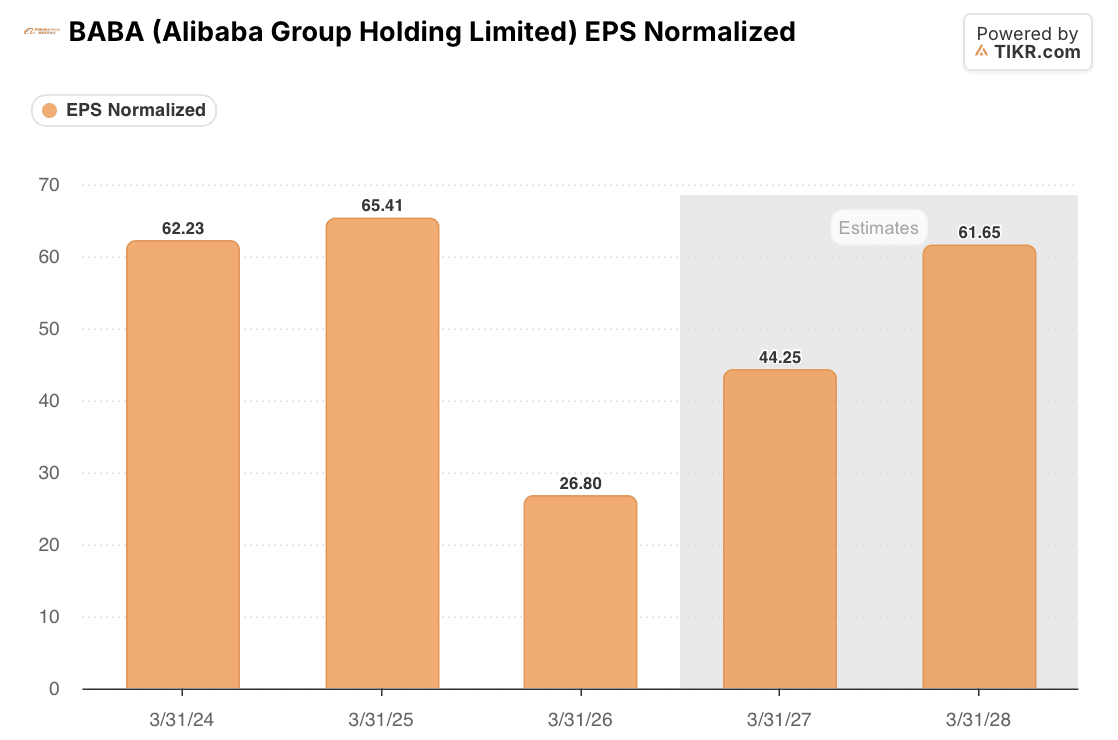
Alibaba’s normalized EPS fell to RMB 26.80 (about $3.89) per ADS in fiscal 2026 (the year to March), from RMB 65.41 (about $9.48). Analysts expect RMB 44.25 (about $6.41) in fiscal 2027 and RMB 61.65 (about $8.94) in fiscal 2028, about back to fiscal 2024’s level:
The Compute Bill Is Already Climbing
Alibaba’s capex rose from RMB 32.1 billion (about $4.65 billion) in fiscal 2024 to RMB 126.1 billion (about $18.3 billion) in fiscal 2026:
In May, management said server cost inflation had topped 100%. The gray-market B300 price has nearly tripled from the roughly 7 million yuan (about $1 million) Reuters reported in late April.
Alibaba’s EBIT margin fell to 6.2% in fiscal 2026, from 15.2%, mainly on quick commerce and technology spending:
TIKR Tracks 41 Analysts on Alibaba. How Many Say “Buy”?
See the full breakdown of Buy, Hold, and Sell ratings on Alibaba, along with Wall Street’s revenue and earnings estimates, all in one place. More than 500,000 investors use TIKR to research stocks like this one. See Alibaba’s Analyst Ratings
Alibaba’s Own Chips Are a Slower Road
T-Head, Alibaba’s chip unit, had shipped 470,000 AI chips by February, but Alibaba concedes they trail foreign rivals. Leland Miller, co-founder and CEO of China Beige Book, said on a Bloomberg podcast: “The only chips that are the top of the frontier or even a step or two down are American chips.”
The legal route is slow. Chinese buyers, Alibaba included, expect only about 1% of roughly 6 million RTX Pro 5500 chips they’ve ordered over the next four months, Bloomberg reported.
What Alibaba’s Nov. 19 Report Has to Show
On Alibaba, Riedel is right too. Its recovery needs compute its cloud can earn back, and every route to it now costs more or takes longer.
One lever is price. Alibaba has raised per-token prices, and its AI Cloud and Compute Services adjusted EBITA margin rose to 11.6% in the June quarter, from 7.2% a year earlier. Management expects that margin to keep improving each quarter, so anything at or below 11.6% on Nov. 19 would miss its own bar, and the chip squeeze would be my first suspect.
So What Is Alibaba Stock Actually Worth?
TIKR lets you forecast the future price of any stock in less than a minute. Just enter a few assumptions into TIKR’s valuation model and see what Alibaba could be worth. Start from Wall Street consensus estimates, or adjust the inputs to reflect your own view of the business. It’s free to use.
Disclaimer:
Please note that the articles on TIKR are not intended to serve as investment or financial advice from TIKR or our content team, nor are they recommendations to buy or sell any stocks. We create our content based on TIKR Terminal’s investment data and analysts’ estimates. Our analysis might not include recent company news or important updates. TIKR has no position in any of the stocks mentioned. Thank you for reading, and happy investing!