Key Takeaways
- Upstart fell 11% in a week as the Nov. 19-20 tech selloff dragged fintech stocks, Block among them, lower.
- Block raised its 2026 guidance on Nov. 3 and fell anyway, so the selloff had little to do with any one company’s results.
- Upstart CEO Paul Gu kept buying stock through the drop, and Executive Chairman Dave Girouard bought at the lows.
- Upstart is cheap against its own history, but estimates are still falling, and its early-December lending update is the next test.
Upstart (UPST) fell 11% over the past week, and Block (XYZ) 12%, as the Nov. 19-20 tech selloff dragged fintech down. Neither company put out news to explain it.
But Upstart’s co-founders kept buying all the way down.
The Rout Hit Good News and Bad News Alike
The Nasdaq fell 5% on Nov. 20, the day Upstart hit a 52-week low of $15.54. Block shows how little results mattered: on Nov. 3, it raised its 2026 guidance after third-quarter gross profit rose 22%. At about 14x forward earnings, with analysts expecting normalized EPS to grow from $4.15 this year to $5.38 in 2027, Block looks like a market casualty to me, and its Feb. 24 report is the next check.
Upstart was already hurting before the rout. On Nov. 3, it cut its 2026 outlook to about $1.35 billion of revenue and $260 million of adjusted EBITDA, from $1.4 billion and $294 million. That came as the Upstart Macro Index (UMI), the company’s own gauge of default risk, hit 1.53.
The CEO Keeps Buying
Gu has bought 50,000 shares three times since Nov. 11, at average prices of $20.57, $19 and $17.20, his Forms 4 show. On Nov. 20, Girouard bought 60,000 shares through his revocable trust at an average of $15.85. That’s a real signal: the two people closest to Upstart’s loan data kept buying as the stock fell. What it can’t tell you is when defaults stop rising.
TIKR Tracks 16 Analysts on Upstart. How Many Say “Buy”?
See the full breakdown of Buy, Hold, and Sell ratings on Upstart, along with Wall Street’s revenue and earnings estimates, all in one place. More than 500,000 investors use TIKR to research stocks like this one. See Upstart’s Analyst Ratings
Cheap, and the Estimates Are Still Sliding
Consensus normalized EPS for 2027 is $2.94, down from $3.58 going into the report, and 2026’s $1.84 would come in below 2025’s $1.89:
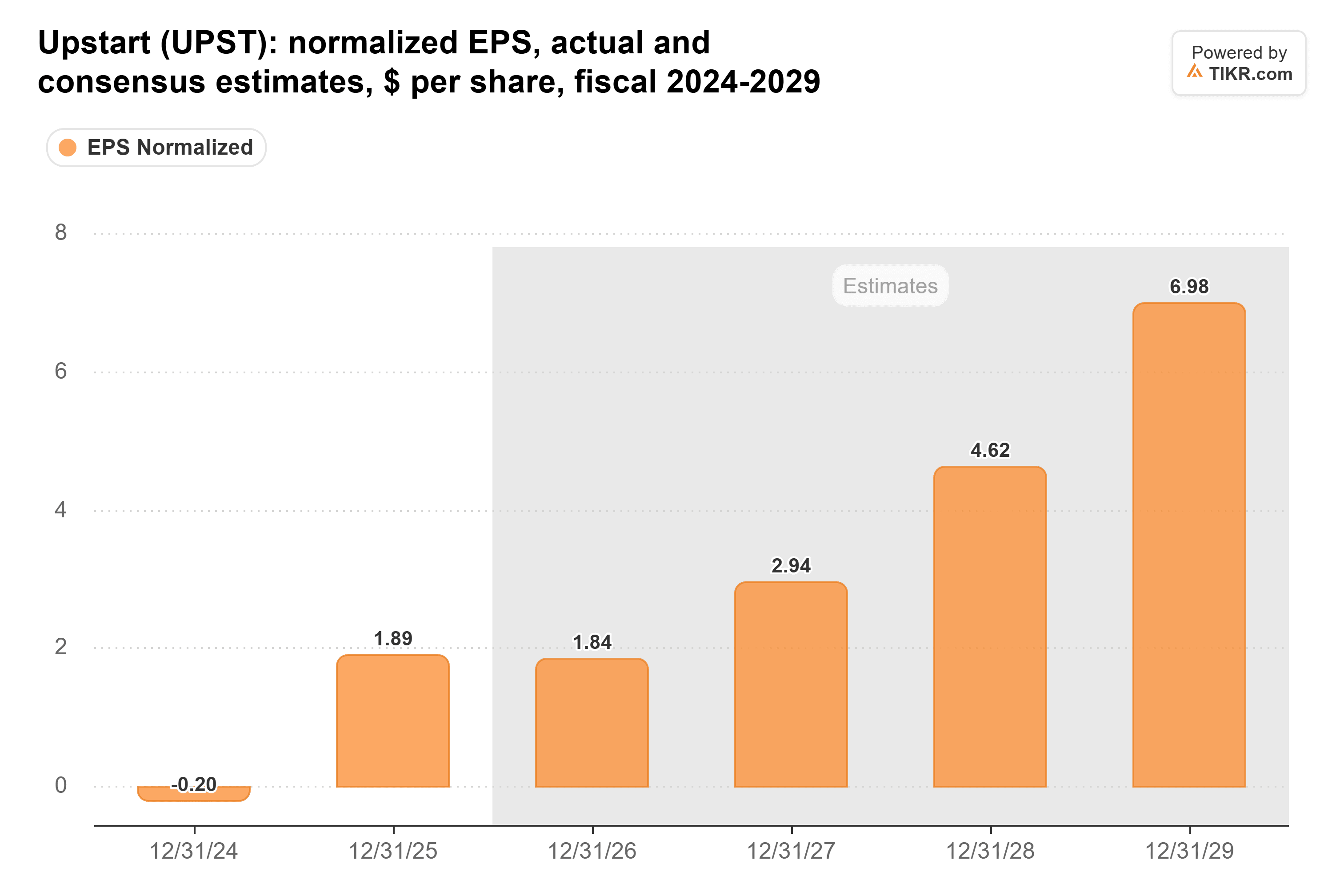
That leaves Upstart at about 6x forward earnings, far below its 14x average for the past year. Analysts’ average target has fallen to about $31 from about $55 a year ago, and Citi’s $46, cut from $61 on Nov. 4, is the highest:
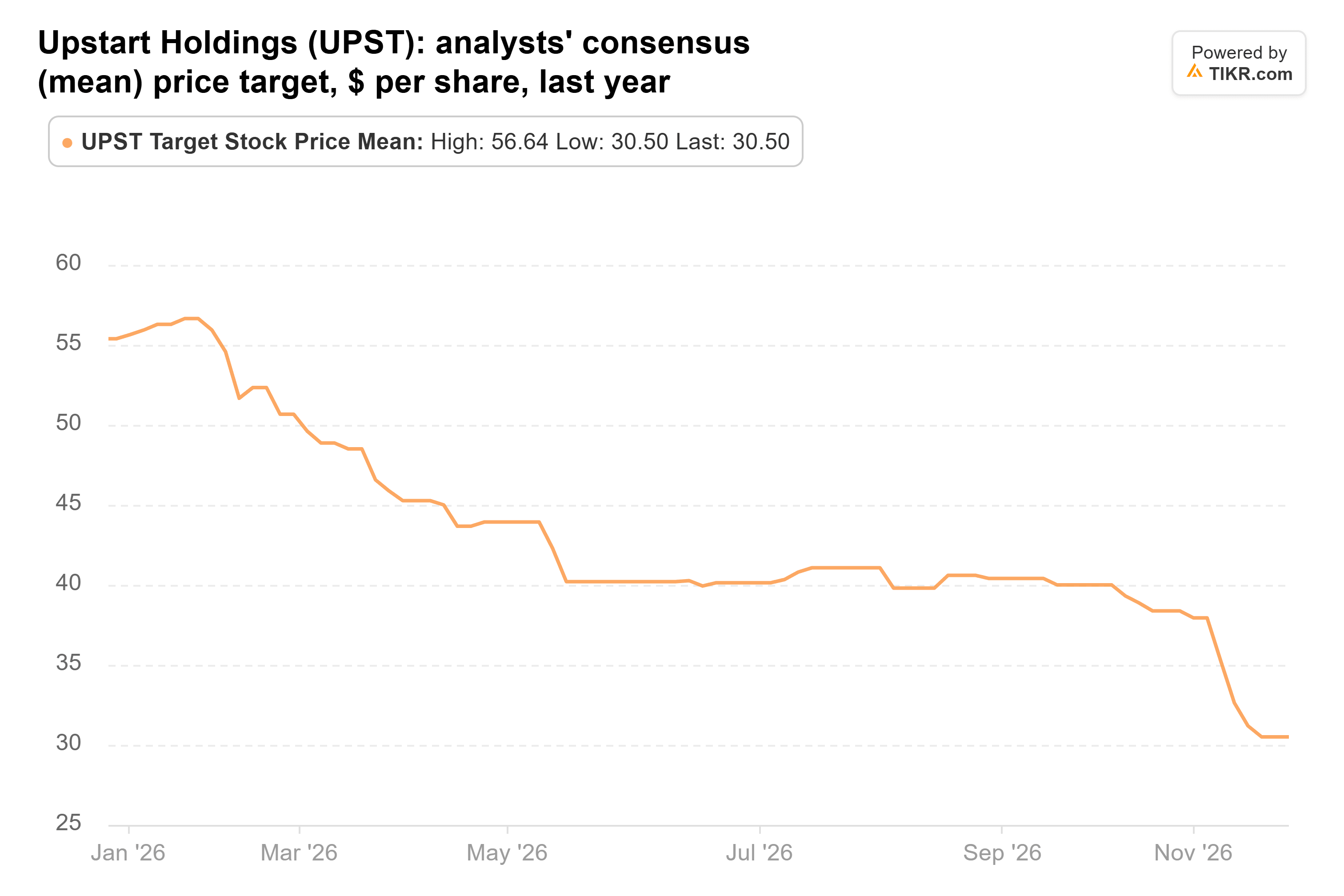
Even the average target sits about 80% above the stock.
The December Number Upstart Holders Should Watch
I think the insiders will be proven right, just early. Each time the UMI rises, Upstart marks down the loans it holds and analysts cut again. Upstart’s cut outlook assumes the UMI stays at or below 1.55, and a new reading arrives in early December: one back toward 1.4 is the signal I’d wait for.
So What Is Upstart Stock Actually Worth?
TIKR lets you forecast the future price of any stock in less than a minute. Just enter a few assumptions into TIKR’s valuation model and see what Upstart could be worth. Start from Wall Street consensus estimates, or adjust the inputs to reflect your own view of the business. It’s free to use.
Disclaimer:
Please note that the articles on TIKR are not intended to serve as investment or financial advice from TIKR or our content team, nor are they recommendations to buy or sell any stocks. We create our content based on TIKR Terminal’s investment data and analysts’ estimates. Our analysis might not include recent company news or important updates. TIKR has no position in any of the stocks mentioned. Thank you for reading, and happy investing!