Key Takeaways
- An industry group including GM, Ford, Toyota and Volkswagen backed the Trump administration in court over a rollback that cuts the 2031 fuel-economy target to 34.9 mpg from 50.4 mpg.
- The Transportation Department puts average industry compliance savings at $1,289 per vehicle, a real benefit for GM, whose trucks earn far more than its crossovers.
- Looser emissions rules already cut GM’s North American costs by $500 million in the first nine months of 2026.
- A coalition of 26 states, counties and cities, including California and Michigan, is challenging the rule in the 1st Circuit, putting its savings at risk.
General Motors (GM) has picked a side in the fight over fuel-economy rules, and it’s the side that protects its trucks.
On Nov. 2, the Alliance for Automotive Innovation, whose members include GM, Ford Motor (F), Toyota and Volkswagen, filed in support of the Trump administration’s rollback at the 1st U.S. Circuit Court of Appeals. California and other states are challenging it.
GM stock hit a 52-week closing high of $92.43 on Nov. 4, then slipped with the market to close Friday at $86.16, down 1.4% for the week.
What Actually Changed
The Transportation Department finalized the weaker standards on Sept. 28. By its own figures, the rule cuts the 2031 fleetwide requirement to 34.9 mpg from 50.4 mpg, saves automakers $1,289 per vehicle in compliance costs, and adds more than $1,600 to a driver’s lifetime fuel bill.
A coalition of 26 states, counties and cities, including California and Michigan, sued in October, and environmental and consumer groups filed separately. The automakers’ group argues the industry needs stable rules to plan its upcoming models.
Trucks Pay GM’s Bills
GM has a lot at stake. Its annual report says trucks carry about 160% of its North American portfolio’s average variable profit, against about 40% for crossovers. Trucks, as GM counts them, were 1.52 million of its 2.85 million U.S. sales in 2025.
Stricter targets would have pushed GM to sell more EVs and fewer of those trucks, or to pay to cover the gap.
Looser rules are already paying off. GM’s third-quarter filing credits “decreased emissions costs of $0.5 billion” for part of its North American gain over the first nine months, about a fifth of the segment’s $2.5 billion profit increase. That came from earlier rollbacks, so September’s rule is the next leg, not the source.
TIKR Tracks 24 Analysts on General Motors. How Many Say “Buy”?
See the full breakdown of Buy, Hold, and Sell ratings on General Motors, along with Wall Street’s revenue and earnings estimates, all in one place. More than 500,000 investors use TIKR to research stocks like this one. See General Motors’ Analyst Ratings
Analysts expect GM’s normalized EPS to rise from $10.60 in fiscal 2025 to $16.10 in fiscal 2028, mostly through buybacks:
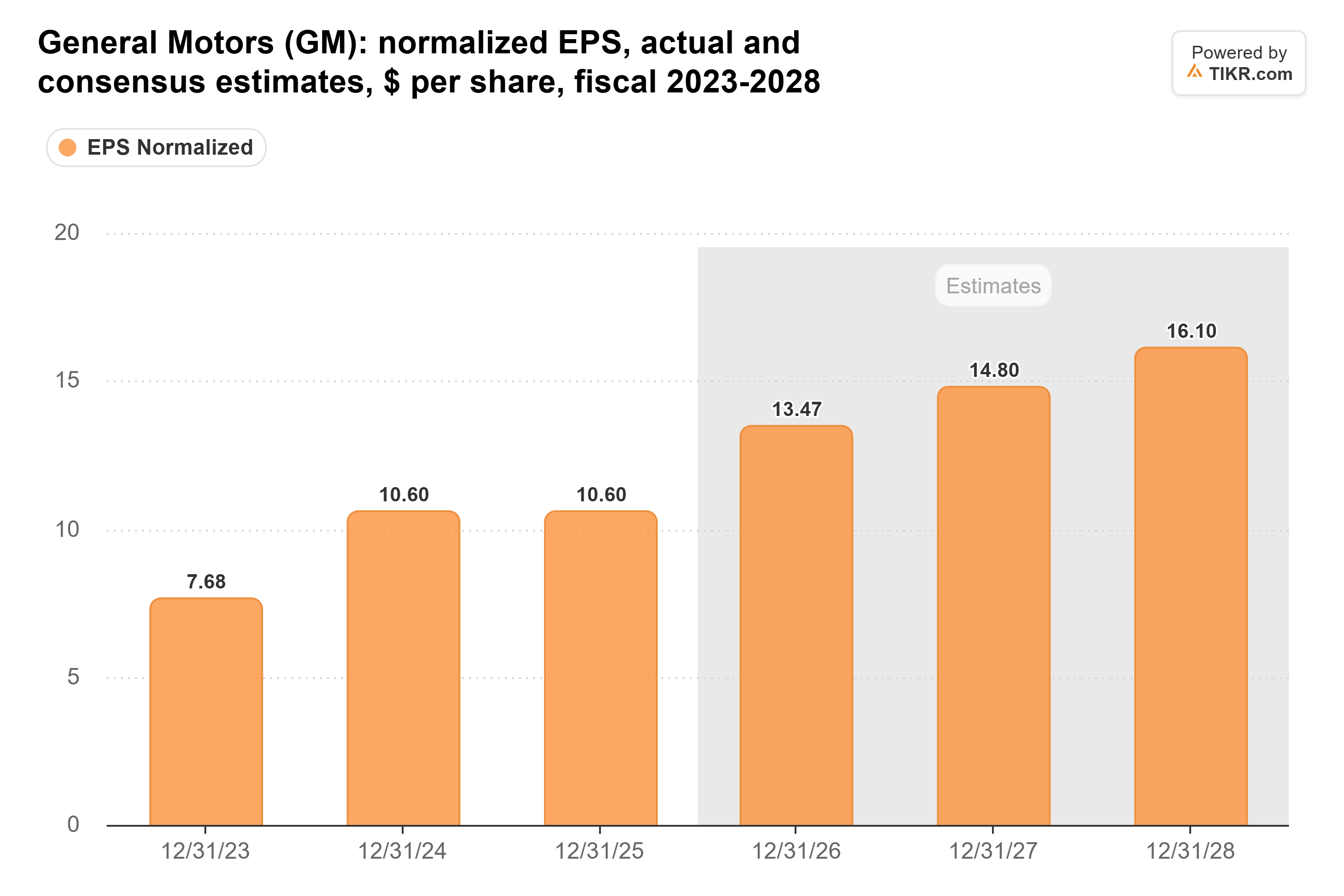
Those estimates date from Oct. 28, after the rule was finalized, so they likely include much of the savings. A court loss would put them at risk.
Ford Needs the Break Even More
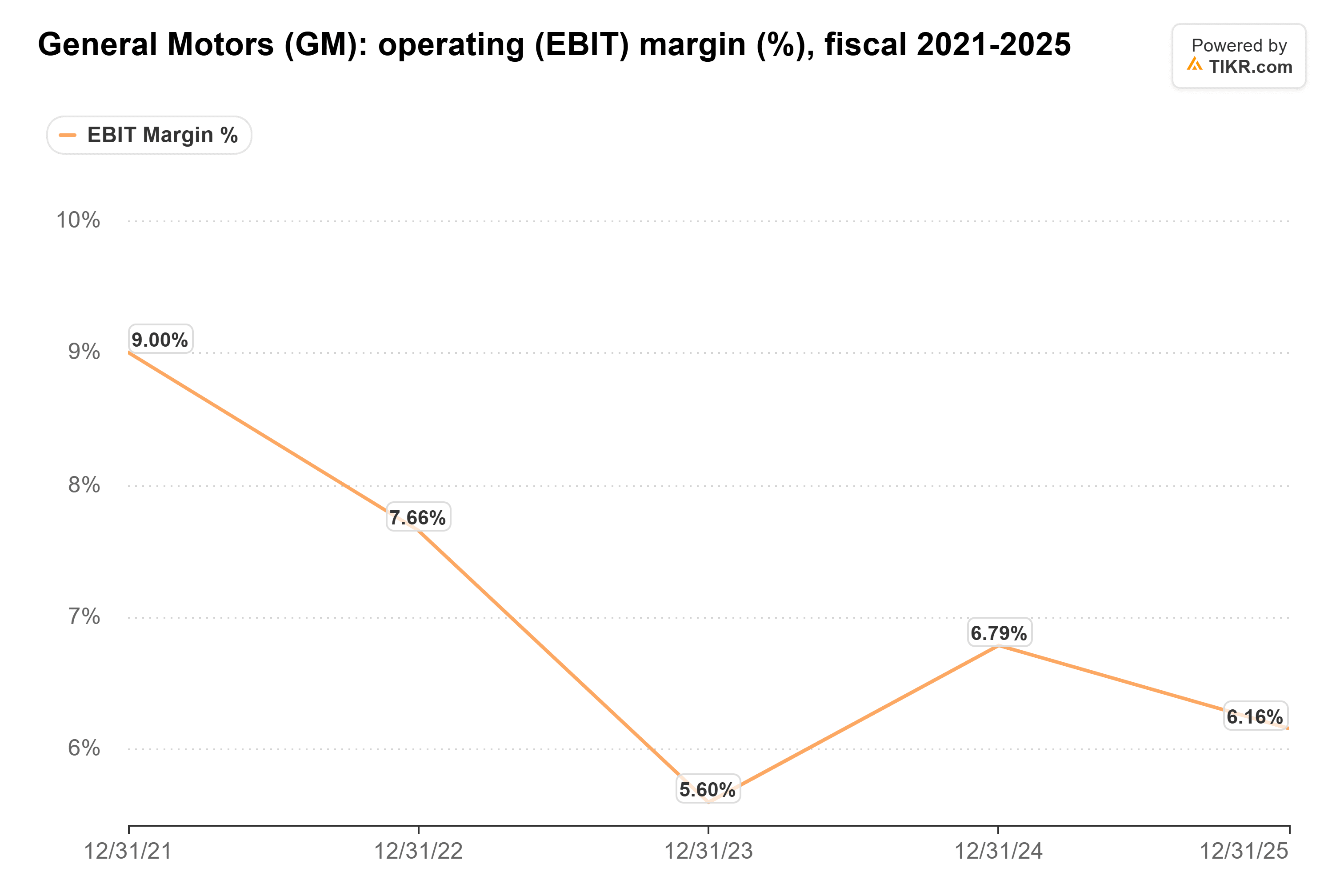
GM’s operating margin fell from 9.0% in fiscal 2021 to 6.2% in fiscal 2025:
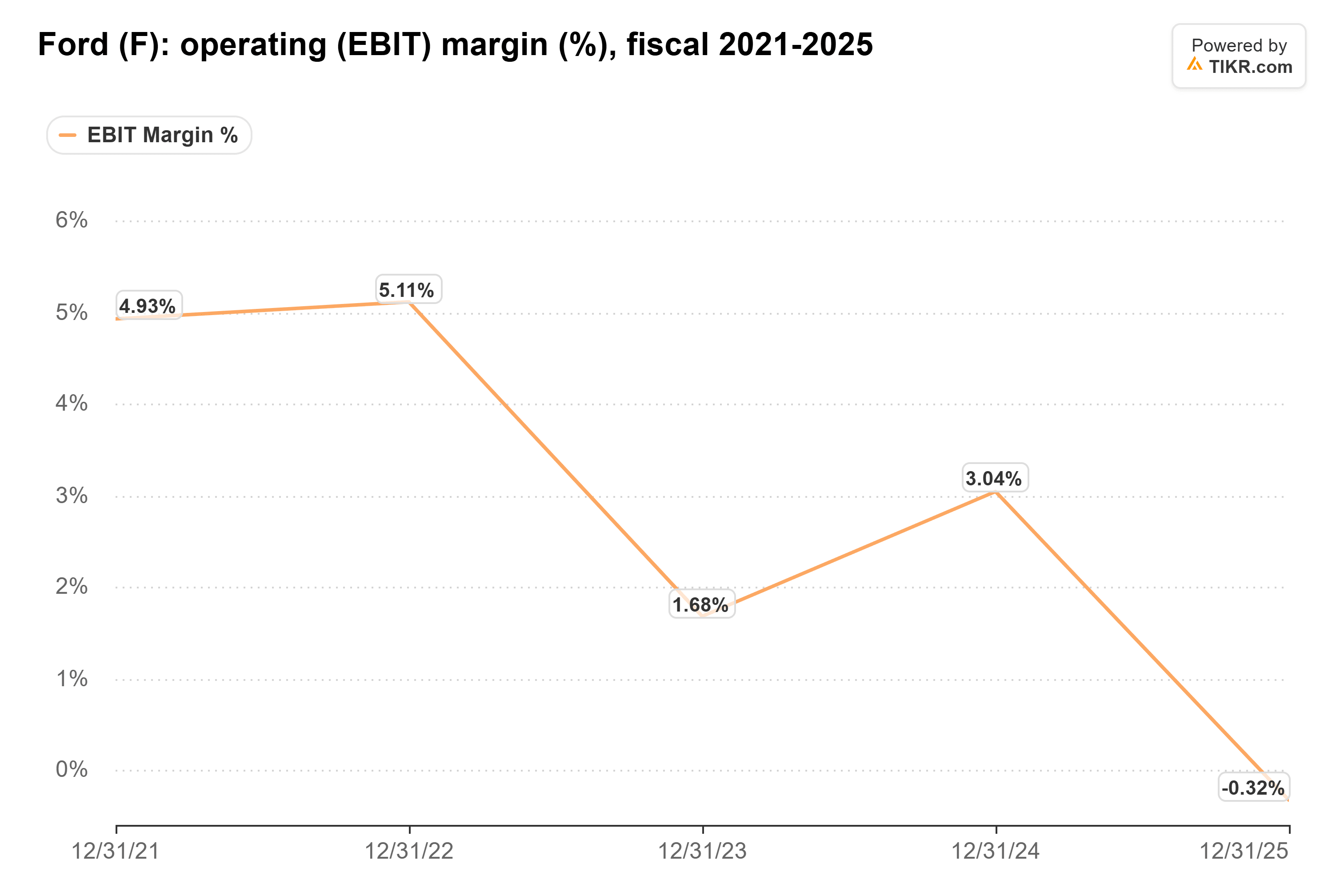
Ford’s was thinner in every one of those years and fell to -0.3% in fiscal 2025:
Costs are rising for both. Ford raised the low end of its 2026 adjusted EBIT outlook to $10.5 billion on Oct. 28 despite commodity costs nearing $2.5 billion, but expects 2027 profit to be roughly flat. GM’s CFO said that if recent cost inflation held, the commodity headwind would reach roughly $2 billion in 2027.
California Is GM’s Real Risk
Congress is less of a threat than it looks. Even with Democrats winning both chambers on Nov. 3, reversing the rollback would need the White House’s signature or a veto-proof majority. The real fight is in the 1st Circuit, where the department’s own fuel-cost estimate gives the states an argument.
Backing the rule was an easy call for GM. It protects its most profitable vehicles while commodity costs climb. GM’s 2027 outlook, due with fourth-quarter results in late January, will show how much of the savings management is counting on.
So What Is General Motors Stock Actually Worth?
TIKR lets you forecast the future price of any stock in less than a minute. Just enter a few assumptions into TIKR’s valuation model and see what General Motors could be worth. Start from Wall Street consensus estimates, or adjust the inputs to reflect your own view of the business. It’s free to use.
Disclaimer:
Please note that the articles on TIKR are not intended to serve as investment or financial advice from TIKR or our content team, nor are they recommendations to buy or sell any stocks. We create our content based on TIKR Terminal’s investment data and analysts’ estimates. Our analysis might not include recent company news or important updates. TIKR has no position in any of the stocks mentioned. Thank you for reading, and happy investing!