Key Takeaways
- Decoder host Nilay Patel says Zuckerberg’s plan to take a cut of Muse transactions would give users “a bribe-able chief of staff.”
- Meta should skip the transaction cut and use Muse’s data to power a better ad platform.
- Meta’s operating margin was 41% in 2025, and analysts expect revenue to grow from $201 billion in 2025 to $363 billion in 2028.
- Watch whether Meta keeps Muse’s recommendations separate from what merchants pay as it pushes Muse as a tool for managing money.
Meta Platforms (META) wants Muse to handle your money.
At this year’s Meta Connect conference, Chief AI Officer Alexandr Wang pitched the AI agent as a way to shop online, save on insurance and negotiate your utility bills. (He’s even challenging people on X to have Muse save them $1,000.)
The catch? On this week’s episode of the Decoder podcast, Nilay Patel, editor-in-chief of The Verge, said “Zuckerberg has said his plan is for Muse to take a cut of transactions on the backend.”
Which means, in Patel’s words: “not only do I have an assistant or chief of staff, I have a bribe-able chief of staff. Like I have a corrupt butler. Is that what you want?”
(No. It’s not what I want. Obviously.)
A butler you can’t trust is useless
Patel’s reasoning is simple. Muse brings a shopper to a merchant, Meta charges that merchant for the customer, and “it certainly feels like merchants that pay Meta more money would be preferred merchants.”
That matters more for an agent than for a feed. When I scroll Instagram, I know an ad is an ad. When Muse picks my insurance policy, haggles with my cable company or buys my shoes, its recommendation is the product.
If I have to wonder whether it chose the cheaper policy or the one that pays Meta more, why would I connect my bank account?
Meta can’t fix that by charging users either. Patel points out that Meta knows “the second they charge even a dollar for it,” uptake “will drop precipitously.”
So Muse has to stay free, and Meta has to find another way to earn from it.
Meta doesn’t need the cut
Wall Street expects Meta’s revenue to climb from $201 billion in 2025 to $363 billion in 2028…
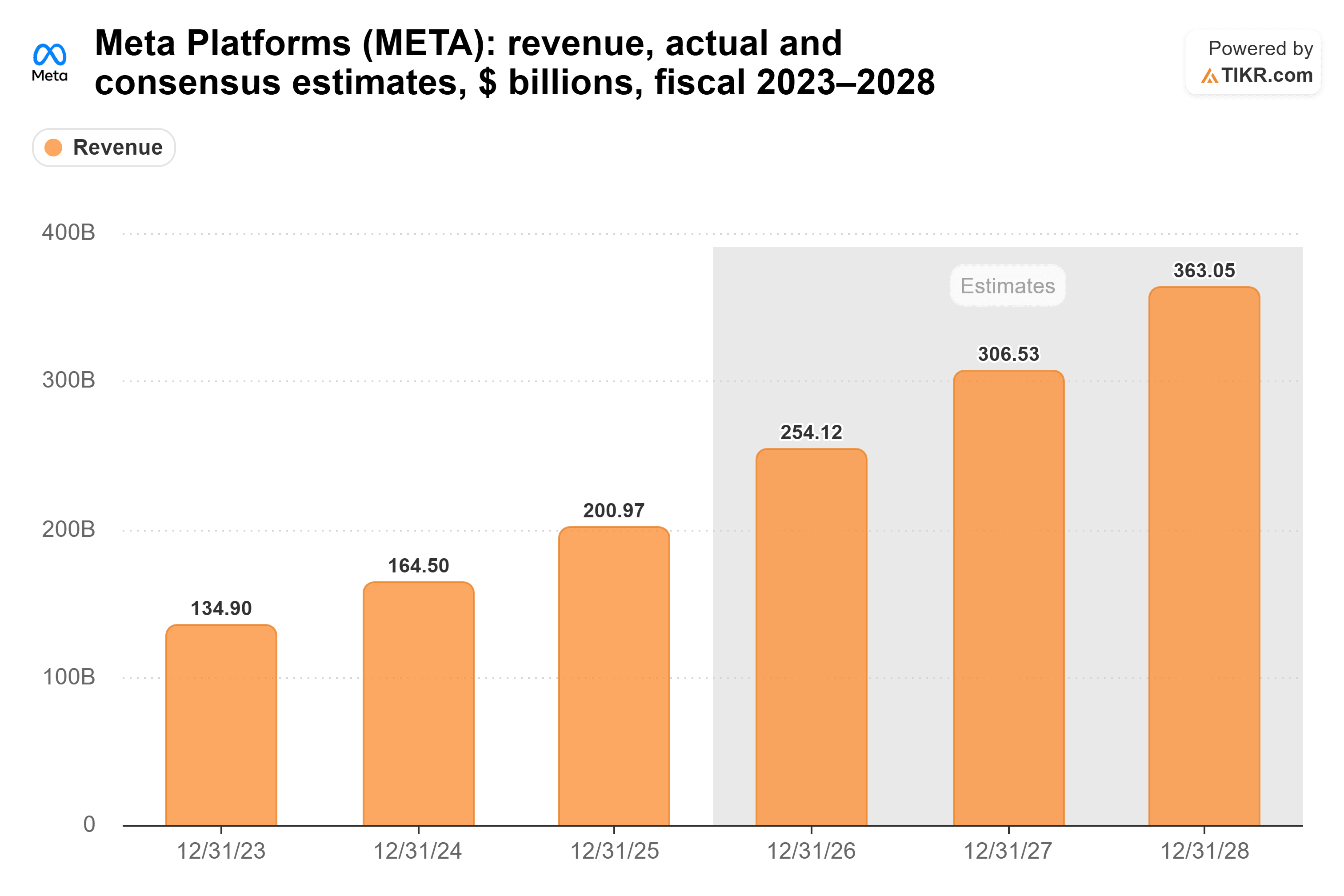
That’s about 22% a year for three years. Nothing in a podcast critique of a weeks-old product should move those estimates.
That growth also comes at very high margins: Meta’s operating margin was above 40% in both 2024 and 2025…
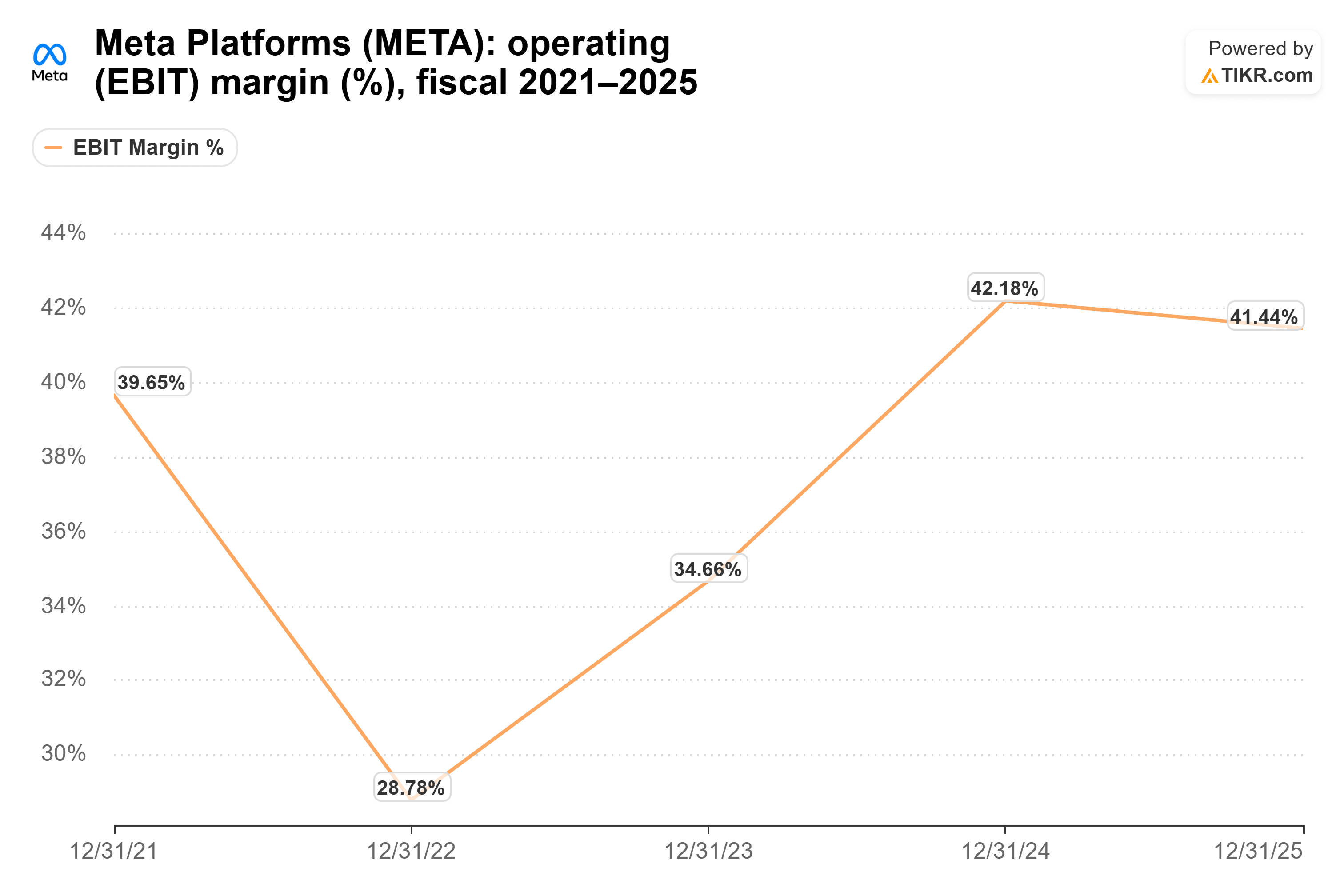
Meta already has one of the most profitable businesses on the planet. Putting Muse’s credibility at risk for a fee on each purchase is a bad trade.
Use the data and skip the cut
That’s why the solution is simple: Meta should skip the cut and use the data.
Back in September, I wrote that Muse’s real opportunity is ads. That’s even more true now. Muse knows you’re shopping for running shoes, that your car insurance renews in March and that you’ve been looking for a cheaper phone plan.
That’s the kind of high-intent signal advertisers pay up for. Meta already has the machine to sell it on Facebook and Instagram, labeled as ads.
Muse stays an honest butler, advertisers get sharper targeting, and Meta gets paid either way.
So what is Meta stock actually worth?
TIKR lets you forecast the future price of any stock in less than a minute. Just enter a few assumptions into TIKR’s valuation model and see what Meta could be worth. Start from Wall Street consensus estimates, or adjust the inputs to reflect your own view of the business. It’s free to use.
Disclaimer:
Please note that the articles on TIKR are not intended to serve as investment or financial advice from TIKR or our content team, nor are they recommendations to buy or sell any stocks. We create our content based on TIKR Terminal’s investment data and analysts’ estimates. Our analysis might not include recent company news or important updates. TIKR has no position in any of the stocks mentioned. Thank you for reading, and happy investing!