Key Takeaways
- A Commerce Department rule now requires a U.S. license for data centers in four Southeast Asian countries to buy advanced AI chips, cutting off Chinese renters.
- I think the freed-up capacity gives buyers like Anthropic cheaper compute, which is bad news for NVIDIA’s next orders and CoreWeave’s rental prices.
- Oracle has reportedly already canceled a chip-leasing deal with Tencent.
- Nobody knows yet how much capacity this frees up, but it could be enough to drop prices and ripple through the whole AI supply chain.
The whole AI trade rests on one idea: there’s never enough compute to go around. The Trump administration may have just freed up a lot of it, and that’s a problem for NVIDIA (NVDA), CoreWeave (CRWV) and even Oracle (ORCL).
On Monday, the Commerce Department released an interim rule that requires a U.S. license for data centers in Singapore, Malaysia, Thailand and Indonesia to buy advanced AI chips.
The rule targets China. Firms like Alibaba and ByteDance can’t buy NVIDIA’s best chips at home, so they’ve been renting them in Southeast Asia. JPMorgan puts 3.8 gigawatts, about 25% of Malaysia’s entire data center pipeline, with Chinese operators.
Then Jukan, who writes about chips on X, posted the line that should worry every AI bull:
“If they can no longer lease that capacity, Anthropic could pick it up at a discount. I think we should factor that into our capex model going forward.”
Anthropic (ANT), which starts trading today, would be thrilled. NVIDIA shareholders, less so.
The capacity is already shaking loose
This is already happening. Kimi’s maker, Moonshot, tried to lease $150 million of Blackwell GPUs in Indonesia but dropped the plan as U.S. restrictions tightened, according to The Information. Oracle reportedly canceled a multibillion-dollar deal to lease about 100,000 advanced chips to Tencent in early November, according to the Financial Times.
TIKR tracks 62 analysts on Nvidia. How many say “Buy”?
See the full breakdown of Buy, Hold, and Sell ratings on Nvidia, along with Wall Street’s revenue and earnings estimates, all in one place. More than 500,000 investors use TIKR to research stocks like this one. See Nvidia’s Analyst Ratings
Cheaper compute means fewer new chips
The AI trade only works if the marginal buyer keeps paying up, and Chinese renters were a big part of that demand. SemiAnalysis spelled out how much it was worth:
“If China has access to compute outside of China, it’s paying humongous margin dollars to the US ecosystem. Nvidia makes about $7 million of profit on every megawatt deployed. The cloud provider makes another $7 to 10 million at today’s pricing.”
If Anthropic picks up that capacity at a discount, it gets its compute without anyone placing a new NVIDIA order.
Analysts expect NVIDIA’s revenue to grow about 71% in the fiscal year ending January 2028, to $724 billion, close to management’s guide of about 75%:
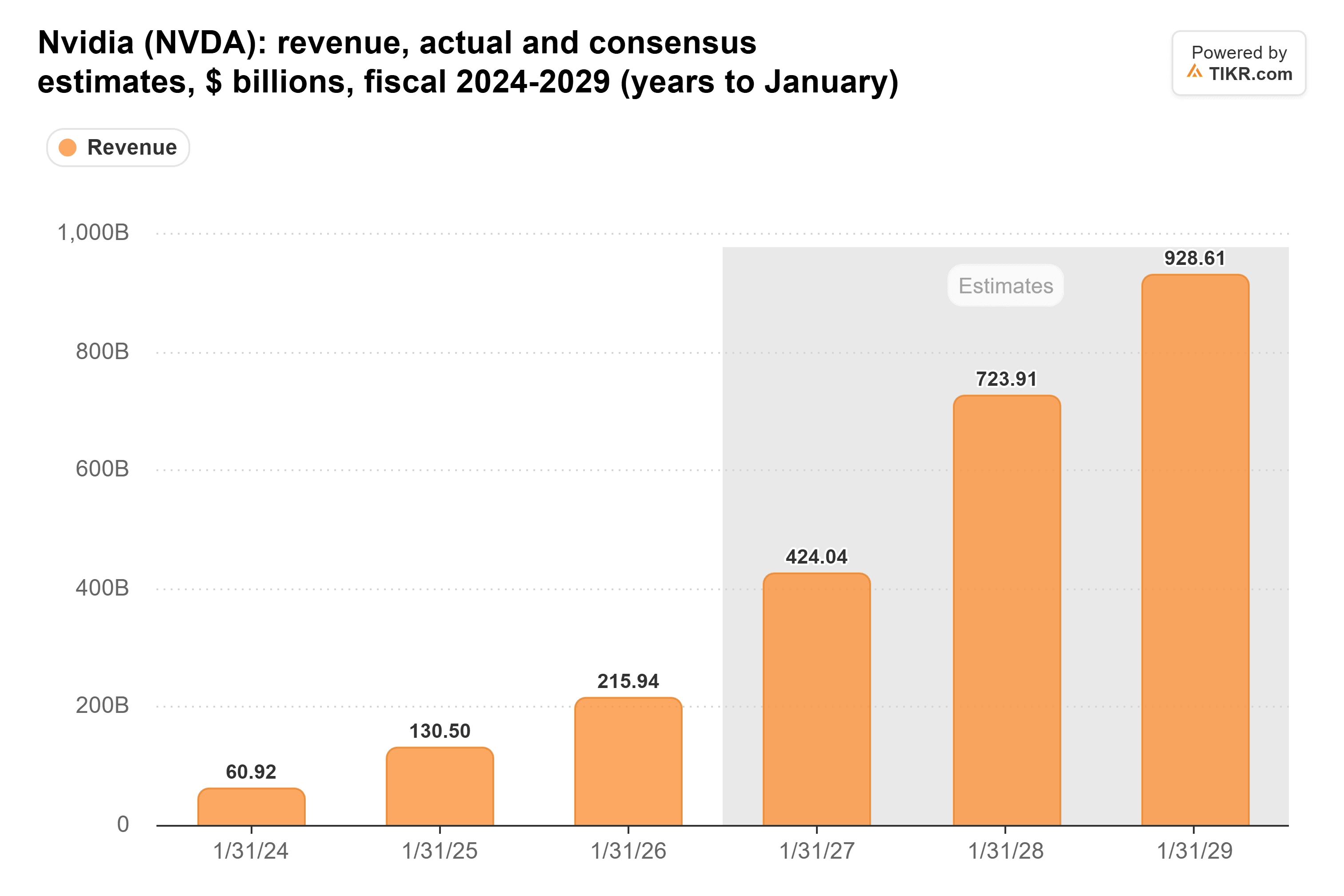
I don’t think those estimates reflect Monday’s rule yet.
CoreWeave has the most to lose
If NVIDIA loses some next orders, CoreWeave could lose something worse: pricing. The $7 million to $10 million a megawatt that SemiAnalysis credits to the cloud provider assumes “today’s pricing,” and cheap Blackwells in Malaysia and Indonesia are exactly the competition CoreWeave doesn’t need.
Analysts expect CoreWeave’s revenue to more than double next year, to $27.1 billion, and reach $45.1 billion in 2028:
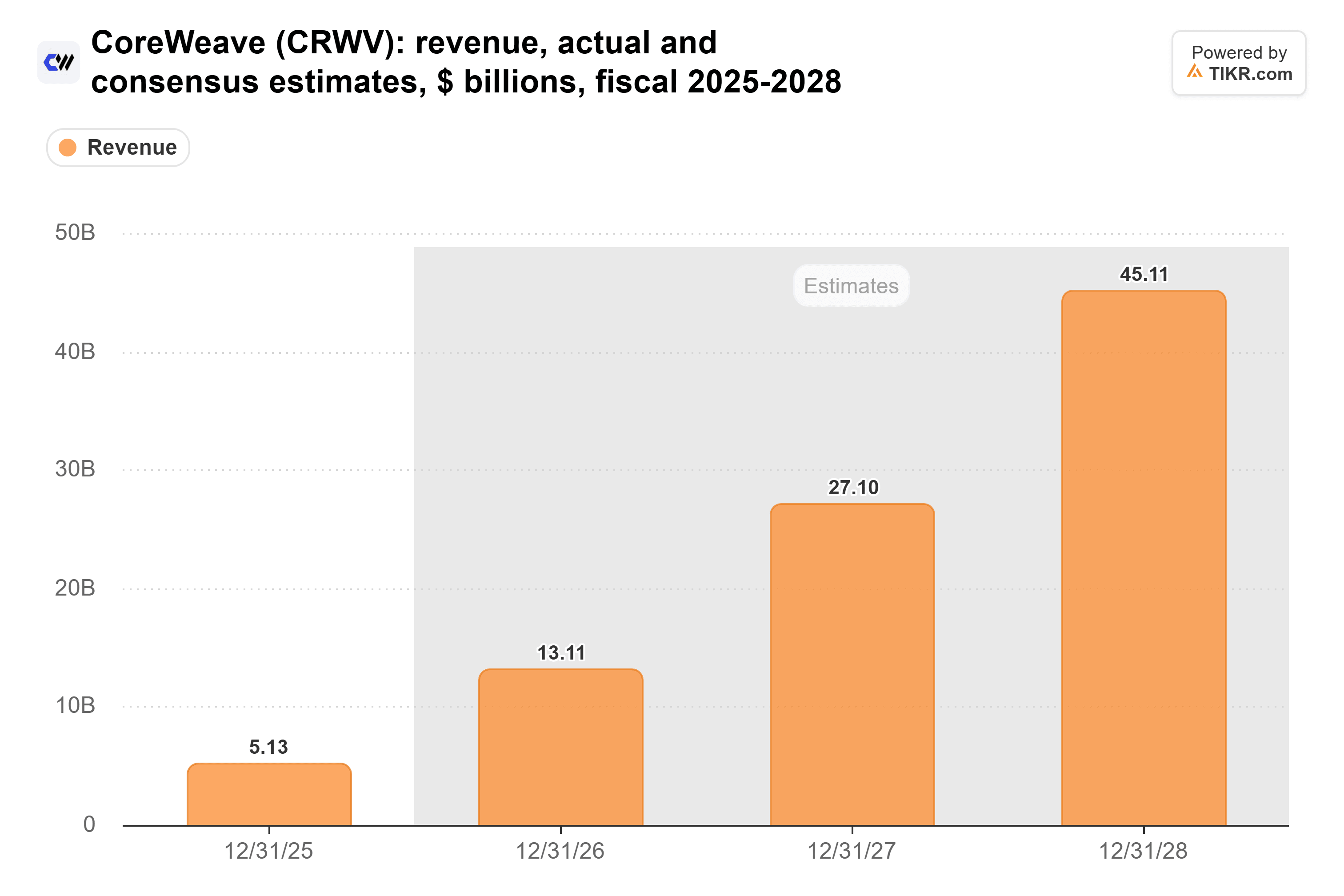
And CoreWeave’s total debt reached $66.2 billion at the end of September, more than 3x the $18.8 billion of a year earlier, so it can’t afford much of a drop in rental prices.
Every chip may still find a home
NVIDIA’s CFO and now interim CEO, Colette Kress, says nothing is coming back. As Jim Cramer relayed, Kress “explained that there will be no excess inventory flowing back from southeast Asia because demand is so strong.”
Ok, fair enough. Frontier labs’ demand has outrun supply all year, and U.S.-headquartered clouds are exempt from the rule. What worries me is the price of renting these chips: a Blackwell that finds a new tenant at a discount still means lower rental prices and less urgency for anyone to build.
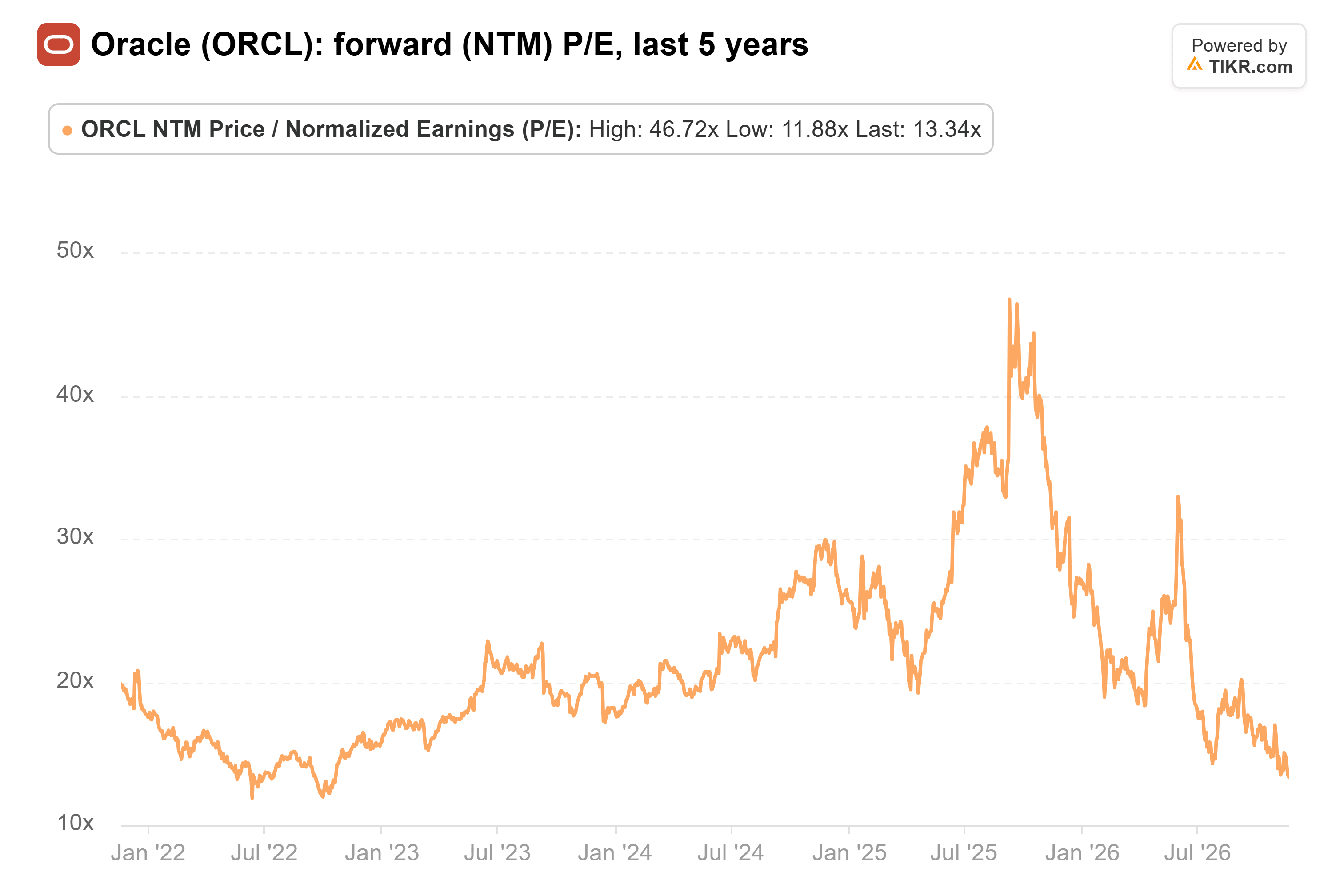
Oracle is exempt, but it still walked away from Tencent, and I’d expect cheaper compute to squeeze its AI cloud pricing like everyone else’s. Oracle trades at 13x forward earnings, well below its five-year average of 21x and not far above its 12x low:
The marginal buyer sets the price
The way I see it, a trade that depends on scarcity can’t hold up for long once the biggest buyers can get compute at a discount, even if every chip is still spoken for. That’s why I’d expect lower rental prices for CoreWeave and fewer next orders for NVIDIA.
Of course, nobody knows yet how much capacity actually frees up. Data centers that already serve large Chinese customers have 90 days to apply for a license, a window that closes in mid-February. Before then, I’d watch for any Anthropic lease in Southeast Asia, and for cuts to that $724 billion estimate.
So what is NVIDIA stock actually worth?
TIKR lets you forecast the future price of any stock in less than a minute. Just enter a few assumptions into TIKR’s valuation model and see what NVIDIA could be worth. Start from Wall Street consensus estimates, or adjust the inputs to reflect your own view of the business. It’s free to use.
Disclaimer:
Please note that the articles on TIKR are not intended to serve as investment or financial advice from TIKR or our content team, nor are they recommendations to buy or sell any stocks. We create our content based on TIKR Terminal’s investment data and analysts’ estimates. Our analysis might not include recent company news or important updates. TIKR has no position in any of the stocks mentioned. Thank you for reading, and happy investing!