Key Takeaways
- Bernstein downgraded PepsiCo to Underperform and cut its target to $128, citing weak North American demand that it expects to keep costing volume and share.
- North American beverage volume fell 2% in the third quarter, while international revenue grew 9.7% and now brings in about 44% of sales.
- Coca-Cola grew organic revenue 7% with a 33.4% operating margin, while PepsiCo’s core operating margin slipped to 16.9%.
- The fourth-quarter report, expected in early February, will show whether about 1,000 North American job cuts are lifting margins.
PepsiCo (PEP) shares fell 2.6% in premarket trading on Tuesday after Bernstein downgraded the stock to Underperform and cut its price target to $128 from $131.
The call follows PepsiCo’s move to cut about 1,000 jobs in North America earlier this month. It also lands while Coca-Cola (KO) keeps pulling ahead, with 7% organic revenue growth in its latest quarter against PepsiCo’s 3.1%.
Bernstein’s case is blunt. Demand at home is weak, and fixing it will cost more than investors expect.
Everyone already knew North America was struggling. The real question is whether cost cuts can protect earnings while PepsiCo spends to win shoppers back.
Bernstein stops giving PepsiCo credit
Bernstein expects PepsiCo to miss earnings expectations over the next year. The firm sees its North American snacks and drinks losing more volume and share. It also flagged weak demand for flagship brands, messy promotions and thin frontline staffing.
The third quarter gave that view plenty of support:
- PepsiCo Foods North America revenue slipped to $6.50 billion from $6.53 billion, and core operating profit fell 12%.
- North American beverage volume dropped 2%, with organic revenue flat.
- Core operating margin narrowed to 16.9% from 17.3%, even as total organic revenue rose 3.1%.
Split the company into its home and overseas businesses, and the divide is hard to miss…
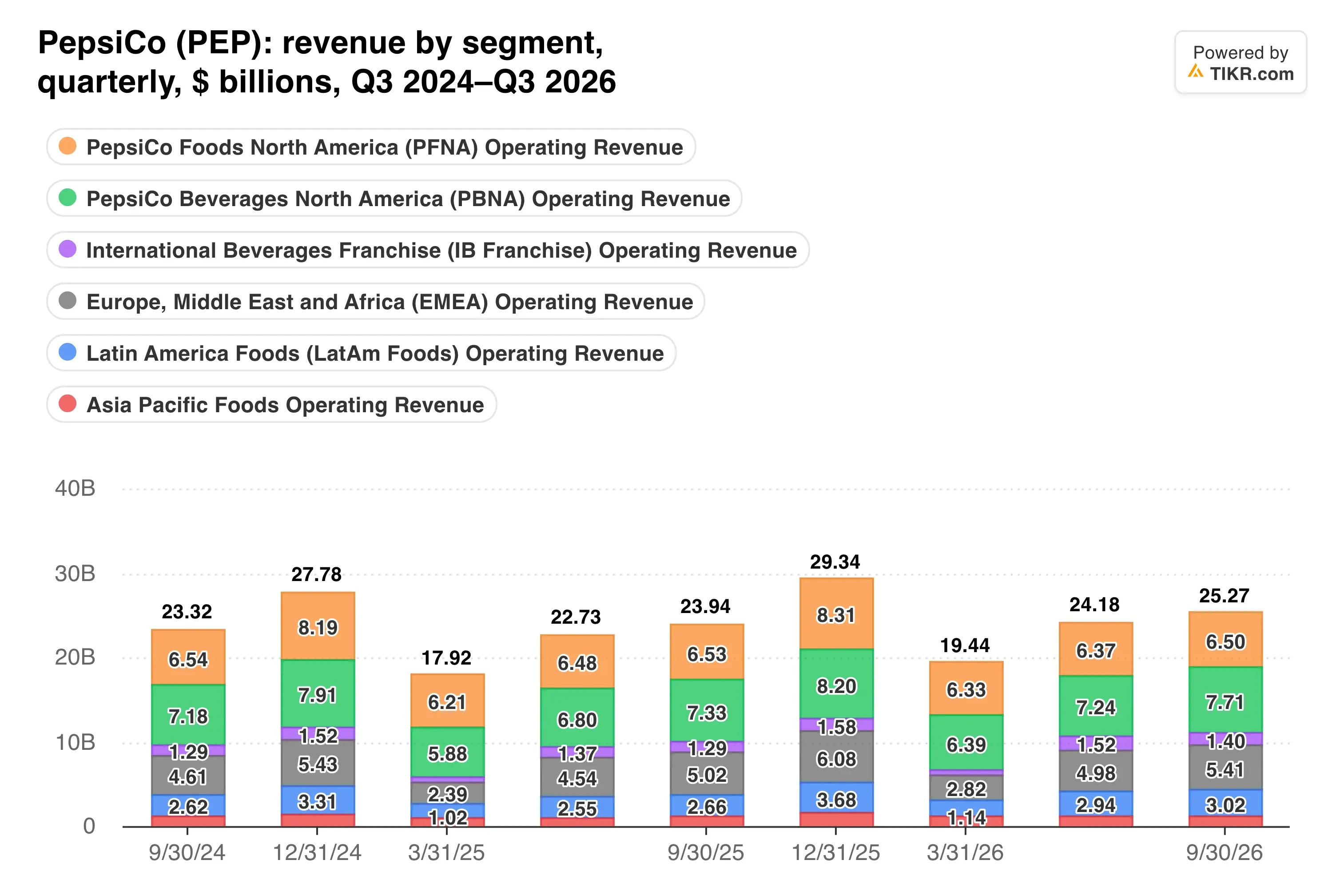
International revenue grew 9.7% from a year earlier. North America managed 2.6%, and nearly all of that came from beverage acquisitions.
International keeps carrying the load
Outside North America, the story looks very different. Every international segment grew organic revenue between 6% and 9%, and Asia Pacific snack volume jumped 11%.
Those businesses brought in about 44% of third-quarter revenue. Their core operating profit rose about 16%, while North America’s fell about 6%.
Customers are sending mixed signals too. KFC moved its U.S. beverage business to Coca-Cola, yet PepsiCo renewed its KFC contracts in Australia, India, the UK, Spain and Germany on November 6.
So how does PepsiCo’s profitability stack up against its biggest rival?
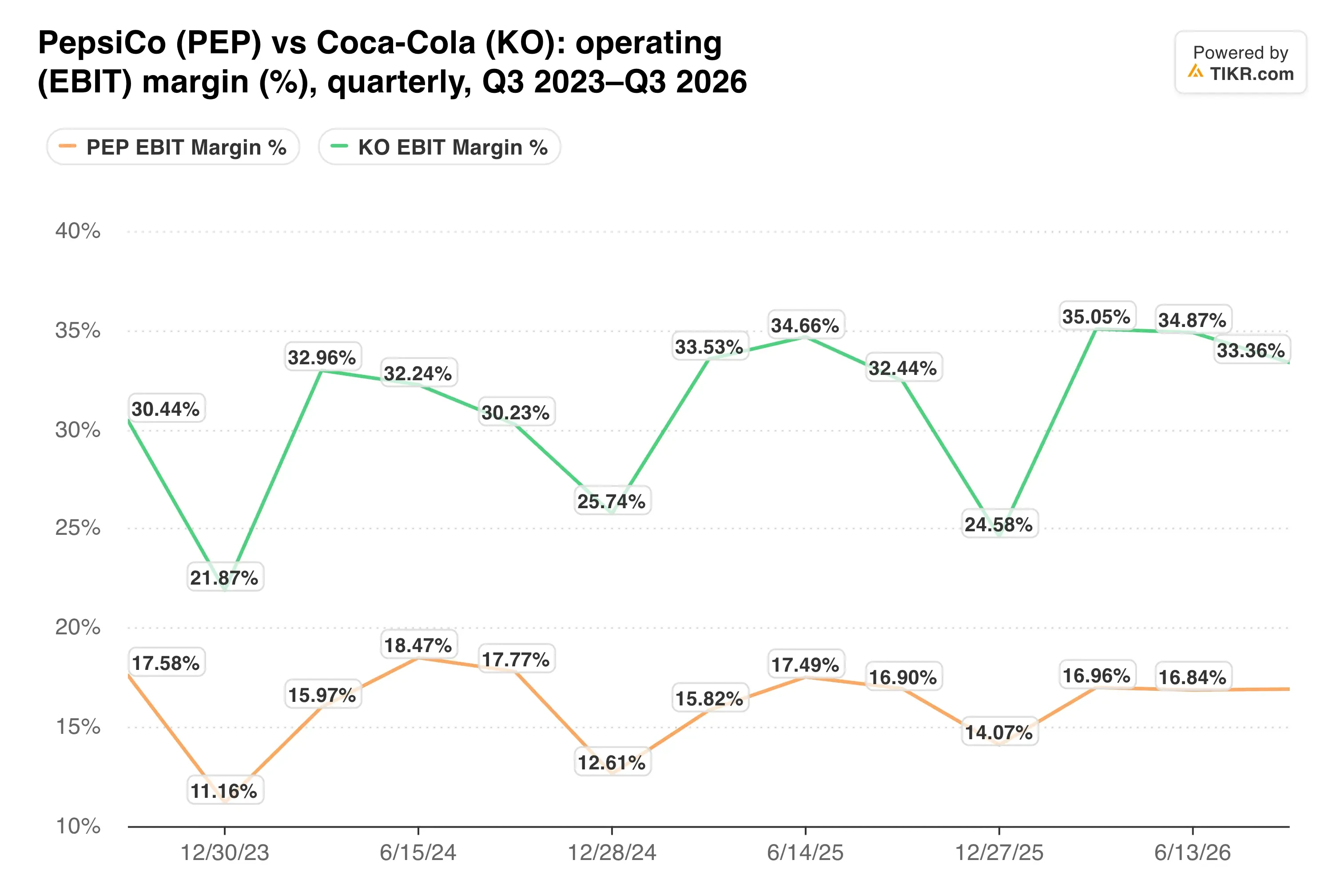
Coca-Cola posted a 33.4% operating margin in its third quarter, up from 32.0%. Its asset-light model explains part of the gap, but Coca-Cola is widening its margin while PepsiCo’s core margin shrinks.
TIKR tracks 25 analysts on PepsiCo. How many say “Buy”?
See the full breakdown of Buy, Hold, and Sell ratings on PepsiCo, along with Wall Street’s revenue and earnings estimates, all in one place. More than 500,000 investors use TIKR to research stocks like this one. See PepsiCo’s Analyst Ratings
Cost cuts must fund everything
PepsiCo already cut its 2026 core EPS growth outlook to 2.5% to 3.5%, from the low end of 5% to 7%. Moreover, the third quarter’s 3% core operating profit growth included a 4-point lift from tariff refunds. Strip that out, and profit slipped.
The job cuts are the first response. In a November 9 memo, North America CEO Ram Krishnan wrote that “too much of how we work today remains complex and fragmented.”
Activist Elliott Investment Management, which built a roughly $4 billion stake a year ago, is still waiting for that simplification to show up in the numbers.
Then there is the dividend, now $5.92 a share annualized after a 54th straight increase…
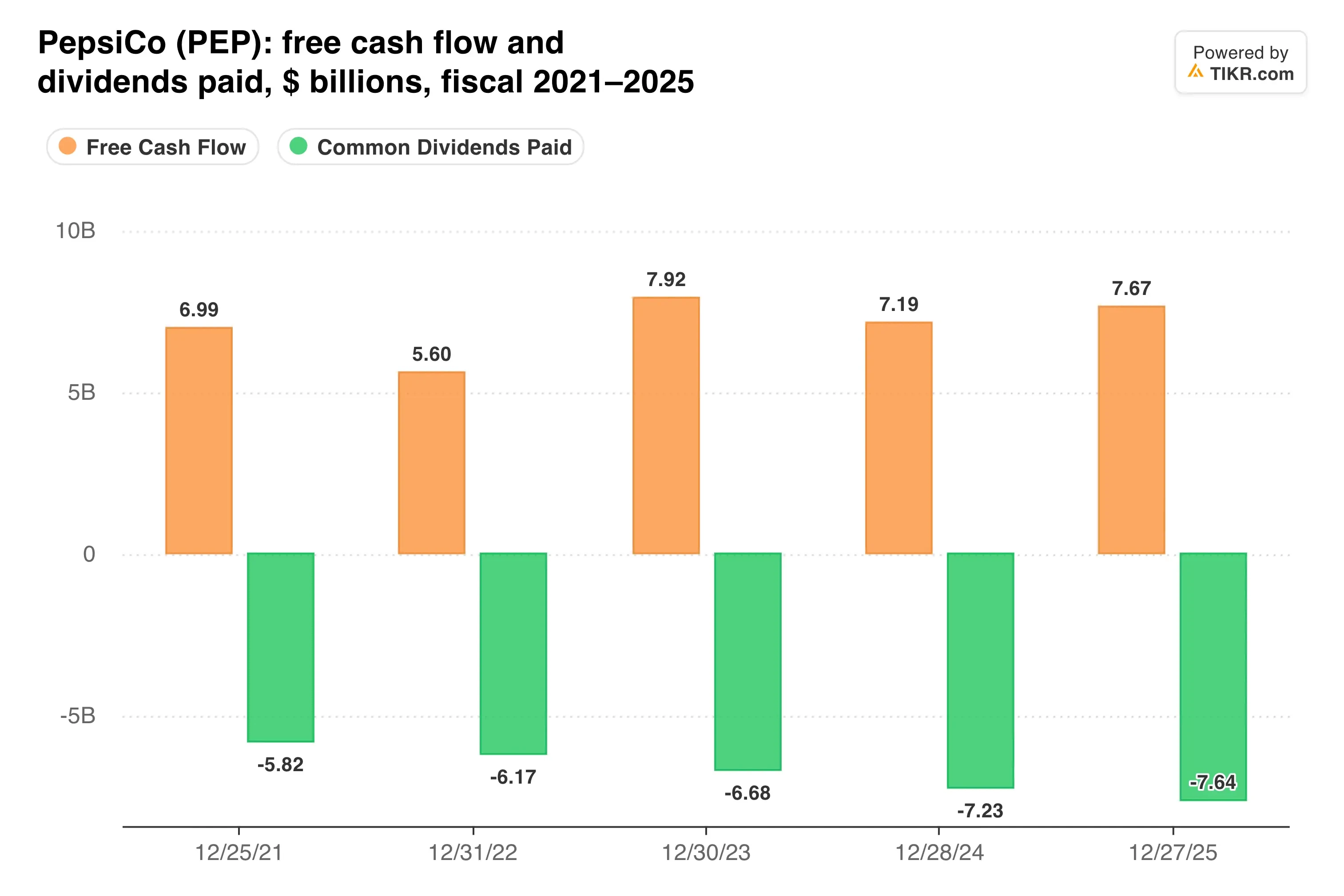
Through 36 weeks, free cash flow of about $5.86 billion fell just short of the $5.94 billion PepsiCo paid in dividends. Buybacks added another $739 million on top.
My take: Bernstein’s diagnosis looks right, and the tariff refund flattered a quarter that was already soft at home. However, the international business is growing fast enough to buy management time, so I’d hold the stock rather than chase the downgrade lower. I wouldn’t add until North American volume turns positive.
The next checkpoint is the fourth-quarter report, expected in early February. It should show whether the job cuts and new cost actions are lifting margins, or whether PepsiCo needs even more reinvestment to stop losing share at home.
So what is PepsiCo stock actually worth?
TIKR lets you forecast the future price of any stock in less than a minute. Just enter a few assumptions into TIKR’s valuation model and see what PepsiCo could be worth. Start from Wall Street consensus estimates, or adjust the inputs to reflect your own view of the business. It’s free to use.
Disclaimer:
Please note that the articles on TIKR are not intended to serve as investment or financial advice from TIKR or our content team, nor are they recommendations to buy or sell any stocks. We create our content based on TIKR Terminal’s investment data and analysts’ estimates. Our analysis might not include recent company news or important updates. TIKR has no position in any stocks mentioned. Thank you for reading, and happy investing!