

Key Takeaways
- President Trump said Friday he’ll work with states that want AI data centers, after all but one of 41 data center ballot measures went against the industry this week.
- Texas’ governor-elect plans to let already-permitted data centers finish, which Gavin Baker says covers 2027 and likely well into 2028, the years behind analysts’ biggest NVIDIA revenue estimates.
- Alphabet’s $17 billion Wyoming data center, powered partly by Bloom Energy fuel cells, shows projects moving to states that want them.
- NVIDIA trades at 15x forward earnings, half its three-year average, which looks too cheap if projects are mostly relocating.
After a midterm week of data center fears that sank NVIDIA (NVDA) 9%, President Trump blamed Thursday’s selloff on the Democrats’ “big Tuesday.”
On Friday morning, he made a pitch to the states:
> “As President, I am 100% in favor of Super Intelligence (SI), and will work with the many States in the U.S. that want to become RICH by having them. They are GOLD, and only foolish leadership will say “NO” to the riches they bring!”
That’s a sales pitch aimed squarely at governors.
Plenty of voters said no anyway. Of the 41 data center ballot measures voted on this week, all but one went against data centers, according to Ballotpedia.
But for NVIDIA, where and when its customers build matters more than how many towns voted no. And from what Texas and Alphabet did this week, I expect the build-out to move to friendlier states and cost builders more, while the next two years of chip demand stay largely intact.
TIKR tracks 58 analysts on Alphabet. How many say “Buy”?
See the full breakdown of Buy, Hold, and Sell ratings on Alphabet, along with Wall Street’s revenue and earnings estimates, all in one place. More than 500,000 investors use TIKR to research stocks like this one. See Alphabet’s Analyst Ratings
Texas lets the next two years finish
Texas was the race chip investors feared most. Atreides Management’s Gavin Baker, who went through the governor-elect’s speeches and interviews, posted on X on Thursday:
> “The governor-elect of Texas, Gina Hinojosa, has explicitly said that all currently permitted datacenters in Texas will be allowed to finish construction. This essentially covers all of the 2027 and likely well into 2028.”
That covers the years analysts are counting on most. Consensus has NVIDIA’s revenue climbing to $692 billion in its fiscal year ending January 2028, and to $903 billion the year after:
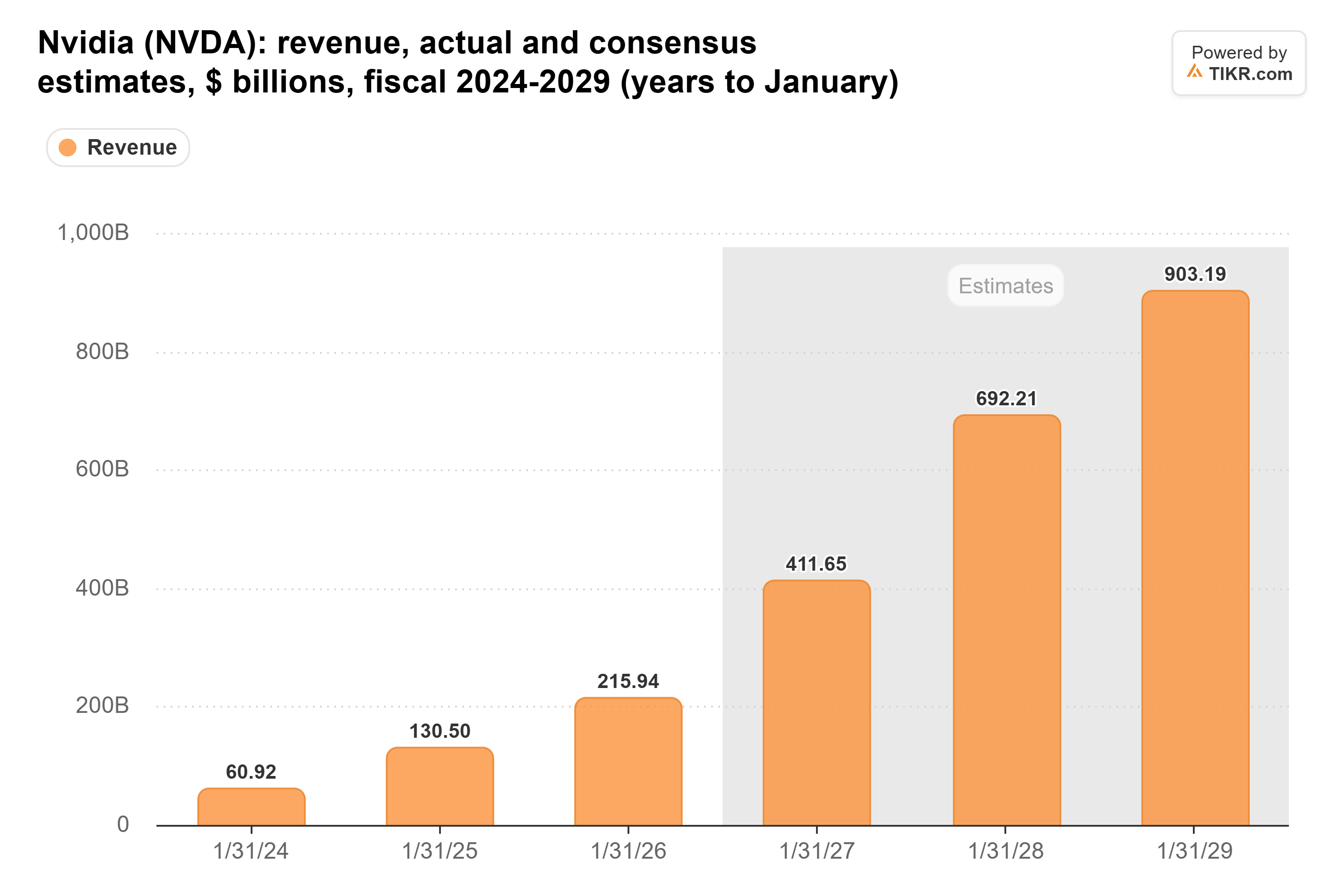
Management already calls its own guide for about 70% revenue growth in the year ending January 2028 a supply-limited figure. Nothing in Hinojosa’s plan touches the projects behind those estimates, so I don’t see a reason for analysts to cut them.
New Texas projects will cost builders more, though. Baker says Hinojosa plans laws requiring those delivered in 2028 and 2029 to pay taxes, commit to no increase in consumers’ power prices, leave people’s water supply alone, use union labor and give “Texans a seat at the table.” His take: “Sounds reasonable.”
Wyoming wants in
A project that runs into trouble in one state can go to another. Bloomberg Intelligence’s Nathan Dean made the point on Thursday’s episode of the Bloomberg Intelligence podcast:
“It’s not going to change overall data center spending in our view, but if you get significant roadblocks in Texas, can you take a project and move to New Mexico or move somewhere else?”
Alphabet (GOOG) did something like that the same day. Google said it will invest $17 billion to build its first data center in Wyoming, a state Trump won with more than 70% of the vote in 2024. Part of the power will come from a planned 702-megawatt fuel-cell development, with the fuel cells supplied by Bloom Energy (BE).
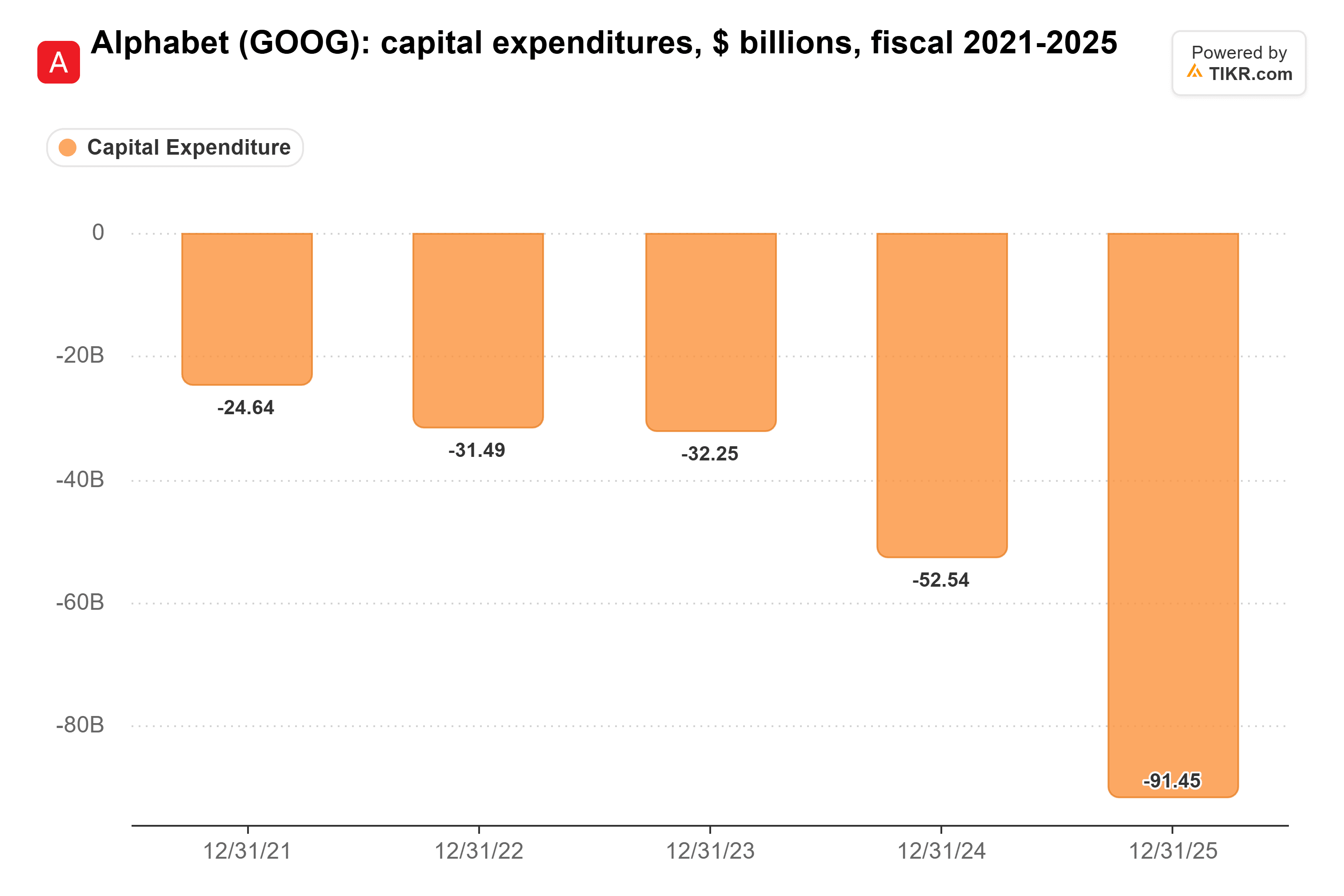
The Wyoming site comes on top of capital spending that has climbed every year, from $24.6 billion in 2021 to $91.5 billion in 2025:
Bloom’s shares still fell more than 14% on Thursday, on worries that restrictions could hit the industry. That’s the market treating a relocation like a cancellation.
Town halls are the harder fight
Not every project can just pack up and move. Strategas’ Daniel Clifton, who sits in on these town hall meetings, said on Friday’s episode of The Compound and Friends that “most of these are getting canceled because of local opposition, not because of a state official or federal official.”
Trump can’t overrule a town council, and local fights will keep slowing some projects. But Clifton also said “the state officials have a lot more power on it.” That’s why I’d watch governors like Hinojosa more closely than this week’s ballot tally.
Investors are paying for a smaller build-out
Even so, investors are pricing NVIDIA as if the build-out were shrinking. Its forward P/E fell to 15x on Thursday, its lowest in three years and half its three-year average of 30x:
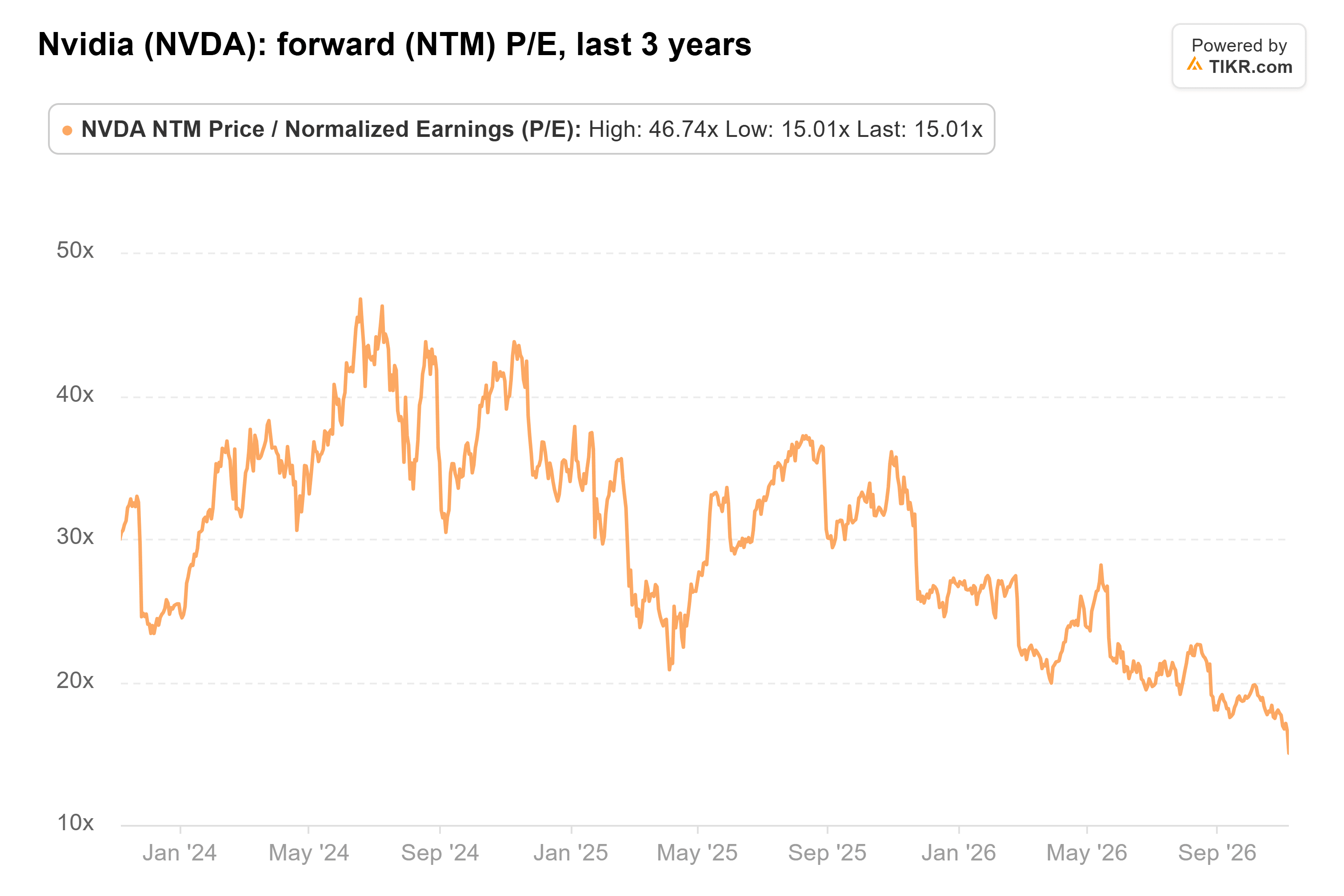
For a company whose next two years look largely spoken for, I think that’s too cheap. NVIDIA needs states to listen, and enough of them are.
Of course, the bigger risk comes later. Dean warned that if a 2028 presidential candidate runs on voters’ distrust of data centers, “we could see significant AI regulations.” Before then, NVIDIA reports on Nov. 17, and its outlook will show whether customers are still building as fast as they planned.
So what is NVIDIA stock actually worth?
TIKR lets you forecast the future price of any stock in less than a minute. Just enter a few assumptions into TIKR’s valuation model and see what NVIDIA could be worth. Start from Wall Street consensus estimates, or adjust the inputs to reflect your own view of the business. It’s free to use.
Disclaimer:
Please note that the articles on TIKR are not intended to serve as investment or financial advice from TIKR or our content team, nor are they recommendations to buy or sell any stocks. We create our content based on TIKR Terminal’s investment data and analysts’ estimates. Our analysis might not include recent company news or important updates. TIKR has no position in any of the stocks mentioned. Thank you for reading, and happy investing!


