Key Takeaways
- A bipartisan Senate bill would make public companies disclose major AI financing, and Sen. Mark Warner pointed to Nvidia’s backing of its own chip buyers.
- Nvidia supplies CoreWeave’s chips, bought $2 billion of its stock and agreed to buy its unused capacity in a $6.3 billion deal.
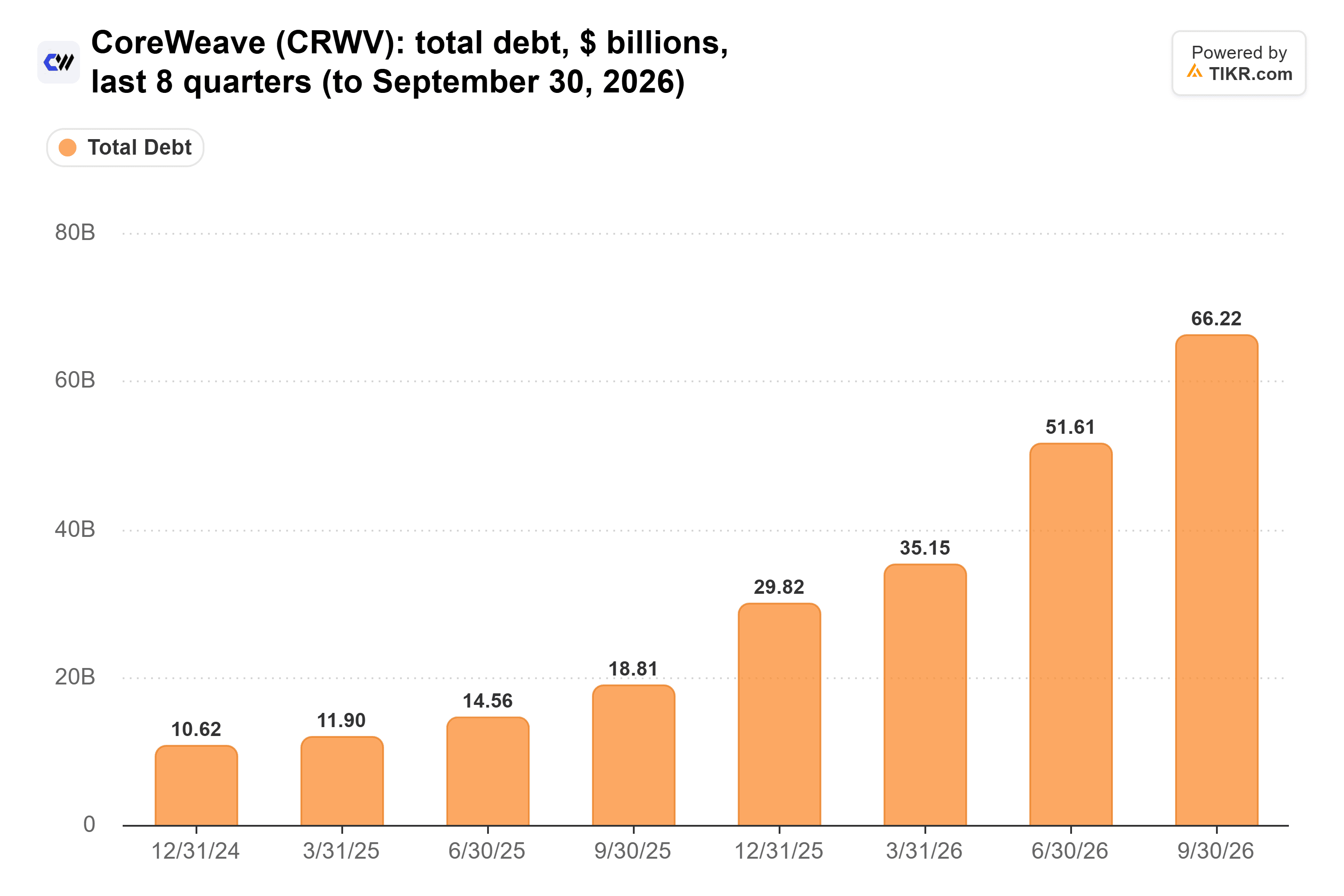
- That’s about $1 billion a year, small next to $66.2 billion of debt, including leases.
- The bigger test: a loan backed by CoreWeave’s Meta contract, expected to yield 7% to 7.5%.
Senators want a closer look at the money behind the AI boom, and Nvidia (NVDA) is their example. That’s an uncomfortable spotlight for CoreWeave (CRWV), which fell 12.0% to $39.51 on Friday, Nov. 20, a one-year low, as the AI selloff deepened.
Its landlords have a stake too: Applied Digital (APLD) has about $11 billion riding on CoreWeave, and Galaxy Digital (GLXY) just booked its first full quarter of CoreWeave rent.
Sen. Mark Warner (D-Va.) introduced the bipartisan AUDIT AI Act on Thursday, Nov. 19, Politico reported. Warner cited Nvidia’s support for its own chip buyers as a circular investment that worries him: “It clearly is a systemic risk when you’ve got this much of the economy being driven by these investments.”
The same day, short seller Jim Chanos was asked on X which neocloud is “the least horrible business.” His reply: “No neocloud should trade at a premium to its key sole supplier.”
Nvidia Is on Every Side of CoreWeave
CoreWeave runs on Nvidia hardware. In January, Nvidia bought $2 billion of CoreWeave stock at $87.20 a share, more than double Friday’s close. And in a September 2025 order, Nvidia agreed to buy capacity CoreWeave can’t sell through April 13, 2032, a deal valued at $6.3 billion.
Nvidia is getting pickier about future financing. On its Nov. 17 earnings call, interim CEO Colette Kress said it would take “a very strong look” at which companies it helps. Its neocloud agreements are down to $32 billion from $36 billion in July.
CoreWeave’s Backstop Is Smaller Than It Sounds
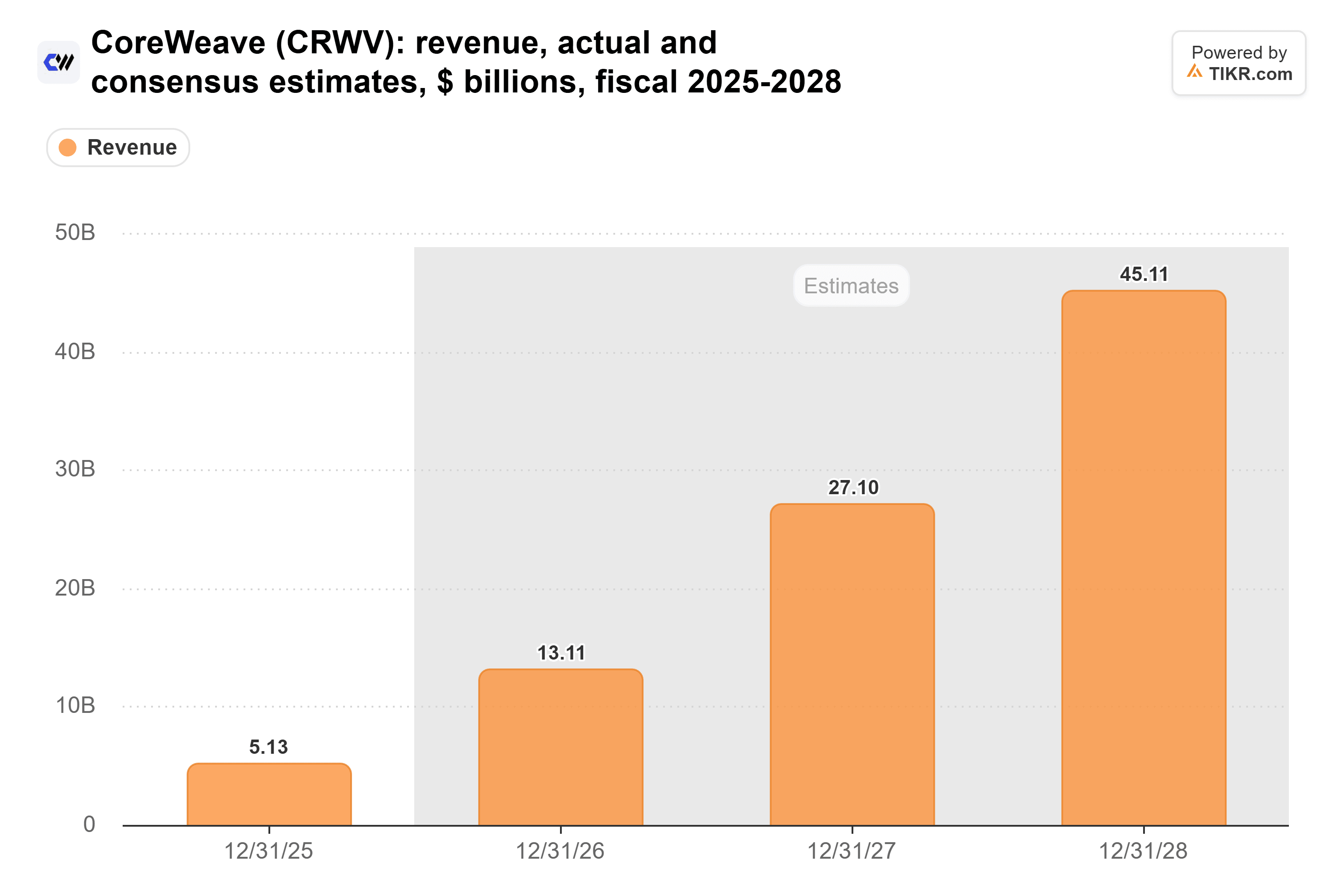
Analysts expect CoreWeave’s revenue to climb from $5.13 billion in 2025 to $45.1 billion in 2028.
It’s borrowing to get there. Total debt, including leases, went from $10.6 billion at the end of 2024 to $66.2 billion on Sept. 30, 2026.
Quarterly net interest expense rose to $846 million from $149 million in that span.
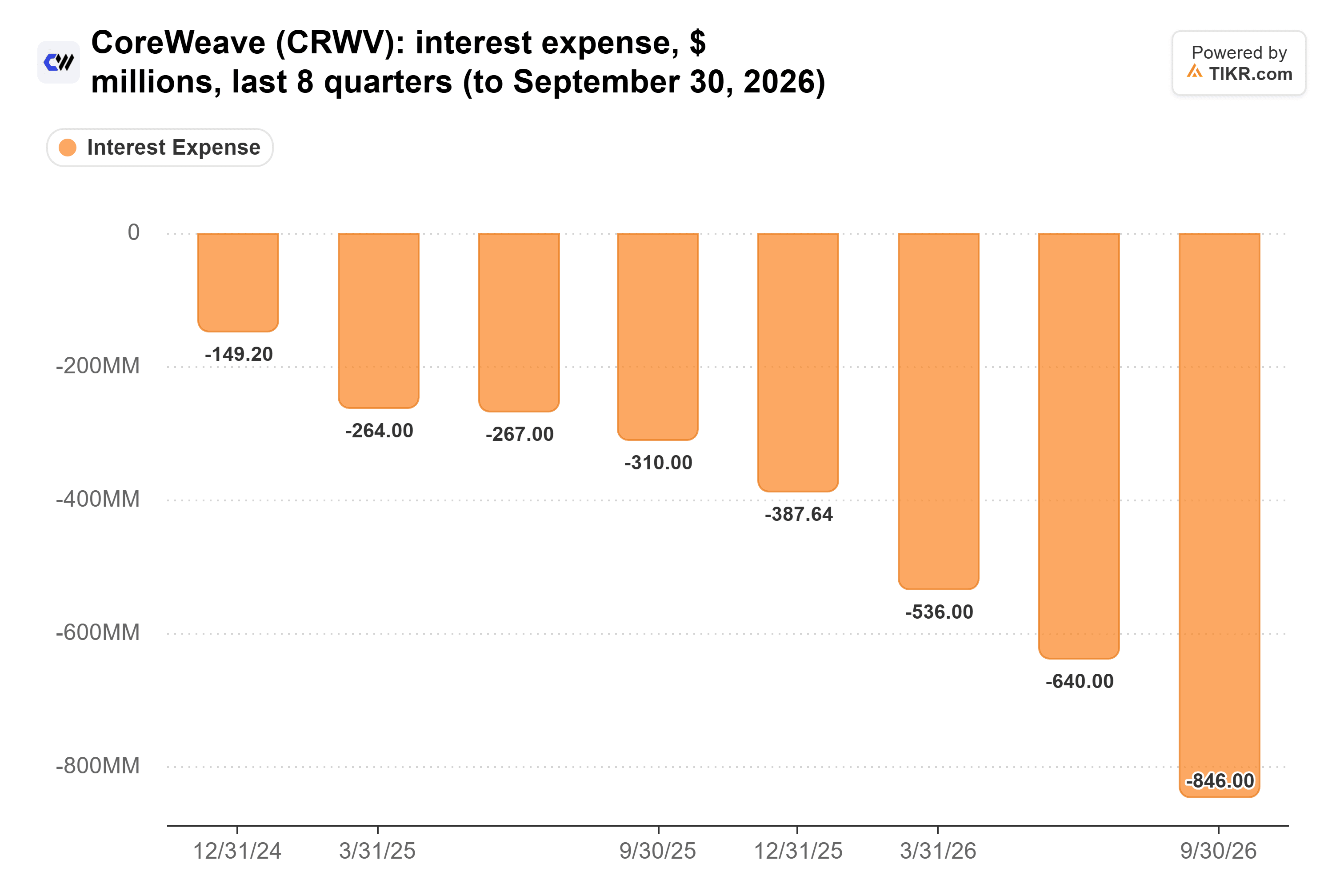
Spread over the deal’s term, Nvidia’s $6.3 billion is about $1 billion a year, under a third of CoreWeave’s interest at the third-quarter pace, and Nvidia pays only for capacity CoreWeave can’t sell. Its name likely does more with lenders than its dollars do.
TIKR Tracks 62 Analysts on Nvidia. How Many Say “Buy”?
See the full breakdown of Buy, Hold, and Sell ratings on Nvidia, along with Wall Street’s revenue and earnings estimates, all in one place. More than 500,000 investors use TIKR to research stocks like this one. See Nvidia’s Analyst Ratings
CoreWeave Is Leaning on Its Customers Instead
CoreWeave relies less on any one buyer: its largest was 30% of third-quarter revenue, down from 67% a year earlier. Bloomberg reported on Nov. 11 that it’s seeking at least $4 billion through an investment-grade loan backed by a Meta Platforms contract. On the Nov. 10 earnings call, CFO Nitin Agrawal said the next contract-backed loan should yield 7% to 7.5%.
The Question CoreWeave’s Next Loan Answers
The bill is far from law, and disclosure can’t cancel a deal Nvidia signed in 2025. A choosier Nvidia is the bigger problem, and CoreWeave’s best answer is borrowing against contracts like Meta’s.
That loan hasn’t priced. If it prices as guided, lenders still back CoreWeave on its customers’ credit. A wider spread means they’re charging more for its risk than expected.
So What is CoreWeave Stock Actually Worth?
TIKR lets you forecast the future price of any stock in less than a minute. Just enter a few assumptions into TIKR’s valuation model and see what CoreWeave could be worth. Start from Wall Street consensus estimates, or adjust the inputs to reflect your own view of the business. It’s free to use.
Disclaimer:
Please note that the articles on TIKR are not intended to serve as investment or financial advice from TIKR or our content team, nor are they recommendations to buy or sell any stocks. We create our content based on TIKR Terminal’s investment data and analysts’ estimates. Our analysis might not include recent company news or important updates. TIKR has no position in any of the stocks mentioned. Thank you for reading, and happy investing!